• ABOUT
  • BIRDING 2018
  • Birding 2019
  • BLOG POSTS
  • Butterflies 2018
  • Resources

earthstar

~ a celebration of nature

earthstar

Category Archives: plants

What do ladybirds eat?

10 Friday Aug 2018

Posted by sconzani in flowers, insects, ladybird, nature, plants, wildflowers

≈ 1 Comment

Tags

7-spot ladybirds, aphids, Cosmeston, Cosmeston Lakes Country Park, harlequin ladybird, ladybirds, Wild parsnip

I googled ‘What do ladybirds eat?’ today because I was trying to work out why there are so many ladybirds – about a 50 / 50 split between 7-spots and Harlequins – on the Wild parsnip plants at Cosmeston Lakes Country Park. It turns out ladybirds are particularly keen on aphids and, as you can see in some of my photos, there are rather a lot of aphids on these plants. Good news for the ladybirds!

180810 ladybirds on wild parsnip (1)
180810 ladybirds on wild parsnip (2)
180810 ladybirds on wild parsnip (3)
180810 ladybirds on wild parsnip (4)
180810 ladybirds on wild parsnip (5)
180810 ladybirds on wild parsnip (6)
180810 ladybirds on wild parsnip (7)
180810 ladybirds on wild parsnip (8)
180810 ladybirds on wild parsnip (9)
180810 ladybirds on wild parsnip (10)
180810 ladybirds on wild parsnip (11)
180810 ladybirds on wild parsnip (12)
180810 ladybirds on wild parsnip (13)
180810 ladybirds on wild parsnip (14)
Like Loading...

A family of Linnets

09 Thursday Aug 2018

Posted by sconzani in birds, nature, plants, wildflowers

≈ Leave a comment

Tags

birding, birdwatching, British birds, Ely embankment, Herb Robert, Linnet, Linnet family, Linnets feeding on Herb Robert

I went for a wander along the Ely embankment yesterday and was delighted to discover a family of five Linnets, two adults and three exceedingly cute juveniles, all feeding on Herb Robert seeds. They started off with Mum and Dad feeding the youngsters but the kids soon got impatient and wanted more food more quickly.

180809 linnet (1)

Mum or Dad has just plucked one of the Herb Robert seed pods while …

180809 linnet (2)

… youngster is watching to see how this food-gathering process works.

180809 linnet (3)

“Now if I can just reach …”

180809 linnet (4)

“Gotcha!”

180809 linnet (5)

“Now I’ve got the idea, I can help myself.”

180809 linnet (6)

Youngster looking rather pleased with itself.

180809 linnet (7)

Like Loading...

Birding at Cefn Cadlan and Cwm Cadlan

17 Thursday May 2018

Posted by sconzani in birds, nature, plants, wildflowers

≈ Leave a comment

Tags

British flora, British wildflowers, Cefn Cadlan, Common butterwort, Cwm Cadlan, Dog violet, Greater stitchwort, Green-veined white butterfly, Marsh lousewort, marsh marigold, Micropterix calthella, Native bluebell, Opposite-leaved golden saxifrage, Redstart, Water avens, Wood sorrel

You may be surprised to learn that birding trips aren’t always dominated by birdwatching.
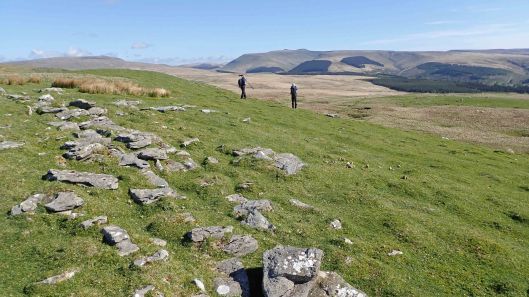
180517 near Cefn Cadlan

Last Sunday’s Glamorgan Bird Club trip saw 22 people striding firstly around the high moorland near Cefn Cadlan, north of Cardiff on the way to Brecon, and then exploring nearby Cwm Cadlan National Nature Reserve, an area renowned for the rare plants that thrive in its wet grasslands.

180517 lane to Cwm Cadlan

Of course, we were on the trip primarily to look for birds – and I saw my first Redstarts for the year (always on distant tree tops) and heard my first Cuckoo (exactly a year since my very first Cuckoo).
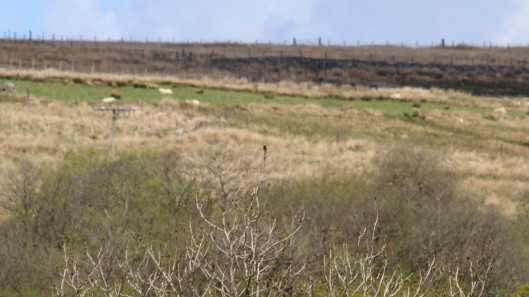
180517 Redstart

You’ll just have to believe me when I say that the dot in the centre of this photo is a Redstart

But, when the birds proved elusive, our team of talented amateur naturalists turned their attention to all the other wildlife and wildflowers that surrounded us. We saw frogs and a hare; speculated on what had left its footprints in the mud; enjoyed all the Green-veined white and Orange-tip butterflies that were nectaring on the abundant Cuckkoflowers …
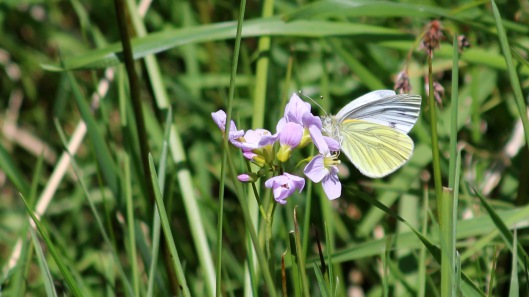
180517 Green-veined white

and we turned our heads downwards to admire all the special wildflowers that surrounded us. It was a glorious sunny day, the scenery was stunning, and the flora and fauna superb.
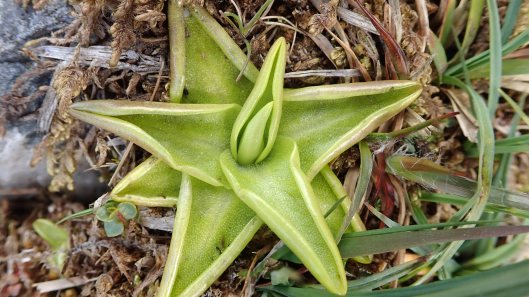
180517 Common butterwort

Common butterwort, not yet in flower

180517 Dog violet

Dog violet

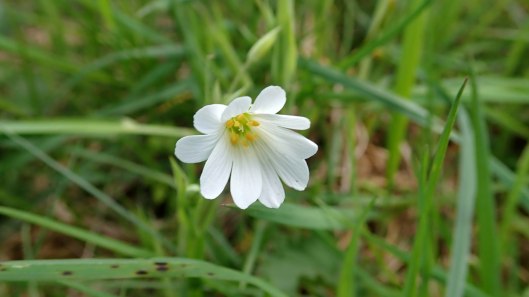
180517 Greater stitchwort

Greater stitchwort

180517 Lousewort

Lousewort

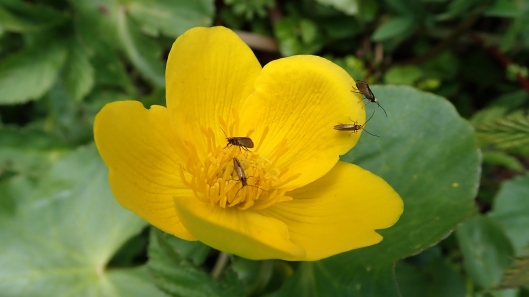
180517 Marsh marigold and Micropterix calthella

Marsh marigold, and the tiny moths are Micropterix calthella
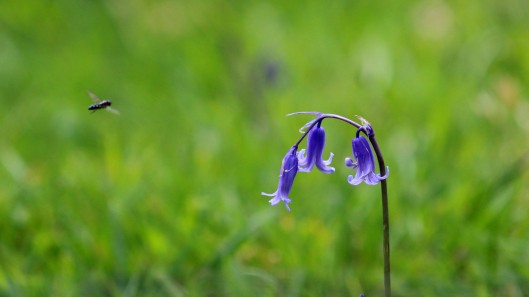
180517 Native bluebell

Native bluebell

180517 Opposite-leaved golden saxifrage

Opposite-leaved golden saxifrage

180517 water avens

Water avens, a very beautiful plant and a new one for me
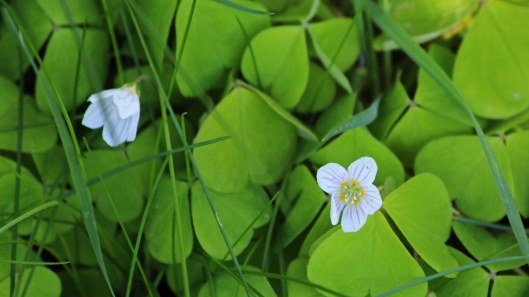
180517 Wood sorrel

Wood sorrel

Like Loading...

On the verge

15 Sunday Apr 2018

Posted by sconzani in flowers, nature, plants, spring, wildflowers

≈ Leave a comment

Tags

#Ontheverge, #WildflowerHour, British wildflowers, spring flowers, wildflowers

Are you up for a challenge? Do you like wildflowers? Well, then get following Wildflowerhour on Twitter and / or Facebook, and join in the weekly wildflower challenge fun. Not only will your newsfeed be filled with glorious colour every Sunday night from 8 to 9pm (and throughout the week, as well) but I guarantee you will also learn something new each week.

180415 The verge

The verge

This week’s challenge was titled ‘On the verge’, and we were challenged to see what wildflowers we could discover on roadside verges. Rather than a busy highway, I chose a quiet local side road at Penarth Marina – I already get lots of odd looks for taking a close look at flowers and insects, so tried to avoid too much attention. The Marina area is a relatively new environment, my verge an area that had previously been a dock, where ocean-going ships brought goods from near and far to Cardiff, but this particular dock was filled with household rubbish and turned into a park back in the 1980s. So, I didn’t find anything particularly exciting on my verge but it was interesting to see what plants had become established.

180415 Common cornsalad Valerianella locusta

Common cornsalad (Valerianella locusta)

180415 Creeping buttercup Ranunculus repens

Creeping buttercup (Ranunculus repens)

180415 Daisy Bellis perennis

The ever reliable Daisy (Bellis perennis)

180415 Dandelion Taraxacum sp and slug friend

Partly devoured Dandelion (Taraxacum sp.) and slug friend

180415 Field Wood-rush Luzula campestris

Field Wood-rush (Luzula campestris)

180415 Groundsel Senecio vulgaris

Groundsel (Senecio vulgaris)

180415 Ribwort plantain Plantago lanceolata

Not quite open yet, but close – Ribwort plantain (Plantago lanceolata)

180415 Wavy Bitter-cress Cardamine flexuosa

Wavy Bitter-cress (Cardamine flexuosa)

Like Loading...

Wild words: strobilus

04 Wednesday Apr 2018

Posted by sconzani in nature, plants

≈ Leave a comment

Tags

#WildWords, British flora, Equisetum arvense, Equisteum, Field horsetail, Horsetail, strobilus, wild words

Strobilus: noun; a botanical term, which came originally from the Greek strephein meaning ‘to twist’, and which is used to describe the cone of a pine, fir or other conifer; and also ‘a structure resembling the cone of a conifer, such as the flower of the hop’ (Oxford Dictionary).

180404 strobilus

I have the lovely Helen of Plantlife Cymru to thank for this word because, when I originally posted this photo on Twitter, she responded by saying that ‘the strobilus is ascending’. My photo shows the newly emerged stalks of Equisetum (possibly Field horsetail, Equisteum arvense), which is a dinosaur of the plant world, a plant that reproduces using spores rather than seeds. The spores are produced in the strobili, the cone-like structures you can see on the tips of the stems.

Like Loading...

Lovely Lungwort

30 Friday Mar 2018

Posted by sconzani in flowers, nature, plants, spring, wildflowers

≈ 7 Comments

Tags

British flora, British wildflowers, Jacob's coat, Lungwort, Mary spilt the milk, Pulmonaria officinalis, Soldiers and sailors, spring flowers

OLYMPUS DIGITAL CAMERA

I kid you not – Lungwort really is this wildflower’s common name (scientific name: Pulmonaria officinalis). And why? Well, it goes back to the times when people believed that the physical qualities of a plant – its shape, colour, features – reflected its uses (a theory also known as the doctrine of signatures). In this case, the freckled oval-shaped leaves were thought to resemble diseased lungs (and I thought I had a good imagination!) and so the plant was (and still is) used as a treatment for various respiratory ailments.

OLYMPUS DIGITAL CAMERA

Those blotchy leaves are also the reason for one of the plant’s many common names, ‘Mary-spilt-the-milk’. And the variety of pinks and blues in its flowers are behind its other vernacular names, ‘Jacob’s coat’ and ‘Soldiers and Sailors’ – all much more understandable.

OLYMPUS DIGITAL CAMERA
Like Loading...

Birth notice

17 Saturday Mar 2018

Posted by sconzani in insects, nature, plants, wildflowers

≈ 6 Comments

Tags

Ficaria verna, flies, fly, leaf mines, leaf mining fly, leafminer, Lesser Celandine, Phytomyza ranunculi

I was handing out the cigars last Monday!
Now, you might well think me more than a little mad to be excited about the birth of a fly but this was the first time I had tried rearing one … and it was actually successful, which bodes well for the fact that I’m intending to take part in a fly-rearing investigation this summer (more on that closer to the time).

180317 Phytomyza ranunculi (2)
180317 Phytomyza ranunculi (3)

The fly is Phytomyza ranunculi, a creature whose larvae often make their home in the leaves of Lesser celandine (Ficaria verna). I blogged about this leafminer, its larvae and the pupa here, and it is that pupa which finally hatched earlier this week. I had been told it would take about 3 weeks to hatch but it was, in fact, longer than that – it was 6 February when I found the pupa and 12 March when it hatched, so 34 days in total.

180317 Phytomyza ranunculi (1)

Now, here I must admit to a rookie error. As it was well over the 3 weeks, I had almost given up on its hatching so, on Monday night, when I had a sudden notion to open the container, I didn’t look inside first. The fly popped straight out, perched on the edge for a very brief time – and I managed to get just one photo, and then it flew off. I’ve searched for it in my flat, and it did a quick fly by when I was washing the dishes yesterday, but I haven’t been able to find it, neither to take more photos nor to let it outside.

Like Loading...

Pavement plants

11 Sunday Mar 2018

Posted by sconzani in nature, plants, wildflowers

≈ Leave a comment

Tags

#PavementPlants, #WildflowerHour, British flora, Groundsel, Hairy bittercress, Lesser Celandine, plants in pavement, Shepherd's purse, wild plants, wildflowers

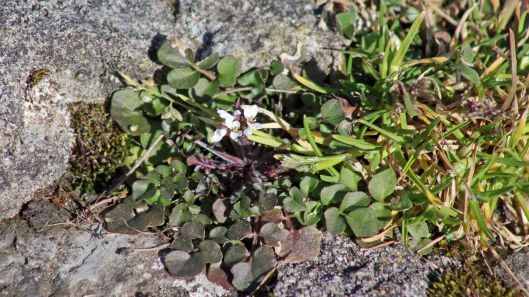
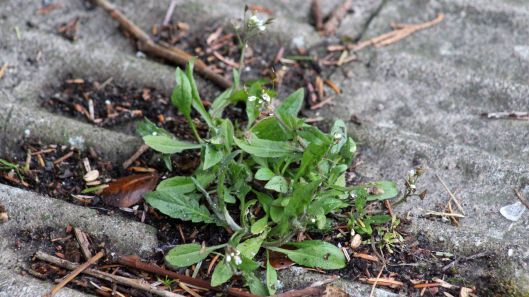
This week’s Wildflower Hour challenge was to check out your local pavement for #PavementPlants. As the challenge says: ‘It is amazing how many plants are able to eke out a living where they were never invited. Growing in seemingly inhospitable cracks and crevices, thriving where there is little soil, these tough little plants are often overlooked.’ So, it was eyes down this week as I wandered around Penarth and, though I decided to look just for plants that were flowering and ignore the ubiquitous grasses and mosses, I did manage to find a few little treasures in my local pavements, steps and paths.

180311 pavement plant groundsel

Groundsel (Senecio vulgaris)
I’m sure most people recognise Groundsel when they see it, as it’s very common in areas of disturbed ground. I just learned today that Senecio comes from the Latin for ‘old man’, a reference to the bare ‘scalp’ that remains once the plant’s fluffy white seeds have blown away.

180311 pavement plant hairy bittercress (2)

Hairy bittercress (Cardamine hirsuta)
I was initially confused about which bittercress this was, Hairy or Wavy but my trusty wildflower guide tells me that Hairy has four stamens and Wavy usually has six, so that clinched it. Apparently, this plant is edible, though bitter – hence its name: I think I’ll pass.

180311 pavement plant lesser celandine

Lesser celandine (Ficaria verna)
Once known as Pilewort, as it was believed to be a remedy for haemorrhoids, Lesser celandine contains high levels of vitamin C and was also used to prevent scurvy.

180311 pavement plant Shepherd's purse

Shepherd’s purse (Capsella bursa-pastoris)
This very common wild plant’s common name comes from the purse-like shape of its seed pods.

Like Loading...

Fair-handed Spring

23 Friday Feb 2018

Posted by sconzani in flowers, nature, plants, spring, wildflowers

≈ Leave a comment

Tags

Cathays Cemetery, crocus, spring flowers

180223 crocuses (4)

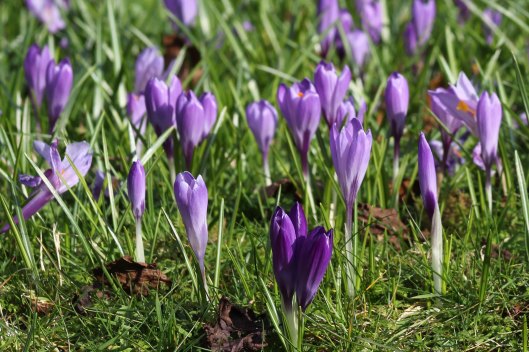
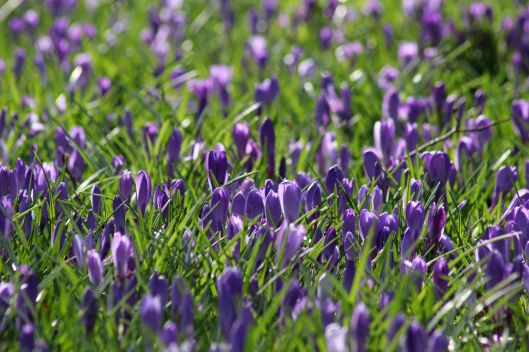
Along these blushing borders bright with dew,
And in yon mingled wilderness of flowers,
Fair-handed Spring unbosoms every grace –
Throws out the snowdrop and the crocus first
~ James Thomson, ‘Spring’, The Seasons
180223 crocuses (2)180223 crocuses (3)180223 crocuses (5)180223 crocuses (1)

Like Loading...

Leafminer on bramble

29 Monday Jan 2018

Posted by sconzani in insects, nature, plants

≈ 6 Comments

Tags

bramble, British micro moth, British moths, Golden pigmy moth, leaf mines, leafminer, moth larvae in leaf mines, Rubus fruticosus agg, Stigmella aurella

Following on from my Leafmines 101 post and the one about leafminers on Hart’s tongue fern, here’s another leaf mine I think I can identify (note the ‘I think’!).

180129 Stigmella aurella on bramble (1)

The reason I’m hesitant about positively IDing this one is because there are two species of micro moth whose larvae produce very similar mines on bramble (Rubus fruticosus agg.) leaves. One is the Glossy bramble pigmy moth (Stigmella splendidissimella) but the more likely in this case is the Golden pigmy moth (Stigmella aurella).

180129 Stigmella aurella on bramble (2)
180129 Stigmella aurella on bramble (3)

Though it’s very common and widespread in Britain, I’ve never seen this tiny moth (images on the UK moths website here) but the mines its larvae create on bramble leaves are everywhere I look. As you can see, the mine starts out small but, as the larva within chews and chews, so it widens its mine to accommodate its expanding girth.

You can see if the inhabitant is still at home by holding the leaf up to the light. Most of these seemed to be empty, as you can see from the images below (the central black lines are the frass). I’ve never actually opened a mine to have a look at the larva when it has been inside but, if I did, I would see an orangey-yellow grub with a brownish tinge to its head (there are images on the Bladmineerders website here).

180129 Stigmella aurella on bramble (4)180129 Stigmella aurella on bramble (5)

Like Loading...
← Older posts
Newer posts →

About me

sconzani

sconzani

I'm a writer and photographer; researcher and blogger; birder and nature lover; countryside rambler and city strider; volunteer and biodiversity recorder.

View Full Profile →

Follow earthstar on WordPress.com

Enter your email address to follow this blog and receive notifications of new posts by email.

Recent blog posts

  • A huddle of 7-spots March 18, 2026
  • Busy Blue tits March 17, 2026
  • Cuttlebones March 16, 2026
  • No woodland here March 15, 2026
  • Family comes first March 14, 2026

From the archives

COPYRIGHT

Unless otherwise acknowledged, the text and photographs on this blog are my own and are subject to international copyright. Nothing may be downloaded or copied without my permission.

Fellow Earth Stars!

  • Unknown's avatar
  • Unknown's avatar
  • Unknown's avatar
  • Unknown's avatar
  • Unknown's avatar
  • Unknown's avatar
  • Unknown's avatar
  • Unknown's avatar
  • Unknown's avatar
  • Unknown's avatar
  • Unknown's avatar
  • Unknown's avatar
  • Unknown's avatar
  • Unknown's avatar
  • Unknown's avatar
  • Unknown's avatar
  • Unknown's avatar
  • Unknown's avatar
  • Unknown's avatar
  • Unknown's avatar
  • Unknown's avatar
  • Unknown's avatar
  • Unknown's avatar
  • Unknown's avatar
  • Unknown's avatar
  • Unknown's avatar
  • Unknown's avatar
  • Unknown's avatar
  • Unknown's avatar
  • Unknown's avatar
  • Unknown's avatar
  • Unknown's avatar
  • Unknown's avatar
  • Unknown's avatar
  • Unknown's avatar
  • Unknown's avatar
  • Unknown's avatar
  • Unknown's avatar
  • Unknown's avatar
  • Unknown's avatar
  • Unknown's avatar
  • Unknown's avatar
  • Unknown's avatar
  • Unknown's avatar
  • Unknown's avatar
  • Unknown's avatar
  • Unknown's avatar
  • Unknown's avatar
  • Unknown's avatar
  • Unknown's avatar

Blog at WordPress.com.

Privacy & Cookies: This site uses cookies. By continuing to use this website, you agree to their use.
To find out more, including how to control cookies, see here: Cookie Policy
  • Subscribe Subscribed
    • earthstar
    • Join 668 other subscribers
    • Already have a WordPress.com account? Log in now.
    • earthstar
    • Subscribe Subscribed
    • Sign up
    • Log in
    • Report this content
    • View site in Reader
    • Manage subscriptions
    • Collapse this bar
 

Loading Comments...
 

You must be logged in to post a comment.

    %d