• ABOUT
  • BIRDING 2018
  • Birding 2019
  • BLOG POSTS
  • Butterflies 2018
  • Resources

earthstar

~ a celebration of nature

earthstar

Category Archives: spiders

Exploding spiders

07 Saturday May 2022

Posted by sconzani in spiders

≈ Leave a comment

Tags

Araneus diadematus, British spiders, Garden spider, Garden spider babies

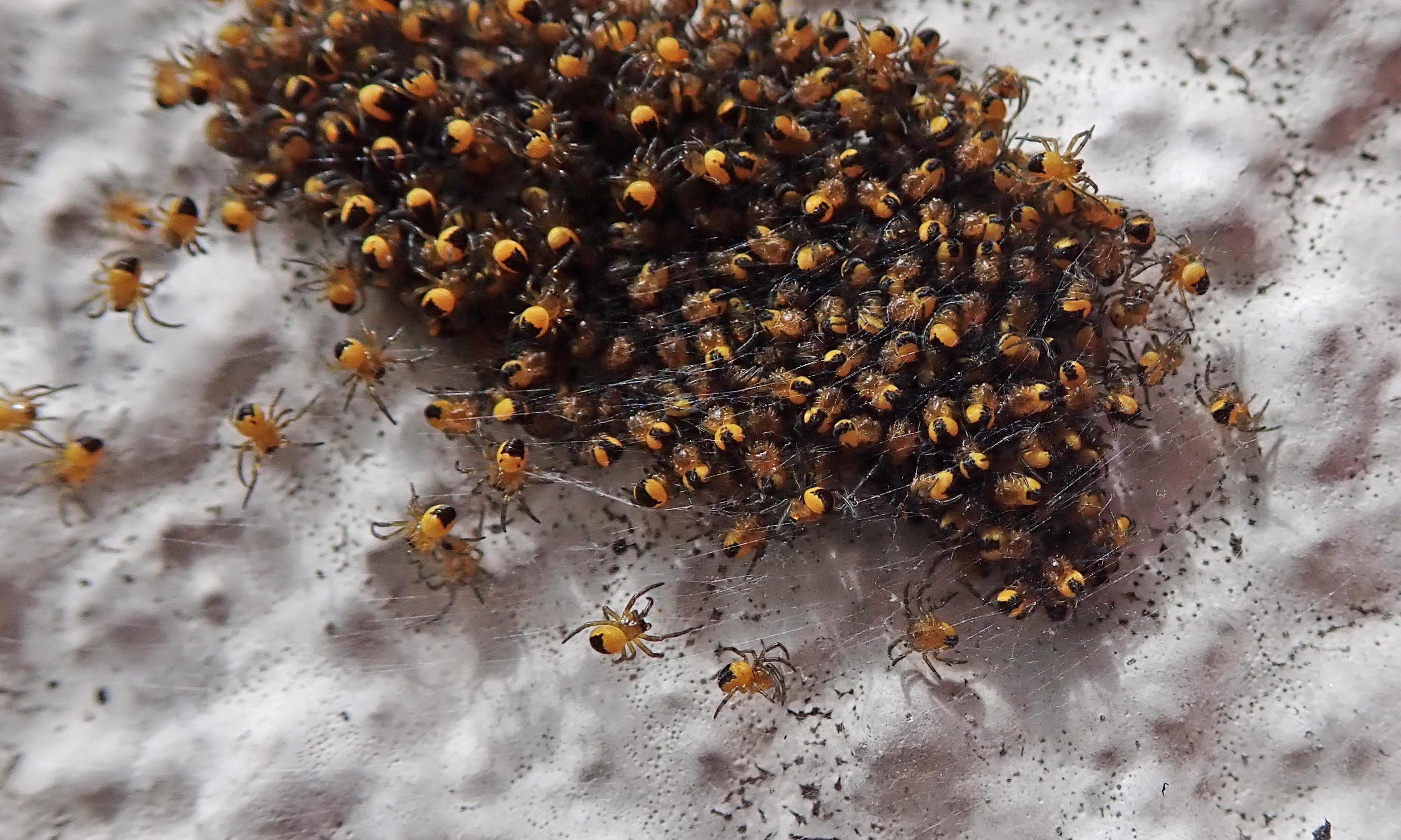
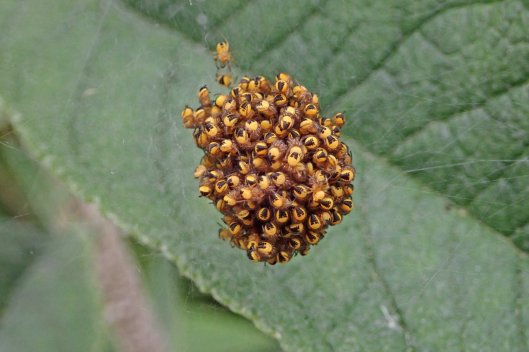
Tiny balls of baby spiders like this one make the news every year, with headlines like ‘Millions of “exploding” yellow baby spiders invade Britain’ (Mirror, June 2015).

220507 Araneus diadematus (1)

Of course, the spiders aren’t actually invading Britain – these are the common Garden spiders (Araneus diadematus) that can be found stringing their webs from every available bush and shrub. And, of course, they don’t actually explode – they normally huddle into a tight ball but, if you get too close, they rapidly run out in all directions, to try to protect themselves. As soon as they feel safe, they huddle back together again. They’re actually very cute!

220507 Araneus diadematus (2)

Like Loading...

W is for Wasp spider

28 Tuesday Dec 2021

Posted by sconzani in spiders

≈ Leave a comment

Tags

Argiope bruennichi, British spiders, Wasp spider

Waxcap, Whinchat, Wych elm – these were all worthy contenders for the letter W but my first ever Wasp spiders won the day!

Like Loading...

Wasp spiders

31 Tuesday Aug 2021

Posted by sconzani in spiders

≈ Leave a comment

Tags

Argiope bruennichi, British spiders, Grangemoor Park, Wasp spider

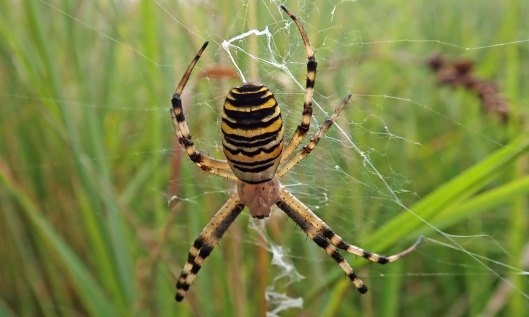
Last week, entomologist Liam Olds made the stunning discovery of local populations of Wasp spiders, not once but twice, the first on 26 August at Porthkerry Country Park in Barry and the second the very next day at Grangemoor Park in Cardiff. Gangemoor is an easy walk for me and I’d never seen these spiders before so, of course, I went searching. Liam and fellow finder Christian Owen had located about 20 of these stunning spiders; I found seven, and was delighted to see so many.

210831 wasp spider (1)

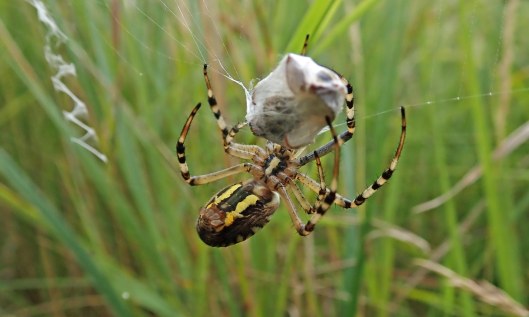
As you can guess from its name, the Wasp spider (Argiope bruennichi) sports wasp-like back-and-yellow stripes on both its upper abdomen (photo above) and under side (below), presumably a clever attempt to fool potential predators into not eating it. In a manner similar to the Common garden spider, the Wasp spider constructs a large web, strung between the tall grasses of its favoured grass- and heath-lands, and sits in the middle awaiting its prey. There is one striking difference with the Wasp spider’s web though; it usually has a white zig-zag stripe running down through the middle. The purpose of this ‘stabilimentum’ is much debated, ranging from a form of camouflage to attracting prey by reflecting ultraviolet light, but it is certainly distinctive.

210831 wasp spider (2)

The Wasp spiders I saw were all females, as the male’s lifespan is short – if he doesn’t get eaten by the female after mating, he dies soon after serving his purpose. He is smaller and lacks the distinctive markings of the female – the UKSafari website has a photo of the male, and much interesting information about these intriguing spiders.

As you can see from the series of photos below, I was lucky to spot one Wasp spider wrapping up her recently caught lunch, an unlucky wasp. It’s a ‘Wasp eat wasp’ world out there, folks!

210831 wasp spider (3)210831 wasp spider (4)210831 wasp spider (5)

Like Loading...

The spider and the fly

14 Saturday Aug 2021

Posted by sconzani in insects, nature, spiders

≈ Leave a comment

Tags

British spiders, camouflage to catch prey, Crab spider, fly caught by spider, spider camouflage

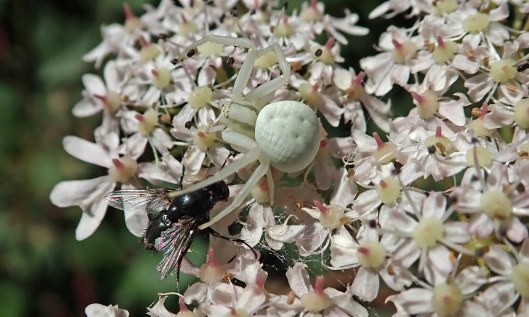
I was watching this well-camouflaged Crab spider (probably Misumena vatia) restraining its prey when a mother and young son came walking along the path towards me. I could see and hear that the woman was pointing out various flowers and insects to her son so, rather than immediately step out of their way, I asked the boy if he wanted to see something cool. I pointed to where he should look and moved away a little, still conscious of maintaining a Covid-safe distance.

210814 spider and fly (1)

He was spellbound as I explained that the spider had been sitting on a white flower so it could use its white colour to trap the fly. He thought the spider was ‘sneaky’, and I could hear him and his mother still talking about the spider and ‘amazing Nature’ as they walked on. Well done to his mum for encouraging the boy’s interest. I think it’s so important that young people are inspired to look closer at the amazing natural world that surrounds them.

210814 spider and fly (2)

Like Loading...

Spot the spider

24 Wednesday Feb 2021

Posted by sconzani in lichen, spiders, trees

≈ Leave a comment

Tags

British spiders, camouflage, lichen on tree, Salticus scenicus, spider camouflage, Zebra spider

I was checking out the lichens and mosses on this tree trunk when part of the grey bark moved. This tiny spider, which I think is a Zebra spider (Salticus scenicus), was so well camouflaged that I hadn’t even noticed it.

Like Loading...

319/366 Current critters

14 Saturday Nov 2020

Posted by sconzani in autumn, insects, spiders

≈ 2 Comments

Tags

Araneus diadematus, British insects, Chrysoperla carnea, Common wasp, earwig, Garden spider, Lacewing, Vespula vulgaris

Just a few of the little critters I’ve come across this week …
201114 lacewing

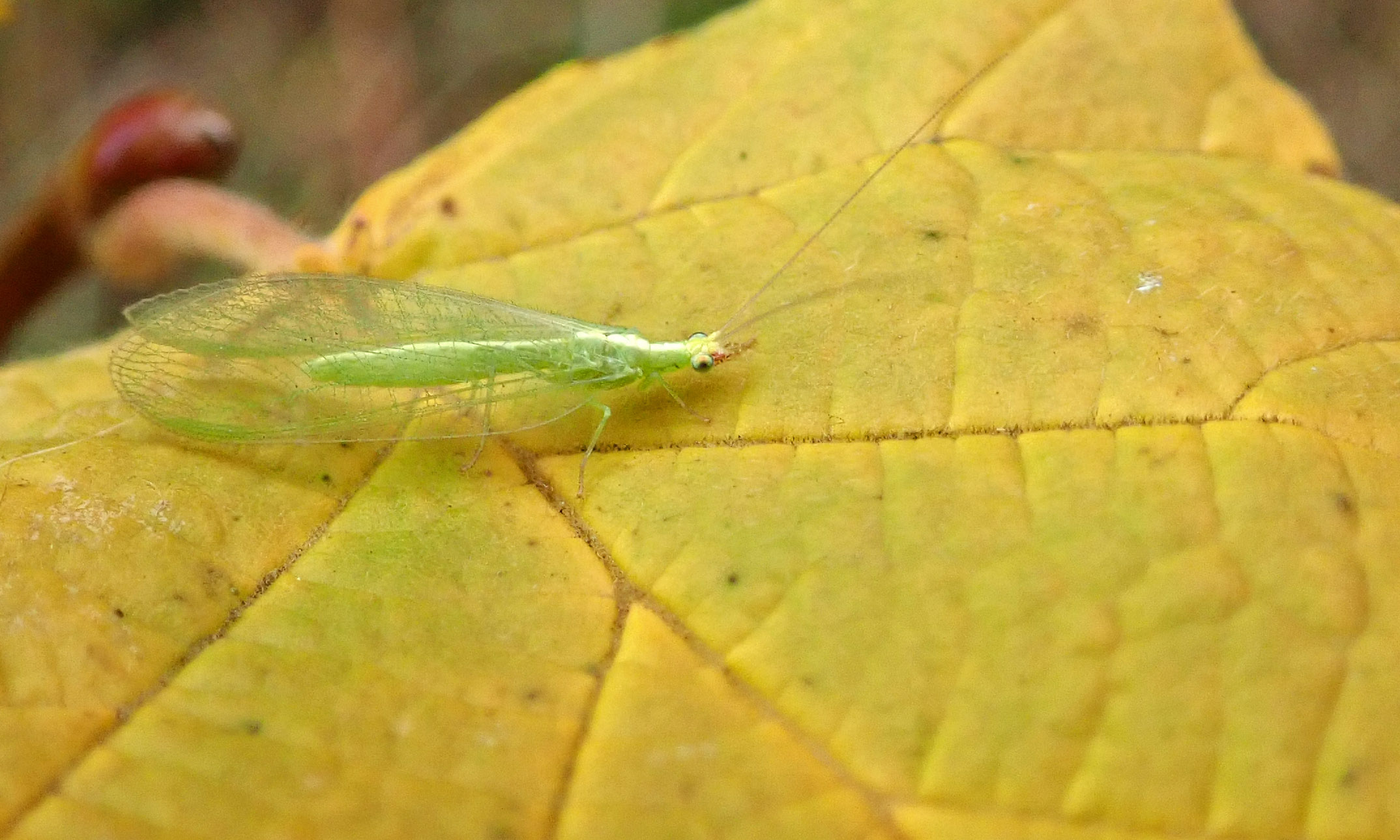
I can’t be entirely sure but this is probably Chrysoperla carnea, Britain’s most common Lacewing. Their transparent wings lend these creatures a fragile air so I was surprised to see one still out and about as these Lacewings usually find a cosy spot indoors to hibernate come the autumn weather.

201114 common wasp (1)
201114 common wasp (2)

I think these are Common wasps (Vespula vulgaris)  that I’m seeing frequently on and around Ivy, and basking in our rare glimpses of sunshine, but I don’t have any face-on shots to properly separate them from German wasps (Vespula germanica). At this time of year, these are likely to be male wasps, which apparently are not able to sting – only female queens and workers have the anatomy for that.

201114 earwig

We saw Earwigs hiding in umbellifer seedheads in a recent post (Insecting, 31 October). It seems they like to hide, though I’m not sure how effective this earwig’s hiding place is, its head tucked into a gorse seed but the length of its body exposed. Still, I doubt anyone – insect, bird or human – was going to argue with those pincers.

201114 spider 1
201114 spider 2

Spiders have been much in evidence lately. Garden spiders (Araneus diadematus) sit ready to pounce in their strategically strung webs, and, in the right photo, I only spotted the tiny, unidentified spider lurking under the Creeping thistle flower when I got home and started looking through my photos.

Like Loading...

300/366 Four-spotted orb weaver

26 Monday Oct 2020

Posted by sconzani in spiders

≈ 5 Comments

Tags

Araneus quadratus, British spiders, Cosmeston Lakes Country Park, Four-spotted orb weaver

If you suffer from arachnophobia, look away now! This spider, found recently in one of the outer fields at Cosmeston Lakes Country Park, was the biggest spider I’ve seen in Britain. That’s still not big when compared to Tarantulas or Huntsmen or other large species but it was big enough to make me feel both a teeny bit freaked out and totally fascinated at the same time.

201026 four-spotted orb weaver (1)

This is a female Four-spotted orb weaver (Araneus quadratus), a species that’s apparently quite common in Britain and can be found in a variety of habitats, from grassland and bogs to gardens and woodlands. As with many spiders, females are larger than males. In this species, females can grow to 17mm long, while the males are only half that size.

201026 four-spotted orb weaver (2)

This beauty was slowly making her way through the long grass at the edge of a bramble patch. Because of the size of her body, she was struggling to stay upright, and several times overbalanced. But those long striped legs are obviously quite strong and she easily managed to pull herself upright again.

201026 four-spotted orb weaver (3)

I spotted this orb weaver because her apricot colour stood out from her surroundings but, according to the Naturespot website, adult females are like chameleons, able to change their colour to coordinate with their surroundings, though that process can take about three days to complete. Fascinating!

201026 four-spotted orb weaver (4)

Like Loading...

188/366 Arachnophilia

06 Monday Jul 2020

Posted by sconzani in nature, spiders

≈ Leave a comment

Tags

British spiders, Misumena vatia, Nursery web spider, Paidiscura pallens, Pisaura mirabilis, sputnik-shaped egg sac, White crab spider

I’m not a huge spider fan but, as I’ve been spying a few during recent meanders, I thought I should show them a little love, so …

200706 1 crab spider

White crab spiders (Misumena vatia) like this one are usually very good at camouflaging themselves, lurking on white or pale-coloured flowers, but this little one was being bold, and so made for a good subject for a photo.

200706 2 spider and eggs

A spot of leaf-turning revealed several Paidiscura pallens spiders and their weirdly shaped egg sacs. You can read more about these tiny creatures in my previous blog The sputnik spider, July 2017.

200706 3 spider and eggs

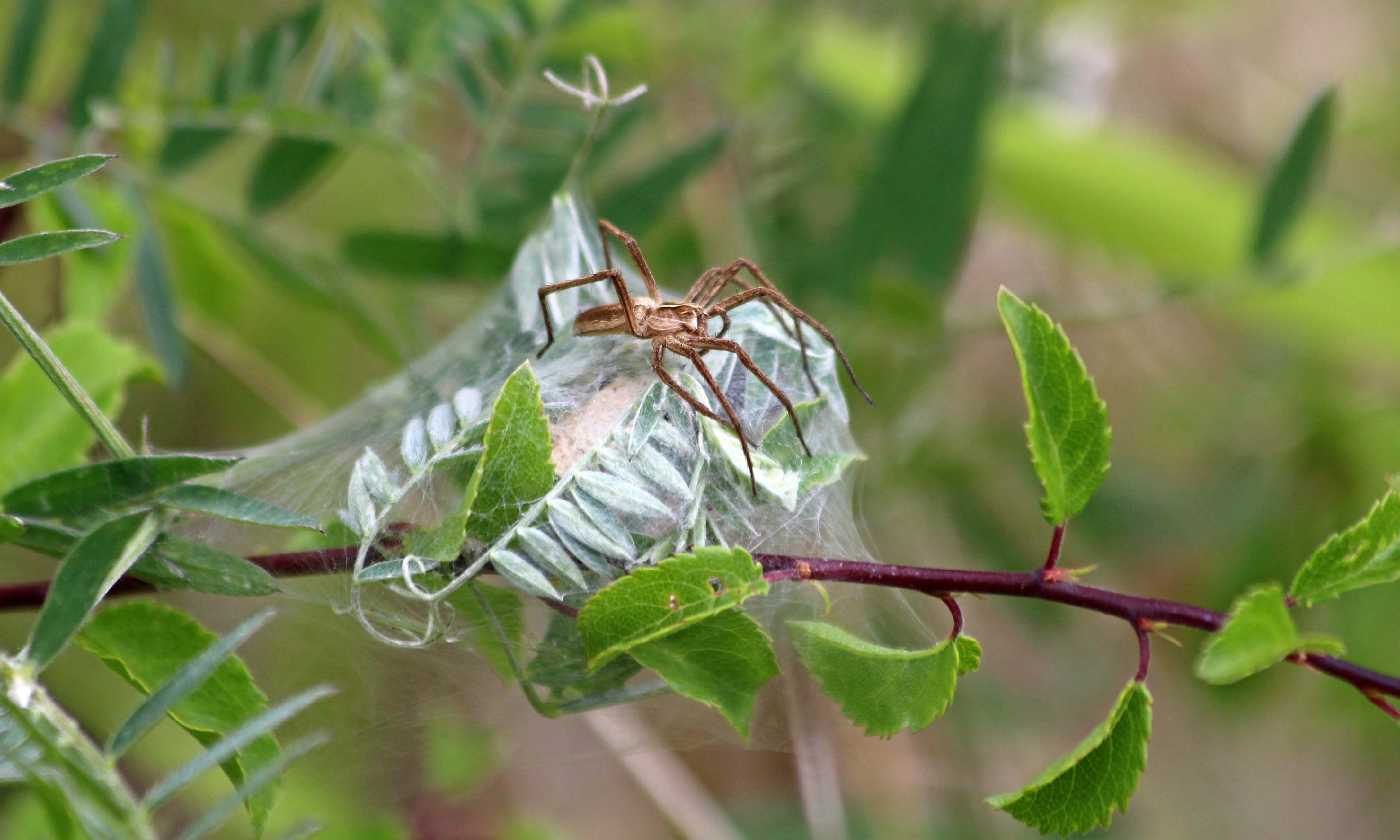
One of the meadows where I walk has a lot of long grass, some of which is now woven together by the silken threads of Nursery web spiders (Pisaura mirabilis). These spiders don’t spin webs to catch food; instead, their webs are constructed to keep their spiderlings safe while they grow in to adults.

200706 4 spider and eggs
200706 5 spider and eggs

The adult spiders are a pale brown in colour, with a pattern of darker brown and black stripes running vertically along their bodies.

200706 6 spider and eggs

The Wildlife Trust website has this fascinating information about Nursery web spiders:
‘Mating is a dangerous game for male Nursery web spiders, so they present a gift of food to the female while laying perfectly still and pretending to be dead. When the female investigates the food, the male will suddenly jump up and mate with her.’

Like Loading...

130/366 Spiderlings

09 Saturday May 2020

Posted by sconzani in nature, spiders, spring

≈ Leave a comment

Tags

Araneus diadematus, British spiders, Garden spider, Garden spider babies, spiderlings, spiders

At first sight, from several feet away, I thought this splodge on the side of a building was a dollop of bird poo … but then I noticed it was moving. So, of course, I immediately got out my camera and peered closer.

200509 garden spiderlings (1)

They were spider babies, hundreds of them, of the species Araneus diadematus, commonly known as Garden spiders. Both as spiderlings and as adults, these are completely harmless, though, as so often happens, several of the trashy daily newspapers have, in the past, vilified these bunches of babies with such headlines as ‘Woman’s horror as hundreds of tiny yellow spiders erupt from a nest in her back garden’ and ‘Millions of “exploding” yellow baby spiders invade Britain’.

200509 garden spiderlings (2)

When they’ve grown to adult size, these little cuties will look like those I photographed for my November 2017 blog post Wearing a diadem. You can read more about the Garden spider on the British Arachnological Society’s website.

Like Loading...

Two Harvestmen

17 Monday Dec 2018

Posted by sconzani in insects, nature, spiders

≈ 17 Comments

Tags

British insects, British invertebrates, Harvestman, Harvestmen, Opiliones species

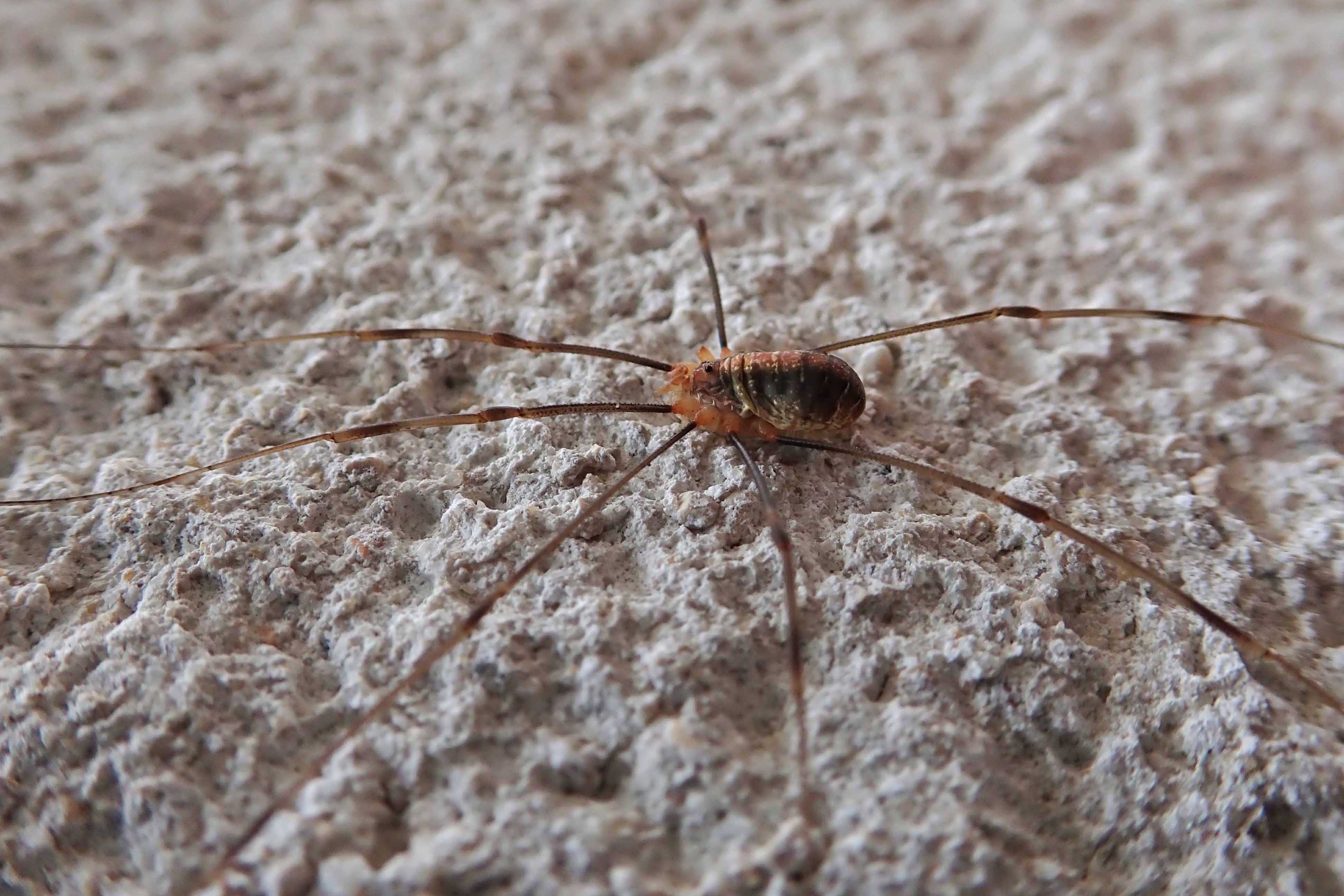
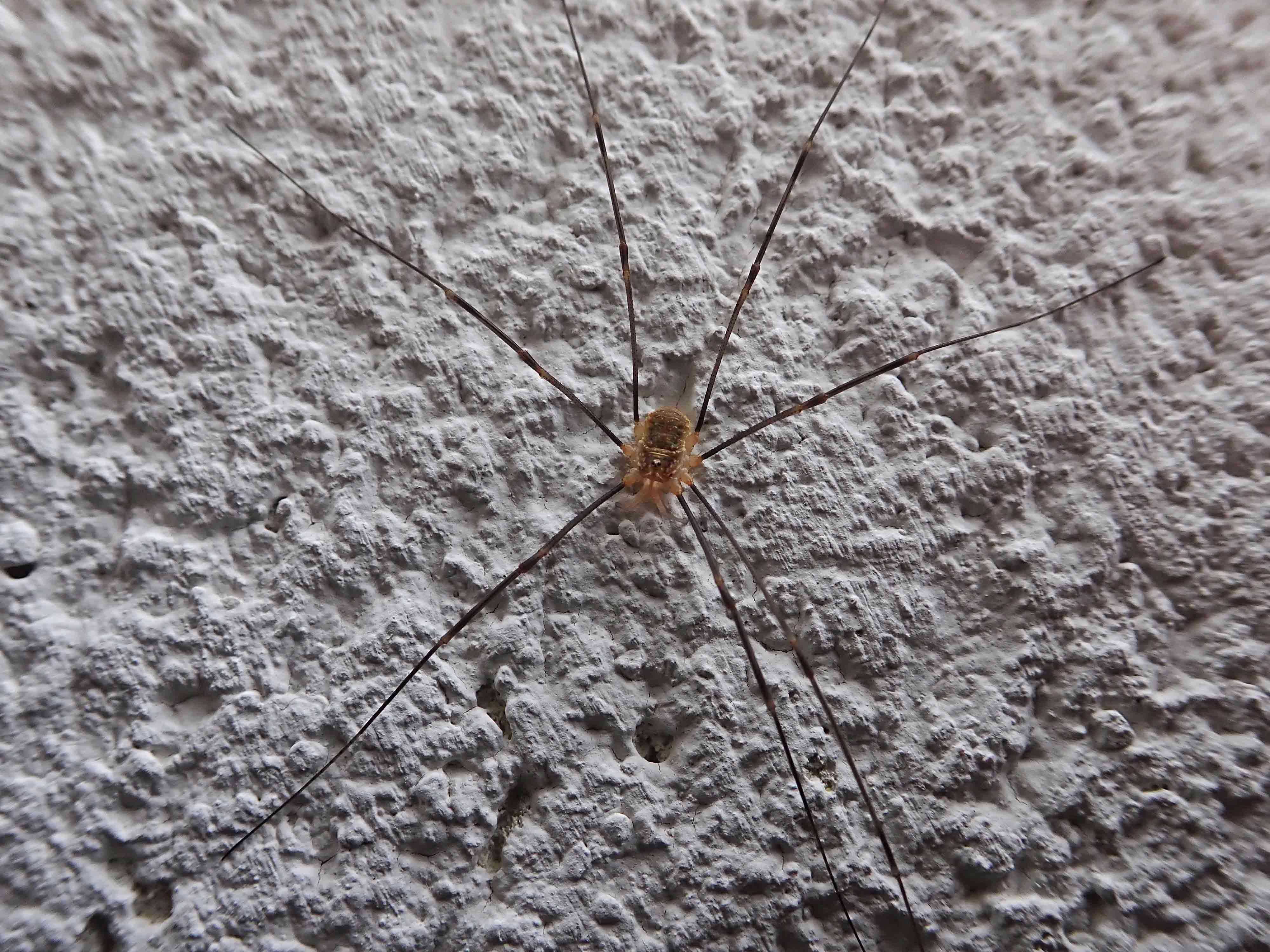
I found these two mini-beasties lurking on the outside of my building the other day. They may look like spiders but they’re not really – they’re Harvestmen (Opiliones species). Unlike true spiders, Harvestmen can’t spin webs and their bodies have only one segment, not two. They’re completely harmless – no venom – and, I think, rather prehistoric looking.

181217 harvestmen (1)

And I just discovered this very interesting but slightly creepy snippet of information about them on the UK Safari website:

When attacked, harvestmen are able to shed a leg as a defensive trick. Even after the leg becomes detached from the body it continues to jump and flick about. This distracts the predator while the harvestman makes its escape. They are able to shed up to four legs in this way, but they need to retain at least one of the sensory legs to survive.

181217 harvestmen (2)

Like Loading...
← Older posts
Newer posts →

About me

sconzani

sconzani

I'm a writer and photographer; researcher and blogger; birder and nature lover; countryside rambler and city strider; volunteer and biodiversity recorder.

View Full Profile →

Follow earthstar on WordPress.com

Enter your email address to follow this blog and receive notifications of new posts by email.

Recent blog posts

  • A female Tawny April 21, 2026
  • NFY: Orange-tip April 20, 2026
  • All the yellows April 19, 2026
  • Spider: Dysdera crocata April 18, 2026
  • Recent Reed buntings April 17, 2026

From the archives

COPYRIGHT

Unless otherwise acknowledged, the text and photographs on this blog are my own and are subject to international copyright. Nothing may be downloaded or copied without my permission.

Fellow Earth Stars!

  • Unknown's avatar
  • Unknown's avatar
  • Unknown's avatar
  • Unknown's avatar
  • Unknown's avatar
  • Unknown's avatar
  • Unknown's avatar
  • Unknown's avatar
  • Unknown's avatar
  • Unknown's avatar
  • Unknown's avatar
  • Unknown's avatar
  • Unknown's avatar
  • Unknown's avatar
  • Unknown's avatar
  • Unknown's avatar
  • Unknown's avatar
  • Unknown's avatar
  • Unknown's avatar
  • Unknown's avatar
  • Unknown's avatar
  • Unknown's avatar
  • Unknown's avatar
  • Unknown's avatar
  • Unknown's avatar
  • Unknown's avatar
  • Unknown's avatar
  • Unknown's avatar
  • Unknown's avatar
  • Unknown's avatar
  • Unknown's avatar
  • Unknown's avatar
  • Unknown's avatar
  • Unknown's avatar
  • Unknown's avatar
  • Unknown's avatar
  • Unknown's avatar
  • Unknown's avatar
  • Unknown's avatar
  • Unknown's avatar
  • Unknown's avatar
  • Unknown's avatar
  • Unknown's avatar
  • Unknown's avatar
  • Unknown's avatar
  • Unknown's avatar
  • Unknown's avatar
  • Unknown's avatar
  • Unknown's avatar
  • Unknown's avatar

Blog at WordPress.com.

Privacy & Cookies: This site uses cookies. By continuing to use this website, you agree to their use.
To find out more, including how to control cookies, see here: Cookie Policy
  • Subscribe Subscribed
    • earthstar
    • Join 642 other subscribers
    • Already have a WordPress.com account? Log in now.
    • earthstar
    • Subscribe Subscribed
    • Sign up
    • Log in
    • Report this content
    • View site in Reader
    • Manage subscriptions
    • Collapse this bar
 

Loading Comments...
 

You must be logged in to post a comment.

    %d