• ABOUT
  • BIRDING 2018
  • Birding 2019
  • BLOG POSTS
  • Butterflies 2018
  • Resources

earthstar

~ a celebration of nature

earthstar

Category Archives: trees

I’m following a tree: January 2018

08 Thursday Feb 2018

Posted by sconzani in nature, trees

≈ 11 Comments

Tags

#treefollowing, Acer mono, Acer pictum, Bute Park, Korean maple, Mono maple, Painted maple, tree following

If I hadn’t decided to keep the title of my 2018 tree-following blogs fairly simple, I would probably have titled this post ‘The mysterious case of the tree with the confused identity’!

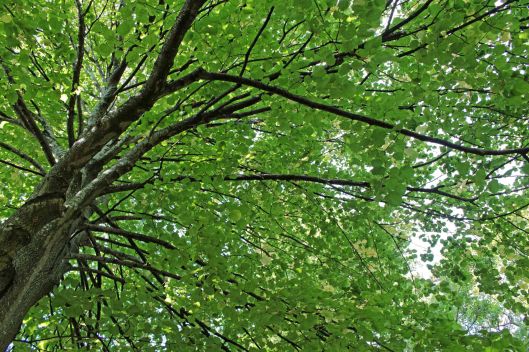
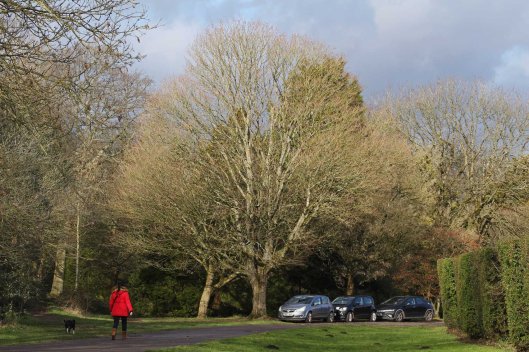
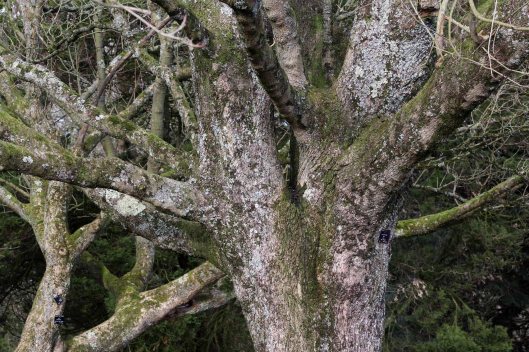
The tag on the tree, which is growing in Cardiff’s Bute Park, names it Mono maple (Acer mono). That seems fairly straight forward but, when I checked it on the Cardiff Parks website, I found it labelled Painted maple (with Mono as an alternative) and its scientific name listed as Acer pictum. So then I looked the tree up in the Cardiff Council Horticultural Database, where its common name is given as Korean maple and its scientific name as Acer pictum (a.k.a. Acer mono). So then I went to The Plant List, which is meant to be the definitive list: there I was informed that Acer pictum is the accepted name and Acer mono is a synonym.
180208 Mono maple (1)

And then, after a bit more searching, I found an extremely helpful blog post from the JC Raulston Arboretum at North Carolina State University, where they use the common name Painted maple and explain its scientific name as follows:

It was first described in western literature by the Swedish botanist Karl von Thunberg in 1784 but was widely known as Acer mono after it was introduced to the west in the 1880s. Its name continues to cause confusion with some authorities using A. pictum to cover the entire species while other botanists break it down into several subspecies including A. pictum subsp. mono.

180208 Mono maple (2)
180208 Mono maple (3)

And, in response to a question from a reader:

… many taxonomists disagree on the name of this maple. According to van Gelderen, they should all be Acer mono since he contends that Acer pictum is an invalid name. In any case, there is much disagreement over whether they constitute different varieties or subspecies or are just part of a large very variable species. A. p. subsp. pictum has short hairs on the back side of the leaf, while A. p. subsp. mono has no hairs on the abaxial surface.
180208 Mono maple (4)

As even the experts can’t agree, for the twelve months that I will be following this magnificent tree, I am simple going to call it Mono. More next month …

Why not join the tree following community. You can find out more here.

Like Loading...

Patterns in Nature, 5

05 Monday Feb 2018

Posted by sconzani in leaves, lichen, nature, trees

≈ Leave a comment

Tags

bark, bracket fungi, lichen, nature's patterns, patterns, patterns in nature, reeds, water, wood

The ‘undiscovered country of the nearby’ ~ Robert Macfarlane, The Wild Places

180205 patterns in nature (1)
180205 patterns in nature (2)
180205 patterns in nature (3)
180205 patterns in nature (4)
180205 patterns in nature (5)
180205 patterns in nature (6)
180205 patterns in nature (7)
180205 patterns in nature (8)
180205 patterns in nature (9)
Like Loading...

Wild words: catkin

31 Wednesday Jan 2018

Posted by sconzani in nature, spring, trees, winter

≈ Leave a comment

Tags

catkin, Corylus avellana, female Hazel flower, Hazel catkin, Hazel tree, wild words

Catkin: According to the Oxford Dictionary, a late 16th century noun, from the now-obsolete Dutch word katteken for kitten (how sweet is that?), meaning a downy, hanging flowering spike of trees such as willow and hazel, pollinated by the wind.

And now is the time to see catkins, at least where I live in south Wales. I took these photos of male Hazel catkins (Corylus avellana) earlier this week, the gusty breeze helping to spread their yellow pollen, hopefully to fall on the tiny pink female flowers of neighbouring trees, there to develop into fruit and later nuts.

180131 Hazel male catkins (2)
180131 Hazel male catkins (1)

180131 Hazel female flower

Like Loading...

Wild words: chlorophilia

24 Wednesday Jan 2018

Posted by sconzani in leaves, nature, trees

≈ 1 Comment

Tags

#WildWords, chlorophilia, green leaves, loving all things green

Chlorophilia: from the Greek khlōros, meaning green, and philia, meaning loving; thus, loving all things green and growing.
Now, that sounds straightforward enough and many of us would willingly admit to having chlorophilia but a word of caution. I’ve just been reading on the Wiki Knowledge Dump blog (the place where rejected Wikipedia articles often get resurrected) that the word (which does not appear in standard dictionaries) was ‘invented’ in 2004 to describe a physical or sexual attraction to plants. Tree-huggers, take note!

180124 chlorophilia

Like Loading...

Wild words: brake

17 Wednesday Jan 2018

Posted by sconzani in nature, trees

≈ 4 Comments

Tags

#WildWords, bracu, brake, meaning of brake, thicket

Brake is a word with several meanings. Aside from those to do with stopping, there are also these to do with the enviorment:
From the Oxford Dictionary: a botanical term for a thicket; from the old English bracu; first recorded in the plural in fearnbraca, meaning ‘thickets of fern’; related to the Middle Low German brake, which means ‘branch’ or ‘stump’.
The Merriam-Webster has a slightly different interpretation: a geographical term meaning rough or marshy land overgrown usually with one kind of plant, as in cedar brakes or coastal brakes.
The Collins Dictionary agrees with the Oxford: an area of dense undergrowth, shrubs, brushwood, etc., a thicket.

180117 brake

The word is often seen in English place names as, for example, in Boughton Brake (a forest in Nottinghamshire), Huxham Brake (a coniferous woodland in Devon), Stratfield Brake (a broadleaf woodland near Oxford, owned by the Woodland Trust), and Combe Brake (another Woodland Trust woodland, this one in Exmoor National Park).

Like Loading...

Leafmines 101

13 Saturday Jan 2018

Posted by sconzani in insects, leaves, nature, plants, trees

≈ 5 Comments

Tags

British insects, homes of insect larvae, insect larvae in leaves, leaf mine, leafmine, leafminer, mines on leaves

Leafmines and their miners are a subject I started to look at last summer but I quickly discovered that, in order to identify the miner, you had to know the plant they were mining, so I needed to improve my botanical knowledge before I could go much further. That effort has begun, and is ongoing, so I will start to look again at the miners in the coming months.

180113 leafmines (1)
180113 leafmines (2)

Firstly though, in case you don’t know, leafmines are made by the larvae of various insects. The mines are their homes and their larders – as well as providing them with some degree of protection from predators, the larvae eat the tissue of the leaves they live within, thus creating their mines. The larvae can be the immature stages of various species of flies, sawflies or moths, and, apparently, some beetles also mine leaves.

180113 leafmines (3)
180113 leafmines (4)

If you look at a mine, you will often see a tiny hole at one end, which means the creature that made it has left the premises, to pupate or to being life as an adult. Sometimes, you can still see the larva within, and you can often also see the pooh (known as frass) it has left behind as it eats and tunnels.

180113 leafmines (5)
180113 leafmines (6)

The shapes of the mines can vary considerably, from long meandering or straight lines to roundish blotches, and these shapes, plus the placement of the mine within the leaf (some occupy just the upper or lower surface, some go right through) and the identity of the plant, are the main ways to determine which creature has made the mine.

**p.s. Since posting this, I’ve been told what I thought was a leaf mine on ivy (the photo on the right in the middle) is actually caused by a fungus, possibly Phoma hedericola, the most common leaf spot of ivy. I can see these leafmines are going to be even more tricky than I anticipated!

Like Loading...

Bark

11 Thursday Jan 2018

Posted by sconzani in birds, insects, nature, trees

≈ Leave a comment

Tags

bark, bark of trees, Birch bark, properties of bark, Scots pine bark, Sessile oak bark, tree bark, treecreeper, uses of bark

The skin of a tree is an amazing thing but, rather than launch in to a scientific description of its various layers, I thought I’d share just a few examples of its incredible capabilities.

180111 tree bark (3)
180111 tree bark (4)
180111 tree bark (5)

The bark of the Birch tree (Betula sp.) contains good quantities of volatile oils, making it both waterproof and highly resistant to decay – the wood inside rots before the bark does.

The cracks and crevices in the bark of many tree species are great hidey holes for a wide range of small insects that make their homes there.

A good number of insects means a plentiful supply of food for birds like the Treecreeper whose beak can easily probe those hidey holes.

180111 tree bark (2)
180111 tree bark (1)
180111 tree bark (6)

The high levels of toxic tannins in the bark of the Sessile oak (Quercus petraea) help protect it from insects.

The bark of the Scots pine (Pinus sylvestris) is thick enough to protect it from the fires that would occasionally sweep through its forests in prehistoric times.

180111 tree bark (7)
180111 tree bark (8)
180111 tree bark (9)

Bark is also home to huge numbers of different lichen and moss species, many of which have adapted to life on the barks of specific trees.

Some animals eat bark – voles, deer and beavers, for example, and squirrels will strip the fibrous bark of certain trees to make their dreys warm and cosy.

The bark of some trees is fibrous enough to make rope and weave baskets.

180111 tree bark (10)
180111 tree bark (11)
180111 tree bark (12)
Like Loading...

Wild words: nemophilist

10 Wednesday Jan 2018

Posted by sconzani in nature, trees

≈ 4 Comments

Tags

#WildWords, forests, lover of forests, lover of trees, lover of woodlands, nemophilist, woodland

Nemophilist: A haunter of woods; one who loves forests and woodlands, their beauty and solitude. From the Ancient Greek νέμος nemos, meaning a wooded pasture or glade + φιλία philia, meaning loving.
This is me!
IMG_0075

Like Loading...

The living fossil fungus challenge

05 Friday Jan 2018

Posted by sconzani in fungi, leaves, nature, parks, trees

≈ Leave a comment

Tags

Bartheletia paradoxa, fungus on Ginkgo leaves, Ginkgo, Ginkgo biloba, living fossil fungus

My local fungus group has a new challenge going for the month of January, to find a ‘living fossil fungus’. Sounds weird? Well, the ‘living fossil’ is the Ginkgo tree (Ginkgo biloba), a tree that’s been around since the time of the dinosaurs (read more about this beautiful tree on my sconzani blog here), and the fungus is Bartheletia paradoxa, a basidiomycete that only grows on Ginkgo leaves and has characteristics that are unique amongst basidiomycetes (for the science geeks out there, here’s a link to an expert article).

180105 Ginkgo fungus (1)

The fungus was not formally recognised until 1932 and was first found in Britain, on the leaves of a Ginkgo at Kew Gardens, in 2008. There are still very few official records for it but, as members of our fungus group are now discovering, it seems to be on almost every Ginkgo tree we can find.

180105 Ginkgo fungus (3)
180105 Ginkgo fungus (2)

As you can see from the photos, the fungus looks like black spots on the fallen leaves. Of course, autumn is long gone and the winter winds that have been roaring across Britain this past week have blown away a lot of fallen leaf litter but it’s still worth looking look around any Ginkgo trees you know of in your local parks. I found these leaves on Wednesday around the magnificent Ginkgo avenue in Bute Park, behind Cardiff Castle, and I have another couple of places to go looking in the next few days. So, do see if you can find yourself a ‘living fossil fungus’ as well.

Like Loading...

Wild words: Pareidolia

20 Wednesday Dec 2017

Posted by sconzani in nature, trees

≈ 2 Comments

Tags

#WildWords, faces in trees, pareidolia

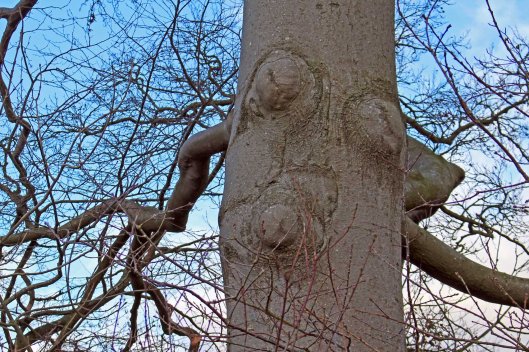
Pareidolia: noun; this is a general term to describe how we humans with active imaginations can bring ourselves to believe that we can see familiar patterns where none, in fact, exist. That’s a bit vague but it will become clearer if I give you some examples: the face of a man in the craters and shadows of the moon; figures of humans and animals in the shapes of clouds, and, in my examples below, human-like faces in trees. Do you see them?

171220 pareidolia (1)
171220 pareidolia (2)

171220 pareidolia (3)

171220 pareidolia (4)
171220 pareidolia (5)
Like Loading...
← Older posts
Newer posts →

About me

sconzani

sconzani

I'm a writer and photographer; researcher and blogger; birder and nature lover; countryside rambler and city strider; volunteer and biodiversity recorder.

View Full Profile →

Follow earthstar on WordPress.com

Enter your email address to follow this blog and receive notifications of new posts by email.

Recent blog posts

  • Curious Coal tit March 19, 2026
  • A huddle of 7-spots March 18, 2026
  • Busy Blue tits March 17, 2026
  • Cuttlebones March 16, 2026
  • No woodland here March 15, 2026

From the archives

COPYRIGHT

Unless otherwise acknowledged, the text and photographs on this blog are my own and are subject to international copyright. Nothing may be downloaded or copied without my permission.

Fellow Earth Stars!

  • Unknown's avatar
  • Unknown's avatar
  • Unknown's avatar
  • Unknown's avatar
  • Unknown's avatar
  • Unknown's avatar
  • Unknown's avatar
  • Unknown's avatar
  • Unknown's avatar
  • Unknown's avatar
  • Unknown's avatar
  • Unknown's avatar
  • Unknown's avatar
  • Unknown's avatar
  • Unknown's avatar
  • Unknown's avatar
  • Unknown's avatar
  • Unknown's avatar
  • Unknown's avatar
  • Unknown's avatar
  • Unknown's avatar
  • Unknown's avatar
  • Unknown's avatar
  • Unknown's avatar
  • Unknown's avatar
  • Unknown's avatar
  • Unknown's avatar
  • Unknown's avatar
  • Unknown's avatar
  • Unknown's avatar
  • Unknown's avatar
  • Unknown's avatar
  • Unknown's avatar
  • Unknown's avatar
  • Unknown's avatar
  • Unknown's avatar
  • Unknown's avatar
  • Unknown's avatar
  • Unknown's avatar
  • Unknown's avatar
  • Unknown's avatar
  • Unknown's avatar
  • Unknown's avatar
  • Unknown's avatar
  • Unknown's avatar
  • Unknown's avatar
  • Unknown's avatar
  • Unknown's avatar
  • Unknown's avatar
  • Unknown's avatar

Blog at WordPress.com.

Privacy & Cookies: This site uses cookies. By continuing to use this website, you agree to their use.
To find out more, including how to control cookies, see here: Cookie Policy
  • Subscribe Subscribed
    • earthstar
    • Join 668 other subscribers
    • Already have a WordPress.com account? Log in now.
    • earthstar
    • Subscribe Subscribed
    • Sign up
    • Log in
    • Report this content
    • View site in Reader
    • Manage subscriptions
    • Collapse this bar
 

Loading Comments...
 

You must be logged in to post a comment.

    %d