• ABOUT
  • BIRDING 2018
  • Birding 2019
  • BLOG POSTS
  • Butterflies 2018
  • Resources

earthstar

~ a celebration of nature

earthstar

Category Archives: trees

Oak galls: Currants and spangles

22 Tuesday Aug 2017

Posted by sconzani in insects, leaves, nature, trees

≈ 7 Comments

Tags

Common spangle gall, Currant gall, galls on oak, Neuroterus quercusbaccarum, Oak gall, Oak gall wasp, oak tree, Spangle gall

This is part one of the story of Oak galls – there will be a sequel (possibly two) because the poor old oak tree, one of the most iconic of British trees, the one almost everyone can identify, is also one of the trees most attacked by galls (though, in this case, the galls do little, if any, damage to the actual tree). This first Oak attack story is a bit like the chicken and the egg – which came first? – as Neuroterus quercusbaccarum, a wasp so tiny that only expert spotters ever actually see it, has the ability to reproduce both sexually and asexually, producing two types of gall on oak trees: the sexual generation is produced inside the Currant galls and the asexual generation develops inside the Common spangle galls.

170822 Neuroterus quercusbaccarum Oak Currant gall (1)
170822 Neuroterus quercusbaccarum Oak Currant gall (2)
170822 Neuroterus quercusbaccarum Oak Currant gall (3)

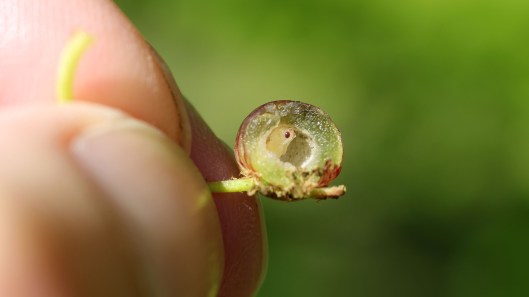
Let’s start with the Currants. As their name suggests, they look a little like currants or berries, maturing in colour from yellow and green to red and purple. In spring, you can find these attached to an Oak’s catkins or to the undersides of leaves.
170822 Neuroterus quercusbaccarum Oak Currant gall

Inside, tiny larvae develop, emerging as adult wasps in June. These wasps are either male or female, they mate soon after emerging, then lay their eggs within the epidermis on the undersides of oak leaves.

170822 Neuroterus quercusbaccarum Spangle gall (1)
170822 Neuroterus quercusbaccarum Spangle gall (2)
170822 Neuroterus quercusbaccarum Spangle gall (3)

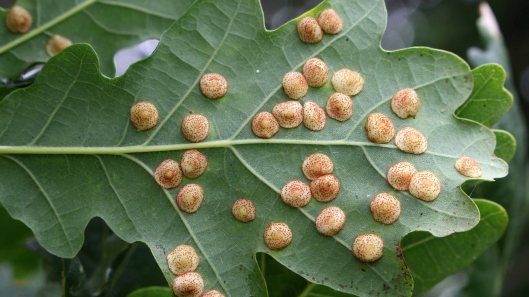
Now to the Spangles. When the eggs of the Currant gall generation hatch and their larvae begin to develop within the oak leaves, they create Spangle galls on the undersides of those leaves. The galls look a little like inverted saucers, with a slight hump in the middle. They are hairy and often quite a bright pinkish red to begin with, maturing eventually to a dull brown. Once mature, in late summer, the spangles detach and fall to the ground to be covered by the leaves of the oak, when they fall in autumn. The larvae overwinter in their cosy spangles, hatching in the spring when, without the need to mate, they lay their eggs on the oak’s leaves and catkins, thus producing the alternate generation of Currant galls. And so the cycle continues …
170822 Neuroterus quercusbaccarum Spangle gall (4)

Like Loading...

‘A Natural History of the Hedgerow’

08 Saturday Jul 2017

Posted by sconzani in animals, birds, fungi, nature, plants, trees, wildflowers

≈ 8 Comments

Tags

British countryside, British hedgerows, field boundaries, hedge, hedgerow, hedgerow trees

170708 hedgerows (1)

Reading John Wright’s excellent book A Natural History of the Hedgerow and ditches, dykes and dry stone walls (Profile Books, London, 2016) has led me to look at the countryside with slightly more knowledgeable eyes, at least when it comes to field boundaries.

170708 hedgerows (6)

Not only does Wright’s book provide a superbly researched history of the hedges, dykes, ditches and dry stone walls that divide up the countryside, it also provides detailed information on the plants, birds, invertebrates and animals that inhabit Britain’s hedgerows, as well as including practical details on how the various boundaries are constructed and maintained.

170708 hedgerows (2)
170708 hedgerows (3)
170708 hedgerows (5)

Now, when I go out on my rural rambles or I’m being transported through the countryside by train, car or bus, I can recognise where hedges must once have grown by the broken line of mature trees marching across a field, I shake my head at the neglect of the hedgerows on so many farms (though I can appreciate the sculptural beauty of ancient hedgerow trees), I can spot where farmers have removed existing boundaries to create huge open fields, and I can appreciate how well-maintained hedges add an extra dimension to the landscape.

170708 hedgerows (4)

Wales and England now have legislation in place to protect hedgerows that meet certain criteria but it would be good if all hedgerows were protected and if more was done to ensure existing hedges were also properly nurtured and maintained.

Like Loading...

Birding at Lliw Reservoirs

25 Sunday Jun 2017

Posted by sconzani in animals, birds, insects, nature, trees, walks, wildflowers

≈ Leave a comment

Tags

birding, birdwatching, Bog pimpernel, Foxgloves, Glamorgan Bird Club, Grey wagtail, Lliw Reservoirs, Red kite, slow-worm, Tormentil, Victorian dam, Victorian ironwork, Whitethroat

170625 Lliw Reservoirs (3)

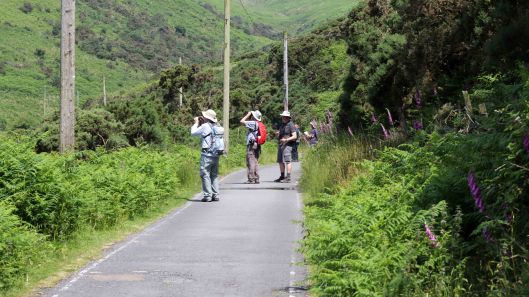
I celebrated the solstice with an outing with my Glamorgan Bird Club buddies to Lliw Reservoirs north of Swansea or, perhaps that should read, I sweated through the solstice – it was one of the hottest days of the year and the middle of a mini heatwave. Still, you know what they say about mad dogs and Englishmen (and Welshmen and a Kiwi) …

170625 Lliw Reservoirs (1)

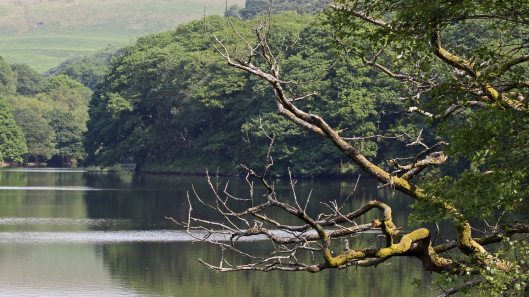
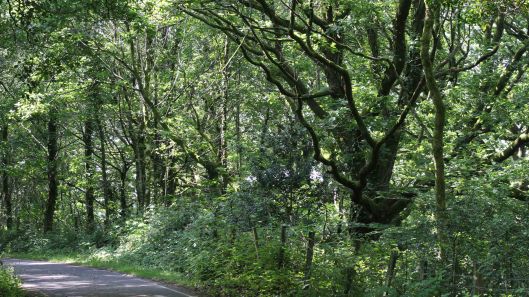
It’s a superb location. The two reservoirs were built in the second half of the 19th century, and still supply water to communities throughout south Wales. We only walked up one side of both reservoirs, through broadleaf woodland and then out onto open areas of grass and scrub and moorland, but there’s an 8-mile circular walk, which would be brilliant in cooler weather and includes large open commons of heath moorland on the hilltops.

170625 Lliw Reservoirs (2)

We heard more small birds than we saw (but that’s helping me learn their songs); buzzards and magnificent red kites were soaring overhead; we heard then saw the elusive grasshopper warbler in flight; dragonflies and damsels and the odd butterfly flitted about; and there were lots of lovely wildflowers (my particular favourites were the foxgloves, tormentil and bog pimpernel). Oh and, most importantly, the locals were friendly and the cafe serves delicious ice cream!

170625 Whitethroat
170625 Tormentil
170625 Slow-worm
170625 Lliw Reservoirs uplands
170625 Peacock
170625 Red kite
170625 Foxglove
170625 Grey wagtail
170625 Victorian ironwork
170625 Bog pimpernel
170625 Welsh sheep
170625 Pines & foxgloves
Like Loading...

Southover Grange Gardens

31 Wednesday May 2017

Posted by sconzani in flowers, nature, parks, plants, trees

≈ Leave a comment

Tags

350-year-old Mulberry tree, garden in Lewes, public gardens in East Sussex, Southover Grange Gardens

Curiosity can be a good thing. You look through a grill in a stone wall and spy a magical garden. You see people walking to and fro so you think, ‘maybe it’s open to the public’. You walk further along the walls until, at the corner of the street, you find an entrance and, hey presto, you discover the glorious Southover Grange Gardens in Lewes.
170531 Southover Grange Gardens Lewes (1)

The Grange was built by one William Newton in 1572, with stone filched from the old Lewes Priory, but the gardens are the creation of more recent owners. Highlights include a 350-year-old Mulberry tree, one of the oldest in England, as well as many other magnificent old trees; herbaceous borders and formal bedding displays; a box-hedged knot garden full of the scent of roses; a wildflower area; and an impressive collection of public artworks. If you’re ever in Lewes, do pay a visit to this tranquil oasis.

This slideshow requires JavaScript.

Like Loading...

Hawthorn: did you know … ?

04 Thursday May 2017

Posted by sconzani in flowers, nature, spring, trees

≈ 6 Comments

Tags

Crataegus monogyna, Hawthorn, Hawthorn wood, May-tree, uses for hawthorn berries

170504 Hawthorn (3)

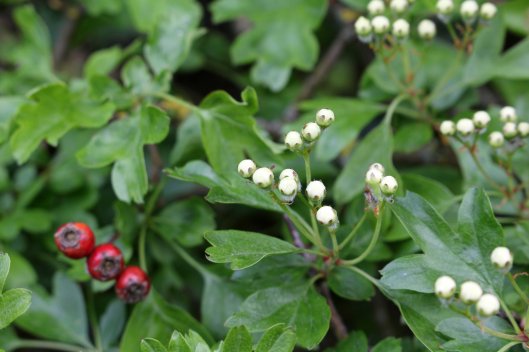
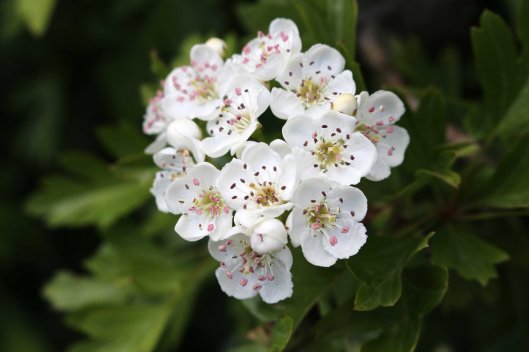
>   Hawthorn’s scientific name is Crataegus monogyna. Crataegus comes from the Greek kratos, meaning strength, and akis, meaning sharp, and monogyna is derived from mono, meaning one or single, and gyna, meaning seed or ovary.
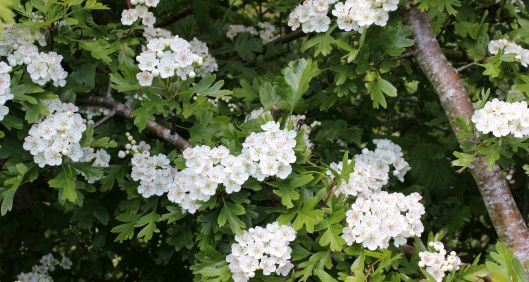
>   Hawthorn is also known as the May-tree, Mayblossom and Maythorn, not surprisingly because it usually flowers during May. It is the only British plant named after the month in which it blooms.

170504 Hawthorn (4)
170504 Hawthorn (1)

>   The Hawthorn’s white flowers can be either male or female. You can tell the male flowers by their pink-tipped stamens.
>   Hawthorn’s red berries, the haws, not only serve as food for birds, particularly the thrushes, they can also be used to make jams and jellies and wine.
>   The Hawthorn provides food for more than 150 different species of insect, like the hawthorn shield bug, the common earwig and common flower bug, bumblebees and cockchafers, to name just a few.

170504 Hawthorn (5)

>   Due to its dense growth and long thorns, Hawthorn has served as the perfect impenetrable hedge for thousands of years. Individual trees can live for 400 years or more.
>   In years gone by, the wood of the Hawthorn, because it has a very fine grain and is very hard, was used for making things like tool handles and engravers’ blocks. The root wood was also used to make combs and small boxes.

170504 Hawthorn (2)

Like Loading...

Wales Walks: Cwm George, and more

22 Saturday Apr 2017

Posted by sconzani in nature, spring, trees, walks, wildflowers

≈ 3 Comments

Tags

beech woodland, Bluebell, Cadoxton River, Coed Twyncyn, Cwm George, Cwm Penllwynog, Dinas Powys, Vale of Glamorgan walks, Wild garlic

I can’t believe it’s almost a year since I visited Cwm George. Luckily, I now live much nearer to this magnificent woodland so I’ll definitely be going back more often. I had a long walk here on Thursday with my friend Hilary, chatting and botanising and soaking in the beauty of the wild garlic and the bluebells and so much more.

This walk, called Salmon Leaps, is one of eight in the Vale of Glamorgan for which there are downloadable pamphlets available (see here for this one). Locals say there haven’t been salmon in these streams for years but don’t let that put you off. Ours was a variation of the routes in the brochure but with much of the same picturesque scenery. Let me show you me some of the highlights …

170421 Cwm George walk (1)

Crossing the Cadoxton River (well, stream, really)

170421 Cwm George walk (2)

The beeches of Cwm George, carpeted with swathes of wild garlic

170421 Cwm George walk (3)170421 Cwm George walk (4)

Looking across farmland to the village of Michaelston-le-Pit

170421 Cwm George walk (5)

A weir, with a small lake behind, on the upper Cadoxton River near Cwrt-Yr-Ala (where the salmon are supposed to leap)

170421 Cwm George walk (6)

Heading in to another woodland, Cwm Penllwynog, and, below, some of its beautiful bluebells

170421 Cwm George walk (7)170421 Cwm George walk (8)

Wildflowers lined the hedgerows as we headed back towards Dinas Powys along Beauville Lane

170421 Cwm George walk (9)

More woodland – this is Coed Twyncyn

Like Loading...

Bute blossom

02 Sunday Apr 2017

Posted by sconzani in flowers, nature, parks, trees

≈ 2 Comments

Tags

blossom, Bute Park, Cardiff parks, cherry trees, Spring blossom, Spring colour

170402 Bute blossom (1)

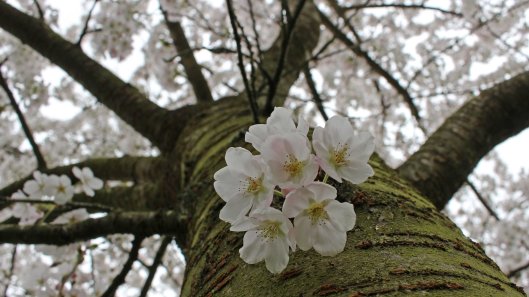
‘Blossom by blossom the spring begins.’ ~ Algernon Charles Swinburne (1837-1909), ‘Atalanta in Calydon’, Collected Poetical Works (1924), vol. ii, ‘Chorus’, p.250. My blossom photographs were taken on a very grey day in Cardiff’s magnificent Bute Park.

170402 Bute blossom (3)
170402 Bute blossom (4)
170402 Bute blossom (2)
170402 Bute blossom (7)
170402 Bute blossom (5)
170402 Bute blossom (6)
Like Loading...

Forests

21 Tuesday Mar 2017

Posted by sconzani in autumn, nature, trees

≈ Leave a comment

Tags

autumn colour, C. S. Lewis, Delamere Forest, forests, International Day of Forests, The Future of Forestry, World Poetry Day

170321 Delamere Forest (2)

How will the legend of the age of trees
Feel, when the last tree falls in England?
When the concrete spreads and the town conquers
The country’s heart; when contraceptive
Tarmac’s laid where farm has faded,
Tramline flows where slept a hamlet,
And shop-fronts, blazing without a stop from
Dover to Wrath, have glazed us over?
Simplest tales will then bewilder
The questioning children, “What was a chestnut?
Say what it means to climb a Beanstalk,
Tell me, grandfather, what an elm is.
What was Autumn? They never taught us.”

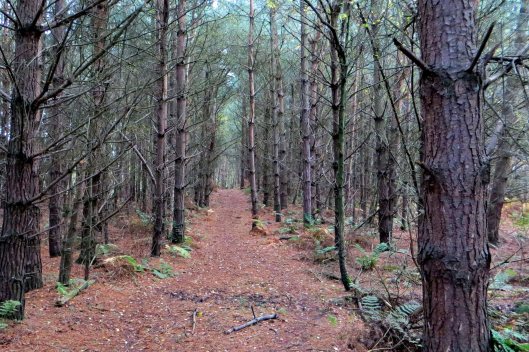
~  an extract from C. S. Lewis’s ‘The Future of Forestry’, for this the International Day of Forests and World Poetry Day. My photos are of Delamere Forest, Cheshire, in the autumn.

170321 Delamere Forest (1)

Like Loading...

Green

17 Friday Mar 2017

Posted by sconzani in birds, insects, leaves, nature, nature photography, plants, trees

≈ 2 Comments

Tags

Goethe's Theory of Colours, green, green feathers, green leaves, green plants, green trees, psychology of colours

Happy St Patrick’s Day! It seemed appropriate to honour St Paddy and those from the Emerald Isle with a blast of green today. I think Goethe got the feel of green exactly right in his Theory of Colours:

The eye experiences a distinctly grateful impression from this colour. If the two elementary colours [blue and yellow] are mixed in perfect equality so that neither predominates, the eye and the mind repose on the result of this junction as upon a simple colour. The beholder has neither the wish nor the power to imagine a state beyond it. Hence for rooms to live in constantly, the green colour is most generally selected.

And this is why walking in a forest of green trees, sitting on a grassy lawn, or strolling in a garden all make us feel happy. Now, where did I put that paintbrush?

170317 green 1 mallard
170317 green 2 ivy
170317 green 3 fir
170317 green 4 Cambo cricket
170317 green 5 fern nz
170317 green 6 horse chestnut
170317 green 7 Banded demoiselle fem
170317 green 8 gunnera
170317 green 9 moss
170317 green 10 Horsetail
170317 green 11 roul-roul
170317 green 12 Speckled bush Cricket
Like Loading...

Fungi on fungi

17 Friday Feb 2017

Posted by sconzani in fungi, nature, trees

≈ Leave a comment

Tags

fungal relationships, parasitic relationships, saprobic relationships, symbiotic relationships

Like most organisms, fungi have complicated relationships. They can be saprobic, deriving their nourishment from dead and decaying wood and leaves; they might be mutualistic, enjoying symbiotic relationships with plants, animals and cyanobacteria where both parties benefit; and they can be parasitic on plants and even other fungi. As well as being the instigator of these many complicated relationships, fungi can also be the victim, succumbing to the needs of animals, plants and other organisms that are looking for nourishment. The topic of fungal relationships is a large and incredibly complex area to cover in a short blog post so let me just show you a few images I’ve captured of fungi (and moulds) feasting on fungi.

170217-fungi-on-fungi-1
170217-fungi-on-fungi-2
170217-fungi-on-fungi-3
170217-fungi-on-fungi-4
170217-fungi-on-fungi-5
170217-fungi-on-fungi-6
170217-fungi-on-fungi-7
Like Loading...
← Older posts
Newer posts →

About me

sconzani

sconzani

I'm a writer and photographer; researcher and blogger; birder and nature lover; countryside rambler and city strider; volunteer and biodiversity recorder.

View Full Profile →

Follow earthstar on WordPress.com

Enter your email address to follow this blog and receive notifications of new posts by email.

Recent blog posts

  • Curious Coal tit March 19, 2026
  • A huddle of 7-spots March 18, 2026
  • Busy Blue tits March 17, 2026
  • Cuttlebones March 16, 2026
  • No woodland here March 15, 2026

From the archives

COPYRIGHT

Unless otherwise acknowledged, the text and photographs on this blog are my own and are subject to international copyright. Nothing may be downloaded or copied without my permission.

Fellow Earth Stars!

  • Unknown's avatar
  • Unknown's avatar
  • Unknown's avatar
  • Unknown's avatar
  • Unknown's avatar
  • Unknown's avatar
  • Unknown's avatar
  • Unknown's avatar
  • Unknown's avatar
  • Unknown's avatar
  • Unknown's avatar
  • Unknown's avatar
  • Unknown's avatar
  • Unknown's avatar
  • Unknown's avatar
  • Unknown's avatar
  • Unknown's avatar
  • Unknown's avatar
  • Unknown's avatar
  • Unknown's avatar
  • Unknown's avatar
  • Unknown's avatar
  • Unknown's avatar
  • Unknown's avatar
  • Unknown's avatar
  • Unknown's avatar
  • Unknown's avatar
  • Unknown's avatar
  • Unknown's avatar
  • Unknown's avatar
  • Unknown's avatar
  • Unknown's avatar
  • Unknown's avatar
  • Unknown's avatar
  • Unknown's avatar
  • Unknown's avatar
  • Unknown's avatar
  • Unknown's avatar
  • Unknown's avatar
  • Unknown's avatar
  • Unknown's avatar
  • Unknown's avatar
  • Unknown's avatar
  • Unknown's avatar
  • Unknown's avatar
  • Unknown's avatar
  • Unknown's avatar
  • Unknown's avatar
  • Unknown's avatar
  • Unknown's avatar

Blog at WordPress.com.

Privacy & Cookies: This site uses cookies. By continuing to use this website, you agree to their use.
To find out more, including how to control cookies, see here: Cookie Policy
  • Subscribe Subscribed
    • earthstar
    • Join 668 other subscribers
    • Already have a WordPress.com account? Log in now.
    • earthstar
    • Subscribe Subscribed
    • Sign up
    • Log in
    • Report this content
    • View site in Reader
    • Manage subscriptions
    • Collapse this bar
 

Loading Comments...
 

You must be logged in to post a comment.

    %d