• ABOUT
  • BIRDING 2018
  • Birding 2019
  • BLOG POSTS
  • Butterflies 2018
  • Resources

earthstar

~ a celebration of nature

earthstar

Category Archives: trees

The fungus that looks like porcelain

10 Monday Oct 2016

Posted by sconzani in autumn, fungi, nature, parks, trees

≈ 8 Comments

Tags

beech trees, fungus, Heath Park, Oudemansiella mucida, Porcelain Fungus, strobilurins

I saw my very first Oudemansiella mucida, the Porcelain Fungus, last Friday, during a wander around Cardiff’s Heath Park and knew at once what it was. Such immediacy of identification does not happen often in the world of the fungi fanciers so this was a rare and much-valued moment. But this is one fungus that is easy to recognise.

161010-porcelain-fungus-1

Firstly, it lives exclusively on beech, and I have been keeping a close watch on a huge old beech tree that came down in a big storm last winter, which, much to their credit, was sawn into huge chunks and left at the woodland edge by Cardiff Council staff. The beech is now providing a home to many small creatures, not just to fungi. Secondly, it is a clean, almost translucent white, like my granny’s tea cups used to be, and its caps are frequently covered in a thin layer of slime (hence the second part of their scientific name: mucida refers to this transparent mucus). That’s not as revolting as it sounds – the shiny surface makes these little beauties shimmer in the sunshine.

161010-porcelain-fungus-2
161010-porcelain-fungus-3

Interestingly, this fungus produces chemicals called strobilurins, which have anti-fungal properties. The Porcelain Fungus uses them to inhibit and even attack opposition fungi in order to protect its territory but scientists have refined these same chemicals to produce anti-fungal agents that can protect crops from fungal attacks. Like so many fungi, the Porcelain fungus is beautiful and utile.

161010-porcelain-fungus-4
161010-porcelain-fungus-5
Like Loading...

Watch your tongue!

04 Tuesday Oct 2016

Posted by sconzani in fungi, nature, trees

≈ 7 Comments

Tags

Alder, Alder tongue, Alnus glutinosa, fungal gall, fungus, galls on alder cones, Taphrina amentorum, Taphrini alni

If you’re out walking through parks and woodlands this month, keep an eye out for these strange-looking growths on the cones of Alder trees (Alnus glutinosa). They’re caused by the fungus Taphrina alni (also known as Taphrina amentorum), common name Alder tongue, a plant pathogen that uses chemicals to persuade the trees to produce these weird and wonderful tongue-shaped galls.

161004-alder-tongue-1
161004-alder-tongue-2
161004-alder-tongue-3

Though common in Western Europe, Alder tongue only appeared in Britain in the 1940s but has now become quite common throughout the isles as spores produced by the ‘tongues’ are easily carried on the wind to other trees. Sometimes the Alder cones have just one tongue, sometimes they have several, usually all emerging from the same spot on the cone and often curling into intriguing shapes (spot the dragons in the images below!). The tongues start off green in colour but then vary from yellow and orange to pink and red (which really would look very tongue-like) before becoming brown and black as they age. They can, in fact, be seen on Alder trees throughout the year, though, for some reason, I’m seeing more of them now, in the autumn months.

161004-alder-tongue-4
161004-alder-tongue-5
Like Loading...

The wizard’s tree

18 Sunday Sep 2016

Posted by sconzani in autumn, nature, trees

≈ 3 Comments

Tags

berries, berry, Celtic beliefs, Greek mythology, Hebe, Mountain Ash, Norse mythology, Rowan, Rowan tree, Sorbus aucuparia

It’s berry time, and some of the loveliest berries to be seen at this time of year are those of the enigmatic Rowan tree (Sorbus aucuparia) or Mountain Ash, as it’s also commonly known.

160918-rowan-1

Why enigmatic? Well, the Rowan is surrounded by millenia of myths and legends. In Ancient Greek myth, Hebe, the beautiful young goddess who served ambrosia to the gods, lost her cup to demons and, when the gods sent an eagle to recover the cup, each one of the eagle’s feathers and drops of blood that fell to earth during the ensuing battle produced a Rowan tree. This also explains the Rowan’s red berries and its feather-shaped leaves.

The ancient Norse people believed the first woman was created from a Rowan tree, and a Rowan rescued the god Thor from drowning in a river in the Underworld. The Rowan also features in the ancient wisdom of the Celtic people. Fid na ndruad, its ancient Celtic name, means wizard’s tree; the Irish planted the Rowan near houses for protection against evil; the Scots believed that felling a Rowan would bring bad luck; and the Welsh planted Rowans in their graveyards to keep evil spirits at bay.

160918-rowan-2
160918-rowan-4
160918-rowan-3
Like Loading...

‘Dedicated Naturalist’: Sessile or pedunculate?

03 Saturday Sep 2016

Posted by sconzani in 'Dedicated Naturalist' Project, nature, trees

≈ 2 Comments

Tags

Dr Mary Gillham, Durmast oak, Lowland oak, Mary Gillham Archive Project, Pedunculate Oak, Quercus pedunculata, Quercus petraea, Quercus robur, Quercus sessiliflora, Sessile oak, Upland oak, volunteering

A snippet from my volunteer work on the ‘Dedicated Naturalist’ Project, helping to decipher and digitise, record and publicise the life’s work of naturalist extraordinaire, Dr Mary Gillham. This is an extract from a piece called ‘The British Oak’, written for the Cardiff Naturalists’ Society newsletter, September 1991.

Oak is Britain’s national tree. Hearts of oak were our ships and an oak tree appears on the head of the Cardiff Naturalists’ Society notepaper. Yet how many of us can tell the two native British oaks apart – or even realise that there are two? …
We have the Lowland Oak, [in Wales] predominantly in the Vale of Glamorgan, and the Upland Oak, predominantly on the Coalfield hills. If you live along the South Border Ridges backing Cardiff – Pentyrch or thereabouts – you will have both, and also a wide range of hybrids between, so you may be excused a certain degree of confusion.

160903 Oak painting Mary Gillham

Mary Gillham’s 1962 watercolour of a hybrid oak

The Lowland or Pedunculate Oak has stalked acorns and unstalked leaves [as in my photo, left below]. (A peduncle is a flower of fruit talk and the name applies to these.) The ‘proper’ name was formerly a neatly descriptive Quercus pedunculata until some egg-headed boffin decided to change it to Quercus robur, which seems to mean very little.

The Upland, Durmast or Sessile Oak has stalkless acorns, sessile, or sitting directly on the woody twig, and stalks to the leaves, which taper to the base instead of terminating in two ear flaps [as in Mary’s photo, below right]. The ‘proper’ name of this was Quercus sessiliflora until (probably the same) taxonomist changed it to a meaningless Quercus petraea.

160903 Oak pedunculate
160903 Oak sessile Mary Gillham photo

These scientists do so like to make things difficult for us. Well, yes, so does Mother Nature. I, too, live on the Border Ridges, so my oaks have stalks to both acorns and leaves. That’s the sort of thing which happens with all this indiscriminate sexual intercourse!

For the full story about the Mary Gillham Archive Project, check out our website, https://marygillhamarchiveproject.wordpress.com/  and follow our progress on Facebook and on Twitter.

Like Loading...

Homage to the Baobab

31 Wednesday Aug 2016

Posted by sconzani in nature, trees

≈ 12 Comments

Tags

Baobab, Maasai, Rachel Sawaya, Tanzania, The Baobab Tree poem

You know he is there, standing
in a field, like all the others
but he is not like them.
from ‘The Baobab Tree’ by Rachel Sawaya

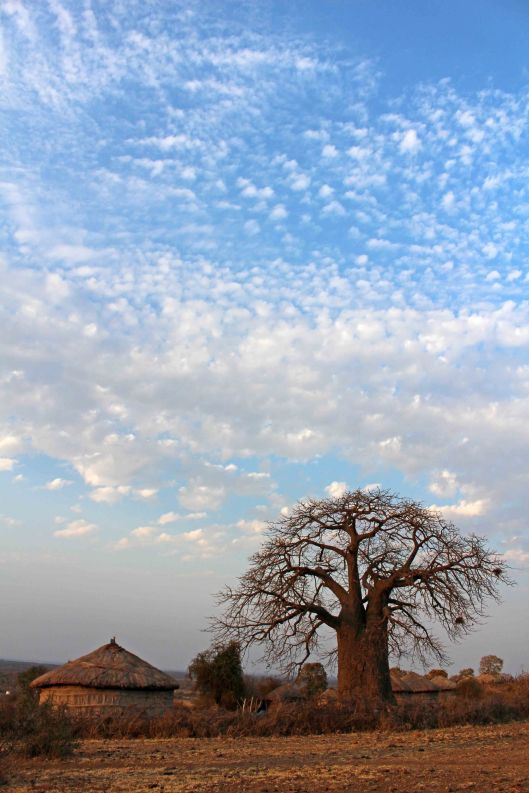
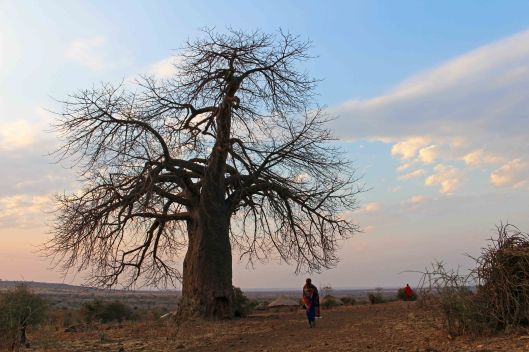
I love these words from Rachel’s prize-winning poem (more about that and her here). In a few deceptively simple words she encapsulates what I love about the baobab: it is not like any other. No facts and figures today. Instead, I hope my photos, taken in Tanzania in 2014, will speak to you of the Baobab.

160831 baobab (1)160831 baobab (2)160831 baobab (3)160831 baobab (4)160831 baobab (5)160831 baobab (6)

Like Loading...

I’m following a tree: month 7

07 Sunday Aug 2016

Posted by sconzani in nature, parks, trees

≈ 9 Comments

Tags

Bute Park, Dawn redwood, Metasequoia glyptostroboides, redwood tree

160807 dawn redwood (1)
160807 dawn redwood (2)

Midsummer has been and gone and, though we’ve had some glorious sunny days – and a short heat wave, we’ve also had some unseasonably cool weather. Perhaps that’s why there are definite signs of autumn to be seen in the foliage of trees and shrubs in my local parks and woodlands.

160807 dawn redwood (6)
160807 dawn redwood (7)
160807 dawn redwood (8)

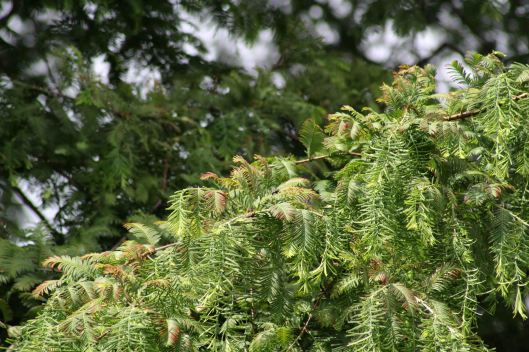
Even Dawn Redwood is showing small signs of the changing seasons and, remember, most unusually for a conifer, Dawn is deciduous. So, these tiny tinges of orange and red are just a hint of how spectacular she will be when the real autumn weather comes.

160807 dawn redwood (5)

Some time during the month, Dawn seems to have suffered a little damage at the top of the tree. Either that or she’s had an incredible growth spurt in one particular branch, which I doubt. You can see the change in the photos below: the one on the left as taken in May 2016, the one on the right in late July 2016.

160807 dawn redwood (3)
160807 dawn redwood (4)

We haven’t had any particularly strong winds or stormy weather so I’m not sure what happened to cause this change but she looks rather wild and a little unkempt compared to her previously perfect pyramidal shape. It will be interesting to see if this corrects itself or if she loses that errant branch or if she just stays this way. Time alone will tell.

Tree following is fascinating and fun. Why not join in? You can find out more here. 

Like Loading...

I’m following a tree: month 6

12 Tuesday Jul 2016

Posted by sconzani in nature, trees

≈ 5 Comments

Tags

Bute Park, Dawn redwood, I'm following a tree, Metasequoia glyptostroboides

The longest day has come and gone, and autumn’s just around the corner. Though some trees are already dropping leaves, there’s none of that messy stuff happening around the very tidy Dawn Redwood.

160712 dawn redwood

The park staff at Bute Park keep her base neatly strimmed and regularly mow the grass that surrounds her, so she always looks tip top (except when untidy humans leave litter from their picnics or late evening drinking sessions!).

160712 dawn redwood base

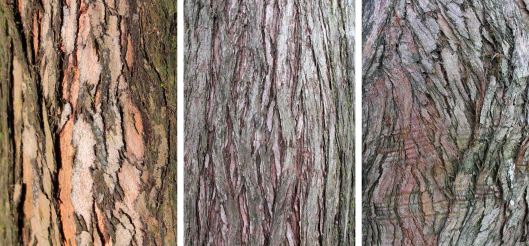
As you might expect from a tree named redwood, Dawn’s wood, if we could see it, would be a rich reddish colour. The bark that covers her wood is also a reddish brown, though it will become increasingly grey as she ages. This bark is quite fibrous and furrowed, and it exfoliates in long narrow strips.

160712 Dawn redwood bark

Both the bark and the leaves are used in Chinese folk medicine to produce an ‘anti-microbic, analgesic and anti-inflammatory drug for dermatic diseases’. In 2015, a study was undertaken to determine if there was any scientific basis to this medical use and it found that Dawn Redwood does, indeed, contain chemicals that can reduce the symptoms in allergic contact dermatitis. So, Ms Metasequoia glyptostroboides is not only beautiful but useful too!

Tree following is fun. Why not join in? You can find out more here.

Like Loading...

I’m following a tree: month 5

13 Monday Jun 2016

Posted by sconzani in nature, trees

≈ 5 Comments

Tags

Bute Park, Cardiff, Dawn redwood, Metasequoia glyptostroboides, tree following

Summer has come to Cardiff so, although she loves our Welsh rain, Dawn Redwood is also a lover of a sunny location and has been basking in the long sunny days. Her leaves are now fully developed, a rich vibrant green in colour, with leaves arranged opposite each other on the branches, flattened in shape, and around 12mm long and 1.5mm wide.

160613 dawn redwood (2)

Although she doesn’t provide the dense shade of a horse chestnut, an oak or a beech, Dawn is much favoured by Cardiffians as a shady spot for a lunchtime picnic – on the two recent occasions I’ve passed by, there have been groups sitting on the grass below her, which is lovely to see but also means I haven’t been able to get too close for more intimate photos (I was intending to check her bark more thoroughly this month).

160613 dawn redwood (3)

It surprises me a little that I’ve never seen any birds perched in Dawn’s branches, as I’d have thought she provided the perfect cover for the smaller birds as well as a well-elevated viewpoint for the larger birds like magpies and crows. However, Dawn is surrounded by trees – several varieties of prunus and some lovely magnolias, as well as other species I’m not sure of – so the birds have plenty of other spots to choose from.

160613 dawn redwood (1)

Like Loading...

I’m following a tree: month 4

09 Monday May 2016

Posted by sconzani in nature, spring, trees

≈ 11 Comments

Tags

autumn leaves, Bute Park, Cardiff, Dawn redwood, I'm following a tree, tree following, trees

Dawn is no longer a naked lady. As April progressed, she gradually acquired her vibrant new covering of leaves, though it has been a slow process, perhaps because we haven’t had much rain to help stimulate leaf production.

160509 dawn redwood (2)

Considering her stature resembles that of a giantess, Dawn’s leaves are surprisingly fine, feathery and delicate, so her new attire is still coquettishly flimsy, seductively see-through.

160509 dawn redwood (4)
160509 dawn redwood (3)

It was lovely to see Dawn being enjoyed by the locals when I popped by on an unseasonably warm day late last week. Her leaf covering may not yet be lush but she was providing ample shade for a picnic lunch.

160509 dawn redwood (5)

Why not join the tree following community. You can find out more here.

160509 dawn redwood (1)

Like Loading...

The beeches of Cwm George

01 Sunday May 2016

Posted by sconzani in nature, trees

≈ 10 Comments

Tags

ancient woodland, beech, beech trees, Cwn George, Dinas Powys, trees, Wild garlic, woodland, Woodland Trust

160501 cwm george beeches (1)

Yesterday I feel in love. His name is George, George Wood, and he lives near the charming little village of Dinas Powys, west of Cardiff.

160501 cwm george beeches (3)

He’s part ancient semi-natural woodland and part new native woodland, primarily dominated by oak and ash but also more recently planted with beeches.

160501 cwm george beeches (4)

Although these beeches are recent, they are now considered an essential part of George’s personality.

160501 cwm george beeches (2)

George is a bit smelly at the moment because of his preference for masses of wild garlic, but his stunning good looks more than make up for this passing phase.

160501 cwm george beeches (5)

Though it’s his beeches that made me fall in love with him, I’m sure I will also come to love his oaks and ashes just as much. I can’t wait to get to know George better!

Like Loading...
← Older posts
Newer posts →

About me

sconzani

sconzani

I'm a writer and photographer; researcher and blogger; birder and nature lover; countryside rambler and city strider; volunteer and biodiversity recorder.

View Full Profile →

Follow earthstar on WordPress.com

Enter your email address to follow this blog and receive notifications of new posts by email.

Recent blog posts

  • Singing Dunnocks March 21, 2026
  • New cat: Large yellow underwing March 20, 2026
  • Curious Coal tit March 19, 2026
  • A huddle of 7-spots March 18, 2026
  • Busy Blue tits March 17, 2026

From the archives

COPYRIGHT

Unless otherwise acknowledged, the text and photographs on this blog are my own and are subject to international copyright. Nothing may be downloaded or copied without my permission.

Fellow Earth Stars!

  • Unknown's avatar
  • Unknown's avatar
  • Unknown's avatar
  • Unknown's avatar
  • Unknown's avatar
  • Unknown's avatar
  • Unknown's avatar
  • Unknown's avatar
  • Unknown's avatar
  • Unknown's avatar
  • Unknown's avatar
  • Unknown's avatar
  • Unknown's avatar
  • Unknown's avatar
  • Unknown's avatar
  • Unknown's avatar
  • Unknown's avatar
  • Unknown's avatar
  • Unknown's avatar
  • Unknown's avatar
  • Unknown's avatar
  • Unknown's avatar
  • Unknown's avatar
  • Unknown's avatar
  • Unknown's avatar
  • Unknown's avatar
  • Unknown's avatar
  • Unknown's avatar
  • Unknown's avatar
  • Unknown's avatar
  • Unknown's avatar
  • Unknown's avatar
  • Unknown's avatar
  • Unknown's avatar
  • Unknown's avatar
  • Unknown's avatar
  • Unknown's avatar
  • Unknown's avatar
  • Unknown's avatar
  • Unknown's avatar
  • Unknown's avatar
  • Unknown's avatar
  • Unknown's avatar
  • Unknown's avatar
  • Unknown's avatar
  • Unknown's avatar
  • Unknown's avatar
  • Unknown's avatar
  • Unknown's avatar
  • Unknown's avatar

Blog at WordPress.com.

Privacy & Cookies: This site uses cookies. By continuing to use this website, you agree to their use.
To find out more, including how to control cookies, see here: Cookie Policy
  • Subscribe Subscribed
    • earthstar
    • Join 668 other subscribers
    • Already have a WordPress.com account? Log in now.
    • earthstar
    • Subscribe Subscribed
    • Sign up
    • Log in
    • Report this content
    • View site in Reader
    • Manage subscriptions
    • Collapse this bar
 

Loading Comments...
 

You must be logged in to post a comment.

    %d