• ABOUT
  • BIRDING 2018
  • Birding 2019
  • BLOG POSTS
  • Butterflies 2018
  • Resources

earthstar

~ a celebration of nature

earthstar

Category Archives: wildflowers

The seeds of success

26 Tuesday Sep 2017

Posted by sconzani in autumn, nature, plants, wildflowers

≈ 2 Comments

Tags

flower seeds, plant seeds, quotes about seeds, seed quotations, seeds, seeds of success

‘The vegetable life does not content itself with casting from the flower or the tree a single seed, but it fills the air and earth with a prodigality of seeds, that, if thousands perish, thousands may plant themselves, that hundreds may come up, that tens may live to maturity; that, at least one may replace the parent.’
~ Ralph Waldo Emerson

170926 seeds (3)
170926 seeds (4)
170926 seeds (2)
170926 seeds (5)
170926 seeds (1)
170926 seeds (6)
Like Loading...

Humming-bird hawk-moth

25 Monday Sep 2017

Posted by sconzani in insects, nature, seaside, wildflowers

≈ 8 Comments

Tags

British moths, Humming-bird hawk-moth, Macroglossum stellatarum, moth, moth like hummingbird, Red valerian

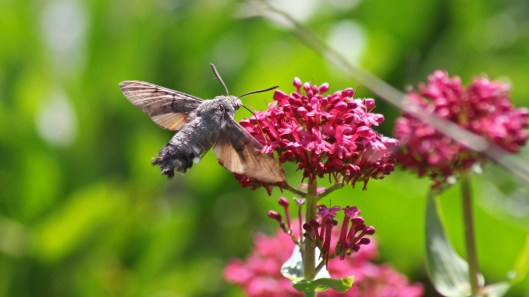
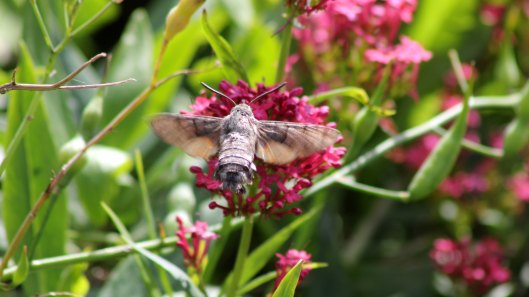
Remember how I wrote yesterday about some days being magical: first I was mobbed by Red admirals, next I discovered the Ivy bee colony and marvelled at its mating antics, and then, la pièce de résistance, I saw my very first Humming-bird hawk-moth.

170925 Humming-bird Hawk-moth (4)

And, by golly, it was difficult to photograph. I took around 70 pictures but most are a blur because, like the bird it’s named after, this moth just does not keep still. Macroglossum stellatarum is its formal name, and it came to Britain originally from Africa and southern Europe. The adult moths can be seen flying any time from April to late November, at which time they start looking for a crevice in a building, a hole in a wall, or a handy crack in a tree to while away the winter months.

170925 Humming-bird Hawk-moth (2)
170925 Humming-bird Hawk-moth (1)

That super-long tongue allows them to specialise in feeding from tube-shaped flowers like the Echiums, though this one was enjoying the nectar of Red valerian plants growing along the high-tide line at a local beach, humming (its wings) as it hovered from one flower to the next. Incredibly, studies have shown that Humming-bird hawk-moths often return to the same flowers at the same time every day. So, it’s a moth that looks like a bird but has the memory of an elephant – simply amazing!

170925 Humming-bird Hawk-moth (3)

Like Loading...

Traveller’s joy

22 Friday Sep 2017

Posted by sconzani in flowers, nature, plants, wildflowers

≈ 2 Comments

Tags

biological recording, clematis vitalba, Old Man's Beard, SEWBReC, species of the month, Traveller's joy

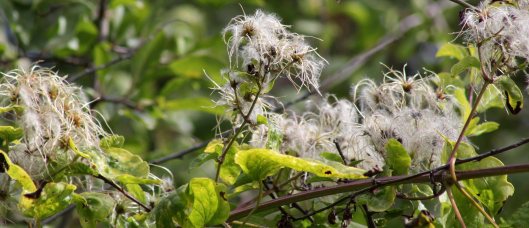
The joy of this plant is that you see it wherever you travel in Britain. See what I did there?

170922 Travellers joy (1)

Clematis vitalba is most commonly called Traveller’s-joy but you might also know it as Old-man’s-beard, Father Christmas, Smokewood or Woodbine. Its feathery white seed heads are its most distinctive feature, making it easy to recognise and identify, and this really is a plant that you’ll see draped over hedges and fences almost everywhere in Britain.

170922 Travellers joy (4)
170922 Travellers joy (3)

Yet SEWBReC, the South East Wales Biodiversity Records Centre, have revealed that Traveller’s-joy is not well recorded: they have less than 2000 records in their database. And so they have made this plant their species of the month for September. If you spot Traveller’s-joy this month (or next, or the month after), please make a point of recording it with your local records centre – almost every county in Britain has its own records centre where you can log your biological sightings and those of you based in south-east Wales can find out more about biological recording, and the species of the month, on SEWBReC’s website.

170922 Travellers joy (2)

Like Loading...

What’s on the scabious?

16 Saturday Sep 2017

Posted by sconzani in flowers, insects, nature, wildflowers

≈ 6 Comments

Tags

bumblebee, Comma, Devil's-bit scabious, hoverflies, insects on scabious, scabious, Six-spot burnet, Small tortoiseshell, Small white

Perhaps it would be easier to ask ‘What’s not on the scabious?’ because it seems that almost every type of fly, bee, butterfly and beetle loves this plant, though that may also be because the Devil’s-bit scabious flowers in late summer – early autumn, when most wildflowers have finished flowering, and so it provides a last delicious taste of summer’s sweetness.

170916 6-spot burnet
170916 beetle
170916 Bumble bee
170916 comma
170916 Common carder & hoverfly
170916 helophilus pendulus
170916 Meadow brown
170916 Melanostoma scalare
170916 Sericomyia silentis
170916 Small tortoiseshell
170916 Small white
170916 unidentified bee
170916 unidentified hoverfly (2)
170916 unidentified hoverfly (3)
170916 unidentified hoverfly (4)
170916 unidentified hoverfly (5)
170916 unidentified hoverfly
170916 Volucella zonaria
Like Loading...

Devil’s-bit scabious

15 Friday Sep 2017

Posted by sconzani in flowers, nature, wildflowers

≈ 3 Comments

Tags

British flora, British wildflowers, Devil's-bit scabious, scabious, Succisa pratensis

There are several species of scabious – and I love them all – but the scabious I’m seeing most in my local nature reserves is the Devil’s-bit (Succisa pratensis).

170915 devil's-bit scabious (7)

Apparently, the scabious name is due to the rough stalks of these plants and dates to times past when scabious was used to treat scabies because people believed in the ‘signature of all things’ – not Elizabeth Gilbert’s latest book but that of Jakob Böhme, who presented the idea, in 1622, that God had imprinted prescriptions for human ailments in the shapes and forms of medicinal plants – thus, rough stalk = rough skin. The ‘Devil’s-bit’ comes from the fact that this plant’s roots have a short, bitten off look.

170915 devil's-bit scabious (1)
170915 devil's-bit scabious (2)
170915 devil's-bit scabious (3)

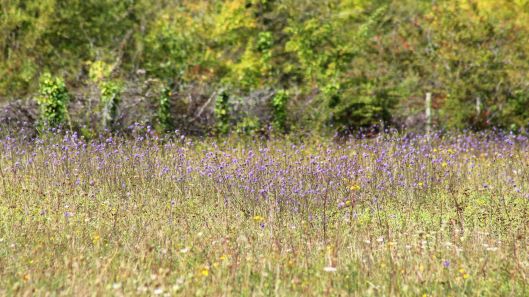
Massed displays of Devil’s-bit scabious lend a purplish tinge to the landscape but it’s the flowers I love best. They begin as fairies’ pincushions and bloom into luscious globular gloriousness.

170915 devil's-bit scabious (4)
170915 devil's-bit scabious (5)
170915 devil's-bit scabious (6)
Like Loading...

Butter and eggs

08 Friday Sep 2017

Posted by sconzani in flowers, nature, wildflowers

≈ 6 Comments

Tags

British flora, British wildflowers, Bunny mouths, Butter and eggs, Common toadflax, Linaria vulgaris

It’s a pretty little thing, this Butter and eggs. There’s none of the bold bright brashness of the stark sunflower; instead, it has a mouth-watering combination of soft warm creamy butter and that bright pop of yellow of a perfectly cooked free-range egg yolk. Mmmmmmmm!

170908 Common toadflax (2)

This is Linaria vulgaris, which has the very bland and rather uninspiring name of Common toadflax. I much prefer the vernacular Butter and eggs or, indeed, its other vernacular name, Bunny mouths, which appeals instantly to the child in me and brings back memories of snapdragon flowers, which these resemble and which can be gently squeezed to make the bunny ‘talk’.

170908 Common toadflax (1)
170908 Common toadflax (3)

Linaria vulgaris beautifies waysides and waste grounds, as well as open grassy areas, flowering from late spring right through till November. Because of its bunny-shaped mouth, the flower can be difficult for insects to access – it takes a strong bee or bumblebee to make the bunny ‘talk’. And, as well as providing bees and bumbles with nectar and pollen in exchange for pollination, L. vulgaris is also a favourite food plant for several species of moth, including the Silver Y, the Toadflax pug, and the Brown rustic. Butter and eggs all round then!

Like Loading...

Grim the collier

06 Wednesday Sep 2017

Posted by sconzani in flowers, nature, wildflowers

≈ 5 Comments

Tags

British flora, British wildflowers, Fox and cubs, Grim the collier, orange hawkweed, Pilosella aurantiaca

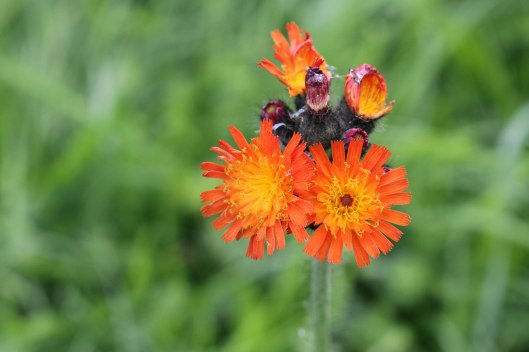
Although Pilosella aurantiaca (more commonly known as Fox-and-cubs) is a native of northern Europe, it must’ve been introduced to Britain a very long time ago as it gets a mention in Gerard’s 1633 Herbal. Gerard called it Grimme the Collier, which seems to me a most intriguing name.

170906 Grim the collier (2)

I’ve read speculation that the name may have been coined because the plant’s hairs resemble coal dust on a miner’s beard (really?) but there was also a play that originated in the early 1600s called Grim the Collier of Croydon and that was apparently based on a real-life character from the mid 16th century.

170906 Grim the collier (1)

It would seem more likely that the plant’s name relates to the person or the play but, in that case, I can’t help wondering: was Grim tall with a head of bright orange hair? Was Grim an invader from northern Europe? Were these particular flowers mentioned in the play? So many questions! If you can shed any light on the collier story, please do tell.

Like Loading...

Autumn Lady’s-tresses

01 Friday Sep 2017

Posted by sconzani in flowers, nature, wildflowers

≈ 4 Comments

Tags

Aberthaw Nature Reserve, Autumn Lady’s-tresses, British orchids, orchid, Spiranthes spiralis

On the first calendar day of autumn it seems entirely appropriate to showcase Britain’s tiny autumnal orchid with the perfectly suited name of Autumn Lady’s-tresses (Spiranthes spiralis).

170901 Autumn lady's tresses (1)
170901 Autumn lady's tresses (2)

Growing up to 20cms (7.8ins) tall but often much smaller, these little beauties can be hard to spot – last week I couldn’t find them at Cosmeston (a friend spotted the first-ever sighting of them there recently) though I managed to spot these at Aberthaw Nature Reserve last Sunday. They are mostly coastal plants because they prefer sandy dunes or calcareous grasslands. In a good year, they can grow in colonies of hundreds, as thickly as grass, often in seaside suburban lawns.

170901 Autumn lady's tresses (3)
170901 Autumn lady's tresses (4)

It’s easy to see where the epithet spiralis comes from: the flowers spiral around the stem as they grow, though you might not guess these were orchids at all until you took a close look at the flowers. Their orchid shape is distinctive but the hairiness of the pure white petals seems a little incongruous. I presume the common name of Lady’s tresses comes from a resemblance to spiralling ringlets.

Like Loading...

What’s on the teasel, 2

30 Wednesday Aug 2017

Posted by sconzani in flowers, insects, nature, wildflowers

≈ 1 Comment

Tags

6-spot Burnet moth, bees, British wildflowers, bumblebees, Six-spot burnet, Teasel

The pretty lilac of teasel flower is beginning to fade now but the mini beasts have certainly been enjoying its nectar. In my local parks and reserves it’s a favourite with the 6-spot Burnet moths and with bees of all species. And not long after those pretty little flowers fade away, the seeds will begin to form and grow, and provide food for the birds, particular the dapper little goldfinch, during the winter months. I’ll try to catch photos of them on the teasels in a couple of months’ time.

170830 whats on the teasel 6spot burnet (1)
170830 whats on the teasel 6spot burnet (2)
170830 whats on the teasel bees (1)
170830 whats on the teasel bees (2)
170830 whats on the teasel bees (3)
Like Loading...

Wildflowers that aren’t

25 Friday Aug 2017

Posted by sconzani in flowers, insects, nature, parks, wildflowers

≈ 8 Comments

Tags

bumblebee, Floral Friday, insects on flowers, ladybird, wildflowers, wildflowers in city parks

170825 flowers & insects (1)

I’m in two minds about the current trend amongst city councils to plant beds of wildflowers in local parks. I’m told that the seed mixes are often imported from Europe because they’re cheaper, so they’re not necessarily flower species that would grow naturally in the local area. It seems a token gesture on the part of councils rather than any kind of commitment to the environment. On the other hand, I can’t help but enjoy the colourful flowers, and the insects also seem to benefit from them. What do you think?

170825 flowers & insects (2)
170825 flowers & insects (3)
170825 flowers & insects (4)
170825 flowers & insects (5)
170825 flowers & insects (6)
170825 flowers & insects (7)
Like Loading...
← Older posts
Newer posts →

About me

sconzani

sconzani

I'm a writer and photographer; researcher and blogger; birder and nature lover; countryside rambler and city strider; volunteer and biodiversity recorder.

View Full Profile →

Follow earthstar on WordPress.com

Enter your email address to follow this blog and receive notifications of new posts by email.

Recent blog posts

  • Blood bees April 29, 2026
  • Nesting material April 28, 2026
  • Lifer: Box bug April 27, 2026
  • Peak Wild garlic April 26, 2026
  • First damsels of 2026 April 25, 2026

From the archives

COPYRIGHT

Unless otherwise acknowledged, the text and photographs on this blog are my own and are subject to international copyright. Nothing may be downloaded or copied without my permission.

Fellow Earth Stars!

  • Unknown's avatar
  • Unknown's avatar
  • Unknown's avatar
  • Unknown's avatar
  • Unknown's avatar
  • Unknown's avatar
  • Unknown's avatar
  • Unknown's avatar
  • Unknown's avatar
  • Unknown's avatar
  • Unknown's avatar
  • Unknown's avatar
  • Unknown's avatar
  • Unknown's avatar
  • Unknown's avatar
  • Unknown's avatar
  • Unknown's avatar
  • Unknown's avatar
  • Unknown's avatar
  • Unknown's avatar
  • Unknown's avatar
  • Unknown's avatar
  • Unknown's avatar
  • Unknown's avatar
  • Unknown's avatar
  • Unknown's avatar
  • Unknown's avatar
  • Unknown's avatar
  • Unknown's avatar
  • Unknown's avatar
  • Unknown's avatar
  • Unknown's avatar
  • Unknown's avatar
  • Unknown's avatar
  • Unknown's avatar
  • Unknown's avatar
  • Unknown's avatar
  • Unknown's avatar
  • Unknown's avatar
  • Unknown's avatar
  • Unknown's avatar
  • Unknown's avatar
  • Unknown's avatar
  • Unknown's avatar
  • Unknown's avatar
  • Unknown's avatar
  • Unknown's avatar
  • Unknown's avatar
  • Unknown's avatar
  • Unknown's avatar

Blog at WordPress.com.

Privacy & Cookies: This site uses cookies. By continuing to use this website, you agree to their use.
To find out more, including how to control cookies, see here: Cookie Policy
  • Subscribe Subscribed
    • earthstar
    • Join 642 other subscribers
    • Already have a WordPress.com account? Log in now.
    • earthstar
    • Subscribe Subscribed
    • Sign up
    • Log in
    • Report this content
    • View site in Reader
    • Manage subscriptions
    • Collapse this bar

Loading Comments...

You must be logged in to post a comment.

    %d