• ABOUT
  • BIRDING 2018
  • Birding 2019
  • BLOG POSTS
  • Butterflies 2018
  • Resources

earthstar

~ a celebration of nature

earthstar

Category Archives: wildflowers

Fireweed, Bombweed

14 Friday Jul 2017

Posted by sconzani in nature, wildflowers

≈ 16 Comments

Tags

Bombweed, British flora, British wildflowers, Chamerion angustifolium, Fireweed, Rosebay willowherb

170714 Rosebay willowherb (5)

It takes a while to learn the differences between the different willowherbs (and the ease with which they hybridise doesn’t help!) but this, the Rosebay willowherb (Chamerion angustifolium), is probably the one most people know best. It was a garden escapee originally, first recorded growing in the wild in 1769, and was considered quite scarce until World War I, when the plant took advantage of woodland areas where timber had been felled (and the area burned) to assist the war effort. Rosebay willowherb’s liking for areas that have been burned is the reason for its common name of Fireweed and is why, during World War II, it thrived in London’s bomb craters, thus earning the plant its other common name of Bombweed. Some people curse it for its invasive tendencies but, for me, there is no prettier sight that a stand of Rosebay willowherb glowing in the bright summer sunshine.

170714 Rosebay willowherb (1)
170714 Rosebay willowherb (2)
170714 Rosebay willowherb (3)
170714 Rosebay willowherb (4)
170714 Rosebay willowherb (6)
170714 Rosebay willowherb (7)
170714 Rosebay willowherb (8)
Like Loading...

‘A Natural History of the Hedgerow’

08 Saturday Jul 2017

Posted by sconzani in animals, birds, fungi, nature, plants, trees, wildflowers

≈ 8 Comments

Tags

British countryside, British hedgerows, field boundaries, hedge, hedgerow, hedgerow trees

170708 hedgerows (1)

Reading John Wright’s excellent book A Natural History of the Hedgerow and ditches, dykes and dry stone walls (Profile Books, London, 2016) has led me to look at the countryside with slightly more knowledgeable eyes, at least when it comes to field boundaries.

170708 hedgerows (6)

Not only does Wright’s book provide a superbly researched history of the hedges, dykes, ditches and dry stone walls that divide up the countryside, it also provides detailed information on the plants, birds, invertebrates and animals that inhabit Britain’s hedgerows, as well as including practical details on how the various boundaries are constructed and maintained.

170708 hedgerows (2)
170708 hedgerows (3)
170708 hedgerows (5)

Now, when I go out on my rural rambles or I’m being transported through the countryside by train, car or bus, I can recognise where hedges must once have grown by the broken line of mature trees marching across a field, I shake my head at the neglect of the hedgerows on so many farms (though I can appreciate the sculptural beauty of ancient hedgerow trees), I can spot where farmers have removed existing boundaries to create huge open fields, and I can appreciate how well-maintained hedges add an extra dimension to the landscape.

170708 hedgerows (4)

Wales and England now have legislation in place to protect hedgerows that meet certain criteria but it would be good if all hedgerows were protected and if more was done to ensure existing hedges were also properly nurtured and maintained.

Like Loading...

Purr-plish

07 Friday Jul 2017

Posted by sconzani in flowers, nature, wildflowers

≈ Leave a comment

Tags

#FloralFriday, British flora, British wildflowers, lilac flowers, pink wildflowers, purple flowers, wildflowers

For those of you who are not overly fond of yellow flowers – you know who you are! – I’ve been out and about looking for other hues, and the result this Floral Friday is a selection of blooms in shades of pink, lilac and purple. The flowers include Betony (Stachys officinalis), Bush vetch (Vicia sepium), Centaury (Centaurium erythraea), Devil’s-bit scabious (Succisa pratensis), Foxglove (Digitalis purpurea), Hedge woundwort (Stachys sylvatica), Herb-Robert (Geranium robertianum), Red clover (Trifolium pratense), Common restharrow (Ononis repens), Rosebay willowherb (Chamerion angustifolium), Tufted vetch (Vicia cracca) and a couple of thistley thingies. Enjoy!

170707 another thistle
170707 Betony
170707 Bush vetch
170707 Centaury
170707 Devil's-bit scabious
170707 Foxglove
170707 Hedge woundwort
170707 Herb-Robert
170707 Red clover
170707 Restharrow
170707 Rosebay willowherb
170707 thistle
170707 Tufted vetch
Like Loading...

National Meadows Day

01 Saturday Jul 2017

Posted by sconzani in flowers, insects, nature, parks, seaside, walks, wildflowers

≈ Leave a comment

Tags

Lavernock Point, Lavernock Reserve, National Meadows Day, Wildlife Trust for South & West Wales

170701 Lavernock Reserve (3)

Happy National Meadows Day!

170701 Lavernock Reserve (2)

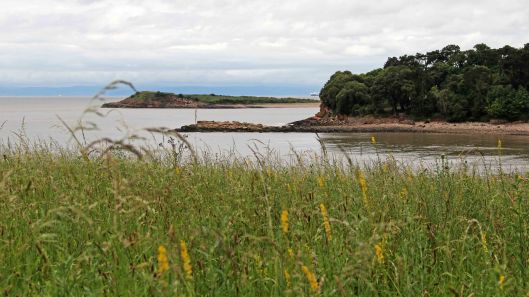
I had a slightly premature celebration by joining a Wildlife Trust walk around Lavernock Reserve on the south Wales coast yesterday. It’s an interesting place that has only become a reserve relatively recently. Due to its prime coastal position, a gun battery was built here back in 1860s and added to during the Second World War – these now form a scheduled ancient monument.

170701 Lavernock Reserve (1)

The meadows sit upon a substrate of clay over Jurassic limestone and, thanks to the tremendous efforts of dedicated volunteers who work constantly to contain the invading scrub, the grasslands are home to many lovely plant, insect and animal species, as well as a succession of migrating birds in spring and autumn.

170701 7-spot ladybird
170701 Centaury
170701 Common red soldier beetle
170701 Common spotted orchid & Selfheal
170701 Large skipper
170701 Marmalade hoverfly
170701 Orange-spot piercer
170701 Plume moth
170701 Restharrow
170701 Ringlet
170701 Snipe fly
170701 Swollen-thighed beetle
Like Loading...

In praise of hogweed

30 Friday Jun 2017

Posted by sconzani in insects, nature, plants, wildflowers

≈ 2 Comments

Tags

British flora, British wildflowers, food for insects, Heracleum sphondylium, Hogweed

170630 hogweed (1)

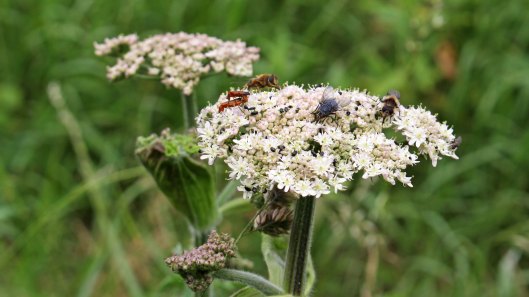
Hogweed is so named because the flowers are said to have a pig-like smell, though I can’t say that I’ve noticed. It has a ton of interesting-sounding common names, of which Bilers, Caddy, Eltrot, Limperscrimps, Cow-weed, Kirk, Chirk and Kek are just a few. Its Latin name, Heracleum sphondylium, is also interesting: Heracleum is a reference to the mythical Greek hero Heracles, who was said to have introduced the medicinal use of the plant to humans, and sphondylium comes from the Greek sphondylo, meaning backbone, and refers to the plant’s segmented stem.

170630 hogweed (3)

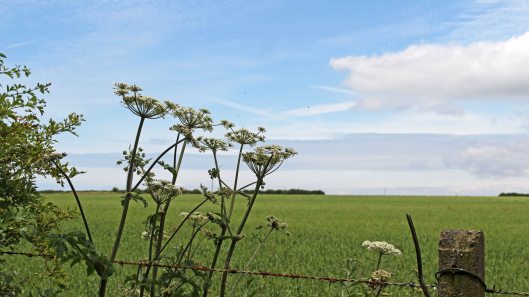
Hogweed is just coming in to flower now, adorning the roadsides, hedgerows and track edges in many of the parts of south Wales that I’ve visited recently.

170630 hogweed (2)

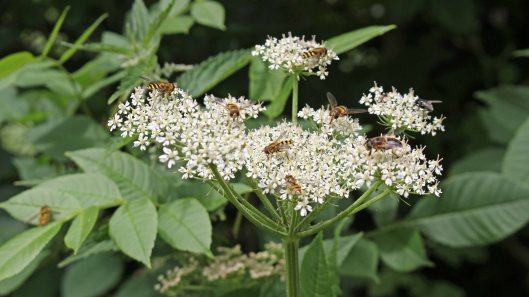
The statuesque purple-coloured-when-young stalks and those large white flower heads are glorious, indeed, but the very best thing about Hogweed, I think, is the food it provides for all manner of creatures, from flies and hoverflies to ants, bees and wasps, bugs and beetles.

170630 1 Common red soldier beetle
170630 2 Swollen-thighed beetle
170630 3 Cheilosia illustrata
170630 4 Noon fly
170630 5 Hogweed
170630 6 Broad centurion female
170630 7 Willow mason-wasp
170630 8 Stilt bug
170630 9 Hogweed leafminer
Like Loading...

Birding at Lliw Reservoirs

25 Sunday Jun 2017

Posted by sconzani in animals, birds, insects, nature, trees, walks, wildflowers

≈ Leave a comment

Tags

birding, birdwatching, Bog pimpernel, Foxgloves, Glamorgan Bird Club, Grey wagtail, Lliw Reservoirs, Red kite, slow-worm, Tormentil, Victorian dam, Victorian ironwork, Whitethroat

170625 Lliw Reservoirs (3)

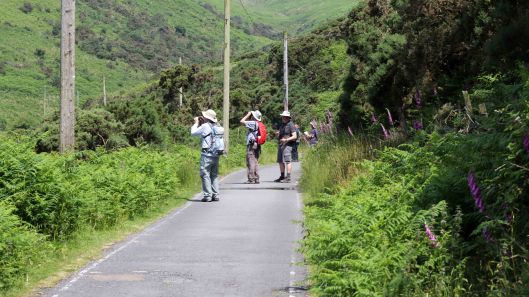
I celebrated the solstice with an outing with my Glamorgan Bird Club buddies to Lliw Reservoirs north of Swansea or, perhaps that should read, I sweated through the solstice – it was one of the hottest days of the year and the middle of a mini heatwave. Still, you know what they say about mad dogs and Englishmen (and Welshmen and a Kiwi) …

170625 Lliw Reservoirs (1)

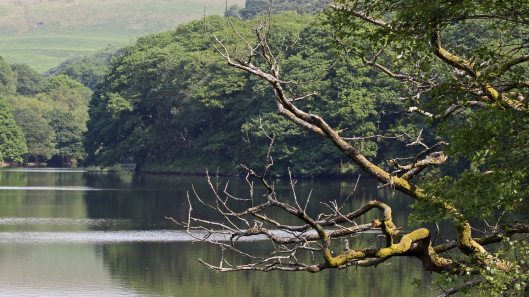
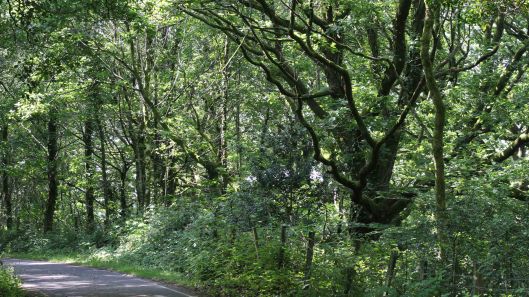
It’s a superb location. The two reservoirs were built in the second half of the 19th century, and still supply water to communities throughout south Wales. We only walked up one side of both reservoirs, through broadleaf woodland and then out onto open areas of grass and scrub and moorland, but there’s an 8-mile circular walk, which would be brilliant in cooler weather and includes large open commons of heath moorland on the hilltops.

170625 Lliw Reservoirs (2)

We heard more small birds than we saw (but that’s helping me learn their songs); buzzards and magnificent red kites were soaring overhead; we heard then saw the elusive grasshopper warbler in flight; dragonflies and damsels and the odd butterfly flitted about; and there were lots of lovely wildflowers (my particular favourites were the foxgloves, tormentil and bog pimpernel). Oh and, most importantly, the locals were friendly and the cafe serves delicious ice cream!

170625 Whitethroat
170625 Tormentil
170625 Slow-worm
170625 Lliw Reservoirs uplands
170625 Peacock
170625 Red kite
170625 Foxglove
170625 Grey wagtail
170625 Victorian ironwork
170625 Bog pimpernel
170625 Welsh sheep
170625 Pines & foxgloves
Like Loading...

Yellow

23 Friday Jun 2017

Posted by sconzani in flowers, nature, wildflowers

≈ 4 Comments

Tags

Agrimonia eupatoria, Agrimony, Bird’s-foot trefoil, Blackstonia perfoliata, Dyer’s greenweed, Genista tinctoria, Lotus corniculata, Rhinanthus minor, wildflowers, Yellow rattle, yellow wildflowers, Yellow-wort

Yellow is the colour of the week as far as the wildflowers are concerned.

170623 Bird's-foot trefoil (1)

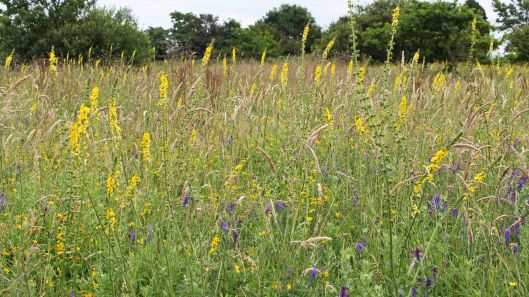
These are some I’ve seen: Bird’s-foot trefoil (Lotus corniculata), Yellow rattle (Rhinanthus minor), Agrimony (Agrimonia eupatoria), Dyer’s greenweed (Genista tinctoria), and Yellow-wort (Blackstonia perfoliata).

170623 Bird's-foot trefoil
170623 Agrimony
170623 Bird's-foot trefoil (2)
170623 Dyer's greenweed (1)
170623 Agrimony (2)
170623 Dyer's greenweed
170623 Yellow-wort
170623 Yellow rattle
Like Loading...

Waving the yellow flag

16 Friday Jun 2017

Posted by sconzani in flowers, nature, wildflowers

≈ 3 Comments

Tags

British flora, British native flowers, British wildflowers, Iris pseudacorus, Segg, Yellow flag iris, Yellow iris

The Yellow iris (Iris pseudacorus), also known as the Yellow flag iris, is really a spring bloomer but I’m still seeing some flowers in the damper boggy and waterside areas during my countryside wanders so I thought I’d share some photos of them before they all disappear for the summer.

170616 Yellow iris (3)

Of course, the wonderfully green, spear-like leaves don’t disappear and they are, in fact, where this plant got one of its common names, Segg. According to Richard Mabey’s Flora Britannica, Segg is a variant of sedge and is derived from the Anglo-Saxon word for a short sword, though I have also seen Segg spelt secg and the Oxford Dictionary says sedge came originally from the Old English word secg, which has Germanic origins and whence also came the Latin secare meaning ‘to cut’ – hence secateurs. Here endeth today’s lesson!

170616 Yellow iris (2)
170616 Yellow iris (4)
170616 Yellow iris (1)
Like Loading...

Orchid overdose!

09 Friday Jun 2017

Posted by sconzani in flowers, nature, wildflowers

≈ 6 Comments

Tags

Anacamptis pyramidalis, Bee orchid, British flora, British orchids, Common spotted orchid, Cosmeston Lakes Country Park, Dactylorhiza fuchsii, Greater butterfly-orchid, native orchids, Ophrys apifera), orchid, Platanthera chlorantha, Pyramidal orchid

170609 Orchids Cosmeston

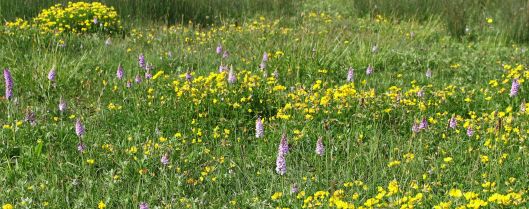
The meadows at Cosmeston Lakes Country Park are awash with orchids, Common spotted-orchids, (Dactylorhiza fuchsii), Bee orchids (Ophrys apifera), Pyramidal orchids (Anacamptis pyramidalis) and, in a secluded location off the beaten track, a tiny smattering of Greater butterfly-orchids (Platanthera chlorantha). To walk along the paths amongst these beauties is simply magical!

170609 Pyramidal orchids Cosmeston (2)
170609 Bee orchid Cosmeston (1)
170609 Pyramidal orchids Cosmeston (3)
170609 Bee orchid Cosmeston (2)
170609 Common spotted-orchid Cosmeston (2)
170609 Greater butterfly-orchid Cosmeston (3)
170609 Greater butterfly-orchid Cosmeston (2)
170609 Bee orchid Cosmeston (3)
170609 Common spotted-orchid Cosmeston (3)
170609 Greater butterfly-orchid Cosmeston (1)
170609 Common spotted-orchid Cosmeston (1)
170609 Pyramidal orchids Cosmeston (1)
Like Loading...

I made a wish …

08 Thursday Jun 2017

Posted by sconzani in flowers, nature, wildflowers

≈ 2 Comments

Tags

dandelion, dandelion seeds, making a wish, wishing on a dandelion

I made a wish, I cast my vote … but will my wish come true?

170608 Wishing on a dandelion

Like Loading...
← Older posts
Newer posts →

About me

sconzani

sconzani

I'm a writer and photographer; researcher and blogger; birder and nature lover; countryside rambler and city strider; volunteer and biodiversity recorder.

View Full Profile →

Follow earthstar on WordPress.com

Enter your email address to follow this blog and receive notifications of new posts by email.

Recent blog posts

  • Blood bees April 29, 2026
  • Nesting material April 28, 2026
  • Lifer: Box bug April 27, 2026
  • Peak Wild garlic April 26, 2026
  • First damsels of 2026 April 25, 2026

From the archives

COPYRIGHT

Unless otherwise acknowledged, the text and photographs on this blog are my own and are subject to international copyright. Nothing may be downloaded or copied without my permission.

Fellow Earth Stars!

  • Unknown's avatar
  • Unknown's avatar
  • Unknown's avatar
  • Unknown's avatar
  • Unknown's avatar
  • Unknown's avatar
  • Unknown's avatar
  • Unknown's avatar
  • Unknown's avatar
  • Unknown's avatar
  • Unknown's avatar
  • Unknown's avatar
  • Unknown's avatar
  • Unknown's avatar
  • Unknown's avatar
  • Unknown's avatar
  • Unknown's avatar
  • Unknown's avatar
  • Unknown's avatar
  • Unknown's avatar
  • Unknown's avatar
  • Unknown's avatar
  • Unknown's avatar
  • Unknown's avatar
  • Unknown's avatar
  • Unknown's avatar
  • Unknown's avatar
  • Unknown's avatar
  • Unknown's avatar
  • Unknown's avatar
  • Unknown's avatar
  • Unknown's avatar
  • Unknown's avatar
  • Unknown's avatar
  • Unknown's avatar
  • Unknown's avatar
  • Unknown's avatar
  • Unknown's avatar
  • Unknown's avatar
  • Unknown's avatar
  • Unknown's avatar
  • Unknown's avatar
  • Unknown's avatar
  • Unknown's avatar
  • Unknown's avatar
  • Unknown's avatar
  • Unknown's avatar
  • Unknown's avatar
  • Unknown's avatar
  • Unknown's avatar

Blog at WordPress.com.

Privacy & Cookies: This site uses cookies. By continuing to use this website, you agree to their use.
To find out more, including how to control cookies, see here: Cookie Policy
  • Subscribe Subscribed
    • earthstar
    • Join 642 other subscribers
    • Already have a WordPress.com account? Log in now.
    • earthstar
    • Subscribe Subscribed
    • Sign up
    • Log in
    • Report this content
    • View site in Reader
    • Manage subscriptions
    • Collapse this bar

Loading Comments...

You must be logged in to post a comment.

    %d