• ABOUT
  • BIRDING 2018
  • Birding 2019
  • BLOG POSTS
  • Butterflies 2018
  • Resources

earthstar

~ a celebration of nature

earthstar

Category Archives: wildflowers

Marsh orchids at Kenfig

07 Wednesday Jun 2017

Posted by sconzani in flowers, nature, wildflowers

≈ 3 Comments

Tags

British flora, British orchids, Dactylorhiza incarnata, Dactylorhiza praetermissa, Dactylorhiza purpurella, Early Marsh-orchid, Kenfig National Nature Reserve, native orchids, Northern Marsh-orchid, orchid, Southern marsh orchid
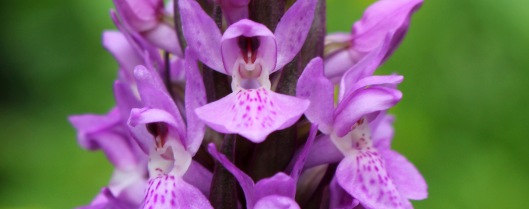
170607 Southern marsh-orchid (2)

Apart from 18 species of rust, there wasn’t a lot of fungi to be found during our foray at Kenfig National Nature Reserve last Saturday but what we did see was a lot of stunning marsh orchids.

170607 Southern marsh-orchid (5)
170607 Southern marsh-orchid (3)
170607 Southern marsh-orchid (1)
170607 Southern marsh-orchid (4)

Identifying these beauties can be extremely tricky, even for trained botanists, partly because they look very similar, partly because their colouration can vary quite a lot within species, and partly because they hybridise easily with each other. So, although the chances are that these are Southern Marsh-orchids (Dactylorhiza praetermissa), there may also be some Northern Marsh-orchids (Dactylorhiza purpurella) or a mixture of both. Whatever they are, they’re beautiful!

170607 Early marsh-orchid (1)
170607 Early marsh-orchid (2)

I am, however, quite sure about these next pictures. These are Early Marsh-orchids (Dactylorhiza incarnata). They thrive in damp calcareous habitats so the dune systems at Kenfig suit them perfectly – or, at least they will as long as the dune systems are managed to prevent scrub and trees taking hold: the orchids actually grow best when wind and rain are allowed to destabilise the dunes and move sand and plants around a bit.

Like Loading...

Looking frazzled!

03 Saturday Jun 2017

Posted by sconzani in flowers, nature, wildflowers

≈ Leave a comment

Tags

British flora, British native flowers, British wildflowers, Ragged robin, Silene flos-cuculi

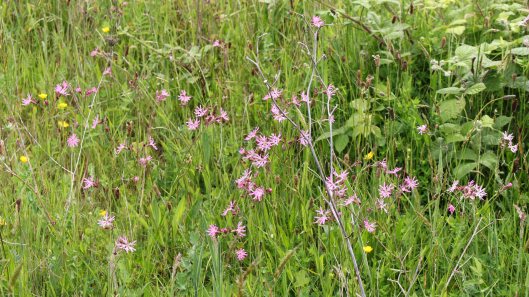
Ragged robin (Silene flos-cuculi) certainly lives up to its name. To me, it always looks a tad stressed, a touch frayed around the edges, a bit frazzled, as if it’s had a long hard day in the meadows, but its distinctive ragged shape does at least make it one of the easiest British wildflowers to identify.

Ragged robin (4)

I say ‘always’ but I don’t actually see this pretty native very often. Perhaps that’s because it prefers to dip its feet into the damper grass- and woodlands, though the word is that it has declined in recent years in many parts of Britain, mostly due to agriculture taking over its habitats.

Ragged robin (2)
Ragged robin (3)

It was, then, even more special to spot these plants in one of my local wild places this week, and I wasn’t the only one smiling at the sight. The bees were obviously pleased to see them too! Ragged Robin flowers from May through to August so I hope you’re lucky enough to spot some too.

Ragged robin (1)

Like Loading...

The bees that don’t buzz

02 Friday Jun 2017

Posted by sconzani in flowers, nature, wildflowers

≈ 6 Comments

Tags

Bee orchid, British orchids, British wildflowers, native orchids, Ophrys apifera), orchid

Finding my very first Bee orchids (Ophrys apifera) in a local park this week made my day! I know they’re designed to entice male bees to attempt mating with their flowers in order to facilitate pollination but to me they actually look like jolly smiling and laughing mouths.

170602 Bee orchid Ophrys apifera (1)
170602 Bee orchid Ophrys apifera (2)

I had to find out more, and I have to say that, when it comes to wild plants, I love the Plantlife website – as well as giving you the straight facts and figures about British plants, they also include the most interesting fact-lets, like these:

*  The aim of the mimicry is to attract passing male bees in the hope they will try to mate and thus aid pollination. In Britain, however, Bee orchids self-pollinate so the deception is not really required.
*  This wild flower was once called the “Humble Bee” orchid (Humble being a variation of Bumble).
*  According to Roman natural historian Pliny the Elder it was used by womenfolk to darken their eyebrows.
*  The Bee orchid is the County Flower of Bedfordshire.
*  In the Language of Flowers it stands for error and industry.

170602 Bee orchid Ophrys apifera (3)
170602 Bee orchid Ophrys apifera (4)
Like Loading...

Botanising: A walk above Brynna

28 Sunday May 2017

Posted by sconzani in nature, plants, wildflowers

≈ 5 Comments

Tags

botany mentee, British flora, Bush vetch, Common vetch, Field horsetail, Glamorgan Botany Group, Mouse-ear hawkweed, Welsh poppy, Zigzag clover

Last weekend I enjoyed another full day’s walk with the Glamorgan Botany Group in the hills and vales above Brynna, in south Wales, and, though I am the first to admit that I came home with more photos of insects than plants, I am learning. It’s just that, for someone who wasn’t brought up in Britain and so didn’t learn from an early age the names of even the most common wildflowers, there’s a huge amount to take in.

170528 Brynna

So, what have I learnt? I can now tell the difference between Common vetch (Vicia sativa), on the left, and Bush vetch (Vicia sepium), on the right below.

170528 2 Common vetch
170528 3 Bush vetch

I know this is Field horsetail (Equisetum arvense) because the first joints of the leaves (which form a skirt around the stem when you break them off) are longer than the stem section (the little dark v-shaped marks on the stem in this photo).

170528 1 Field horsetail

Though the two species are very similar, I know this is not Red clover (Trifolium pratense) but rather Zigzag clover (Trifolium medium) partly because the white marks on its leaves are not as obvious but, most definitively, because at the widest part of the leaf the veins meet the edge at a 90 degree angle.

170528 4 Zigzag clover (1)
170528 4 Zigzag clover (2)

I know that the plant on the left is Mouse-ear hawkweed (Hieracium pilosella) and that beautiful flower on the right is my very first Welsh poppy (Meconopsis cambrica) growing in the wild!

170528 Mouse-ear hawkweed
170528 Welsh poppy
Like Loading...

Two orchids

26 Friday May 2017

Posted by sconzani in flowers, nature, wildflowers

≈ Leave a comment

Tags

Common twayblade, Dactylorhiza maculata, Heath spotted-orchid, Merthyr Mawr National Nature Reserve, native orchids, Neottia ovata, orchid, Twayblade

Of the estimated 25,000 different species of orchid that can be found around the world, 56 are native to Britain and, as some of those 56 are now coming in to bloom, I thought I’d share a couple for this week’s Floral Friday.

170526 Twayblade (2)
170526 Twayblade (1)

Twayblade (Neottia ovata)
First up is the Twayblade I saw growing quite prolifically in the woodland at Merthyr Mawr a couple of weeks ago. It’s one of Britain’s most common species but is often overlooked, perhaps because its yellow-green flowers often blend in with their woodland, scrub or grassland habitats. Twayblade means two leaves, as there usually are just two leaves, from the centre of which sprouts the flower stalk, though, like all living things, there are exceptions to the rule and plants with three to five leaves are sometimes found. The thing that most fascinates me about these orchids is the manikin-shaped flower.

170526 Heath spotted-orchid (1)
170526 Heath spotted-orchid (2)

Heath spotted-orchid (Dactylorhiza maculata)
Luckily I was with a group of botanists when I saw my first Heath spotted-orchids last weekend, as they can easily be confused with Common spotted-orchids, though the fact that we were in a damp boggy field at the time was probably also a good species indicator. As the name ‘heath’ implies, this orchid likes to get its feet wet, relishing the sogginess of peaty moors and boggy heaths. As well as being common throughout Europe, this orchid can also be found throughout the British Isles, though it does show a marked preference for northern and western areas. Its gorgeous flowers can be seen from around the middle of May through to mid July.

Like Loading...

Seaford Head wildlife walk

21 Sunday May 2017

Posted by sconzani in birds, coastal fauna, nature, plants, wildflowers

≈ Leave a comment

Tags

Brown-tail moth caterpillars, Fulmar, Green-winged orchid, Rock pipit, Rook, Seaford Head Nature Reserve, Seaford Head wildlife walk, Stonechat, Sussex Wildlife Trust, Thrift

One of the highlights of my recent short break in Sussex was a guided wildlife walk around Seaford Head, organised by the Sussex Wildlife Trust and led by knowledgeable and amusing local naturalist Michael Blencowe.

170521 1 Seaford Head walk

The day was very windy and scattered showers kept us clad in rain jackets until lunchtime but that didn’t spoil the walk. The scenery on this coast is magnificent and it’s one of my favourite places in the whole of Britain so, even if we’d not seen any wildlife, I would’ve been happy. As it was, we saw more than I expected, and our guide was a mine of funny stories and fascinating facts.

170521 2 Seaford Head Hound's-tongue
170521 3 Seaford Head Stonechat
170521 4 Seaford Head Fulmar
170521 5 Seaford Head group
170521 6 Seaford Head Rock pipit
170521 7 Seaford Head Flower
170521 8 Seaford Head Brown-tail moth
170521 9 Seaford Head Green-winged orchid
170521 10 Seaford Head Rook

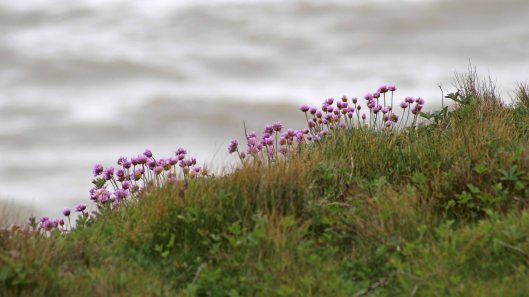
Our flora and fauna sightings included many different plants in flower, like Green alkanet, Hound’s-tongue and Thrift; plus several Stonechats and Linnets, and Rock pipits and Rooks aplenty. We had Fulmars soaring up from the cliffs to the left of us and Skylarks serenading us high in the sky to the right. A grass snake was discovered snoozing under a sheet of corrugated iron, the webs of Brown-tail moth caterpillars adorned the bramble bushes, and Green-winged orchids provided striking bursts of colour in the rough alongside the local golf course. If you ever get the chance, I’d highly recommend this walk.

170521 11 Seaford Head Thrift

Like Loading...

Herb-Paris

14 Sunday May 2017

Posted by sconzani in nature, wildflowers

≈ Leave a comment

Tags

ancient woodland, British native plant, British wildflower, conservation of ancient woodlands, Herb-Paris, Paris quadrifolia

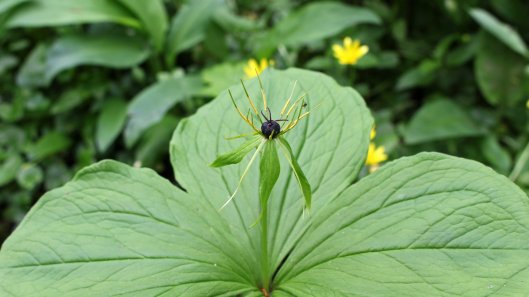
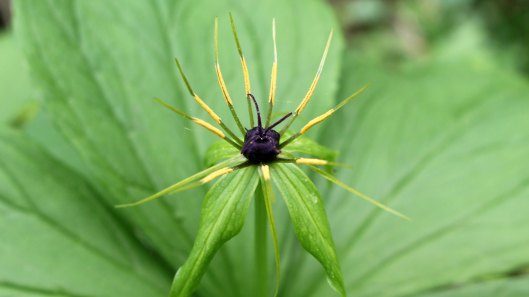
Paris quadrifolia is its scientific name and you’d think quadrifolia would mean this plant had four leaves but no one told the plant that! Herb-Paris, as it’s more commonly known, can actually have between 4 and 8 leaves. It’s not its leaves that Herb-Paris is most admired for though, it’s its stunning solitary flower, a true masterpiece of Nature.

170508 Herb-Paris (1)

Herb-Paris is a perennial plant and can be found in both cool and temperate areas of Europe. In Britain you’re most likely to find it in the damp shade of ancient woodlands on calcareous soils, though sadly it has declined significantly over the last century due to the destruction of many broad-leaved woodlands in favour of conifer plantations. As Herb-Paris has proven to be very slow at colonising replanted woodlands, the only hope for its survival is the conservation of those ancient woodlands that still exist.

170508 Herb-Paris (2)
170508 Herb-Paris (3)

Though all parts of this plant are considered poisonous, it was used in various ways in traditional medicine: it was considered to be an antidote for mercury and arsenic poisoning, its root was used as an emetic, and the juice of its berry as a treatment for inflammation of the eyes. I think I’ll stick to conventional medicine and leave this beautiful herb to be admired by all who are lucky enough to see it.
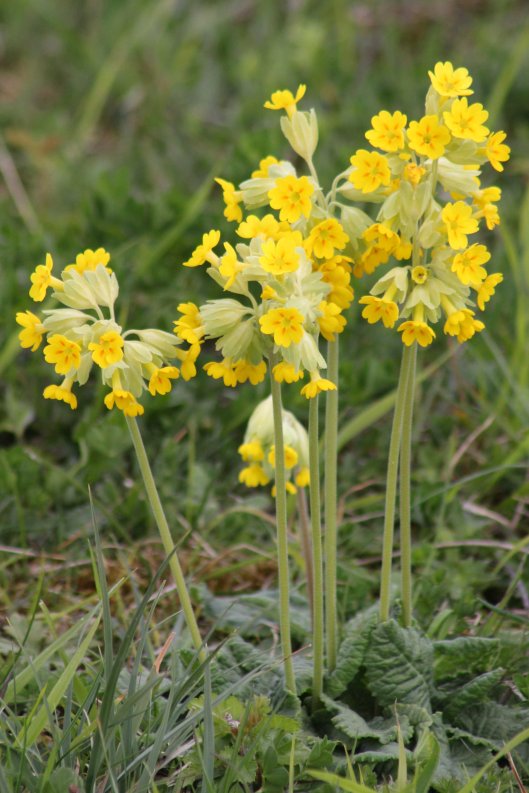
170508 Herb-Paris (4)

Like Loading...

Primrose x Cowslip = False Oxlip

12 Friday May 2017

Posted by sconzani in flowers, nature, wildflowers

≈ Leave a comment

Tags

British flora, British wildflowers, Cowslip, False oxlip, flora hybridisation, flower hybrids, primrose, Primula veris, Primula vulgaris, Primula vulgaris x veris = P. x polyantha


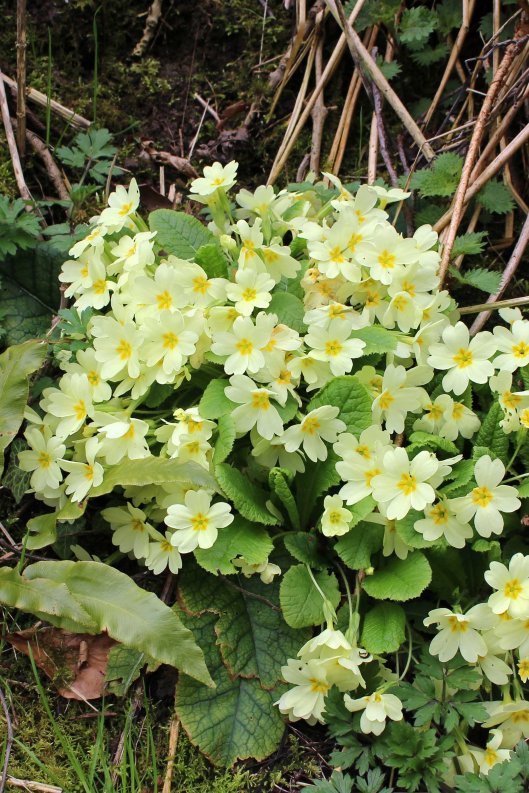
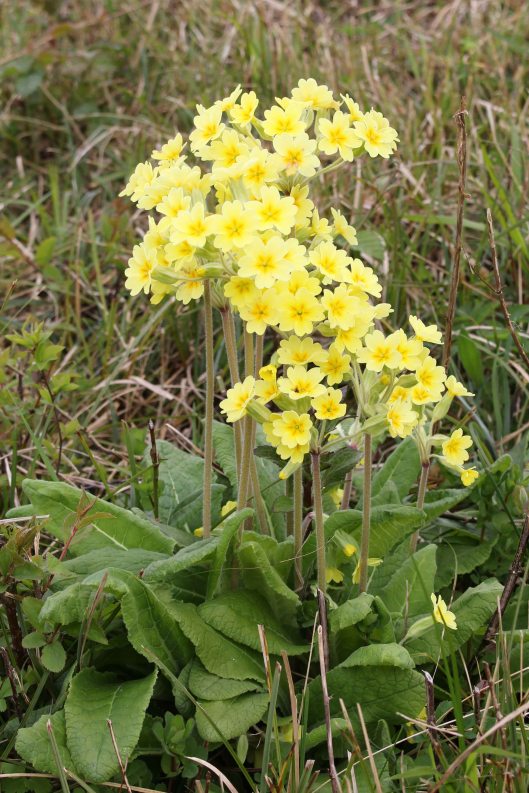
Where Primroses (Primula vulgaris) and Cowslips (Primula veris) grow in close proximity they will occasionally hybridise to produce the False Oxlip (Primula vulgaris x veris = P. x polyantha). Though this is not really clear from my images, the hybrid is usually a larger plant than the Cowslip, and I think it combines the prettiest traits of both parents to produce a real stunner!

170512 A Primrose
170512 B Cowslip
170512 C False oxlip
Like Loading...

More from Merthyr Mawr

09 Tuesday May 2017

Posted by sconzani in insects, nature, wildflowers

≈ Leave a comment

Tags

biodiversity, biological diversity, Blood bee, Common Stork's-bill, Glamorgan Fungus Group, Green dock beetle, Merthyr Mawr National Nature Reserve, Micropterix calthella, Navelwort, Poplar leaf beetle, Red-headed Cardinal beetle

As I wrote yesterday, with very little fungi to be found our Glamorgan Fungus Group foray on Saturday developed into a more general nature ramble. I’m afraid I wasn’t writing down the names of all the various critters and plants we saw so I can’t identify everything in these photos but I can name some.

170509 (2) Pyrochroa serraticornis Red-headed Cardinal beetle
170509 (3) Centipede
170509 (4) Eggs of Gastrophysa viridula Green dock beetle
170509 (5) Micropterix calthella moths
170509 (6) Erodium cicutarium Common Stork's-bill
170509 (7) Two species of snails
170509 (8) Umbilicus rupestris Wall pennywort or Navelwort
170509 (9) Chrysomela populi Poplar leaf beetle
170509 (10) Sphecodes sp Blood bee

The first is a Red-headed cardinal beetle (Pyrochroa serraticornis), a very pretty beetle though this one wouldn’t keep still for me. The centipede was the same and I’m afraid I don’t remember its name, though I was told it’s not particularly common. It tickled! I think the little yellow dots are the eggs of the Green dock beetle (Gastrophysa viridula) as we saw a pair mating nearby. The tiny moths on the buttercup flower are Micropterix calthella. The plant with the pink flower is one I actually remembered from my botany walk on Thursday – a miracle! It’s Common Stork’s-bill (Erodium cicutarium). Then we have two different species of snail cosying up together. Once again, I was told the names but didn’t write them down and have forgotten (must do better next time!). This very pretty plant was a new one for me and it has two common names, so you might know it either as Wall pennywort or Navelwort (scientific name Umbilicus rupestris). Next is another beetle, this time a Poplar leaf beetle (Chrysomela populi). It was a gorgeous wee thing, with metallic green thorax and dark red body, almost like an oversized ladybird. And, last but not least, was this rather angry Blood bee (Sphecodes sp.). It was trying to lay its eggs in the holes of mining bees when it was netted and potted up for a quick close-up look.

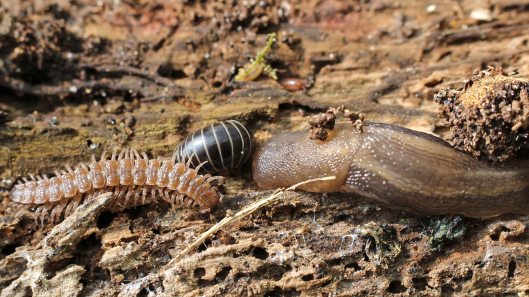
170509 (1) Millipede Pill bug Slug

My favourite moment of the day, though, was when I turned over this log. I particularly loved the little grouping of millipede, pill-bug and slug but these were only a few of the various creatures to be seen. It was just nice to see such biodiversity co-existing happily together. A lesson for us all, I think.

Like Loading...

Botany 101: sore knees and sniffy nose

06 Saturday May 2017

Posted by sconzani in nature, plants, wildflowers

≈ 7 Comments

Tags

botanists' knees, botany mentee, botany mentorship, British coastal plants, British flora, learning botany

You’ll recall I blogged recently about my first outing as a botany mentee. Well, on Thursday I took my second tentative step on the road to learning more about the incredible variety of plants that surround us. This time it was just me and my mentor Julian, though we were joined by another enthusiast David for the morning part of our jaunt. This time also I was better prepared, with a notebook to write down plant names and, though I somehow managed to lose my pen around lunchtime, I’m proud to say I remembered the names of all but one of the afternoon’s plant finds.
170506 Ogmore-by-sea

The ‘grass’, the view and a nice spot for morning tea

One thing I hadn’t expected was a condition I will describe as botanists’ knees. The plants we spent the morning looking for and at, in a ‘grassy’ area on the south Wales coast (I now know ‘grassy’ is a hopelessly inadequate adjective to describe the incredible number of plants growing in those areas I would once have called grass), were never more than an inch or two high so we spent most of the morning on hands and knees, bums in the air. One further unexpected result of that was full sinuses (and the accompanying drippy nose), though perhaps there was an element of hay fever in the mix as well – with my poor eyesight the easiest way to see the finer details of some plants was to take my specs off and get my face within an inch or two of the plants, so I’m sure I breathed in plenty of pollen and dust in the process.

170506 Anthyllis vulneraria Kidney vetch Newton
170506 Arenaria serpyllifolia Thyme-leaved sandwort
170506 Erodium cicutarium Common stork's-bill

After lunching on a nearby river bank (a couple of specialist plants there too), Julian and I headed to another coastal site nearby, to inspect a car park – it has a rare grass – and to wander amongst some large sand dunes. I’ll blog separately about a couple of the special plants we saw but here is a selection of the more common but no less lovely: (above) Anthyllis vulneraria Kidney vetch, Arenaria serpyllifolia Thyme-leaved sandwort, Erodium cicutarium Common stork’s-bill, (below) Medicago lupulina Black medic, Polygala vulgaris Milkwort, and Sherardia arvensis Field madder. Needless to say, in spite of my sore knees and sniffy nose, I enjoyed the day immensely.

170506 Medicago lupulina Black medic
170506 Polygala vulgaris Milkwort Newton
170506 Sherardia arvensis Field madder
Like Loading...
← Older posts
Newer posts →

About me

sconzani

sconzani

I'm a writer and photographer; researcher and blogger; birder and nature lover; countryside rambler and city strider; volunteer and biodiversity recorder.

View Full Profile →

Follow earthstar on WordPress.com

Enter your email address to follow this blog and receive notifications of new posts by email.

Recent blog posts

  • Blood bees April 29, 2026
  • Nesting material April 28, 2026
  • Lifer: Box bug April 27, 2026
  • Peak Wild garlic April 26, 2026
  • First damsels of 2026 April 25, 2026

From the archives

COPYRIGHT

Unless otherwise acknowledged, the text and photographs on this blog are my own and are subject to international copyright. Nothing may be downloaded or copied without my permission.

Fellow Earth Stars!

  • Unknown's avatar
  • Unknown's avatar
  • Unknown's avatar
  • Unknown's avatar
  • Unknown's avatar
  • Unknown's avatar
  • Unknown's avatar
  • Unknown's avatar
  • Unknown's avatar
  • Unknown's avatar
  • Unknown's avatar
  • Unknown's avatar
  • Unknown's avatar
  • Unknown's avatar
  • Unknown's avatar
  • Unknown's avatar
  • Unknown's avatar
  • Unknown's avatar
  • Unknown's avatar
  • Unknown's avatar
  • Unknown's avatar
  • Unknown's avatar
  • Unknown's avatar
  • Unknown's avatar
  • Unknown's avatar
  • Unknown's avatar
  • Unknown's avatar
  • Unknown's avatar
  • Unknown's avatar
  • Unknown's avatar
  • Unknown's avatar
  • Unknown's avatar
  • Unknown's avatar
  • Unknown's avatar
  • Unknown's avatar
  • Unknown's avatar
  • Unknown's avatar
  • Unknown's avatar
  • Unknown's avatar
  • Unknown's avatar
  • Unknown's avatar
  • Unknown's avatar
  • Unknown's avatar
  • Unknown's avatar
  • Unknown's avatar
  • Unknown's avatar
  • Unknown's avatar
  • Unknown's avatar
  • Unknown's avatar
  • Unknown's avatar

Blog at WordPress.com.

Privacy & Cookies: This site uses cookies. By continuing to use this website, you agree to their use.
To find out more, including how to control cookies, see here: Cookie Policy
  • Subscribe Subscribed
    • earthstar
    • Join 642 other subscribers
    • Already have a WordPress.com account? Log in now.
    • earthstar
    • Subscribe Subscribed
    • Sign up
    • Log in
    • Report this content
    • View site in Reader
    • Manage subscriptions
    • Collapse this bar

Loading Comments...

You must be logged in to post a comment.

    %d