My last butterfly

Tags

, ,

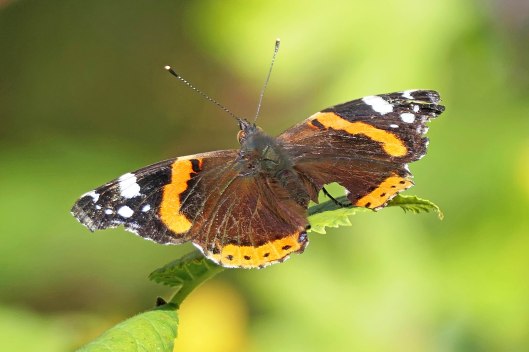
Looking at the weather forecast for the next week, I think I can confidently say I’ve seen my final butterfly for 2022. It was on 6 December, a surprisingly warm day in the winter sunshine, when was this slightly battered-looking Red admiral emerged from its over-winter hiding place. I am SO looking forward to the return of the butterflies in 2023, and I’m planning to see a few more of the British species I’ve not yet seen, which will be exciting.

221224 red admiral

Tufts of sulphur

Tags

, , ,

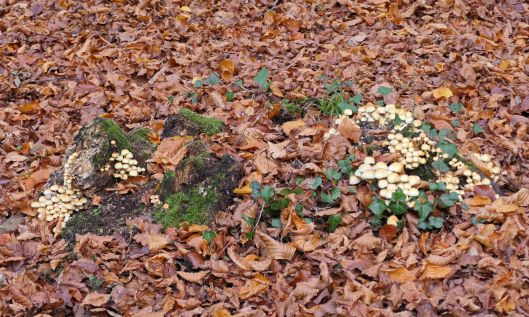
During my recent walks to marvel at the autumn colours of the Beautiful Beeches of Cwm George in Dinas Powys, I noticed that one of the Beech trees had, at some time in the past, succumbed to the ravages of time and weather and, where once a majestic giant stood tall, there was now a large, crumbling stump.

221223 sulphur tuft (1)

As well as a thick covering of fallen leaves, the greens of moss, ivy and a thin clump of grass, the stump was providing a home – and food – to fungi, a thriving colony of Sulphur tuft (Hypholoma fasciculare), one of our most common wood-rotters. I’m sure this is a fungus almost all my followers will have seen.

221223 sulphur tuft (2)

Orange legs

Tags

, , , , , , ,

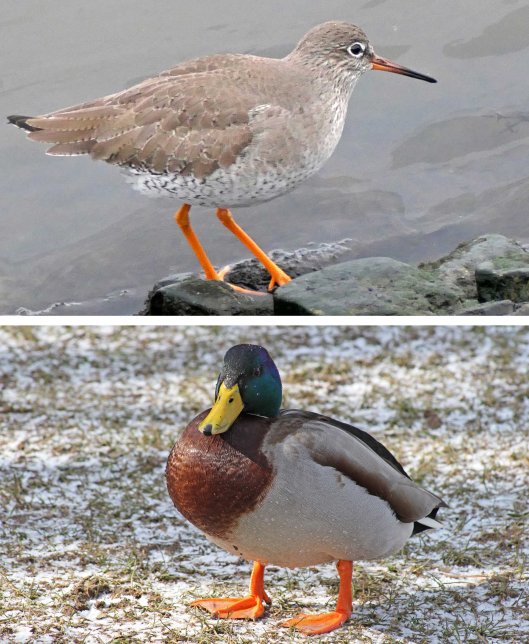
As a follow up to yesterday’s post about our local Redshanks, I thought I’d write about those legs, which, to my eye, are orange not red. A few months ago, I wondered aloud on social media why so many birds have such bright orange legs and was informed that, on a recent episode of the BBC’s Winterwatch television programme (I don’t have a tv so didn’t see it), it had been suggested that orange-coloured legs ‘are effective in disturbing benthic creatures when feeding/stirring the sediment’.

221222 orange legs (1)

Another idea suggested on the Canadian Science.ca website is that ‘bright orange feet may reveal that the male is good at foraging (carotene comes in the diet)’, though the writer of that article also acknowledged that there may be several other factors at play, and that scientists don’t actually know the answer to the fascinating ‘why orange feet?’ question. So, if you have your own theories, or verified scientific knowledge, please do share in the comments.

221222 orange legs (2)

Five Redshanks

Tags

, , , ,

In previous years, the Redshanks have returned to the Ely embankment, where the River Ely runs in to Cardiff Bay, as early as mid October. This year, for some unknown reason, they’re late. I started seeing them on the mud outside the Barrage a couple of weeks ago but these five are the first I’ve seen grazing along the shoreline of the embankment, where they catch tiny molluscs and crustaceans. It’s wonderful to have these handsome birds back on the patch again.

221221 redshanks

Two Mipits

Tags

, , , , ,

Often, my first indication of the presence of a Meadow pipit (Mipit is the contraction often used by birders) is its pip-pip-pip call as it flies away. They are notoriously flighty birds, despite their markings providing such good camouflage that we often hear them before we have any chance of seeing them. I hear/see these birds in the fields at Cosmeston Lakes Country Park and also along the edges of Cardiff Bay, which is where the two birds below were foraging for food.

221220 meadow pipit (1)

This first bird was fossicking around the pebbles and amongst the vegetation of the embankment of the River Ely where it flows in to Cardiff Bay.

221220 meadow pipit (2)

And the second bird was on the edge of the Barrage. I’m fairly sure this was a juvenile – rather than fly away immediately on seeing me, it huddled very close to the board edging the grassed area, as if that would make it invisible.

Leafmines: Psychoides filicivora, 2

Tags

, , , , ,

At the start of this year I found my first moth larvae living in self-constructed coverings of spores on the underside of fern leaves. At that occasion, the ferns were Hart’s-tongues (Asplenium scolopendrium) and the moth larvae were Psychoides filicivora. However, there is another moth species that lives like this on fern fronds so, when I found this larva last week on one of the Polypody fern species (Polypodium vulgare sensu lato), I was hoping I’d found the second species, Psychoides verhuella. Unfortunately, I had not but I was still pleased to have found P. filicivora on a different fern species. My search for the other moth species continues.

221219 psychoides filicivora

Flowers and berries

Tags

, ,

There seems to me no better example of our changing climate and the confusion it’s causing in the natural world than this: finding one Holly tree in flower and others carrying berries all at the same time. In fact, the photo of the flowers, which are supposed to bloom during the spring and early summer, was taken at the beginning of this month, two weeks after that of the berries.

221218 holly

An aphid has a baby

Tags

, , ,

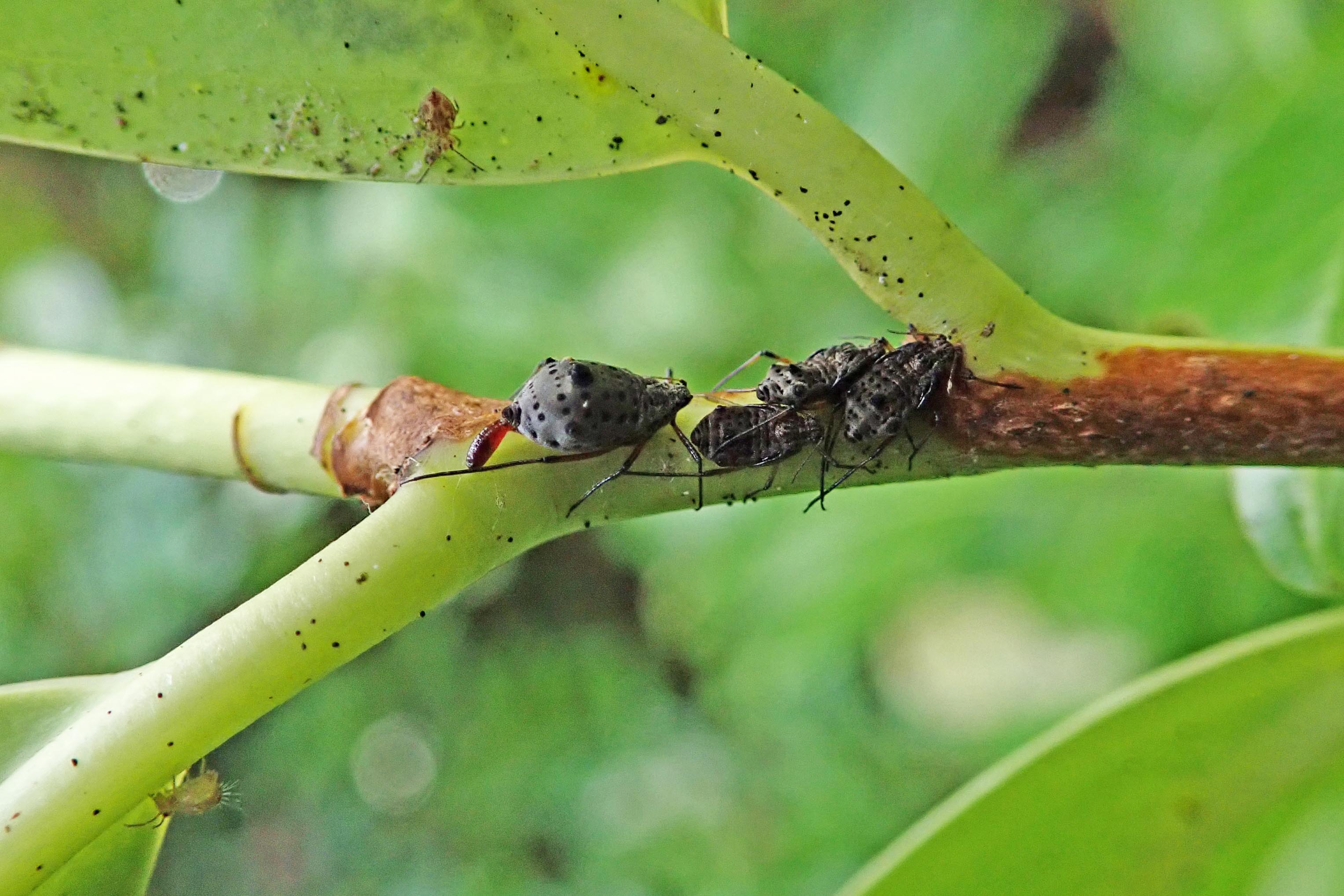
I almost forgot about this photo, taken a couple of weeks ago on a local walk. I’ve seen aphids of various sizes all together on one branch before but I’ve never knowingly seen an aphid that’s just had a baby. In fact, I didn’t know aphids gave birth to live young, rather than lay eggs, and I’ve only just found out that there’s no sex involved in the reproduction process. They may be the bane of every serious gardener but what fascinating creatures aphids are!

221217 aphid having a baby

Goldeneyed gals

Tags

, , , , ,

As their usual waterways freeze over and temperatures plummet, many birds are forced to move to find open water and places to feed. Though it’s certainly not pleasant for the birds, one of the huge pluses for those who love birding is that, in places like Cardiff Bay, having several days in a row of freezing temperatures can bring in the rarities. And, that’s exactly what happened today, with not one but four Goldeneyes present, a pair that I didn’t manage to see and these two females. I spent a delightful half hour watching them diving and preening and sailing back and forth just outside the iced-up waters along the Barrage. Magic!

221216 goldeneyes