New year, new lists

Tags

, , , ,

Yes, I make lists. Each year, a new page in my notebook, new pages in the spreadsheets on my laptop. I only keep two lists, one for the birds I see and one for the butterflies, which, unless I’m very lucky, won’t have any names added for a few months yet. I don’t do this in competition with other listers but rather as a way of comparing one year with another, and also of remembering. Just as photographs trigger memories of places and events, so too do my lists. And then there’s the personal challenge, particularly on the first day of the new year, to see how many bird species I can find on a walk around Cardiff Bay (31 in 2018, a whopping 47 in 2019, 44 in 2020, 40 in 2021, 45 in 2022). And this year’s total? Well, incredibly, yesterday’s 9-mile walk resulted in a total of 50 bird species, which was definitely helped by the lingering presence of Black redstarts, the Whooper swan, and this female Scaup.

New year, first bird

Tags

, , , ,

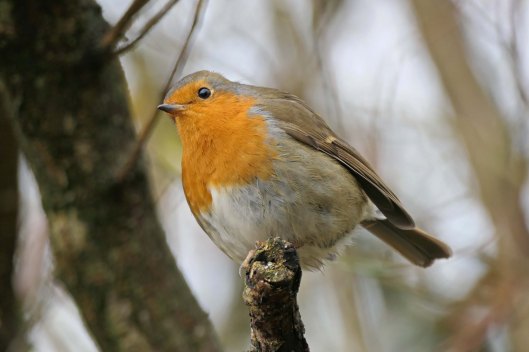
In previous years my first birds, seen or heard, have variously been a wee Robin that would tick-tick-tick its way around the tree at the front of my flat in the pre-dawn light, one of the many Lesser black-backed gulls that whirl around this seaside town, and a Blackbird whose alarm call rang out while I was still abed, probably in response to a prowling cat. This year, as last year and the year before, it was a little Robin, this one singing a merry tune as it sat in the tree. The RSPB website says Robins usually only live a couple of years but the oldest recorded was 11 years 5 months, so this could possibly be the same bird as in previous years.

230101 robin

Are you ready?

Tags

, , , , ,

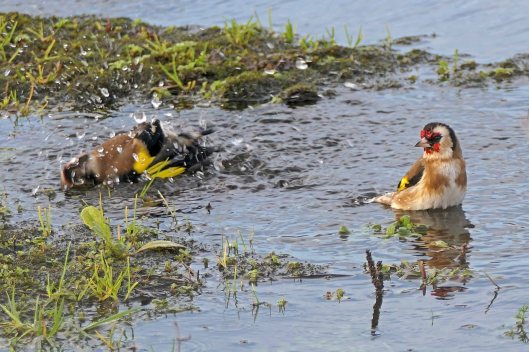
It’s time to wash off the dirt and grime of another year, enjoy a refreshing sluice down, jiggle and squirm to clean off the final flecks of dust, then shimmy and shake to flick off all that water before enjoying a thorough preen to prepare for the new year ahead. Are you ready? Set? Let’s goooooooooooooo …

221231 goldfinch

Silverleaf

Tags

, , , ,

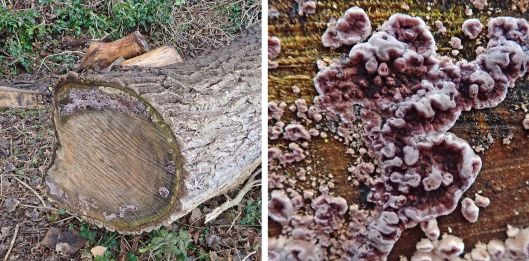
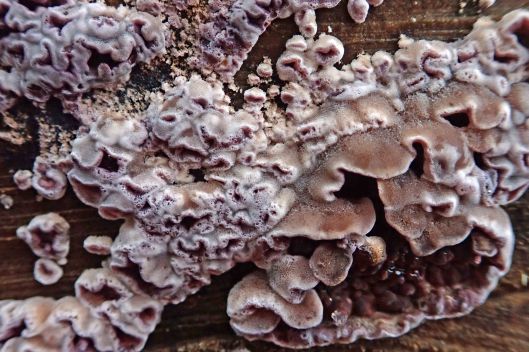
The pinkish-purple colour of this fungus makes its identification a little easier than many fungi, and is reflected in the epithet of its scientific name, Chondrostereum purpureum. Its common name, Silverleaf (or Silver leaf) fungus, comes from the damage the fungus can do as a parasite of some species of fruit trees.

221230 silverleaf fungus (1)

I’ve only ever seen it on dead wood, as in these photos, where it starts off looking like a crust spread across the surface of the sawn end of a tree, then, as it grows, develops into brackets, with a hairy upper surface and white edges.

221230 silverleaf fungus (2)

New Year Plant Hunt, 2023

Tags

, , , ,

The BSBI’s 12th New Year Plant Hunt runs from 31 December 2022 to 3 January 2023 so, if you’re at a loose end on one of those days or you’re looking for a reason to get out for a walk, look no further than this fun and important hunt for wildflowers in bloom. The Botanical Society of Britain and Ireland uses the data from this nationwide plant hunt to research the effects of climate change on our local flora and, as a citizen scientist, your contribution plays an important part in their research. You can read more about the hunt and events happening throughout Britain and Ireland, find out how to record your finds, and where to get help with identification on the BSBI website. Do please join in if you can.

Beautiful butterflies, 2022

Tags

,

For a variety of reasons, I wasn’t able to venture far from home for my butterfly viewing opportunities this year. As a consequence, the number of species I saw was small, just 30. Of those, 26 species were seen within walking distance of home, which, even after seven and a half years here in Wales, I still find amazing. In my native New Zealand, you would usually only see two species so easily (the introduced White and the self-introduced Monarch), though this does depend, of course, on where you live. The other four species on my list were seen up the valleys, at Aberbargoed, Grayling on the coal spoil tip, and Small heath, Marsh fritillary and Small pearl-bordered fritillary in the Aberbargoed Grasslands National Nature Reserve. Only 29 species are shown in my video, as I didn’t manage to get close enough to the Purple hairstreaks I saw for viable photographs. I am hoping / intending / planning to see more species in 2023, and compiling this video has made me impatient for the return of my beloved, beautiful butterflies.

Little limper

Tags

, , , ,

This morning’s weather was dismal, drizzle turning to steady heavy rain, so it was a delight to watch this little Moorhen. I’ve seen it before – it’s a juvenile, I think, from one of this year’s early broods, and it has a limp – its right leg looks weaker than its left, perhaps broken and rehealed when it was younger. But that doesn’t hold it back. It hobbles around as well as its kin and, perhaps to its detriment, it is quite fearless. When I walked slowly along the path, it popped up out of the water and headed straight towards me, presumably equating humans with the provision of food. Fortunately, it can still fly well too, so was able to flit quickly back to the safety of the lake when a dog headed our way.

221227 moorhen

On narrow-leaved willows

Tags

, , , , , , , , , ,

In early October I, and others, began a new leafmine search, for mines on narrow-leaved willows (see Leafmines: Phyllocnistis saligna, 3 October). In the months since, I’ve only found these mines in two locations, partly due to a lack of the host plants and partly, probably, because the moths have yet to spread very far (which may be because of a lack of host plants). I’ll continue the search next autumn but, in the course of my search – and this is one of the brilliant things about staring at leaves – I’ve found many other life forms that were making these leaves their home.
221226 on willow (1)

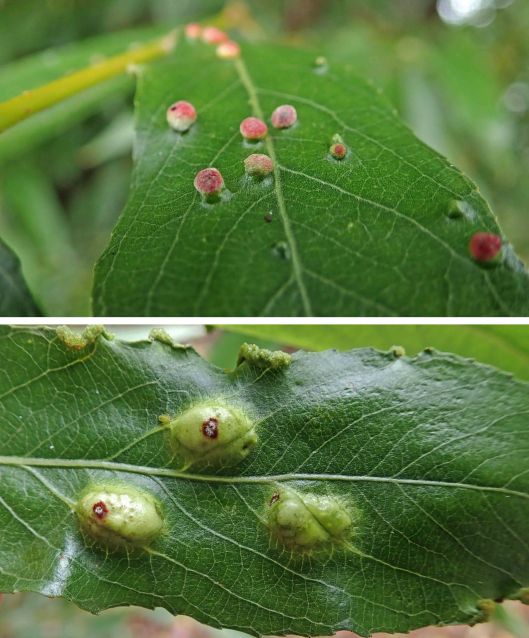
I found two types of galls: the first, above top, have been made by a species of mite, Aculus tetanothrix, and those immediately above are home to the larvae of the sawfly species, Euura proxima.
221226 on willow (2)

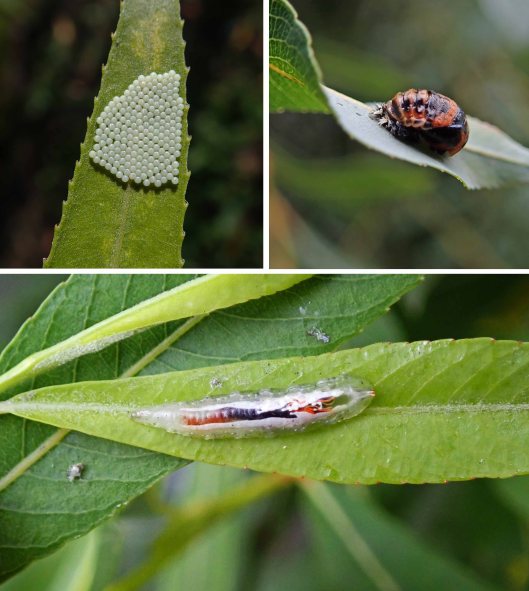
On the underside of one leaf I found this array of what I think are moth eggs and, on the right, is the pupa of a ladybird, and, below those, is a hoverfly larva.
221226 on willow (3)

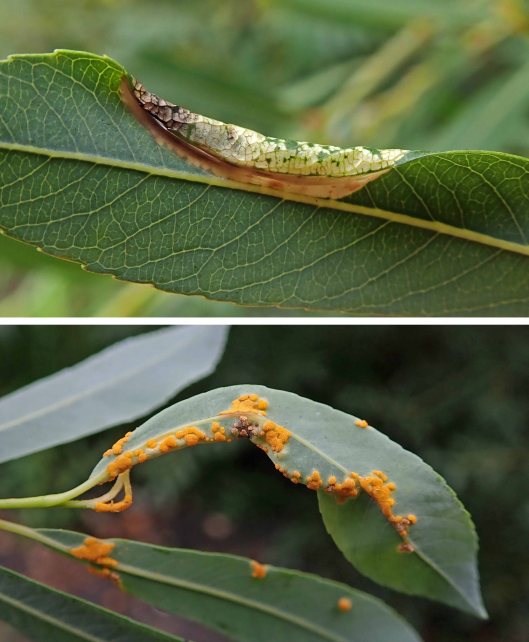
There was also a different species of leafminer, the tiny moth Phyllonorycter viminiella, and I found a rust, which might be Melampsora caprearum.