Two dives, two fish

Tags

, , , , ,

This Great crested grebe was on a roll! As I watched it diving close to the walking trail around Cardiff Bay, it was successful two dives in a row, emerging with squirming small fish clamped firmly in its beak. With a success rate like that, it wouldn’t take long to fill your tummy.

221124 great crested grebe

Lurking beneath

Tags

, , , ,

This is my favourite time of year for leaf turning, not only because it’s the best time of year to search for leafmines but also because you never know what you might find lurking beneath. In this instance, a rosy red Parent bug (Elasmucha grisea), which overwinters as an adult bug, was hiding away beneath the leaves in a well-vegetated spot.

221123 parent bug

Common, not common

Tags

, , , ,

In the part of coastal south Wales where I live, Common sandpipers are not so common, though there has been at least one (the same one?) of these little bobbing beauties frequenting the shorelines of Cardiff Bay and the lower River Ely for many months now. These birds can be quite flighty, zipping away at the slightest noise or movement, but this little particular sandpiper was too busy searching for (and finding) tiny crustaceans to munch on to worry about the human clicking away on her camera from the pavement above, luckily.

221122 common sandpiper

Frost and flowers

Tags

, , , , ,

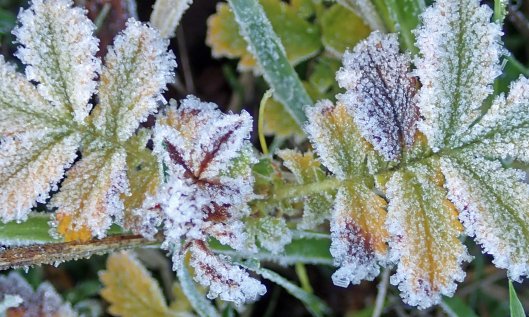
Yesterday saw our first real frost of the season, with the ground crunchy and vegetation covered in a sparkling layer of ice crystals.

221120 frost

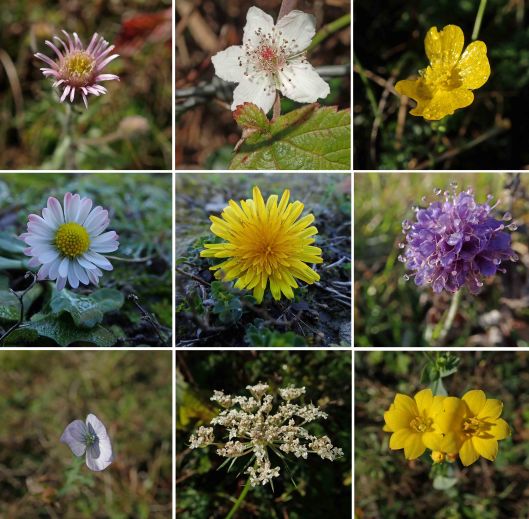
Despite these signs of the cooler weather to come, there were still plenty of wildflowers in bloom so, as I meandered up and down the east and west paddocks at Cosmeston Lakes Country Park, I photographed those I found: Blue fleabane; Bramble; both Creeping and Meadow buttercups; the ubiquitous Daisy and Dandelion; one or two Devil’s-bit scabious and Flax flowers hanging on in the more sheltered spots; Wild carrot enjoying a second flowering; and Yellow-wort, whose little bursts of bright sunshine yellow dotted much of the west paddock.

221120 cosmeston wildflowers

More Lacewing larvae

Tags

, , , , ,

Back in September 2021, after a little leaf-turning produced examples of eggs and larva, I blogged about The lacewing lifecycle. But that was one of the green lacewing species, so I didn’t initially connect the tiny larvae shown in the photos below with lacewings – in fact, I thought they were leafhopper larvae but, despite a good search through the images on the British Bugs website and other online image resources, I wasn’t able to distinguish which species. So, as I often do, I posted images on Twitter and asked for help (I’m going to miss that place if/when it finally dies!).

221119 Coniopterygidae larvae

Turns out, the little critters are the larvae of the Dustywing or Waxy lacewing, one of the Coniopterygidae species. Trouble is, around 460 species have so far been identified and the only way to really nail them down is to examine their genitals under a microscope. I am happy to remain ignorant and let these little creatures live their lives, though I am pleased I can now, at least, recognise them as lacewing.

Brown rollrims

Tags

, , ,

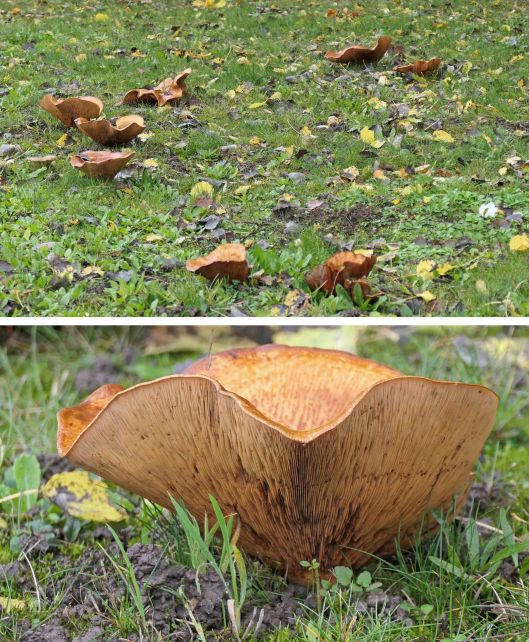
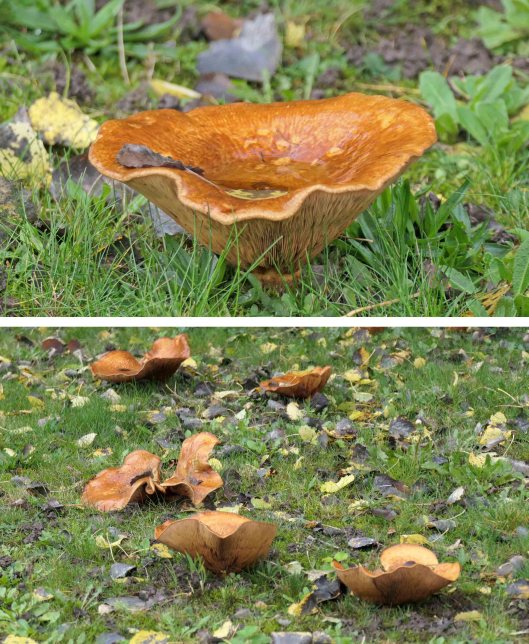
I initially thought these were a type of funnel fungi, one of the several Clitocybe species perhaps but, as I’m only too well aware that I’ve forgotten most of what I ever knew – never much – about fungi identification, I consulted an expert, Emma [@Coalspoilfungi on Twitter]. Turns out I was wrong – no surprise there!

221118 paxillus involutus (1)

These are Brown rollrims (Paxillus involutus) and they were massive, the biggest at least 12 inches across. They were growing on a grassy verge, next to a very busy local road. Emma told me: ‘They would have been viscid when wet, but when dry, [are] the texture of silky soft pig leather. Gills, cap and stem bruise easily deep red /orange to dark brown / Blackening slowly.’ Fungi are just so fascinating!

221118 paxillus involutus (2)

A rare visitor to Cardiff Bay

Tags

, , , , , , ,

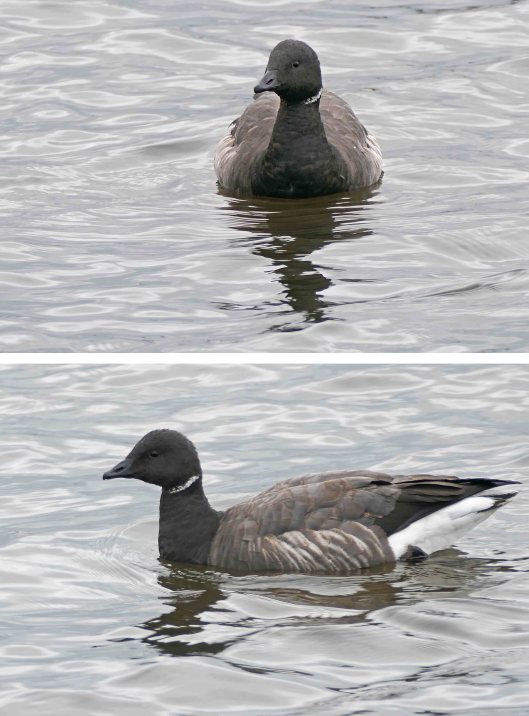
Monday’s walk around part of Cardiff Bay was special. When I reached the eastern side of the Barrage, I noticed an unusual bird with a flock of the 20-plus Canada geese that were cruising close to shore. I wasn’t sure what it was but a quick photo post to the local WhatsApp group produced three rapid responses: ‘It’s a Brent goose, Annie!’

221117 brent goose (1)

I probably should have known that but I’ve only seen these geese a few times before and then only at a distance. It’s a rare occurrence for one to drop in to the Bay. There are four races of Brent goose (Branta bernicla) (if you’re interested, there’s a good article, with photos, on the Bird Guides website); this bird was one of the dark-bellied sub species that breed in the Russian Arctic. Good numbers of these birds over-winter on the Exe estuary in southern England, so it’s possible that this bird was heading in that direction.
221117 brent goose (2)

Perhaps it got a little lost en route, though I suspect it was simply hungry. It repeatedly came out of the water and up on to the grass to feed – I say repeatedly because dog owners often let their mutts run loose in that area and the Brent, and the Canada geese that followed its lead, kept getting chased, causing them to fly back to the safety of the water. The geese persevered though and, from reports I heard from other birders who came to see this local rarity, I know that it was still in the area in the late afternoon. Our Brent visitor disappeared overnight, hopefully with its energy restored for the flight south to find its kin.


221117 brent goose (3)

Caterpillars in November

Tags

, , , ,

Though I know many Lepidoptera over-winter as caterpillars, and this has been a particularly mild November as well, it was still a surprise to see these two caterpillars on one of my recent walks. From previous sightings, I knew that the black, red and white hairy beastie was the larva of a Knot grass moth (Acronicta rumicis) but I didn’t recognise the other one. One of my Twitter pals was able to tell me it’s one of the Noctuid species of moths but wasn’t able to be more specific, but I’ve just ordered a book I’ve long desired, The Field Guide to Caterpillars of Great Britain and Ireland, so will hopefully be able to update this post soon.

221116 noctuid sp knot grass

The shield-bearing duck

Tags

, , , ,

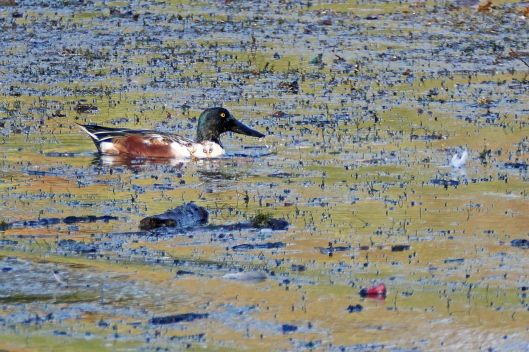
It’s always a pleasure to see a Shoveler, one species of duck that’s easy to identify because of its massive beak. This distinctive appendage is perfectly designed for sieving through water to find the tiny invertebrates and plant life that make up this bird’s balanced diet. Its scientific name is Anas clypeata, anas being the Latin for duck and clypeata, from the Latin clypeus for shield, here meaning shield-bearing, a reference to that massive shield-like bill.

221115 shoveler