Leafmines: Coleophora albitarsella

Tags

, , , , , ,

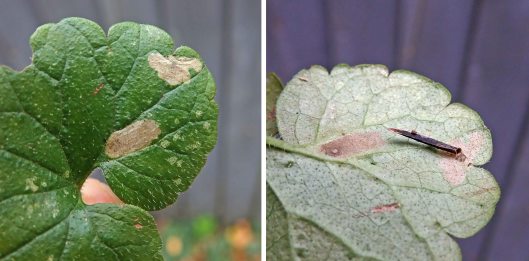
For months, both earlier this year and in recent weeks, I’ve been casting an eye over all the patches of Ground-ivy (Glechoma hederacea) I’ve noticed so I was delighted, last Friday, to finally find what I’ve been searching for, a new leafminer. Even better, as well as the tell-tale blotches on several leaves, when I turned over one leaf there was also an empty larval case.

221114 coleophora albitarsella (1)

These are the feeding signs for the larvae of the little moth Coleophora albitarsella (also known as the White-legged case-bearer, you can see the rather non-descript adult moth on the UK Moths website here), which munches on a wide variety of different plants (see full list on the British Leafminers website here). This moth species is relatively scarce in Glamorgan, with just a few sightings this millennium; in fact, it’s not very common anywhere in the UK, with just 109 records currently showing in the NBN Atlas (110, when mine is added) , so I feel rather privileged to have found these leafmines.
221114 coleophora albitarsella (2)

Dabchicks

Tags

, , , ,

The Little grebe (Tachybaptus ruficollis) is also commonly known as the Dabchick, though it has a wide variety of other vernacular names. Its scientific name, according to professor Wikipedia, is a combination of Ancient Greek and Latin: takhus means fast, bapto means ‘to sink under’, rufus is red and collis comes from the Latin for neck – so, fast diving red-neck. It’s aptly named. Although these cute little grebes are widespread and common, they are ‘seen infrequently as they live on waterways where there is dense aquatic vegetation’, according to Fauna Britannia, though I would modify that to read that they are seen infrequently close up because they dive rapidly as soon as they realise someone is near.

221112 little grebe

Dusky puffball

Tags

, , ,

As you can see, the Dusky puffball (Lycoperdon nigrescens) is very similar to the Common puffball but its skin is darker. Specimens are primarily found in coniferous woodland (mine was fruiting in a section of a local cemetery planted with various species of conifer), though these flexible puffballs can also be found growing amongst the dunes at the seaside and in the acid soils of heathland. According to Pat O’Reilly in his book Fascinated by Fungi, these fungi emit ‘an unpleasant gassy smell’ when their flesh is cut. I didn’t check!

221111 Dusky Puffball

Tooting Teal

Tags

, , , , ,

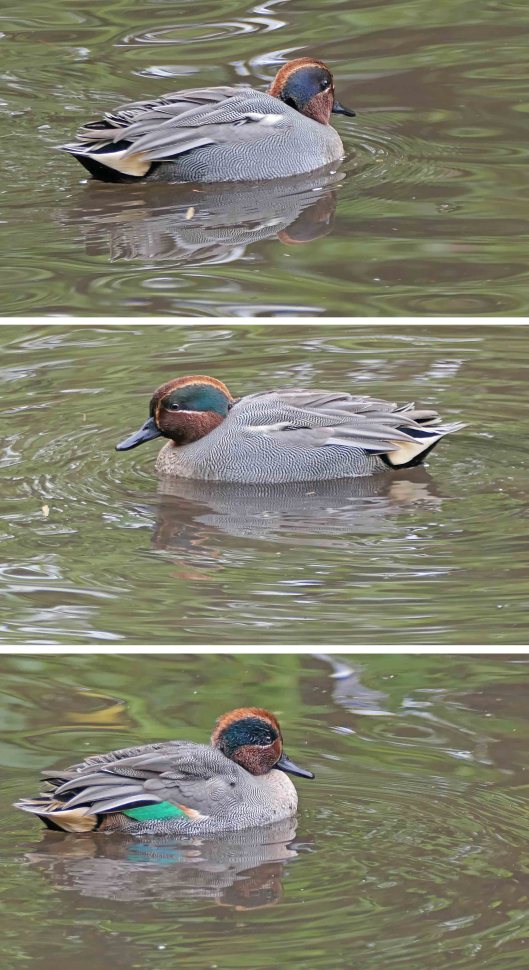
I could hear them tooting from the other side of the road so quickly got my camera out and headed across to Roath Park Lake. There were six Teal in total, four males and two females. One pair was drifting off to one side together but it was the other three males that were making all the noise.

221110 teal (1)

The second female, a delicate brown-and-grey beauty, was the subject of their intense attention. All three males were circling her, making their distinctive tooting call and flinging back their heads. I had never seen this behaviour before but their display was unmistakeable. Each was trying, but seemingly failing to impress the female. They were certainly presenting her with some very handsome choices, and I was definitely impressed.

221110 teal (2)

Twenty two

Tags

, ,

I know the weather’s been mild – we haven’t even had a frost here yet – but I still didn’t expect to see a bunch of ladybirds on nettles as I walked through a local park on Monday afternoon. Initially I thought there were just one or two but the little red dots just kept on appearing so I retraced my steps to where I’d seen the first one and counted. Twenty two! Sadly, they were all the invasive Harlequins but hopefully that means the native breeds are all tucked up somewhere safe for the winter.

221109 ladybirds

Movement, 2

Tags

, , , , ,

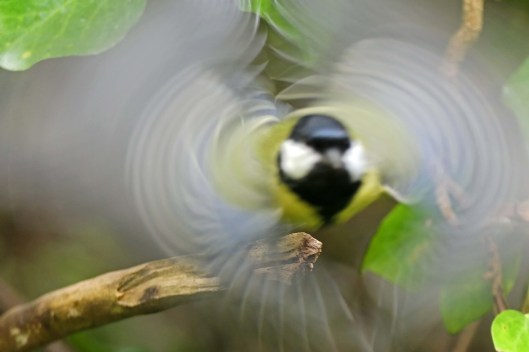
As I mentioned in last Saturday’s post, the birds at Cosmeston Lakes Country Park are currently not being fed by visitors because of the danger of spreading bird flu, but the birds are confused by this neglect.

221108 great tit (1)

And, as they’ve come to expect people feeding them, if you’re walking through Cogan Wood and stop to look at something, anything, the small birds come flying in, hopefully. This Great tit was particularly cheeky and kept flying straight at me, making me felt guilty that I had no seed, even for one hungry bird.

221108 great tit (2)

Leaves as lungs

Tags

, , ,

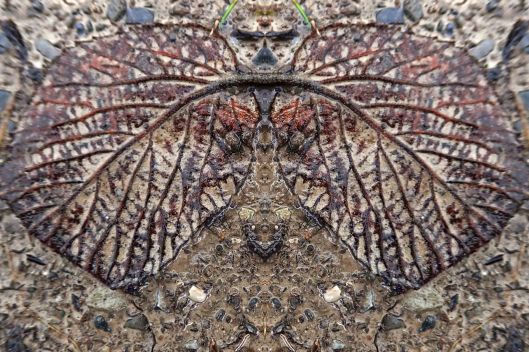
I’m not actually a fan of mud. It clings to my shoes, leads to more frequent clothes washing, makes pathways impassable, occasionally causes me to slip and slide and fall over on my backside. But, when I noticed a patch of fallen leaves lying in mud, I rather liked how they looked, how the mud helped to highlight the veins. And, when I got home and looked more closely at my photographs, this one leaf looked to me like a lung. And so I manipulated the image, cropping the photo then flipping it horizontally and pasting the two parts together. Et voilà!

221107 muddy leaves

An empty pod

Tags

, , , , ,

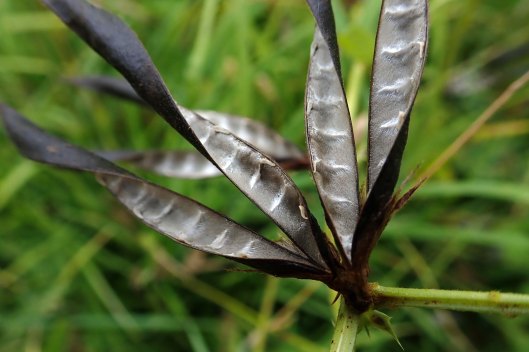
This pod has done its job, encasing within its sturdy walls the growing seeds of the next generation of legumes, in this case one of the vetch family. Once the seeds were mature, the pod began to dry out, in the process turning from a lush green to rich brown. And then, when the time was right, the temperature and humidity at optimum levels, the pod split open, flinging its seeds as far and wide as possible to try to ensure the success of the next plant generation.

221106 seed pod

Little Coalmouse

Tags

, , , , ,

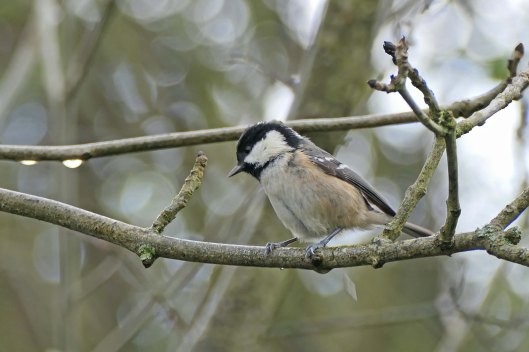
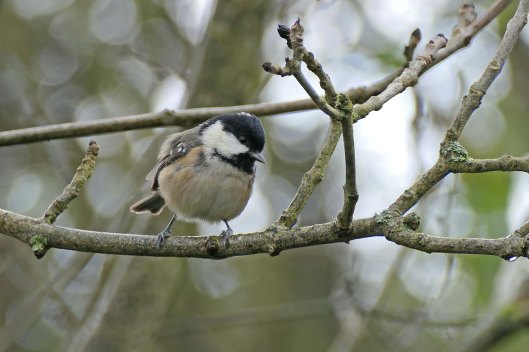
There’s a kissing gate between the sections of a paddock at Cosmeston Lakes Country Park where passers-by frequently leave seeds on the tops of the wooden posts for small hungry birds. When avian flu appeared amongst the local birds, the park rangers put up signs asking people not to feed the birds so that their close association did not spread the flu, and mostly people have complied with these instructions.

221105 coal tit (1)

The birds, of course, can’t read the signs and so they still lurk in the bushes near the regular feeding places, expecting seeds to appear when walkers pass through. This little Coal tit – historically, it would have been called a Coalmouse, according to my Fauna Britannica – was disappointed not to find a few seeds when I walked this way on a recent rainy day.

221105 coal tit (2)