Garbage Bay

Tags

, , , , ,

Cardiff Bay has a reputation as a lovely area but the sad reality is that when you place a barrier across a bay into which two rivers discharge then the garbage that flows down those rivers, especially after raging storms and heavy rain, is bound to accumulate. And, though the local council does remove some rubbish, this particular corner of the Bay is never cleared. No chance of any lunch for the Grey heron here, I’m afraid.
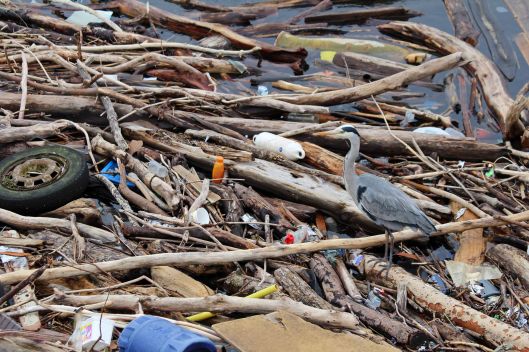
220301 heron in rubbish

Flying critters

Tags

, , , ,

Though a cool breeze blew from the south east, yesterday was wonderfully sunny, so I planned my walk to check the more sheltered spots in the local landscape where I hoped I might find newly emerged flying critters. And I got lucky. As well as my first two butterflies of the year (Small tortoiseshell and Brimstone, both too distant for photos with the camera I had with me), I also found some solitary bees and a wasp.

Thanks to Liam Olds, of the Colliery Spoil Biodiversity Initiative, I can tell you the two bees above are both ‘female Lasioglossum sp. [species] (morio group but not possible to ID from pics)’ and the bee below is a ‘male Andrena flavipes by the looks’.

220228 andrena flavipes

And the wasp I found basking on a tree trunk is a Vespula vulgaris.

220228 vespula vulgaris

Queen bumbles

Tags

, , ,

Not having been out walking for 12 days until yesterday means my first Springtime sightings are probably a bit behind many people’s. Still, it was an absolute delight yesterday to hear, three times, the buzzing of a bumblebee, and to watch this queen Buff-tailed bumblebee (Bombus terrestris) searching amongst the low vegetation for a place – perhaps the abandoned burrow of a vole or shrew – to create a nest for her first brood of the year.

220226 buff-tailed bumblebee

Colin’s coloured up

Tags

, , , , ,

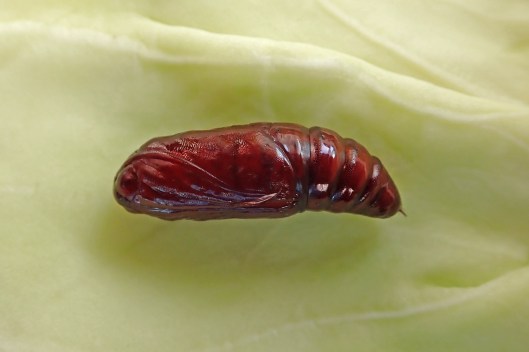
Don’t worry – I won’t be posting too many updates on Colin the caterpillar, now chrysalis. I just thought it was interesting to see how quickly he has changed from looking like a caterpillar to looking like a moth-in-the-making. During Monday morning, after he’d just pupated, he squirmed around a lot, sometimes quite violently. By the end of the day, he had turned a wonderful golden brown colour and showed definite structural signs of the moth he will become, a process that will apparently take between two and three weeks.

220223 Colin in colour

Joe Ben or Saw sharpener

Tags

, , , ,

From Fauna Britannica, some vernacular names for the Great tit (Parus major): Big ox-eye (Angus); black-capped lolly (West Yorkshire); Black-headed Bob (Devon); Joe Ben (Suffolk); Joe Bent (Gloucestershire); Sawfinch & Saw sharpener (Roxburghshire); Sharp saw (Norfolk), and many more.

220222 great tit

Author Buczacki explains that ‘the names “Joe Ben” and “Joe Bent” are probably onomatopoeic of the bisyllabic call; “saw sharpener” and other “saw” references are similarly descriptive of the call.’ Many birders describe the call as ‘teacher, teacher’ – I guess we all have our own ways of remembering the calls of birds.

Colin the chrysalis

Tags

, , , , ,

For various reasons (illness – mine, not his, and this run of stormy weather) I was not able to return Colin the caterpillar to the area where I think he must have been living before he hitched a ride home with me. So, I’ve been keeping him in a jar on my desk, where he’s munched happily on a diet of cabbage and Alexanders leaves. For the past 24 hours, I’ve been a bit worried as he’d stopped eating but this morning I discovered why – he’s pupated!

220221 colin the chrysalis