Alder-cone-seed-nibblers

Tags

, , , , , ,

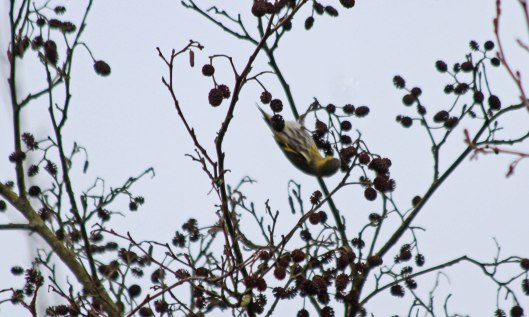
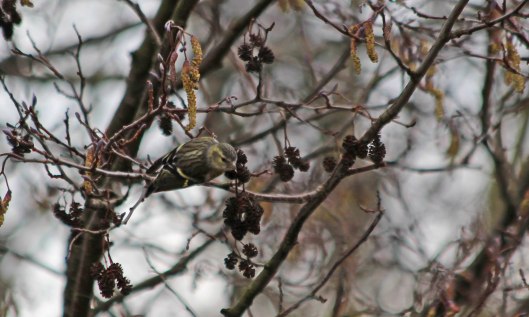
In yesterday’s post I mentioned the birds I’ve been seeing recently in Alder trees, in particular the Alder-cone-seed-nibbling Siskins.

210308 siskin (1)210308 siskin (2)

At Cosmeston Lakes Country Park, in the Cwm George woodland behind Dinas Powys, at Grangemoor Park and, yesterday, at Hamadryad Park – this year the Siskins seem to be everywhere there are Alders, nibbling on seeds, squabbling with Goldfinches, hanging upside down from slender stems … it’s been a joy to watch their antics.
210308 siskin (3)210308 siskin (4)

Alder flowers

Tags

, , , , , , ,

I’m off on a flower tangent this week. With no new wildflowers to add to last week’s collection and because I’ve been seeing lots of nice birds (especially Siskin) in Alder trees this week, I thought I’d focus on Alder for my Sunday flower post.

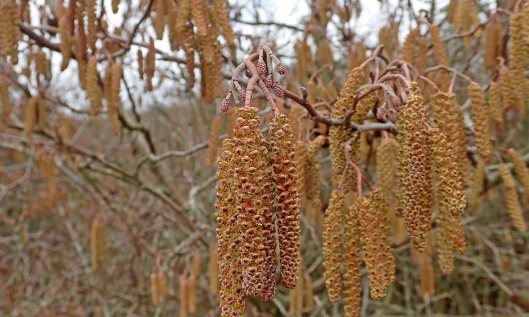
210307 alder flowers (1)

As the Alder (Alnus glutinosa) is monoecious, you can find both the male and female flowers on the same tree. I’ve frequently noticed the male flowers (commonly known as catkins), as they’re the most obvious and are very similar to Hazel catkins. Give them a flick at this time of year and you’re sure to see a shower of yellow ‘dust’ released into the air: that’s the pollen.

However, I hadn’t really paid any attention to the female flowers before and, I admit, I hadn’t really made the connection between the female flowers and the little woody cones they grow in to once fertilised. The female flowers are much smaller and found in little bunches on the stem, usually above the male catkins.

Interestingly, the Woodland Trust website says that ‘The green dye from the flowers was used to colour and camouflage the clothes of outlaws like Robin Hood, and was thought to also colour the clothes of fairies.’ And, of course, in the winter months the seeds from the cones provide essential nourishment to the Siskin, the Goldfinch and the Redpoll. What a bountiful tree the Alder is!

210307 alder flowers (6)

Three more hoverflies

Tags

, , , , ,

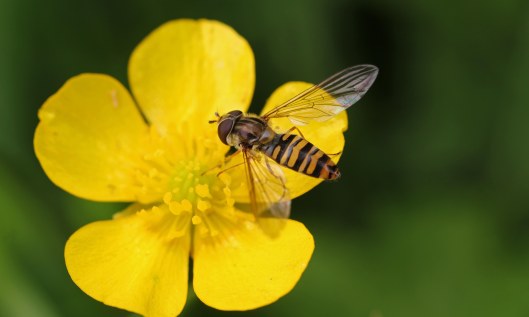
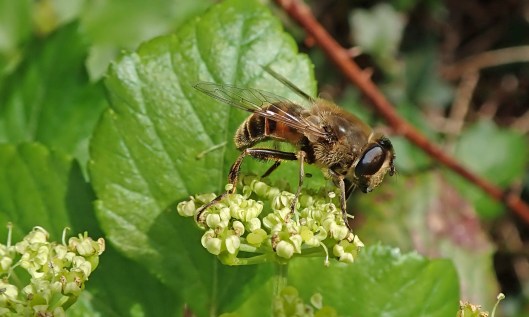
These three are often the first hoverflies seen in the springtime as they all over-winter as adults, so it’s no surprise that I’ve now seen these three species as well my first for 2021, the Melanostoma scalare I blogged about 10 days ago (First hoverfly, 25 February). We’ll need a bit more sun and warmer temperatures before more hoverflies are out and about though.

210306 Episyrphus balteatusEpisyrphus balteatus

210306 eristalis tenaxEristalis tenax

210306 Meliscaeva auricollisMeliscaeva auricollis

Nest-builders at work

Tags

, , , , , ,

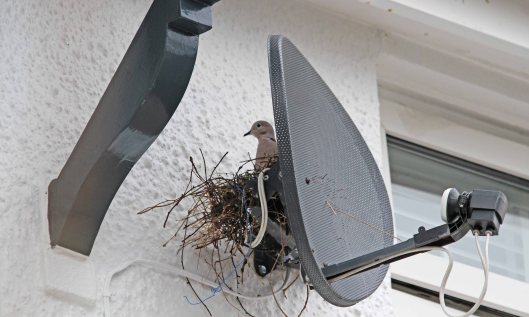
I didn’t turn up any interesting birds during my woodland walk on Tuesday but, on my way home, I spotted a pair of nest-building Collared doves at work. One, perhaps the male, was flying out to collect the materials – I spotted a lot of pine needles – and the other, I’m guessing the female, was sculpting the nest, poking and prodding, sitting and twisting around to form the bowl. Now I know where they are, I’ll be keeping an eye out for chicks.

210304 nest building

Common pocket-moss

Tags

, , ,

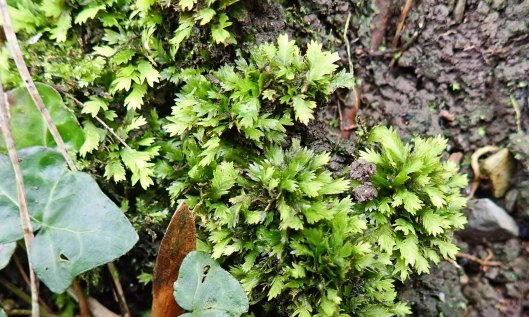
I was searching for the leaf mines on Hart’s-tongue ferns that I blogged about on Monday when I spotted this little moss. I wasn’t sure if I’d be able to identify it, as I’ve discovered mosses can be rather tricky, but I took several photos anyway.

210303 Fissidens taxifolius (1)

When I later checked out this species, the Fissidens, on the Nature Spot website, I realised I was on a hiding to nothing. Still, I recorded seeing the moss at species level and filed away my photos.

Then I got a notification about my record: the expert checking it had been able to make a more exact identification. So I can say positively that this is Common pocket-moss (Fissidens taxifolius). If you want to go down the rabbit hole that is moss identification, you can read more about it here.

500!!!

Tags

, , , ,

In the world of social media, reaching 500 followers means I’m very small fry as a blogger but, to me personally, it’s a huge deal, and I just want to say a sincere ‘thank you’ to you all for supporting my attempts to share the beauty, the fascination, the mystery of the natural world around us. Your follows, likes and comments are all very much appreciated. Diolch!

210302 robin

Leaf mines: Chromatomyia scolopendri

Tags

, , , , , ,

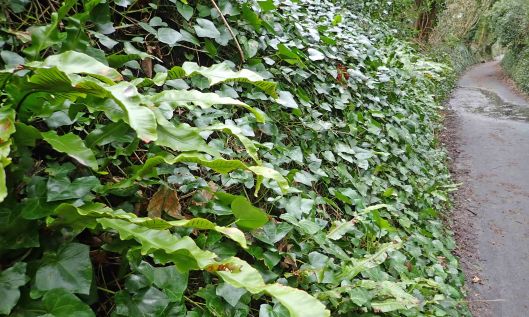
Another week, another leaf mine – in fact, lots of mines in the glossy, lush leaves of Hart’s-tongue ferns (Asplenium scolopendrium).

210301 Chromatomyia scolopendri (1)

I have actually blogged about these before (Leaf mine in Hart’s-tongue, January 2018) but those finds were made in Somerset and I’m now finding lots of these mines in my local area in south Wales. The mines are made by the larvae of the fly Chromatomyia scolopendri, one of the Agromyzidae family of flies, and their long, winding gallery mines are unmistakeable.

You can read more about these flies on the newly launched Agromyzidae Recording Scheme website, and, if you’re interested in finding out which leaf mines to look out for and when, the scheme has a page that lists which species are most commonly recorded each month. Can you find Chromatomyia scolopendri mines in your area?

Wild blooms

Tags

, , ,

The results are in! After a concerted effort to check as many different local habitats as possible, walking 31.5 miles over 5 days, I managed to find 29 different wildflowers in bloom this week. Two (Ragwort and Smooth sow-thistle) were too distant for good photos; the other 27 feature in this week’s little video. I hope you’re also seeing plenty of flowers in your areas now too.

The 27 are: Alexanders, Barren strawberry, Colt’s-foot, Cow parsley, Cowslip, Creeping buttercup, Daisy, Dandelion, Dog’s mercury, Field speedwell, Forget-me-not, Gorse, Groundsel, Ivy-leaved toadflax, Lesser celandine, Opposite-leaved golden-saxifrage, Petty spurge (with little yellow spots of the rust Melampsora euphorbiae), Primrose, Red dead-nettle, Red valerian, Shepherd’s-purse, Snowdrop, Spurge laurel (a shrub really but I’m including it), Sweet violet, Three-cornered leek, Wavy bitter-cress, and Winter heliotrope.

Mossy gravestone

Tags

, ,

Graves may not be everyone’s idea of wildlife-friendly spaces but I’ve found cemeteries and grave-filled churchyards can hold some interesting, often unusual flora and fauna.

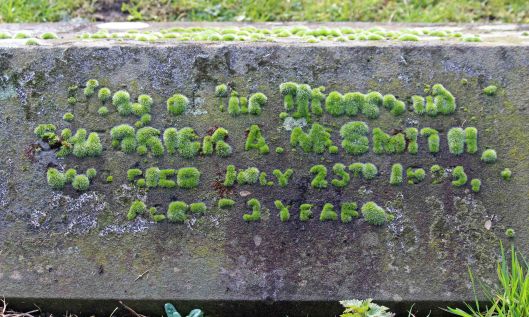
210227 mossy gravestone (1)

Mosses grow very easily on next to nothing. They have no roots, and only need moisture and shady conditions to grow.

210227 mossy gravestone (2)

I presume the indentations of the inscription on the gravestone, though shallow, would be deep enough to accumulate a little moisture and a modicum of dusty soil, and that’s all these little mosses required to thrive. The churchyard is also well shaded by hedges and tall trees, as well as the church building itself – again, perfect for the mosses.

210227 mossy gravestone (3)

Some people might think mosses and lichens should be scrubbed off gravestones or sprayed with chemicals to kill them. Not me. I can think of nothing nicer than to have my gravestone be home to little beauties like these, and my personal details spelled out in mosses.

210227 mossy gravestone (4)