First caterpillar

Tags

, , , , ,

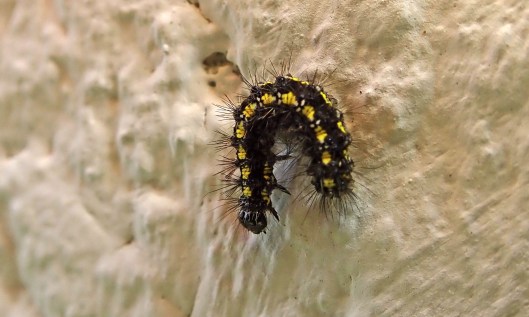
Most unexpectedly, I saw my first caterpillar of the year when I was out walking yesterday. It’s a Scarlet tiger moth caterpillar that was sitting on the stucco wall of a house I passed. According to my Twitter pal George, who’s a senior moth ecologist with Butterfly Conservation, though Scarlet tigers over-winter as larvae, these larvae are not usually seen until the spring. But spring is only a couple of weeks away and, if local bird activity is anything to go by, the wild creatures can already feel it in the air.
210206 scarlet tiger moth caterpillar

George reassuringly told me that caterpillars are tough but I do hope this little one finds somewhere a bit more sheltered to weather the cold spell that’s forecast for the coming week. I’d love to see it again when it emerges as an adult as they’re so beautiful and I’ve only ever seen the adults twice. The photo below, of a Scarlet tiger moth, was taken locally in June 2019.

210206 scarlet tiger moth adult

Bluebell rust

Tags

, , , , ,

Now that the lush leaves of Bluebells are poking their fleshy heads above the soil, it’s time to check for Bluebell rust (Uromyces muscari), which can be found on native, cultivated and hybrid Bluebells.

210205 bluebell rust (2)

I’ve been looking during my recent local exercise walks but have found most of the locals are rust-less, except in one location, which is where I found these examples.

210205 bluebell rust (3)

This rust won’t affect the flowers, of course, and, as far as I’m aware, it doesn’t affect the health of the plant. In fact, most people won’t even notice it’s there but now you know about it, you might.

210205 bluebell rust (1)

Barrage lichens

Tags

, , ,

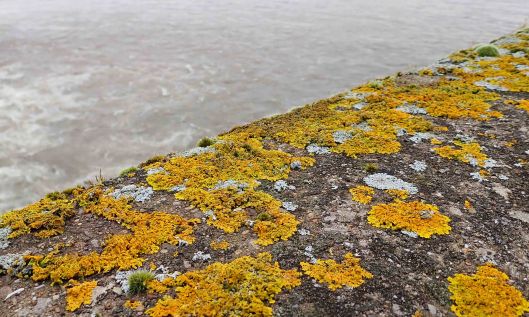
Cardiff Bay Barrage is a monument to concrete, 135,000 square metres of concrete – in fact, it received an award from The Concrete Society soon after it was completed. And lichens love having so much concrete to colonise!

210204 Barrage lichens (1)

According to that same Concrete Society, ‘As the concrete ages, the surface alkalinity is reduced by carbonation and the action of rainfall, thus providing a more suitable environment for biological growth.’ And, as lichens are sensitive to air pollution, the almost constant blasting of fresh air aids their lush growth, as you can see from these photos, taken during one of last week’s exercise walks.

Cooing doves

Tags

, , ,

Collared doves can be quite flighty I’ve found so, when I was out for a local walk recently, I was delighted to spot this pair grazing amongst the leaf litter on the pavement.

210203 collared dove (1)

As soon as I stopped to get my camera out of my backpack, they saw me and flew off. But I was lucky, as they had only flown across the road and were sitting on a stone wall.

210203 collared dove (2)

Using a van that was parked on that side of the road as cover, I managed to get close enough to get a few photos, then moved around the van and edged closer, very very slowly, to get more images.

210203 collared dove (3)

Happy with those shots, I then put the camera down and just enjoyed watching these beautiful creatures for some minutes, until other pedestrians walking along the street scared them off. I really value special moments like these, and I was cooing quietly to myself all the way home.

210203 collared dove (4)

Leaf mines: Phytomyza chaerophylli

Tags

, , , , ,

It may be winter but there are still leaf mines to check for, if you live in a location where the Cow parsley (Anthriscus sylvestris) is already springing up – here in coastal south Wales, I’ve even spotted a few flowers, though the official flowering period is April to June.

The leaf miner is a fly, Phytomyza chaerophylli, whose larvae munch their way through the leaves of several umbellifer species and can usually be seen from early spring right through to the end of summer, sometimes even earlier and later if the temperatures are mild enough. You can read more about these leaf mines and see more images on the UK Fly Mines website.

Feather: Jay

Tags

, , , , , , ,

I could easily have overlooked this feather if, at the very moment I glanced down, the sun hadn’t shone through a fleeting break in the dense cloud cover and highlighted the tiny splodge of bright blue on one side below the white.

210201 jay feather (1)

Once I’d picked up the feather and looked closer, I also noticed the faint blue mottling at the other end of the white patch. That blue is an indisputable identification pointer – this is from a Jay, it’s one of the less vibrant and well marked of its wing feathers.

Wild in the churchyard

Tags

, , , , , , , ,

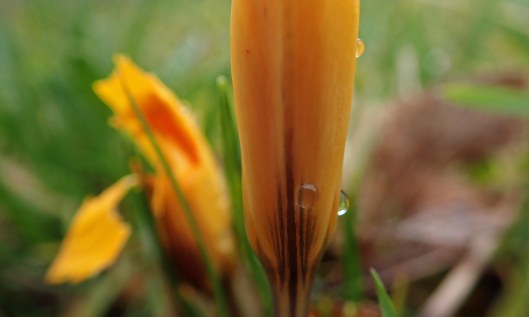
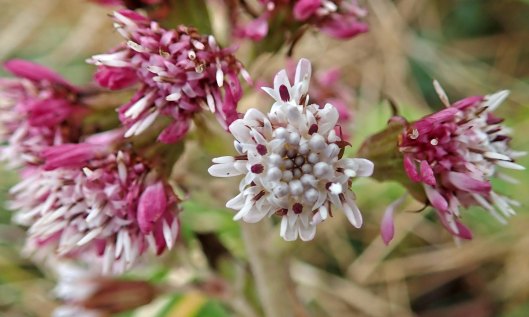
I often take a wander through the churchyard of St Augustine’s during my local exercise walks. As this space is purposefully managed to attract wildlife and nurture the environment, it’s always a pleasure to visit, to sit on a bench and listen to the birdsong, to check for what’s growing and blooming. On Thursday’s visit, I looked for wildflowers and was delighted to find my first Snowdrops and Crocuses of the year, as well as a lot of Winter heliotrope, several Primroses, a few Daisies in the grass, and the white-flowered variety of Red valerian.

210131 StAugs wildflowers (1)210131 StAugs wildflowers (2)210131 StAugs wildflowers (3)210131 StAugs wildflowers (4)210131 StAugs wildflowers (5)210131 StAugs wildflowers (6)

Ring-necked duck, again

Tags

, , , ,

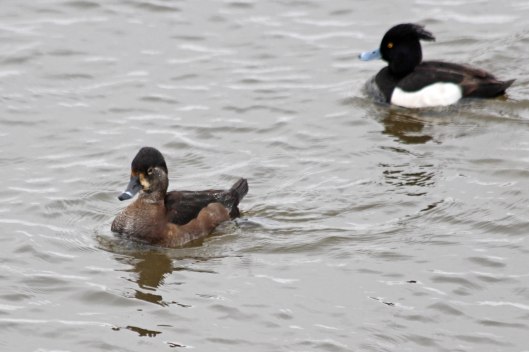
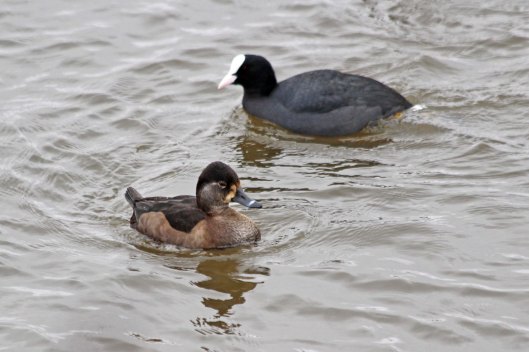
This gorgeous wee duck has already starred in a couple of this winter’s blog posts but yesterday, when I passed her regular spot, she was closer to the path than usual so I managed to get some slightly better photos, which I can’t resist sharing.

210130 ring-necked duck (1)

The Ring-necked duck (Aythya collaris), like the Tufted ducks this one spends its time with locally, is a diving duck that summers and breeds in North America but migrates to spend the winter in the southern United States and Central America. Sometimes that migration goes awry and, according to the BTO, around 21 Ring-necked ducks find their way to Britain each year.

210130 ring-necked duck (2)

Hopefully, in another month or so, our winter visitor, this lovely immature female Ring-necked duck, will catch a favourable wind to carry her back across the Atlantic to rejoin others of her kind and find herself a mate. Fingers crossed!

210130 ring-necked duck (3)

Dead man’s fingers

Tags

, , , ,

210129 dead man's fingers
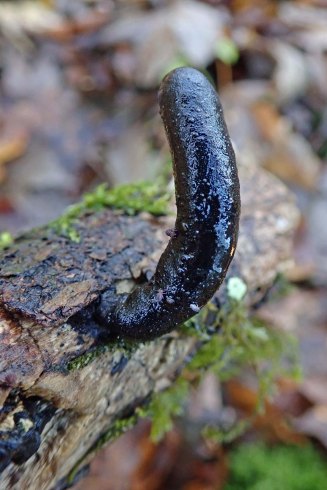
Be afraid! A dead man is poking his rotting blackened fingers up from the leaf litter, reaching for the passing ankles of unwary walkers.

Nah, not really, though the ‘fingers’ – really the fungal fruiting bodies of the aptly named Dead man’s fingers (Xylaria polymorpha) – can look rather spooky when first encountered.

As the First Nature website explains, these wood-rotting fungi play an important environmental role:

they specialise in consuming neither the softish cellulose nor the much tougher lignin but rather the polysaccharides … As a result, when these and various other ascomycetous fungi have consumed what they can of a dead stump the remainder is a nutrient-rich soft mess that insects and other small creatures are able to feed upon.

RSPB Garden Birdwatch 2021

Tags

, , , ,

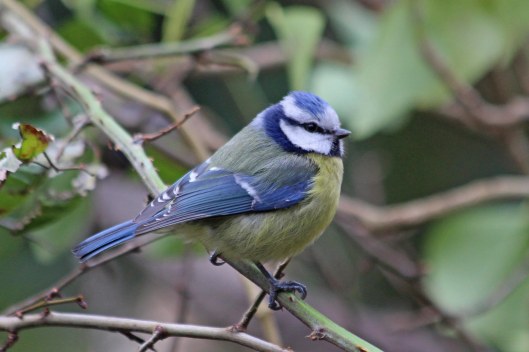
In 2020, the Blue tit was the third most common bird to be recorded by people taking part in the annual RSPB Garden Birdwatch, which is happening again this weekend, 29 – 31 January.

210128 blue tit (1)

So, if you have a garden, how about spending a relaxing hour enjoying the birds that visit your green space? You can read all about it and do your bit for citizen science by checking the RSPB website here.

210128 blue tit (2)