174/366 Mitey galls

Tags

, , , , ,

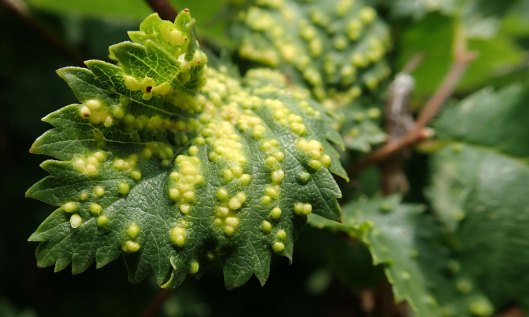
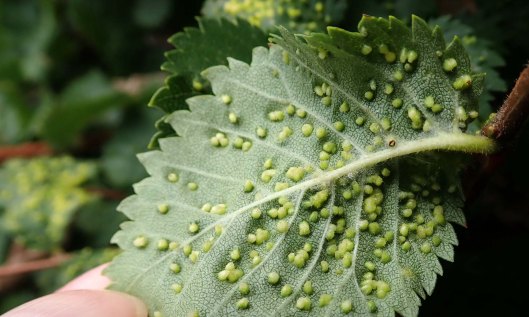
When walking along a narrow path between fields last week, I turned to face into the neighbouring hedgerow so that two other walkers could safely pass behind me. In so doing, I noticed these galls, which I think are Aceria campestricola (also known as Aceria ulmicola).

These growths betray the presence of the hundreds, perhaps thousands of the tiny mites that have caused these galls to form.

These particular galls can only be found on specific elm species, which in Britain include English elm and Small-leaved elm.

173/366 Beautiful Betony

Tags

, , , , ,

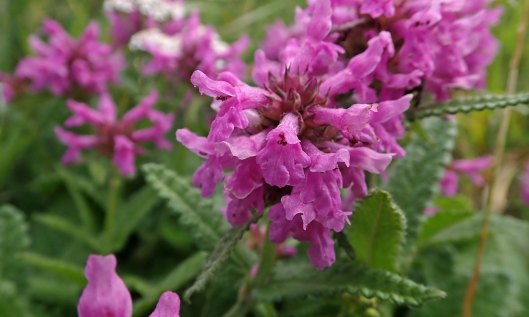
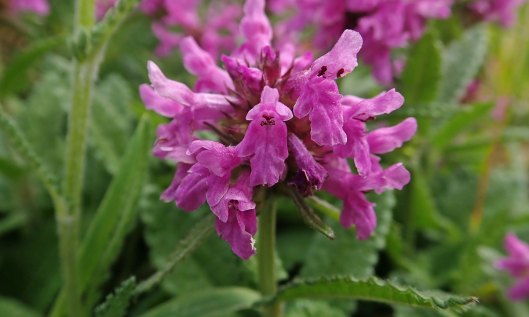
This was a pretty find in an unmown roadside verge earlier this week. It looks more pink than my wildflower guide and most online images show, but I’m fairly sure this is Betony, which now goes by the scientific name of Betonica officinalis, but was previously Stachys officinalis.

200621 betony (2)

Its common names include Common hedgenettle, and Bishopwort or Bishop’s wort, and my Flora Britannica labels it ‘one of the great “all-heals” of medieval herbalists’. The various old herbals claim it was effective for everything from treating arthritis and gout, to preserving the liver and curing drunkenness. Roman physician Antonius Musa reckoned it counteracted sorcery, and Christians planted Betony in churchyards as a ghost-busting tool.

200621 betony (1)

I’ve read that various subspecies are available that produce different flower colours so perhaps this is one of those and the plants have developed from seed dropped via bird droppings, though the verge contains a wealth of other wildflowers – Yarrow, as you can see in one of my photos; Oxeye daisies; Knapweed; Bird’s-foot trefoil; and even three Pyramidal orchids. Before the high-rise apartment blocks and office blocks were built, this riverside location must have contained a wealth of wonderful plants and, perhaps now that the verge is not being mowed, the plants are making a comeback.

200621 betony (3)

200621 pyramidal orchid

172/366 Chicks

Tags

, , ,

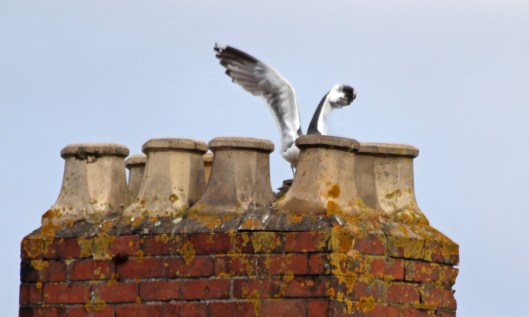
The neighbourhood Lesser black-backed gulls, presumably the same pair as last year, have bred again, amongst the chimney pots of a house over the back lane from me. I first noticed them checking out their previous nesting spot a couple of months ago – the photo below was taken on 22 March, and there was a lot of mating activity in early May (see Bonding, 4 May).

200620 1 LBB gulls 22March

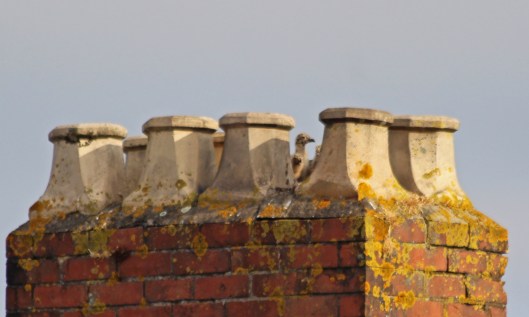
The female started sitting in mid May, and I spotted the first chick on 12 June.

200620 2 chicks 12June

Now there are three chicks, the same number as this pair started off with last year, though they only managed to fledge one. I’ll keep you updated on this year’s success (or failure) rate. Fingers crossed!

200620 3 chicks 17June

171/366 Buttercups

Tags

, , , , ,

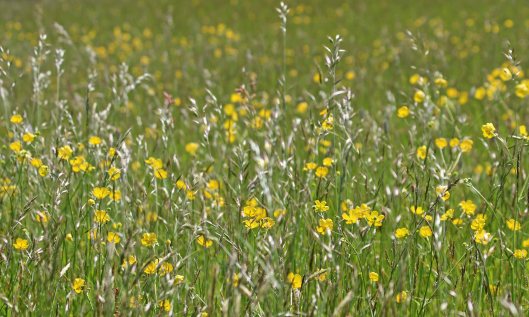
I’ve been trying to learn about buttercups, specifically how to identify the three species that are most common in my area and, three cheers, I think I’ve finally got it! Each species has several distinguishing characteristics – these are simply the features I find most helpful.

200619 meadow buttercup (1)

Meadow buttercup (Ranunculus acris): This is probably the easiest to put a name to, partly because it’s the tallest and also because its leaves are very distinctive – they are quite finely cut, and remind me of geraniums. This is the buttercup I see most often, especially in local wildflower meadows.

200619 creeping buttercup (1)

Creeping buttercup (Ranunculus repens): I see Creeping buttercup frequently too, and find its leaves the best way to identify it – they are broader, with three lobes and with pale marks on each lobe.

200619 bulbous buttercup (1)

Bulbous buttercup (Ranunculus bulbosus): Bulbous is the buttercup I see least often. The distinguishing feature I find easiest to remember is the way the sepals underneath the flower bend back against the stem, rather than cupping the flower. I had to turn over a lot of flowers before I found this one!

170/366 Misc hoverflies

Tags

, , , , , , , , , ,

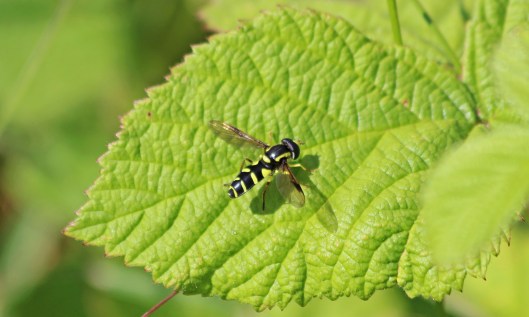
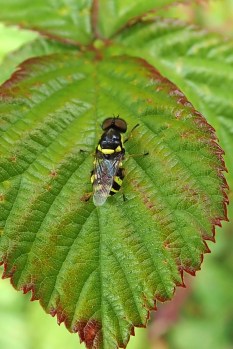
Hoverflies seem particularly numerous this year … or maybe it’s just that I’ve been keeping more of an eye out for them. Here are some of the species I’ve clocked in the past couple of weeks. Looking through my photos again now, I’m struck by how diverse these lovely creatures are.

OLYMPUS DIGITAL CAMERA

Volucella bombylans: One of the bumblebee-mimicking hoverflies. This one was snoozing on a cool day, which is how I managed to get a nice close shot.

200618 chrysotoxum bicinctum

Chrysotoxum bicinctum: Its distinctive yellow bars make this hoverfly reasonably easy to identify.

OLYMPUS DIGITAL CAMERA

Episyrphus balteatus: Also known as the Marmalade hoverfly. Despite its small size, this species is known some years to migrate en masse to Britain from continental Europe.

OLYMPUS DIGITAL CAMERA

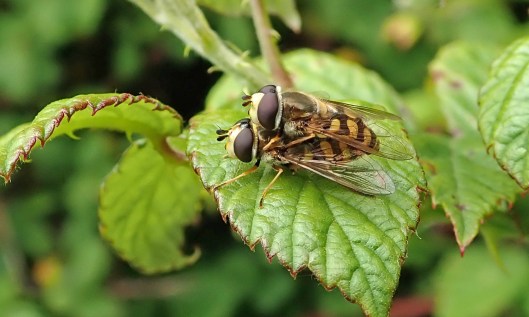
Eupeodes corollae: These two were otherwise occupied, which allowed me to get quite close to them.

OLYMPUS DIGITAL CAMERA

Helophilus pendulus: The ‘footballer’, because of the striped ‘footballers’ kit’ markings on its abdomen.

OLYMPUS DIGITAL CAMERA

Sphaerophoria scripta: Apparently, the yellow colouration is influenced by the temperature at which the larvae develop, so Spring-born individuals can be darker than those hatching later in the year.

OLYMPUS DIGITAL CAMERA

Volucella pellucens: One of Britain’s larger hoverflies; also known as the Great Pied hoverfly and the Pellucid fly.

200618 xanthogramma pedissequum

Xanthogramma pedissequum: This used to be easy to identify from its distinctive markings but, in 2012, the very similar Xanthogramma stackelbergi was added to the British list so now the thoracic markings need to be carefully checked to ensure the correct identification.

OLYMPUS DIGITAL CAMERA

Xylota species: I didn’t get good enough photos of this one to be able to work out whether this was X. segnis or X. sylvarum – you need very clear views of its hind tibia to work out which is which.


169/366 Fox

Tags

, , ,

This was a bonus on Monday’s long walk …
I first saw its red bottom and tail walking away from me and thought I wouldn’t see it again but then it turned and sat in the long grass, keeping an eye on me while I took several photos. After about 5 minutes it spotted something more interesting on the other side of the field and trotted off. A delight!

200617 fox

167/377 Leaf eaters

Tags

, , , ,

I don’t see many beetles, perhaps because I don’t spend enough time looking for them, but I could hardly miss these ones, because there were hundreds of them.

200615 celery leaf beetles (1)

I’m not entirely sure what they are and there are many species of leaf beetle that look very similar but, as these were munching on umbellifer leaves – possibly hogweed (I’m not good at identifying umbellifers either!), I think they might be Celery leaf beetles (Phaedon tumidulus).

As well as munching on the correct type of leaf, these beetles were about the right size (tiny, just 3-4mm), and, although they have lines of dimples on the elytron (the wing covers on the abdomen), they don’t have any on the centre of the pronotum (the thorax), which also fits with Phaedon tumidulus. However, I may have got the ID wrong, so do let me know in the comments box if you can positively identify these hungry creatures.

200615 celery leaf beetles (6)

166/366 Wild and yellow

Tags

, , , , , , , ,

It’s grey here in south Wales today, which is not a bad thing as we desperately need the accompanying rain, and it also makes me appreciate even more the days when vibrant, sunshiny, cheery yellow is the dominant colour of my day. Here’s some of the yellow that’s been brightening my walks in recent days.

200614 1 dyers greenweed

Dyer’s greenweed (Genista tinctoria), found at several local sites, and the food plant for the larvae of a couple of rare moths, though I’ve yet to find any.
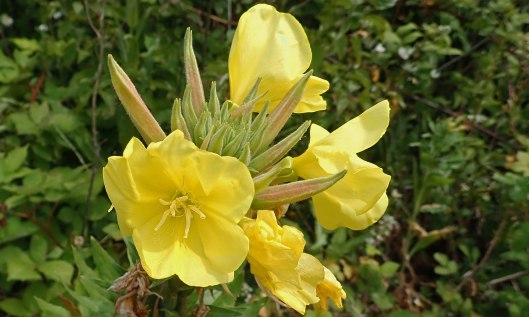
200614 2 evening primrose

Evening-primrose (Oenothera agg). There are several different species, which can be difficult to differentiate, and they also hybridise with each other, hence the ‘agg’.

200614 3 silverweed

Silverweed (Potentilla anserina). The Plantlife website has some fascinating information about this pretty plant – did you know, for example, that Roman soldiers used to pad their shoes with Silverweed to ease their feet on long marches?

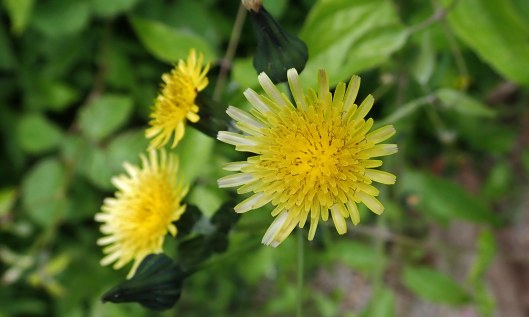
Prickly sow-thistle (Sonchus asper). Most thistles have flowers in shades of pink-lilac-purple but not this one. I’ve included two photos, one to show the structural beauty of the flower, one to show the prickly leaves.
200614 5 smooth sow-thistle

Smooth sow-thistle (Sonchus oleraceus). Another sow-thistle, but without those pesky prickles, and with flowers a more lemon-yellow.

200614 6 agrimony

Agrimony (Agrimonia eupatoria), a plant of hooking-bristle seed heads, as you may remember from my earlier post Hooked, September 2019.

200614 7 creeping cinquefoil

Creeping cinquefoil (Potentilla reptans), a plant that thrives on waste and bare ground.

165/366 Major Rara

Tags

, , ,

200612 Four-barred Major (1)

Thursday’s walk produced another new-to-me insect.

At first I thought it was a hoverfly I’d not seen before but, when I got home, checked my photos and then my hoverflies guide book, I realised I was mistaken, and this is, in fact, a Four-barred major (Oxycera rara), a tiny (7mm long) soldier fly.

The excellent Nature Spot website tells me these handsome little creatures are widespread in Britain, particularly in damp areas like wetlands and marshes.

200612 Four-barred Major (2)