65/366 The oldest plants

Tags

, , ,

‘The oldest surviving family of plants on Earth is the Equisetum – the horsetail. The fifteen or so species that persist today have known 395 million years of Earth’s history.’  ~  Hope Jahren, Lab Girl: A story of trees, science and love, Fleet, London, 2016.

To my eye, Equisetum has an ancient look to it. The plant was on this planet long before humans and I’m sure it will be around long after humans have passed. Its spears are pushing up everywhere now, a literal sign that Spring has sprung.

64/366 ‘A wonderful bird’

Tags

, , , ,

A wonderful bird is the pelican,
His bill will hold more than his belican,
He can take in his beak
Food enough for a week,
But I’m damned if I see how the helican.
The Pelican, Dixon Lanier Merritt, American poet

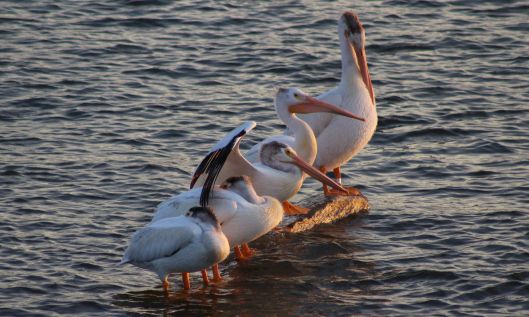
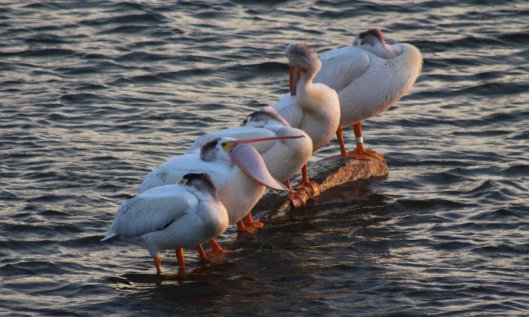
I met the stunning Great white pelican (Pelecanus onocrotalus) above at the Kuala Lumpur Bird Park in Malaysia in May 2013. The great thing about the bird park was its huge aviaries, where the birds had plenty of space and a relatively natural environment to roam in. The American white pelicans (Pelecanus erythrorhynchos), below, were gathering to roost on the Fox River, in De Pere, in the US state of Wisconsin in July 2015.

200304 american white pelican (1)200304 american white pelican (2)

I can’t help but wonder what the pelican with its beak open is doing – scratching an itch?

63/366 Small and white

Tags

, , ,

Roses are red, violets are white
If you’re confused, that’s alright.

200303 white sweet violets (1)

Though most violets are usually, well, violet coloured, some can be much lighter shades of lilac and Sweet violets (Viola odorata) also have a white variety. I was surprised and delighted to find good numbers of these gorgeous white beauties growing alongside a local pathway yesterday. In fact, as it’s a route I walk often, I was particularly surprised that I haven’t noticed their presence in previous years.

200303 white sweet violets (2)

62/366 A flying start

Tags

, , , ,

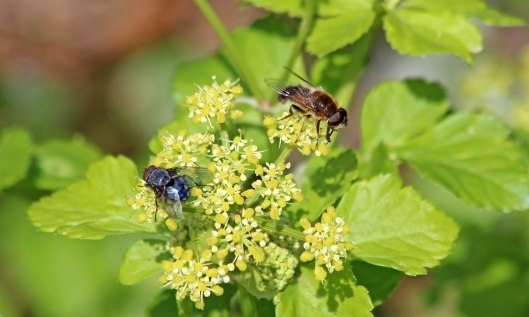
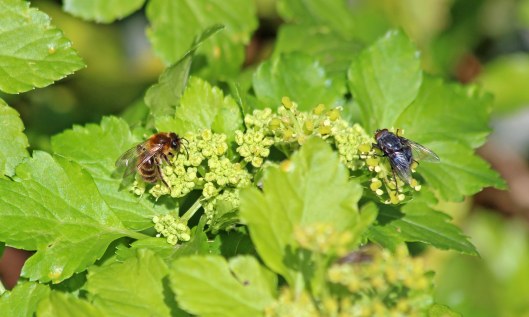
A little bit of sunshine and a sheltered spot, plus a few blooming wildflowers – in this case, dandelions and Alexanders, alongside a south Wales coastal road – and out came the flying critters: solitary bees a’buzzing, various species of flies a’flying and hoverflies a’hovering. Spring is off to a flying start!

200302 flying critters (1)


200302 flying critters (4)

61/366 Lilac and yellow

Tags

, , , ,

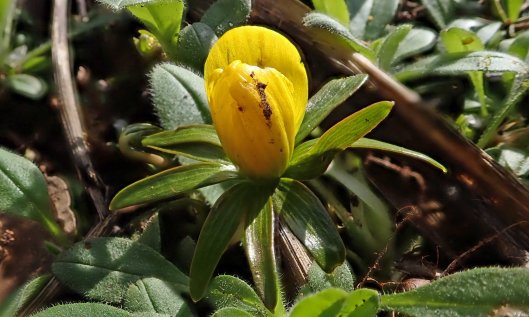
Rather than a full list of wildflower sightings this week, I’m focusing on just three, this week’s new (to me) blooms. And, in fact, this first wildflower, Winter aconite (Eranthis hyemalis), was a first-ever sighting for me. Originally from southern Europe, this plant is a member of the buttercup family, and, if the database records of this beautiful flower are any indication, it’s a plant that is quite rare in the wild in Wales.

200301 winter aconite

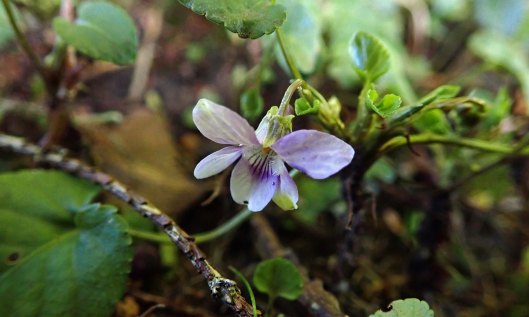
This is a dog-violet, possibly Early dog-violet, though I didn’t take good enough photos of the particular features needed to differentiate the Early (Viola reichenbachiana) from the Common (Viola riviniana).

200301 early dog-violet

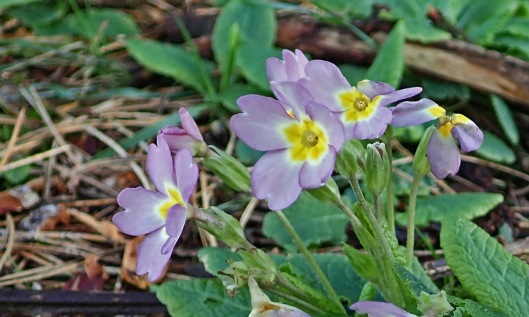
And, finally, this delightful combination of the two colours of the above blooms, lilac and yellow, a Primrose. Though not the usual cream-coloured flower we most commonly see, this is, I believe, a natural colour variation of the native Primrose, rather than something humans have bred.

200301 primrose pink variety

60/366 Barefaced crow

Tags

, , , , , ,

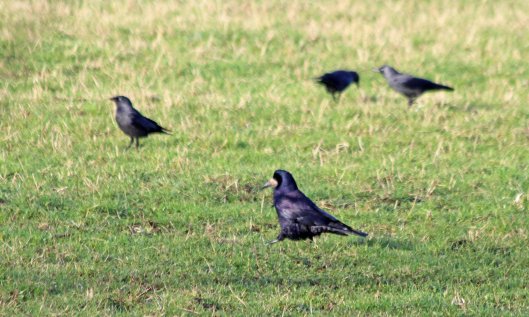
Barefaced crow is one of the common names for the Rook (Corvus frugilegus), and it’s easy to see how it came about, though it’s not so much that its face is bare but rather the top of its large, pale beak (compare the Crow on the left, the Rook on the right).

Though there’s a rookery in a nearby town, and used to be one in the woods at Cosmeston Lakes Country Park, I haven’t seen a lot of Rooks in my local area … until this winter. Now, I see them quite often, in the farm fields north of the park itself, usually in the company of Jackdaws and Carrion crows.

200229 rook (2)

I was fascinated to read in my Fauna Britannica, that ‘If a death (especially of the head of the household) occurred in a family owning the land that supported a rookery, there has been a widespread tradition that the Rooks must be told.’ Let’s hope that doesn’t prove necessary!

200229 rook (3)

59/366 Good weather for frogs?

Tags

, , , ,

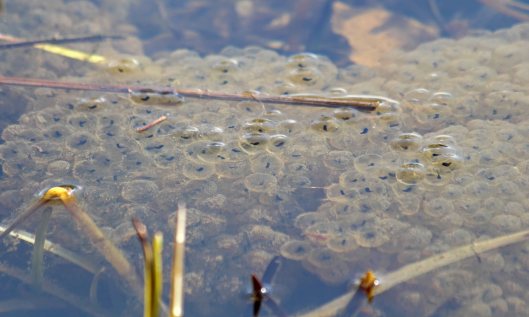
Do frogs like the rain? As they’re amphibians, I’m assuming they do but I’m sure even they experience difficulties when there’s too much water around, and maybe it’s just their tadpoles that, of necessity, like water.

200228 frog spawn (1)

Our miserable weather continued today, with heavy rain from dawn to dusk, so these photos are from a couple of days ago when I enjoyed a meander around Forest Farm Nature Reserve in the all-too-brief sunshine. I found this frog spawn, the eggs of the Common frog (Rana temporaria), in the dragonfly pond at the reserve.

200228 frog spawn (3)

I initially thought it was a little early but it turns out I blogged about finding frog spawn at Lavernock Nature Reserve on the exact same date last year. I missed the tadpoles in 2019 so must remember to check for them in a week or so.

200228 frog spawn (2)

58/366 A weather warning from the Wren

Tags

, , , , ,

200227 wren (2)

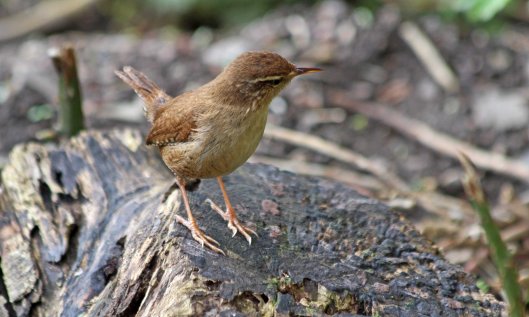
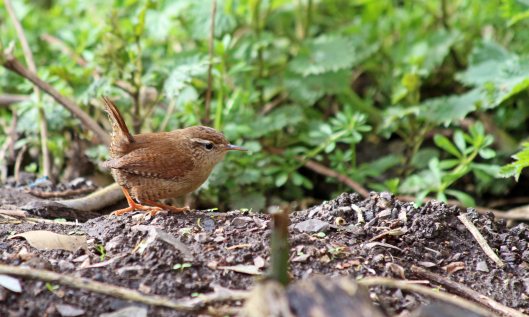
In its section about the Wren (Troglodytes troglodytes) my Fauna Britannica has this disturbing sentence: ‘In some areas, the sight of Wrens congregating presaged bad weather.’ I’d better not tell you how many Wrens I saw together yesterday because I’m sure that, like me, you really don’t want any more bad weather!

200227 wren (1)

57/366 WWW : Colombian butterflies

Tags

, , , , ,

These gorgeous butterflies were in the botanical gardens, the Jardín Botánico, in the Colombian city of Medellin, a treasure trove of beautiful flowers, lush plantings, and exotic creatures.

Owl (Caligo illioneus) : this is such a lovely butterfly and it’s easy to see how it got its common name, with those enormous eye-like markings on its lower wings. Presumably, those eyes are meant to scare away any potential predators.

200226 Monarch

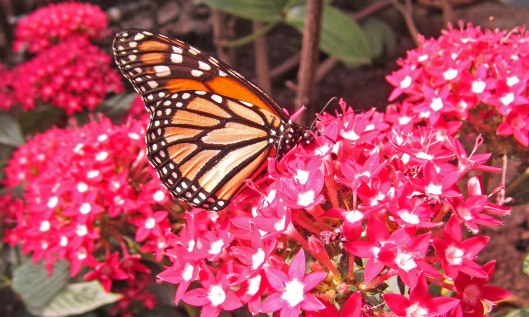
Monarch (Danaus plexippus) : I’m sure everyone will recognise this beautiful creature – it’s probably the world’s most recognisable butterfly, and most people know of its mass migrations in North America. I know of the Monarch, as it’s also found in New Zealand, where it’s considered a native because it self-established, a remarkable feat when you consider how far New Zealand is from the Americas.

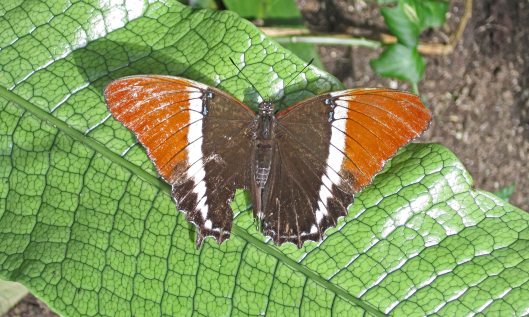
200226 Rusty-tipped page

Rusty-tipped page (Siproeta epaphus) : It took a while to find (through googling) the name of this butterfly. It’s a pretty little thing – if you click on the link, you can see photos that are rather better than mine.

56/366 Spots and splashes

Tags

, , , , ,

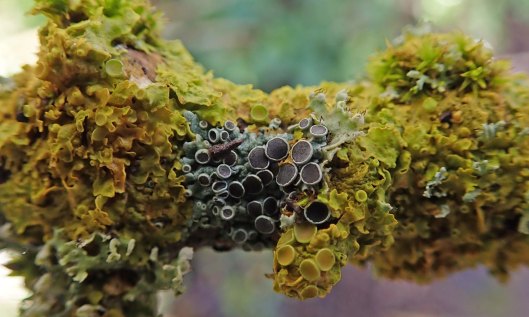
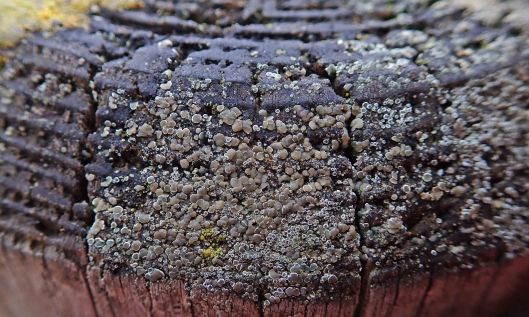
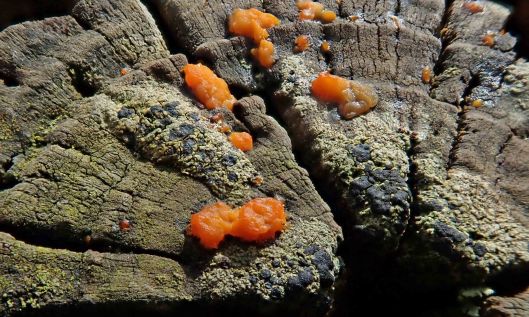
Amidst all the greys and browns and dull greens of the wintertime natural world, there are still wonderful wee spots and splashes of colour to be found. These are some I found during today’s stomp around Cosmeston, a rather rapid stomp trying, unsuccessfully, to avoid the rain showers.

200225 lichen and fungi (1)

I’m not good at identifying lichens but I do love their fresh, bright yellow-greens, especially on the twigs and small branches that have recently blown down from the tree tops.

200225 lichen and fungi (4)200225 lichen and fungi (5)

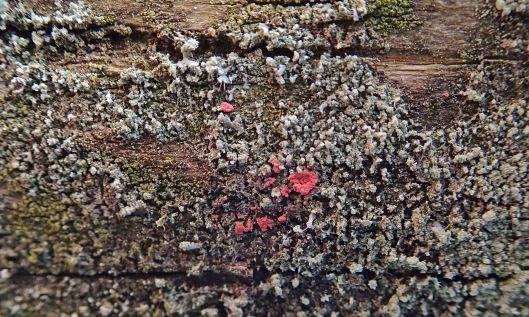
The tiny bursts of lollipop pink are Illosporiopsis christiansenii, a lichenicolous fungus (that’s a fungus which is parasitic on lichens, usually on Physcia tenella and sometimes on Xanthoria parietina).

And the pretty pops of orange, found on several fence posts, are Common Jellyspot fungus, Dacrymyces stillatus.

200225 lichen and fungi (8)