35/366 A flowering saxifrage

Tags

, ,

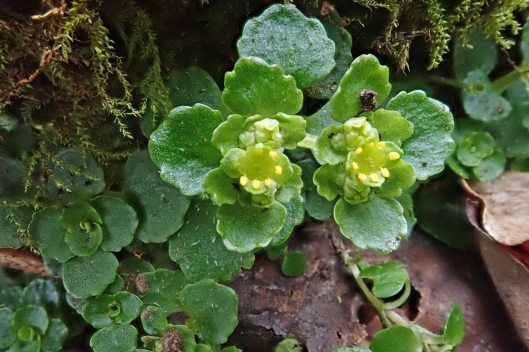
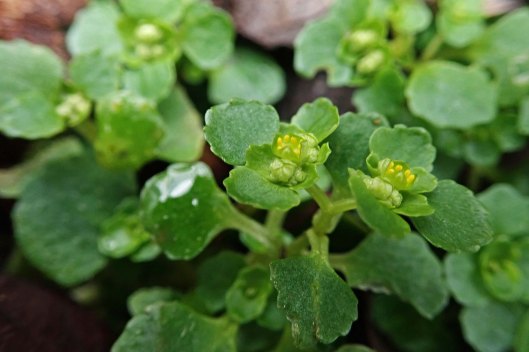
Today’s walk produced yet more evidence of our changing climate in the form of another very early Spring flower, this time Opposite-leaved golden saxifrage (Chrysosplenium oppositifolium), which my wildflower guide tells me shouldn’t be flowering for at least another month.
200204 opposite-leaved golden saxifrage (2)

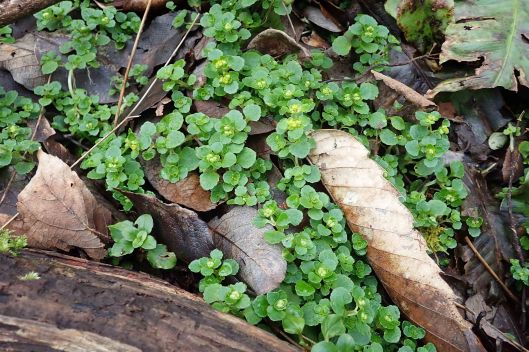
Today’s location was typical of this plant’s favoured habitat: in woodland, along the edges of a well-shaded small stream. Its liking for damp conditions is perhaps one of the reasons it grows best in western parts of Britain and is less common in the eastern counties.
200204 opposite-leaved golden saxifrage (3)

It can be confused with its cousin Alternate-leaved golden saxifrage (Chrysosplenium alternifolium) – the key thing, as the names suggest, is to check the arrangement of the leaves. In the first photo and the one below you can see how the pairs of leaves are growing opposite each other along the stem. You can only see its slightly odd flowers – they have no petals, just eight yellow stamens.
200204 opposite-leaved golden saxifrage (1)

34/366 Clever tit

Tags

, , , , ,

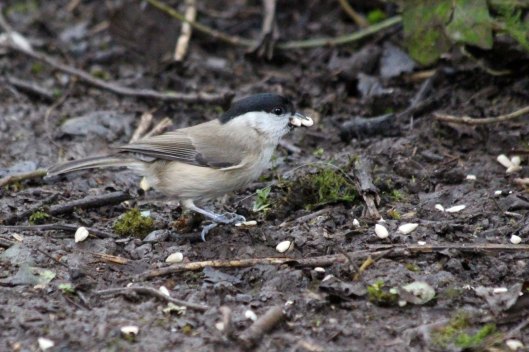
My walk through Cogan Wood this afternoon was punctuated by stops, at tree stumps, a sculpted dead tree known locally as the dragon tree, by benches, and at particular shrubs and bushes, where I dispensed seed to the hungry small birds that immediately mobbed me.

200203 Marsh tit (1)

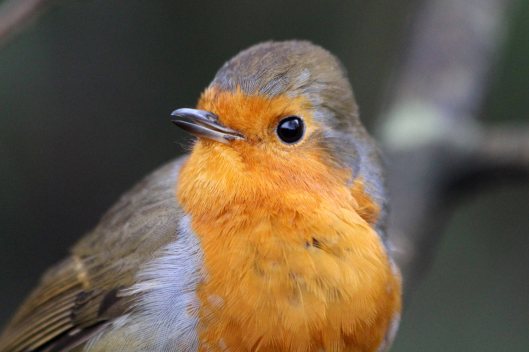
I was delighted that one of those hungry small birds was the resident Marsh tit, as I hadn’t seen it for a few weeks. And I was very impressed with its intelligence – whereas the myriad Great and Blue tits flit in, grab a single seed, and flit away into the bushes to eat it, the Marsh tit has learnt to grab at least two, once three seeds in its tiny beak before flying quickly off. What a clever little tit!

200203 Marsh tit (2)

33/366 This week in wildflowers

Tags

, , ,

These are the blooming wildflowers I was able to find during yesterday’s and today’s local meanders, an impressive total of 21, due to the continuing mild weather we have been experiencing this winter.

This slideshow requires JavaScript.

They are: Bramble; Comfrey – a nice surprise; Common ragwort (with a bonus Marmalade hoverfly, my first for 2020); a Crocus (probably planted, now wild); Daisy; one of the Dandelions; Gorse; Groundsel; Hairy bittercress; a female Hazel flower – a tree, I know, but I couldn’t resist the dash of pink; Herb Robert; Ivy-leaved toadflax; Lesser celandine – quite a lot of these flowering now; perhaps one of the Hawkweeds; Primrose; Red valerian; Snowdrop; one of the Sowthistles; a Speedwell species, possible Field Speedwell; an umbellifer; and the pretty pink of Winter heliotrope.

32/366 Grey wagtails

Tags

, , , , , ,

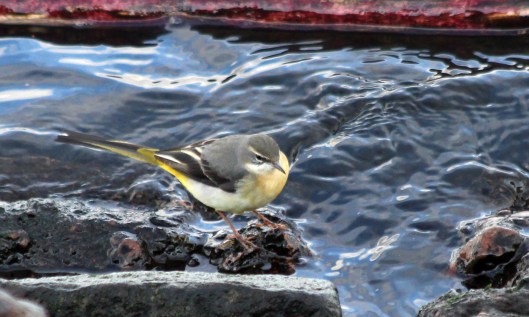
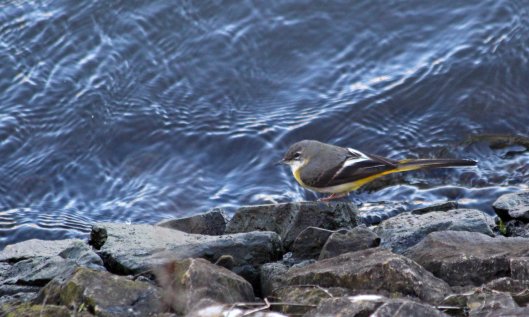
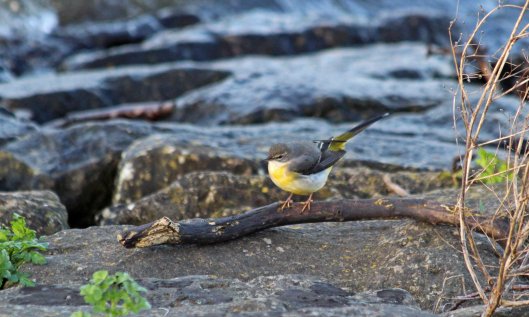
Grey wagtails are tough little birds. It was blowing a gale here today, yet these small creatures were still out foraging along the water line of the Ely embankment, poking their needle-thin beaks between pebbles and, sadly, amongst the human detritus, to find the tiny invertebrates they feed on.

200201 grey wagtail (1)200201 grey wagtail (2)

It amazes me that such small birds can fly so well in gusty conditions yet, with a flash of their bright yellow underbellies and a blast of their cheery call, they seemed to move further along the stony shore with ease.

200201 grey wagtail (3)

Two of the birds pictured here are from today, the other three are photos taken during recent walks along this same path, as I’m always happy to pause and watch these cheery little bobbers.

200201 grey wagtail (4)200201 grey wagtail (5)

31/366 Empty pincushions

Tags

, , , , , ,

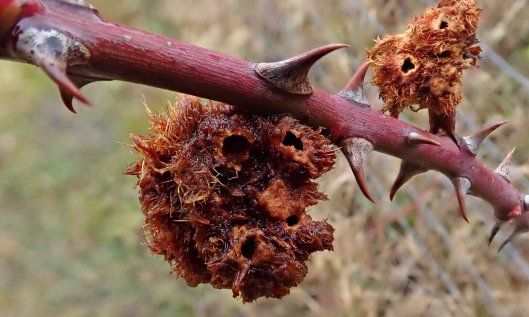
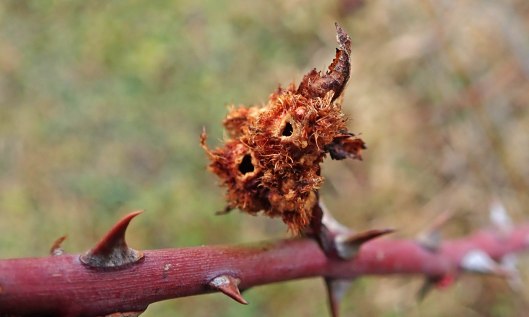
Robin’s pincushions are the amazing gall structures created on Dog roses by the larvae of Diplolepis rosae, the Bedeguar gall wasp.

200131 Robins pincushions (1)

I’ve seen the bright red galls many times during the summer months but I’ve not looked for them in the winter, so it was interesting today to find these and to see the very obvious holes where the adult wasps have hatched out. If it hadn’t been raining, I would have broken one off and brought it home for a closer look inside … maybe next week.

200131 Robins pincushions (2)

30/366 Fascinating fasciation

Tags

, , , , ,

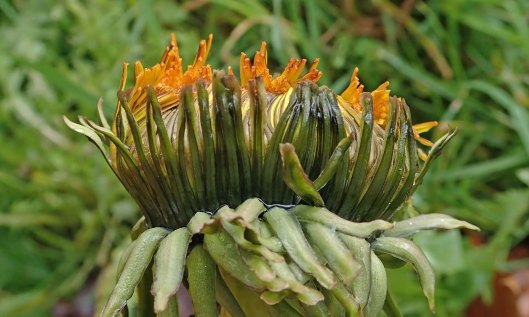
I’ve posted about this phenomenon before (see Wild word: fasciated, back in July 2018) but, as some of you may not have been following me back then, I thought it was worth repeating, especially as I’ve found such a magnificent example.

200130 fasciation (1)

So, this Dandelion stem and flower are fasciated, i.e. both parts of the plant exhibit an abnormal fusion which has resulted in a flattening of their structure. In this particular case, it almost appears as if three separate stems and flowers have fused into one.

200130 fasciation (2)

I couldn’t resist the alliteration in the title as my spellchecker kept changing fasciated to fascinated – what a difference an ‘n’ makes!

200130 fasciation (3)


29/366 Cladonia lichen

Tags

, ,

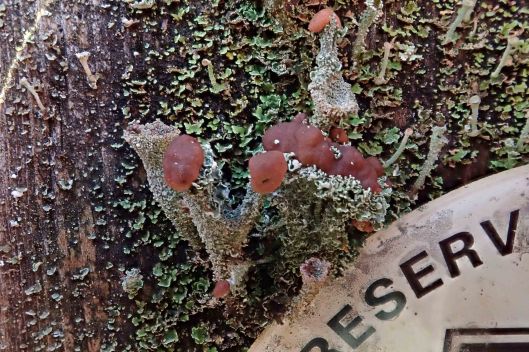
One of the Cladonia lichen species is the food of Reindeer but I doubt this is it, though I don’t actually know which Cladonia species this is. As you can perhaps guess from the snippet of sign showing in my photo, the lichen was growing well on a signpost at the Wildlife Trust reserve I visited today. The brownish blobs on the tops of some cups are where the spores of these attractive lichen develop.

200129 cladonia lichen (1)

28/366 Blossoming Blackthorn

Tags

, , , ,

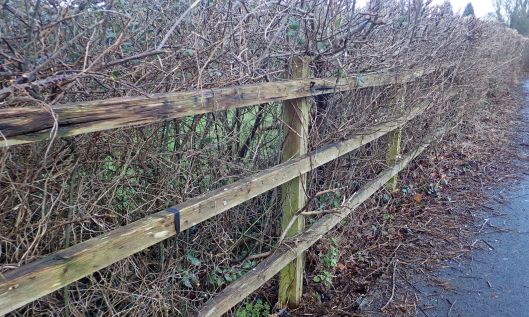
Despite being caught twice in freezing hail showers, I had a lovely walk today, and part of the reason is because I saw my first Blackthorn blossoms for 2020. As Blackthorn flowers appear before the leaves (in contrast to Hawthorn, where the leaves appear first), this hedge along the roadside at Cosmeston Lakes Country Park still looks lifeless and barren.

200128 blackthorn (1)

In fact, the brown branches and twigs were dotted here and there with white buds and occasional fully open blossoms. Spring is coming!

26/366 Three-cornered leek

Tags

, , ,

200125 three cornered leek (3)

In New Zealand we call this plant Onion weed but, here in Britain, its common name is Three-cornered leek. As its scientific name, Allium triquetrum, indicates, this bulbous plant is part of the garlic and onion family, the Alliums, and triquetrum refers to the triangular shape of its flower stem.

200125 three cornered leek (2)

In Flora Britannica, Richard Mabey writes that this smelly plant was ‘introduced to Britain in 1752’ and ‘began to escape into shady hedge-banks and churchyards in Cornwall in the 1860s. By the 1930s it was in Devon’ and, in 1995, Mabey found it in the Chilterns, near London. Obviously, it’s spread even further since then, as it’s jumped the border and is thriving here in Wales. These were my first Three-cornered leek flowers for 2020.

200125 three cornered leek (1)