290/365 Woundwort shieldbug

Tags

, , ,

As well as the cute little flower bug I found on Hedge woundwort (see yesterday’s post), on a nearby plant I also found this Woundwort shieldbug (Eysarcoris venustissimus), its jewel-like colours shining in the sunlight.

191017 Woundwort shieldbug (1)

As the name implies, Hedge woundwort is one of the plants this bug’s larvae feed upon. Apparently, these shieldbugs were considered rare in the 19th century but their situation has improved and the adults can now be found year round in much of southern Britain.

191017 Woundwort shieldbug (2)

289/365 Hedge woundwort

Tags

, , , ,

Determined to make the most of a few hours of sunlight yesterday, I headed along the south Wales coastal path to see what I could find, taking just my small camera as more rain was forecast.

191016 hedge woundwort (1)

Vegetation along the path had been severely cut back since my last walk that way, which meant that wildflowers were few and far between, though I did find a few plants of Hedge woundwort (Stachys sylvatica) still flowering.

191016 hedge woundwort (2)

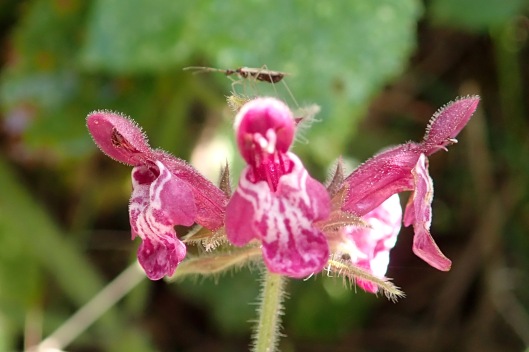
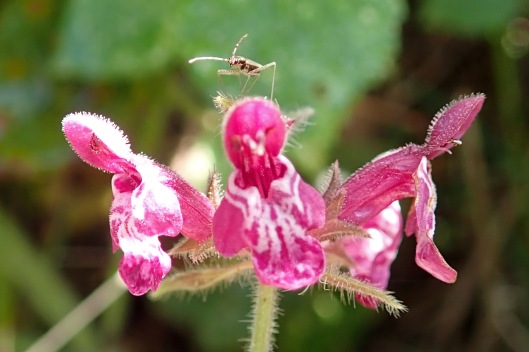
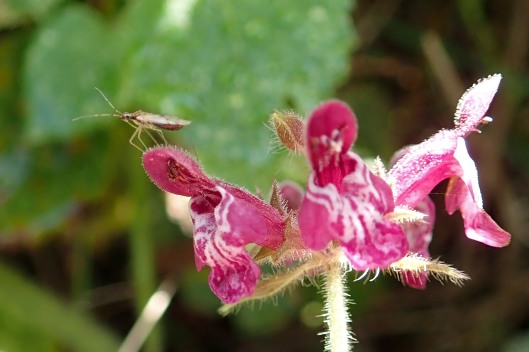
And while trying to get some close-ups of the flowers, I had the distinct feeling I was being watched. A tiny, early instar flower bug (not sure which species) was sitting atop one of the flowers and, as if curious, it pranced across from the further flower to the nearer to see what I was doing. Cute!

191016 hedge woundwort (3)

287/365 Hygrocybe, but which

Tags

, , , , , ,

191014 hygrocybe (1)

Waxcaps are my favourite fungi but they can be difficult to identify. Sometimes the colour helps, but there are several species of a reddish-orange hue. As these have quite a coarse upper surface on the caps, I thought at first that they might be Fibrous waxcaps (Hygrocybe intermedia) but, as these were at Cosmeston Lakes Country Park, I’m wondering if they might be Hygrocybe calciphilia, which are smaller and grow on calcareous grassland. I really need to check their features more thoroughly in future. What I do know for sure is how lovely they are!

191014 hygrocybe (2)

285/365 Mousepee pinkgill

Tags

, , , , ,

What’s in a name? That which we call a Mousepee pinkgill
By any other name would still smell like mouse pee!
(with apologies to William Shakespeare)

191012 mousepee pinkgill (2)

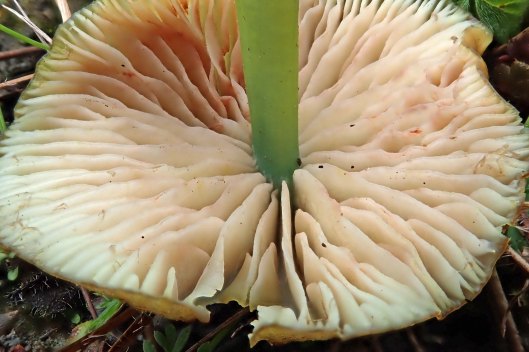
Truth be known, I have no idea what mouse pee smells like (and these fungi had been rained on for several days so the smell may well have dissipated) but I’m fairly sure that is what these fungi are. The greenish stem is a bit of a giveaway, and these are definitely not Parrot waxcaps, which are the only other green-stemmed fungi I know (though that, in itself, doesn’t mean there aren’t others).

191012 mousepee pinkgill (1)

You can read up on the Mousepee pinkgill (Entoloma incanum) on the most excellent First Nature website here.

191012 mousepee pinkgill (5)

284/365 Brown veins in the rain

Tags

, , , , ,

It’s been a week of almost constant rain and, despite my rain wear, I’ve had several drenchings. Fortunately, one of my cameras is waterproof so I can still take photos in the wet. Today it was the leaves that caught my eye and the incredible spectrum of browns.

This slideshow requires JavaScript.

283/365 Nom, nom, nom

Tags

, , , , , , ,

191010 herring gull (1)

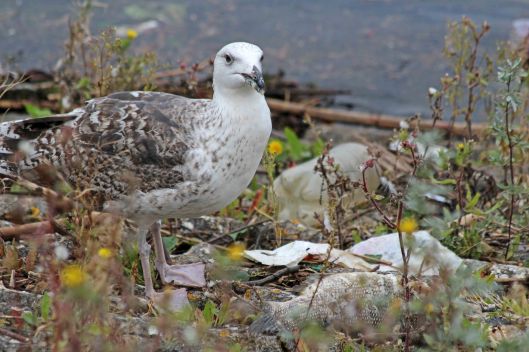
It’s difficult to share this juvenile Herring gull’s enthusiasm for the large dead fish it had discovered on the embankment of the Ely River where it flows in to Cardiff Bay, but food is food and the bird’s scavenging was removing a potentially very smelly object from the foreshore. Well done, that gull!

191010 herring gull (2)

282/365 How many Shelducks?

Tags

, , , , , ,

One of the reasons Bridgwater Bay is a National Nature Reserve is the Shelduck.

191009 shelducks (1)

Due to the extreme tidal range of the bay, at low tide enormous areas of mudflats are exposed and these are teeming with the tiny creatures that Shelducks – and many other species of waterfowl and wading birds – like to eat.

191009 shelducks (2)

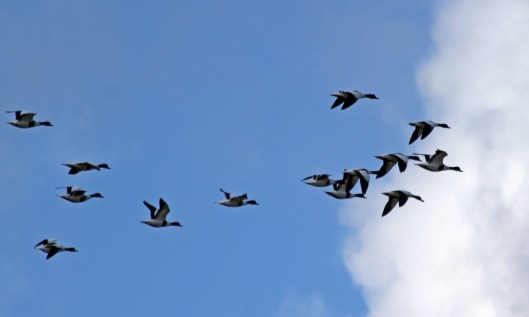
According to the UK Government website, this reserve is ‘the second largest European moulting ground for Shelduck, with up to 2000 birds present each July’, and rather a lot were still there last Sunday (6 October) when I visited with my birding buddies from Glamorgan Bird Club.

191009 shelducks (3)

In fact, I’ve never seen so many Shelducks in my life before. Two thousand almost seems to be an underestimate!

191009 shelducks (4)

281/365 The golden marbled butterfly

Tags

, , , ,

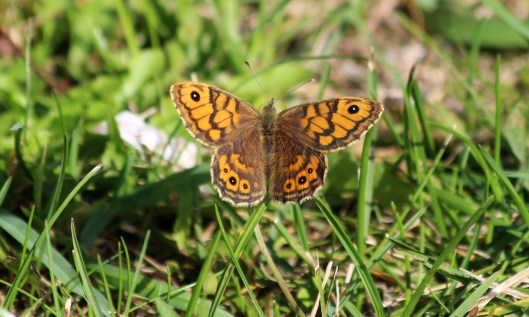
According to my recently acquired Life Cycles of British & Irish Butterflies (Peter Eeles, Pisces Publications, 2019 – if you like butterflies, this new book is a must!), the Wall was once known as ‘the golden marbled Butterfly, with black eyes’ – such a wonderfully descriptive name!

191008 wall (1)

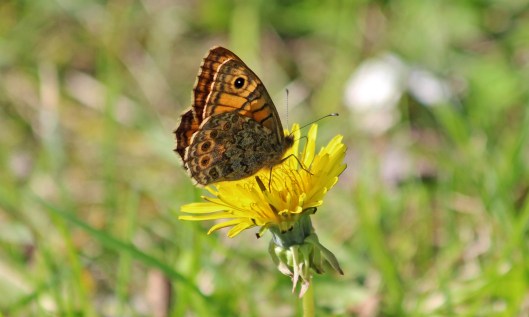
Wall butterflies are not common in my part of south Wales (they’ve suffered severe declines throughout Britain in recent years) so I was absolutely delighted, during Sunday’s bird club trip to Steart Marshes, to see not one but three of these lovely creatures. The first was braving the blasting wind along the coastal path at the edge of Bridgwater Bay and there were two more enjoying the much more sheltered warmth of the car park near Steart village, flitting from dandelion to dandelion in their quest for nectar.
191008 wall (2)

Though the butterfly on the coastal path looked a little battered – understandably, given its exposed position, the two Walls in the car park looked very fresh so, although the Wall usually has only two generations a year, I assume these were part of a third generation that can sometimes appear in early September.

191008 wall (3)