The Shieldbug red-light district

Tags

, , , , , ,

There’s a little track I often walk down, or up, between my home and Penarth Marina, that’s not been touched by the Council’s destructive strimmers (so far), so it’s a great place to look for wildflowers and critters, and it can take me 30 minutes or more to walk its 100 metres.

OLYMPUS DIGITAL CAMERA

When I walked this way the other day, I came across this little Green shieldbug (Palomena prasina). Just look at that innocent-looking face … but don’t be fooled. It was probably the only one of maybe 30 Green shieldbugs I saw that was on its own – all the others were working on ensuring the continuation of their species.

Even the Hairy shieldbugs (Dolycoris baccarum) I found (only 3 of those) were at it! Given all the bad news we hear these days about declining insect populations, I hope this means the shieldbugs are doing okay.

Gorgeous Guillemots

Tags

, , , , , ,

180521 Guillemot (10)

What gorgeous birds the Guillemots are! A delicious combination of crisp white and rich chocolate brown, a smile that beams contentment, a look of gentleness despite that fierce-looking beak….

180521 Guillemot (1)180521 Guillemot (4)

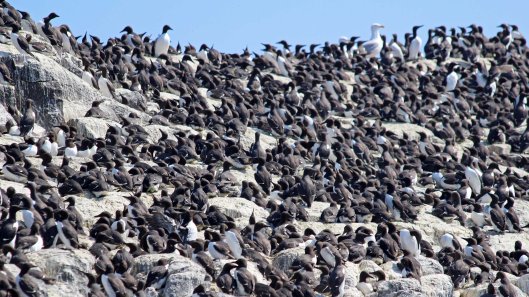
Guillemots spend most of their lives at sea, only moving on to land to breed, so May was the perfect time to see them on the Farne Islands, where they breed in their thousands each year. The densely packed breeding colonies are called loomeries.

180521 Guillemot (2)

Reciprocal grooming is part of their bonding process and was delightful to watch.

180521 Guillemot (3)

Some Guillemots have an additional white marking around their eyes, like the two you can see in this photo. These are officially known as the ‘bridled’ form, though they look like they’re wearing glasses to me. The bridling is, apparently, caused by a genetic mutation, and there seems to be a correlation with temperature – the bridled form is more common in cooler areas.

180521 Guillemot (5)

I’m not sure what was happening in the top of this photo: bouncing for joy? Jumping off the cliff? Coming in to land?

Sleepy in the sunshine. Just beautiful!

Holly blues

Tags

, , , , ,

180520 Holly blue (2)

With clear blue skies and temps in the mid 20s, it was hot work chasing the Holly blue butterflies (Celastrina argiolus) around Lavernock last Monday. I think I saw five but they move so quickly along the scrub and up and over the trees that it was hard to be sure. Those fast fliers are mostly the males, I think, constantly sniffing for the female pheromones.
180520 Holly blue (1)

I know there were at least two Holly blues, as I managed to get a male and female together in one photo, and then was lucky enough to catch the female laying an egg on a Dogwood plant. Once she’d departed I carefully examined the plant but couldn’t find the egg. I think she must have tucked it well in amongst the flower buds, which I didn’t pry apart in case I damaged the newly laid egg. But I remember where it was so will try and go back in a week or so to check for a caterpillar.

180520 Holly blue (3)180520 Holly blue (5)

Holly blues are the first of Britain’s blue-coloured butterflies to emerge each year, which is one way to distinguish them from the many other blue butterflies. Another is their flight pattern – the other blues usually fly close to the ground. And the Holly blues are the only ones with small black dots on the undersides of their wings though, unless you see one perched, you’ll need to be quick to spot those dots ’cause these little beauties are speedy.

180520 Holly blue (4)

Shags are surprising

Tags

, , , , , , ,

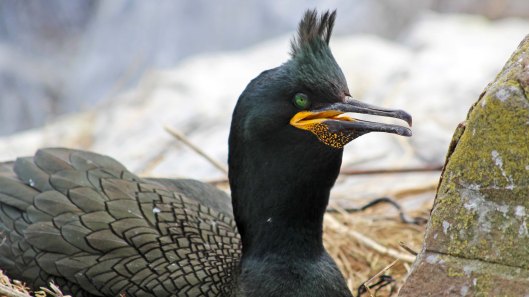
I always thought the Shag was all black, but I was wrong: its adult plumage is an intricate combination of vibrant metallic greens, browns and black, and it has beautiful patterning on its wings. As you can see, the Shag also has soulful green eyes, and, during the breeding season, the adult birds have a very punky crest on the tops of their heads, a combination which, obviously, makes them irresistible …. to other Shags.
Shags have a superb Latin name too, Phalacrocorax aristotelis, which is derived from Ancient Greek. Phalacrocorax is a combination of φαλακρός (phalakros) meaning bald and κόραξ (korax) meaning raven, and the epithet commemorates Aristotle. Did that Greek philosopher look like a bald raven, I wonder?

180519 shag (5)180519 shag (9)

Shags build their stick nests on rocks, sometimes on top of very high cliffs, and, on the Farne Islands, separated only by a rope barrier and monitored by a local ranger, we were able to get very very close to a couple of Shags that had chosen to nest right next to the path.

180519 shag (6)

One of the Shags was making odd motions with its head and puffing out its neck as if breathing heavily (I should’ve taken a video!). The ranger said this was to warn people off getting too close, and I’ve since found a paper that explains some aspects of the displays Shags make:

At the lowest intensity of stationary aggressiveness, the bird on the nest or nest-site points its bill at the object of aggression with gular pouch slightly distended, and at the same time makes slight lateral head-shakes without taking its eyes off the intruder.

180519 shag (8)

It was being close enough to observe such behaviour, as well as get a better look at the physical characteristics of the birds that made our visit to the Farnes so special for me.

180519 shag (7)

Ravishing rhoddies

Tags

, , , ,

180518 rhododendrons (1)

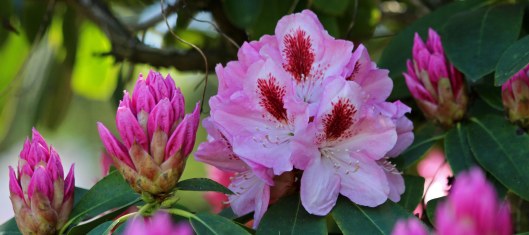
Did you know that in the Victorian era, when flowers were used to convey not-so-hidden meanings, the rhododendron symbolised danger? I really can’t imagine why, except perhaps the danger of being stung by a bee if you put your face too close to the rhoddies’ extravagant blossoms. These beautiful blooms entranced me during a wander through Cardiff’s Bute Park on Monday.

Birding at Cefn Cadlan and Cwm Cadlan

Tags

, , , , , , , , , , , , , , ,

You may be surprised to learn that birding trips aren’t always dominated by birdwatching.

180517 near Cefn Cadlan

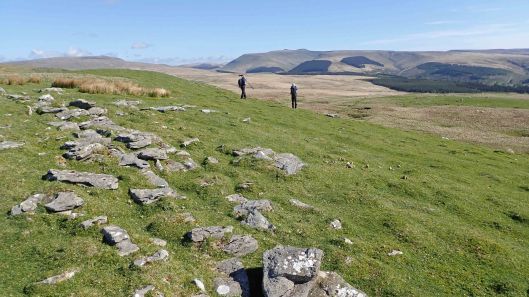
Last Sunday’s Glamorgan Bird Club trip saw 22 people striding firstly around the high moorland near Cefn Cadlan, north of Cardiff on the way to Brecon, and then exploring nearby Cwm Cadlan National Nature Reserve, an area renowned for the rare plants that thrive in its wet grasslands.

180517 lane to Cwm Cadlan

Of course, we were on the trip primarily to look for birds – and I saw my first Redstarts for the year (always on distant tree tops) and heard my first Cuckoo (exactly a year since my very first Cuckoo).

180517 Redstart

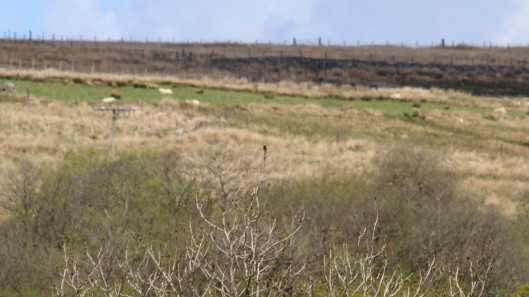
You’ll just have to believe me when I say that the dot in the centre of this photo is a Redstart

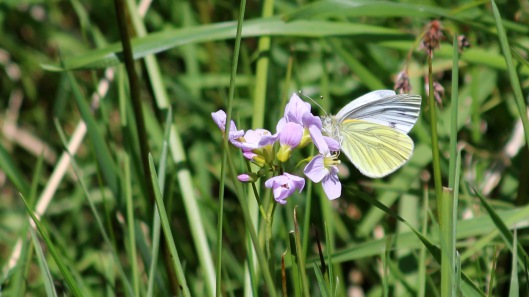
But, when the birds proved elusive, our team of talented amateur naturalists turned their attention to all the other wildlife and wildflowers that surrounded us. We saw frogs and a hare; speculated on what had left its footprints in the mud; enjoyed all the Green-veined white and Orange-tip butterflies that were nectaring on the abundant Cuckkoflowers …

180517 Green-veined white

and we turned our heads downwards to admire all the special wildflowers that surrounded us. It was a glorious sunny day, the scenery was stunning, and the flora and fauna superb.

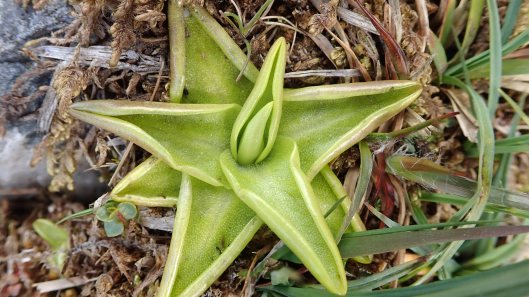
180517 Common butterwort

Common butterwort, not yet in flower

180517 Dog violet

Dog violet

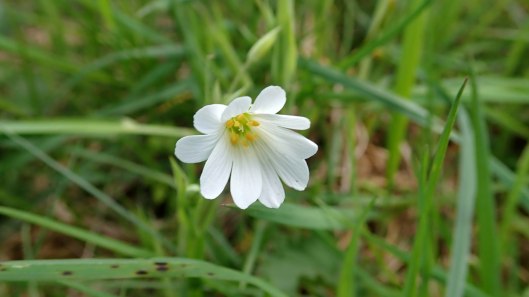
180517 Greater stitchwort

Greater stitchwort

180517 Lousewort

Lousewort

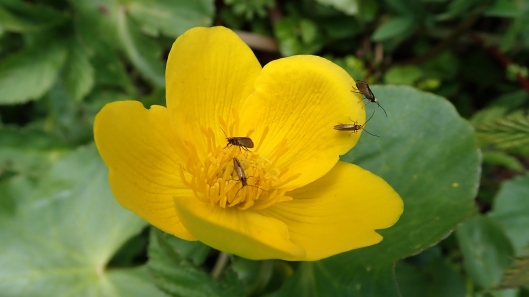
180517 Marsh marigold and Micropterix calthella

Marsh marigold, and the tiny moths are Micropterix calthella

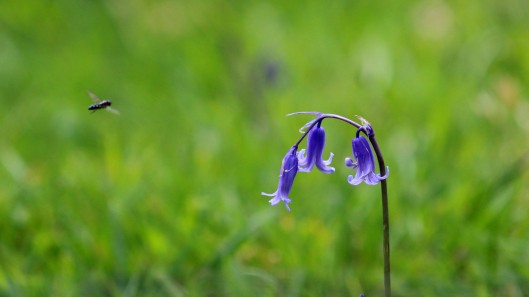
180517 Native bluebell

Native bluebell

180517 Opposite-leaved golden saxifrage

Opposite-leaved golden saxifrage

180517 water avens

Water avens, a very beautiful plant and a new one for me

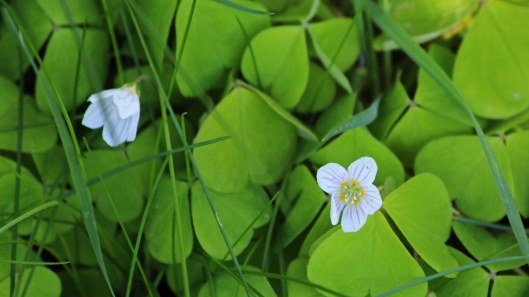
180517 Wood sorrel

Wood sorrel

Wild word: ornithomancy

Tags

, , , ,

180416 ornithomancy (1)

Ornithomancy: Noun; rarely used; divination by means of the flight and cries of birds; augury. From Byzantine Greek ὀρνιθομαντεία divination from birds, augury from ancient Greek ὀρνιθο- + μαντεία (Oxford Dictionary).

I predict that the person who eats fish and chips at the seaside will be attacked by gulls and is likely also to get pooped upon!

180416 ornithomancy (2)

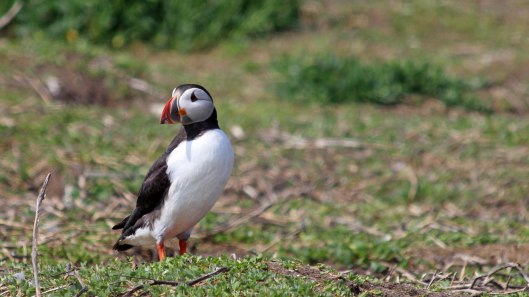
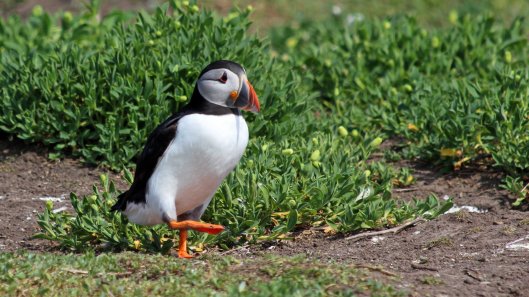
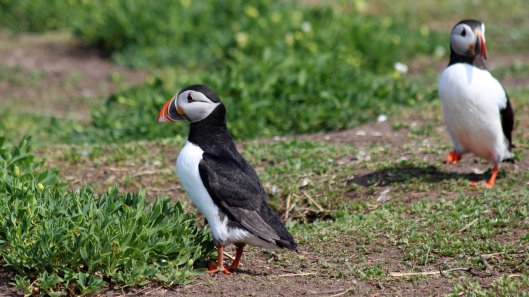
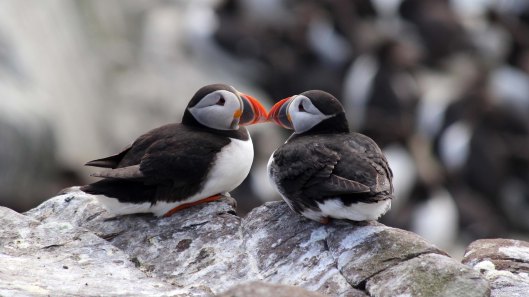
I love Puffins!

Tags

, , , , , , , ,

It’s taken me almost 62 years to see my first Puffins (yes, I am that old!) but they were worth the wait. What magnificent little characters they are!
First I saw them in the water, from the boat en route to the Farne Islands …

Next I saw them on the cliff tops, craning my neck and lens to look up from the boat …

180515 puffins on the cliff tops (1)180515 puffins on the cliff tops (2)

Then we were on the island, for a very brief 60 minutes that went by so very quickly, and I saw them marching around defending their burrows, trying ever so hard to look stern and menacing …

180515 puffins protecting their burrows (1)180515 puffins protecting their burrows (2)180515 puffins protecting their burrows (3)180515 puffins protecting their burrows (4)180515 puffins protecting their burrows (5)

I also saw them – well, one of them – trying very hard to impress the Puffin of his dreams, but she was having none of it …

180515 puffin trying to impress (1)180515 puffin trying to impress (2)180515 puffin trying to impress (3)

And, finally, I saw a couple in love. So very sweet!

180515 puffins in love

I’m following a tree: April 2018

Tags

, , , , ,

What a difference a month makes!

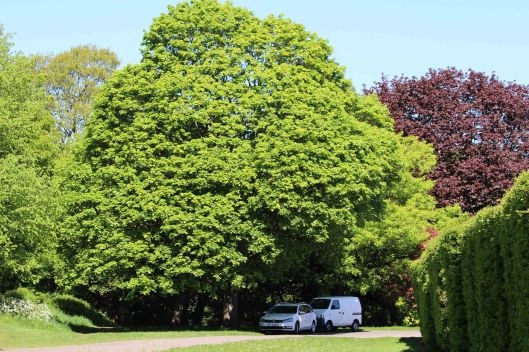
180514 Acer pictum (1)

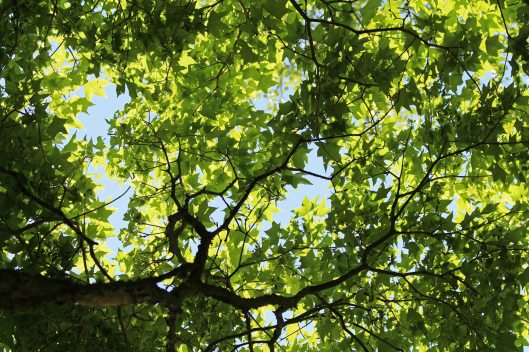
With a friend visiting for a week and then a week away on a birding trip, I hadn’t managed to visit Mono, my tree, until the very end of the month. In the few short weeks since my last visit, encouraged by some brilliantly fine weather and a definite rise in daytime temperatures, Mono’s buds have burst open to reveal her splendid summer foliage.

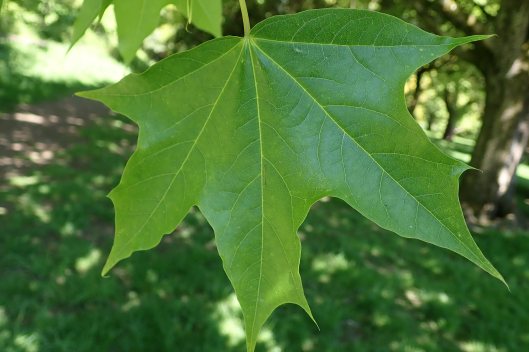
upper side of leaf

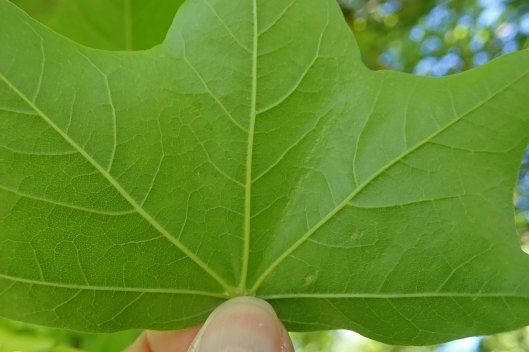
lower side of leaf

The scientific description for her leaves is as follows:

leaves depressed-orbicular; 7-15cm wide, deeply to rather shallowly 5- to 7-lobed, cordate to somewhat truncate at base, usually glabrous on upper side, short-pubescent to glabrous except for the axillary tufts of hairs beneath, the lobes deltoid to lanceolate, entire or with few coarse teeth, acuminate and awn-tipped, the petioles 4-12cm long, glabrous to short-pubescent.

I shall attempt to translate: the leaves are roughly circular, if somewhat heart-shaped, and range in size from 7 to 15 cm across. They are smooth on top, though sometimes have short hairs on the underside. Each leaf has between 5 and 7 projections that are roughly triangular and shaped a bit like the head of a lance. The edges of the leaves can be smooth or slightly jagged, like the teeth of a saw, and the stalk that joins the leaf to the stem ranges from 4 to 12 cms long, is sometimes smooth, sometimes a bit hairy.

The upshot is that Mono, my tree, an Acer pictum aka Acer mono, is looking absolutely stunning in her lush and vibrant new foliage!

OLYMPUS DIGITAL CAMERA

180514 Acer pictum (2)

Glossy ibis

Tags

, , , , , , , ,

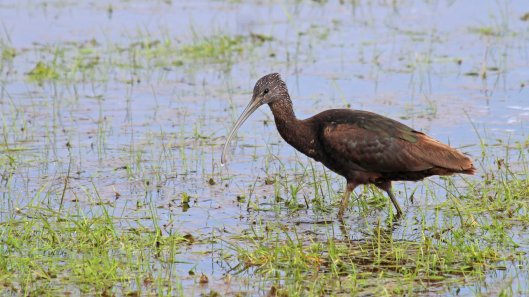
One of the nearest and clearest avian encounters on my recent birding trip to England’s north east was our sighting of a Glossy ibis (Plegadis falcinellus) at Druridge Pools.

180512 glossy ibis (2)

This is a large bird, similar in many ways to a heron, but the Glossy ibis has a beautifully rich plumage in vibrant shades of bronze and green. The Glossy is not strictly speaking a British bird – it can be found in the warmer parts of Europe, Asia and the Americas – but these birds have been visiting Britain more frequently in recent years (I saw my first at RSPB Ham Wall last year).

180512 glossy ibis (1)

This particular Glossy ibis eluded us when we first arrived at Druridge – it had been scared off by photographers getting too close and a tractor driving by – but, luckily for us, it later returned to the site and was grazing within a few yards of the fence so we had outstanding views of it. I even managed to take a short video.