This week in wildflowers

Tags

, , , , , , , , , , , ,

What a week it’s been weather wise! We’ve gone from a generous dumping of snow and temperatures hovering around -5°C last Sunday through occasional rain, sunny periods, UV factors up and down, zephyr winds and mustang gales. Is it spring or isn’t it? Well, I’m seeing increasingly more wildflowers so I guess it must be. Here’s a selection from this week’s wanders.

180323 colt's-foot

Colt’s-foot (Tussilago farfara)

180323 daisy

Daisy (Bellis perennis)

180323 dandelion sp

a type of Dandelion (Taraxacum sp.)

180323 gorse

a type of Gorse (Ulex sp.)

180323 groundsel

Groundsel (Senecio vulgaris)

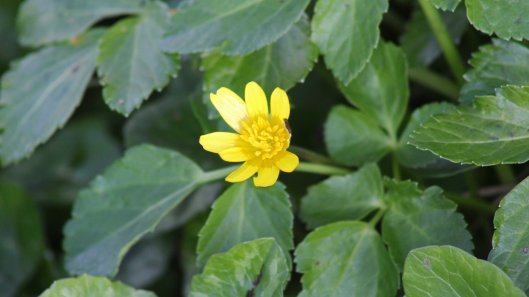
180323 lesser celandine

Lesser celandine (Ficaria verna)

180323 red dead nettle

Red dead-nettle (Lamium purpureum)

180323 speedwell

a species of Speedwell (probably Germander) (Veronica sp.)

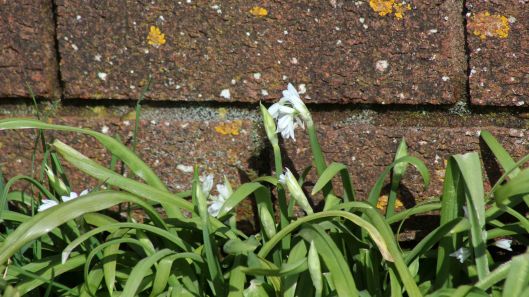
180323 three-cornered leek

Three-cornered leek (Allium triquetrum)


Wild words: forest

Tags

, , , , ,

Forest: noun; a large area covered chiefly with trees and undergrowth. The Oxford Dictionary says the word morphed from the Latin foris, meaning ‘outside’, to the late Latin forestis (silva), meaning ‘(wood) outside’, to Old French and thence to Middle English.

Today just happens to be a day to celebrate the importance of all types of forests and woodlands and trees all around the globe, so here’s wishing you a very happy International Forests Day!

180321 forest

Frogs, and lots of them

Tags

, , , , , ,

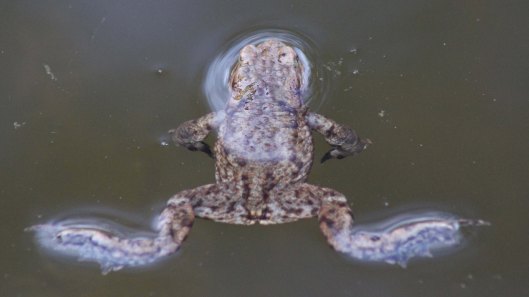
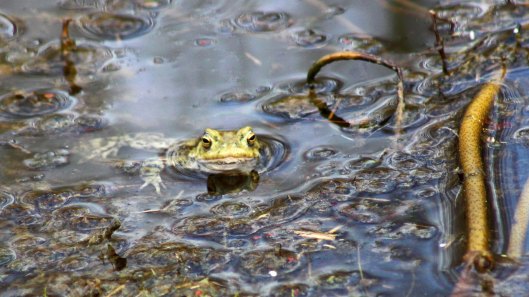
Here’s a sign of spring, if ever there was one – well, hundreds of signs of spring, in fact – as the frogs are out and croaking at Cosmeston’s dipping pond.

180320 Common frog (1)

Though they come in a variety of colours, ranging from light green and yellow through to olive and light brown, these are all Common frogs (Rana temporaria). They’ve long hind legs for hopping and swimming, big eyes for spotting females, and strong front fingers for gripping on to those females once they find them. At dinnertime, they have a preference for small invertebrates like slugs and snails, and they, in turn, are much enjoyed by herons, crows, hedgehogs, otters, and rats.

180320 Common frog (2)180320 Common frog (4)

Frogs have a special place in human culture: they have been used to predict the weather – bright healthy skin foretells fine weather, dull skin rain; they are the subject of numerous superstitions – a frog in the house is a portent of death or something similarly awful, yet frog bones might be worn around the neck as a cure-all; they feature in idioms – if your voice is a bit croaky, you are said to ‘have a frog in your throat’ – and in fairytales – a frog is transformed into a handsome price after being kissed by a beautiful princess. And I haven’t even mentioned one of the most well-known frogs of all, Kermit.

180320 Common frog (3)180320 Common frog (5)

Feathers and fungi at Forest Farm

Tags

, , , , , , , , , , , , , ,

I’ve blogged about the charms of the Forest Farm Nature Reserve many times before but I thought I’d share some of the highlights from last week’s wander …

180319 Forest Farm

Oh, and I will just add that the combination of feathers – me mostly looking upwards – and fungi – eyes down – can be quite difficult. By the end of the day, I felt like one of those nodding dog ornaments you used to see in the rear windows of cars. Still, ’twas a lovely long meandering walk!

Spring migration: chiffchaff

Tags

, , , , , ,

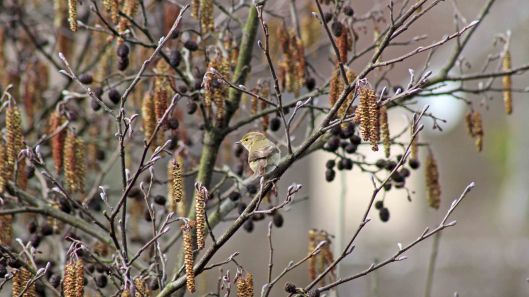
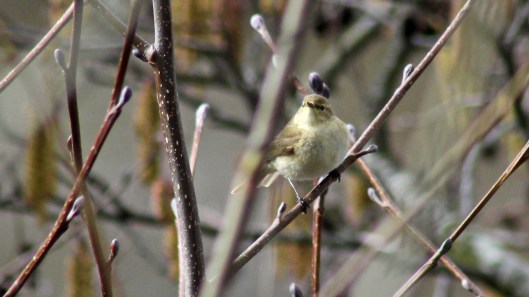
You know it’s really springtime when the migrating birds start to appear and this week has seen those birds arriving, albeit in fairly small numbers yet here in south Wales. Friends have been reporting sightings of Sand martins and Wheatear – I’ve yet to see either, but I am one of the many who have now either heard and/or seen their first Chiffchaff (Phylloscopus collybita) of 2018.

180318 chiffchaff (4)

Though a few Chiffchaffs overwinter in Britain, the vast majority migrate south during autumn and overwinter in the sunshine and warmer temperatures of the Mediterranean and west Africa.

I heard my first of these lovely little birds last Monday, 12 March, at Forest Farm Nature Reserve, and I saw my first, shown here in my photographs, in trees alongside the River Taff in Cardiff on Thursday, the 15th. Welcome back, little Chiffchaffs!

180318 chiffchaff (2)

Birth notice

Tags

, , , , , , ,

I was handing out the cigars last Monday!
Now, you might well think me more than a little mad to be excited about the birth of a fly but this was the first time I had tried rearing one … and it was actually successful, which bodes well for the fact that I’m intending to take part in a fly-rearing investigation this summer (more on that closer to the time).

The fly is Phytomyza ranunculi, a creature whose larvae often make their home in the leaves of Lesser celandine (Ficaria verna). I blogged about this leafminer, its larvae and the pupa here, and it is that pupa which finally hatched earlier this week. I had been told it would take about 3 weeks to hatch but it was, in fact, longer than that – it was 6 February when I found the pupa and 12 March when it hatched, so 34 days in total.

180317 Phytomyza ranunculi (1)

Now, here I must admit to a rookie error. As it was well over the 3 weeks, I had almost given up on its hatching so, on Monday night, when I had a sudden notion to open the container, I didn’t look inside first. The fly popped straight out, perched on the edge for a very brief time – and I managed to get just one photo, and then it flew off. I’ve searched for it in my flat, and it did a quick fly by when I was washing the dishes yesterday, but I haven’t been able to find it, neither to take more photos nor to let it outside.

A mulish Magpie

Tags

, , , , , , , ,

Spring is definitely in the air here in south Wales. Wildflowers are wakening and blossom is bursting, migrating creatures are on the move and those that don’t migrate are thinking about procreation. For birds, that means nest building, and this Magpie obviously had some rather grandiose ideas about the size of nest it was going to construct. But had it bitten off more than it could chew?

 Success!

180315 Magpie nest building (9)