A colony of Woundwort shieldbugs

Tags

, , , ,

I was actually checking the Hedge woundwort plants growing alongside our local coastal path for leaf-mining moths (of which there were none) when I spotted first one Woundwort shieldbug, then another, and another, and then two mating.

240611 woundwort shieldbugs (3)

In fact, I eventually counted eight, which is more than I’ve ever seen in one spot before. Hopefully, this means their numbers are increasing generally as they are very handsome little bugs.
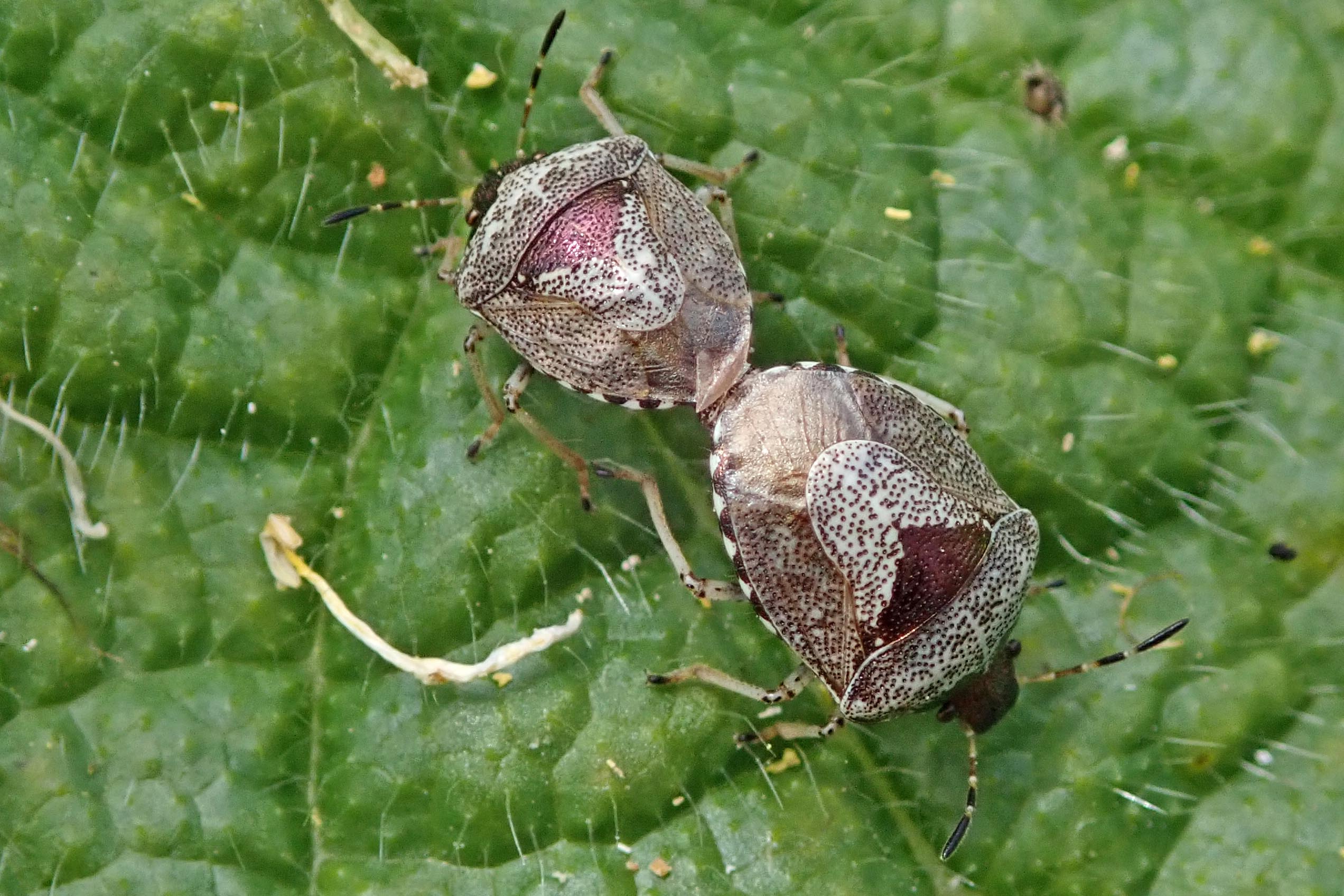
240611 woundwort shieldbugs (2)

As well as feeding on Hedge woundwort (Stachys sylvatica), the Woundwort shieldbug (Eysarcoris venustissimus) is also partial to the Lamiaceae species of plants, especially White dead-nettle (Lamium album).
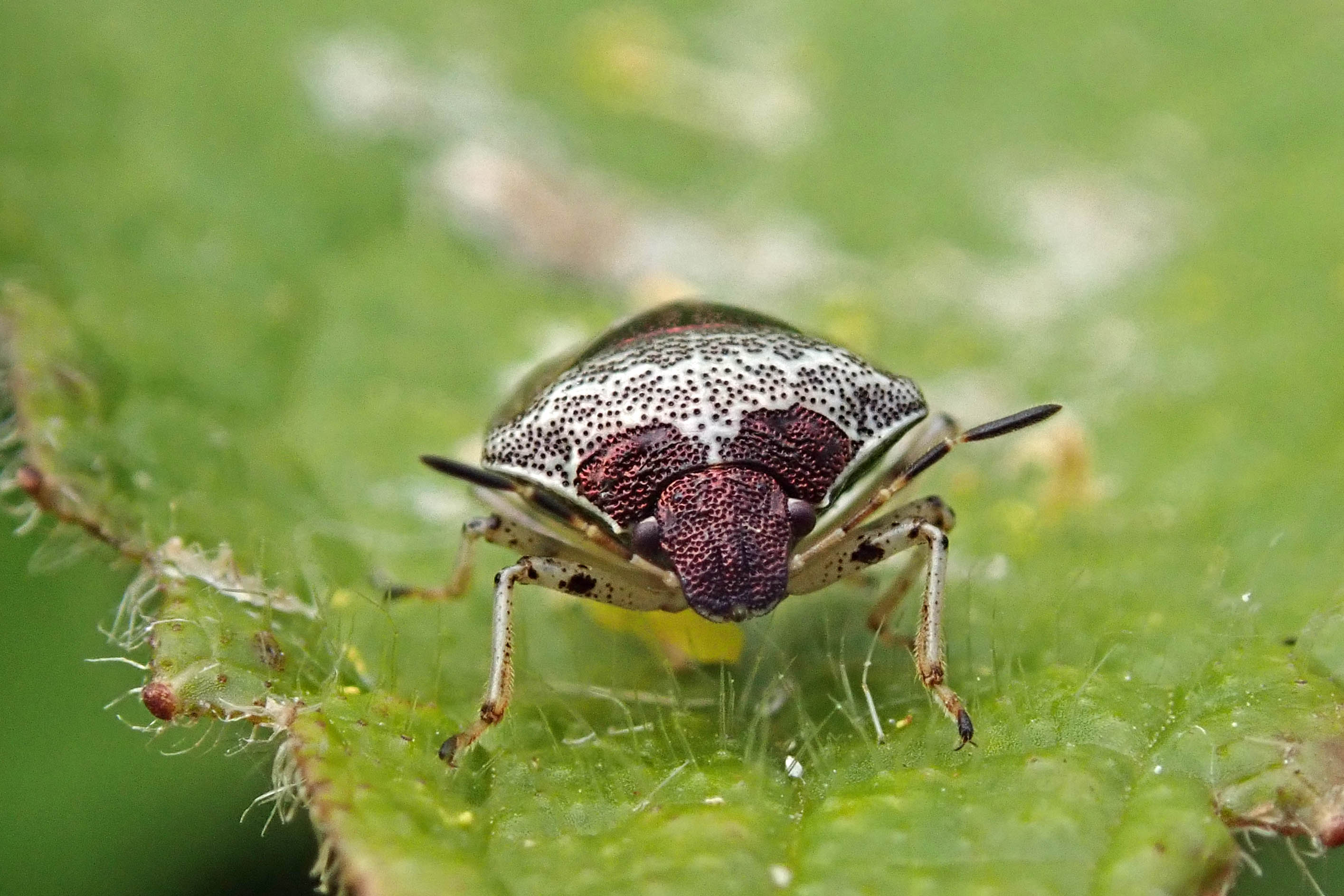
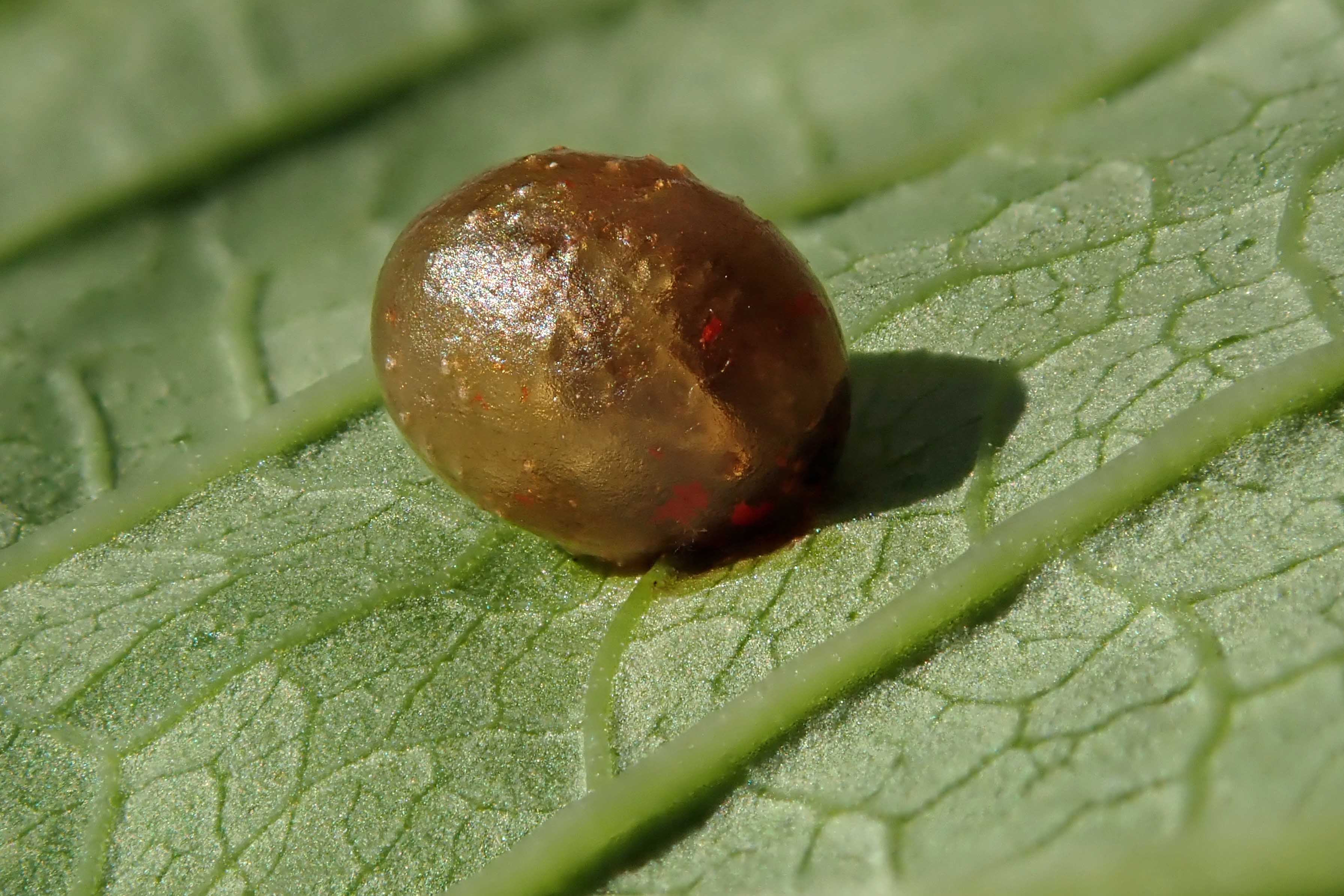
240611 woundwort shieldbugs (1)

On the Oxeyes

Tags

, , ,

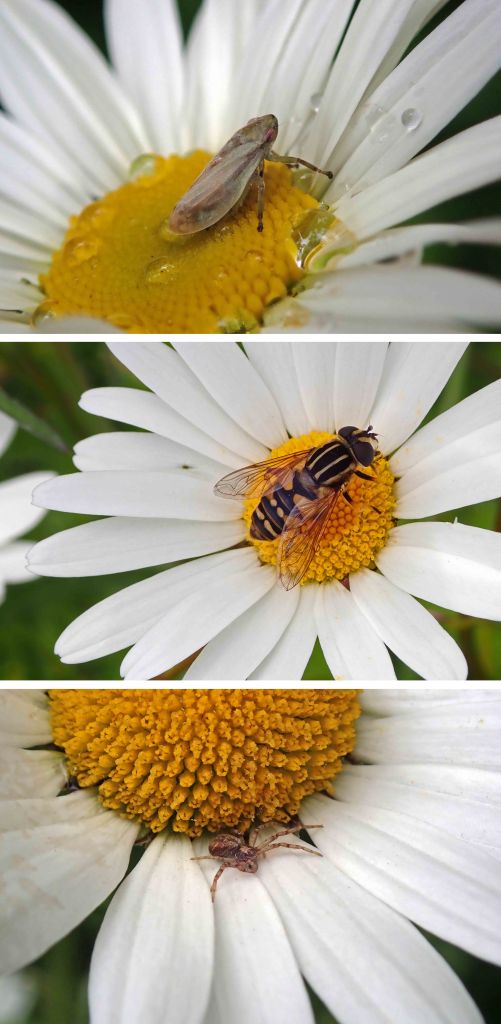
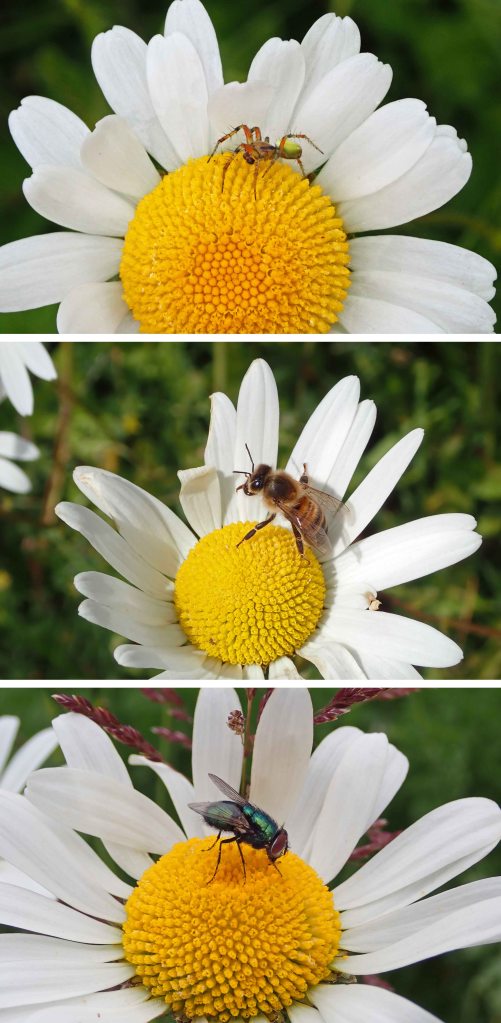
Perhaps because they are so common and abundant I am guilty of ignoring both the beauty and the usefulness of Oxeye daisies.

So, during my walks over the past few days I have been taking more notice and taking photos of the creatures either using the daisies as perches or feeding on their pollen.

If the weather had been more cooperative, without the constant breezy conditions, I probably would have got more photos.

Still, it was nice to see such a variety of invertebrates: bees and hoverflies, ladybirds and their larvae, several species of spider, grasshoppers and froghoppers and tiny beetles.

Fleabane tortoise beetle larvae

Tags

, , , , , , ,

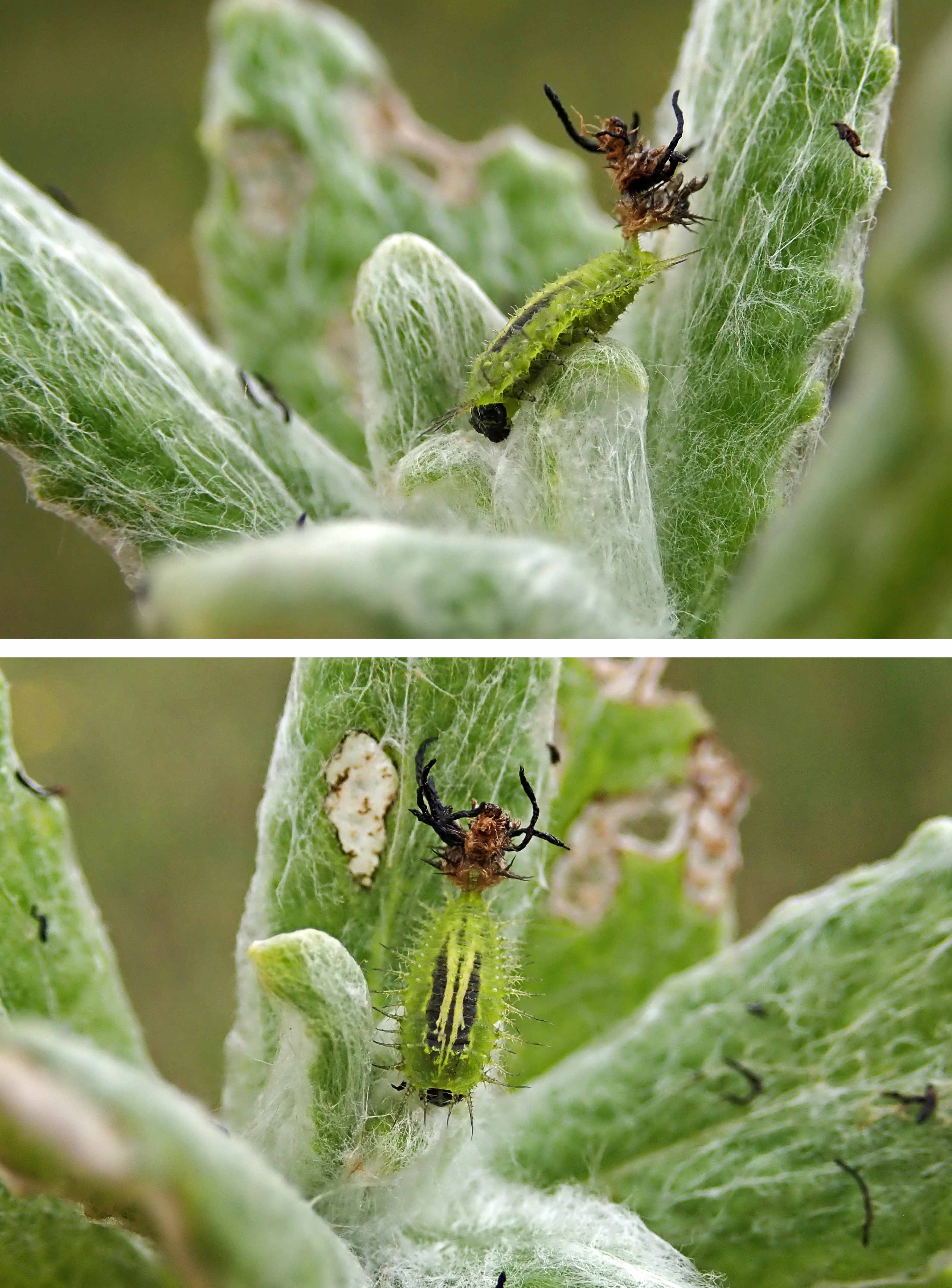
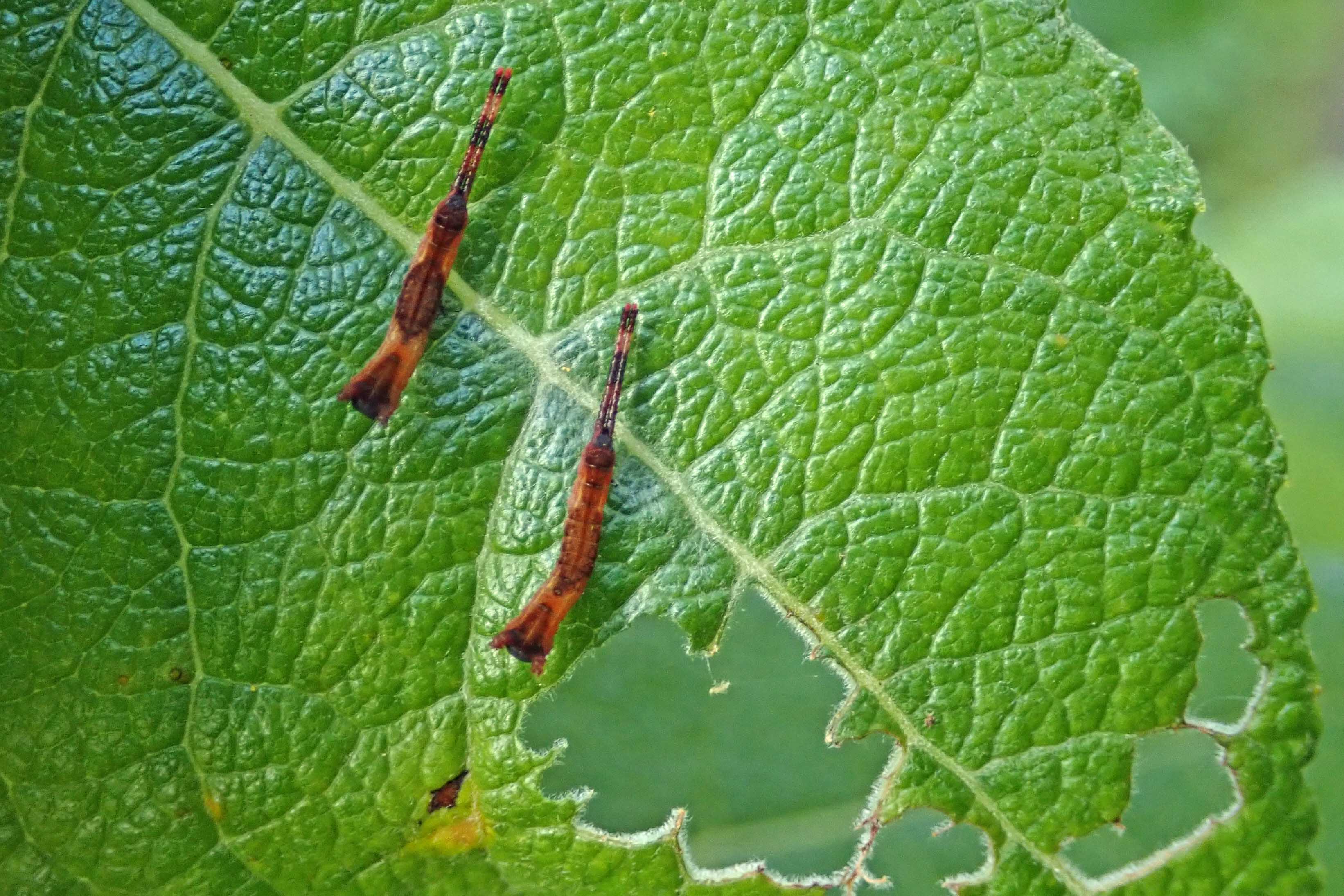
If you’ve been here a while (for which, sincere thanks!), you might remember the bizarre larvae of the Thistle tortoise beetle that employ a faecal shield as a protective device, carrying their own excretions above their backs as a disguise (Thistle tortoise beetle larvae, 7 July 2022). Well, earlier this week, while checking the leaves of Common fleabane (Pulicaria dysenterica) for leafminers, I found another example of this behaviour.

240608 fleabane tortoise beetle larva (2)

These are Fleabane tortoise beetle larvae (Cassida murraea), which, like all other members of the tortoise beetle family, the Cassidinae, use a combination of their own frass and moulted skin, secretions and plant material to create the cryptic disguises they carry around behind and above their vulnerable bodies.

240608 fleabane tortoise beetle larva (1)

This particular species has not been recorded locally before and I’ve never seen the adult beetles so I’ll be poking about in the fleabane in the coming weeks to see if I can find any.

Pale tussock moth

Tags

, , , , ,

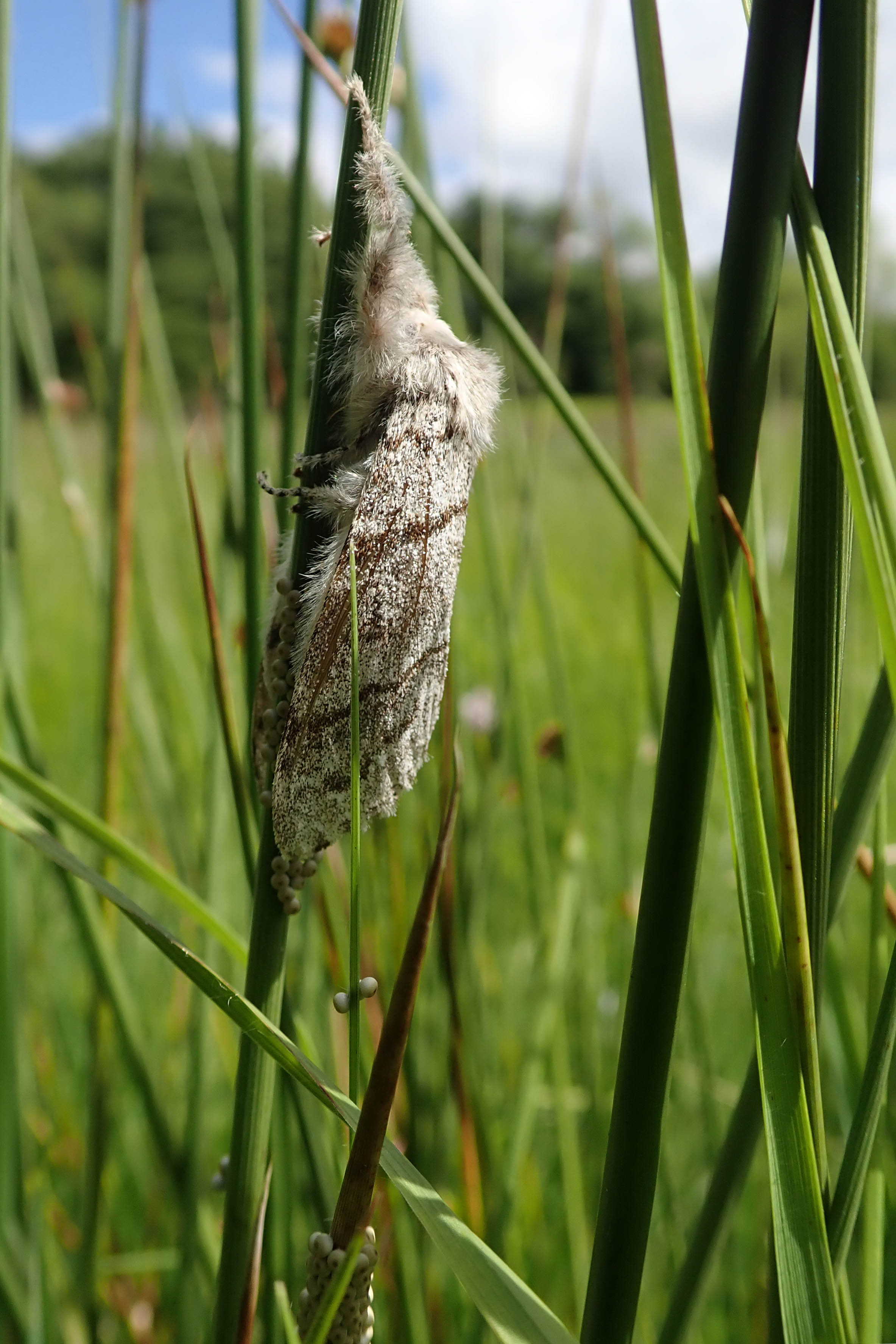
240607 pale tussock (1)I probably wouldn’t have noticed this gorgeous moth but, when I was standing chatting to an ecologist I hadn’t seen for a while, he spotted it, clinging on to a piece of grass close to the ground.
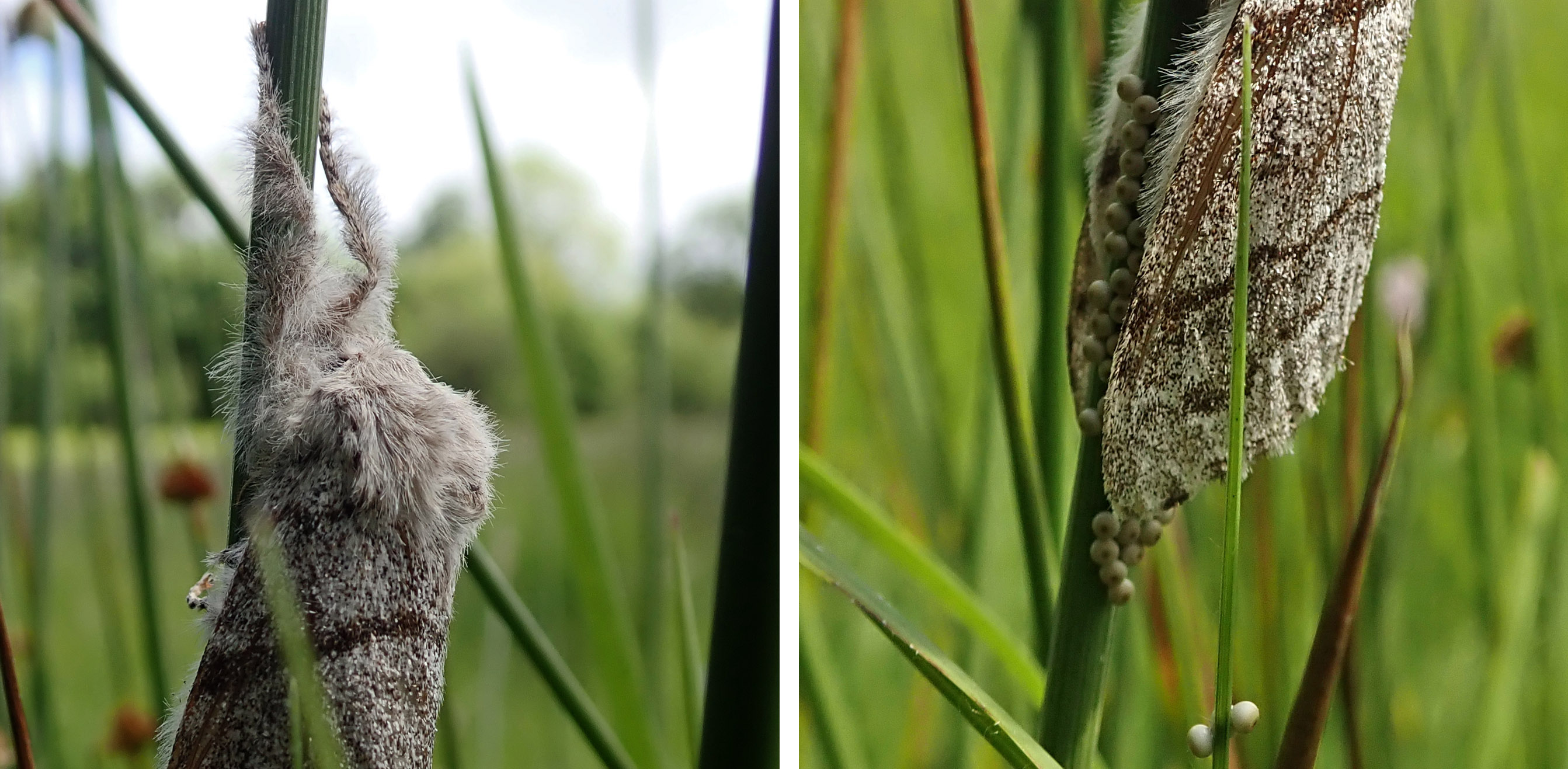
It’s a Pale tussock moth (Calliteara pudibunda), a female who was busy laying an abundance of eggs – hopefully, you will be able to see them, on the grass stem underneath and below her body, in my first photo and in the photo on the right below. I’m sure many of you will have seen the amazing tufty yellow caterpillars that will emerge from those eggs (see my blog Pale tussock moth caterpillar, 3 September 2022).

I’ve included the photo below left not only to show more detail of this beautiful moth but also so that you can see a distinctive aspect of her behaviour, what the UK Moths website describes as the ‘forward-facing “furry” legs at rest’.

240607 pale tussock (2)

Puss moth kittens

Tags

, , , , , ,

As I wrote when I posted about this on Twitter/X, sometimes Nature is mind blowing!

240604 puss moth eggs larvae (1)

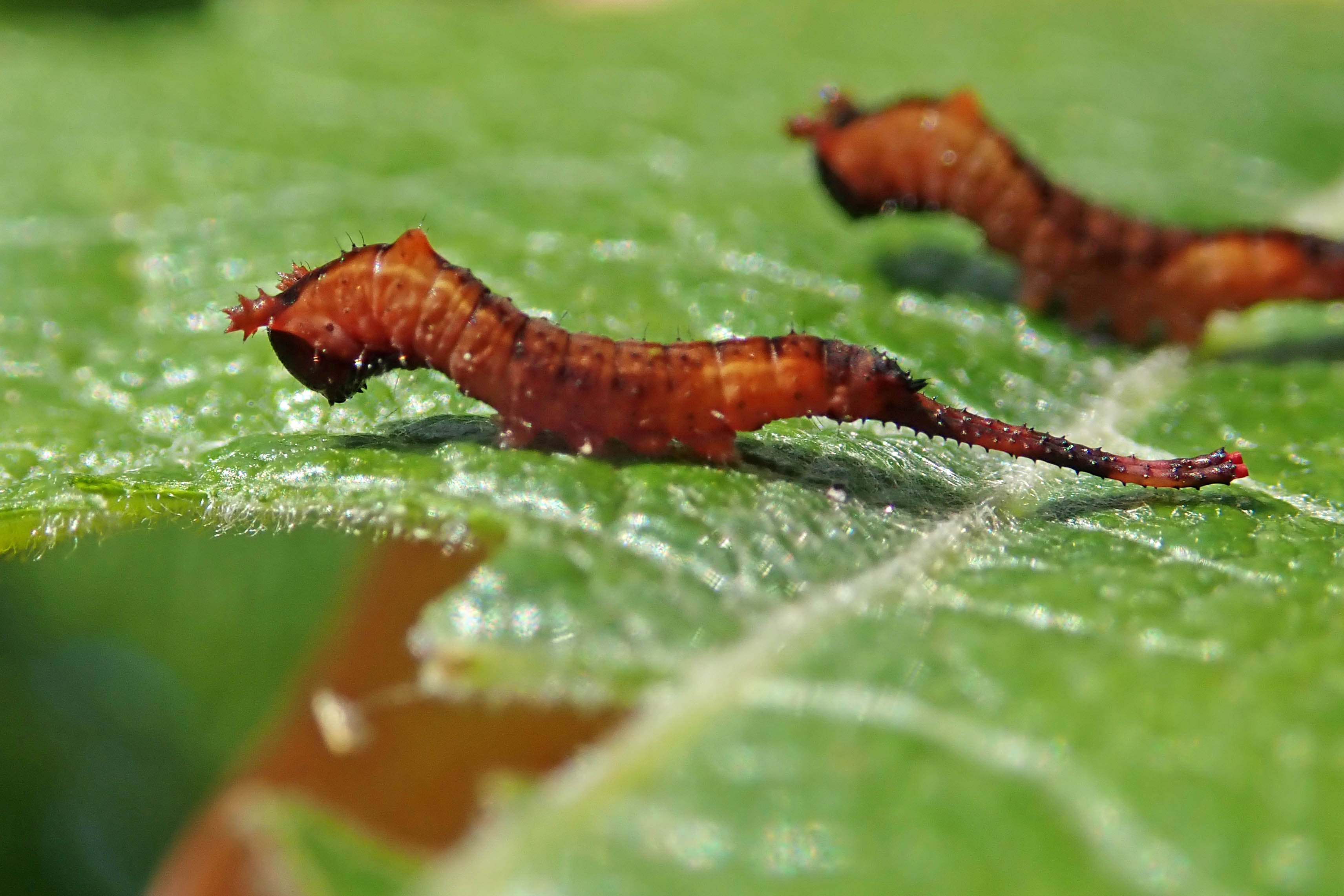
These are the empty eggs cases of a Puss moth (Cerura vinula), and the damage to a willow leaf from their initial feeding.

240604 puss moth eggs larvae (4)

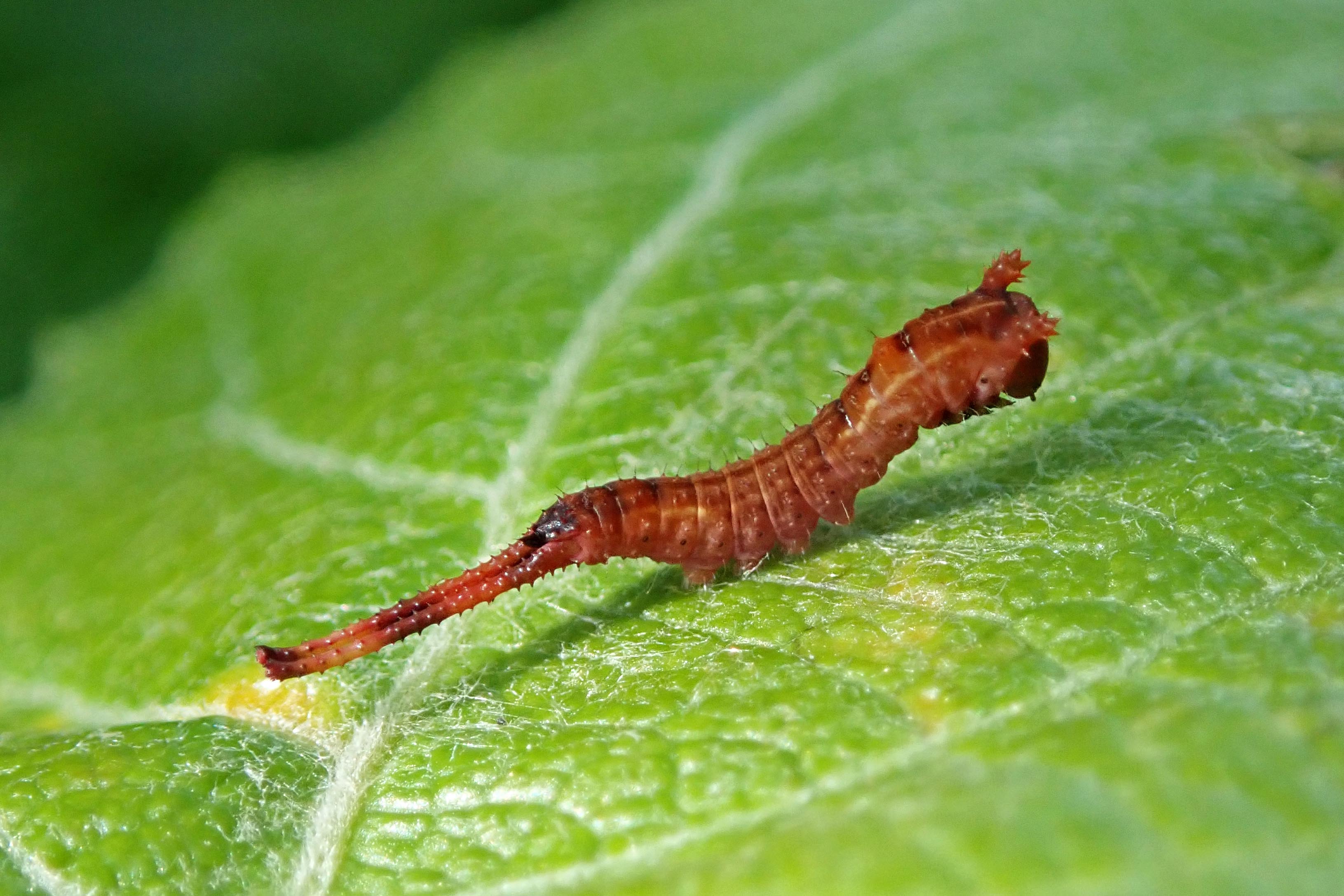
And these are the three incredible larvae that had emerged from those eggs cases. One person commented that they thought they looked like aliens; I think they look a little like seahorses out of water. As they grow, they will develop in to even more beautiful larvae (and, fingers crossed, I’m hoping to be able to re-find them).

240604 puss moth eggs larvae (2)

I’ve never seen an adult Puss moth but it too is an amazing-looking creature (see the photos of both adults and larvae on the UK Moths website here).

240604 puss moth eggs larvae (3)

Hope for Box growers

Tags

, , , , , , ,

In this post I am pleased to bring some good news to those of you who grow Box trees, bushes and hedges (Buxus species) in your gardens.

240603 jackdaws munching box moth larvae (1)

Though many Box plants are being ravaged by the voracious larvae of the Box tree moth (Box tree moth cats, 2 May), it seems the local Jackdaws have developed a taste for the larvae – and pupae, I think, judging by what the Jackdaw in my photo below is eating. A local moth expert explained recently on Twitter/X that ‘the larvae are known to contain alkaloid toxins, so birds generally seem to avoid them.’ Presumably some birds are able to tolerate the toxins, which is good news for all you Box growers.

240603 jackdaws munching box moth pupa

Grangemoor’s orchids

Tags

, , , , , , ,

This week’s Wildflower Hour challenge was to find orchids in flower. I love these gorgeous native plants so was very happy to include orchid spotting in a walk to Cardiff’s Grangemoor Park. And I was not disappointed, finding these four species currently in flower.

240602 southern marsh

Southern marsh-orchid (Dactylorhiza praetermissa)

240602 common spotted

Common spotted-orchid (Dactylorhiza fuchsia)

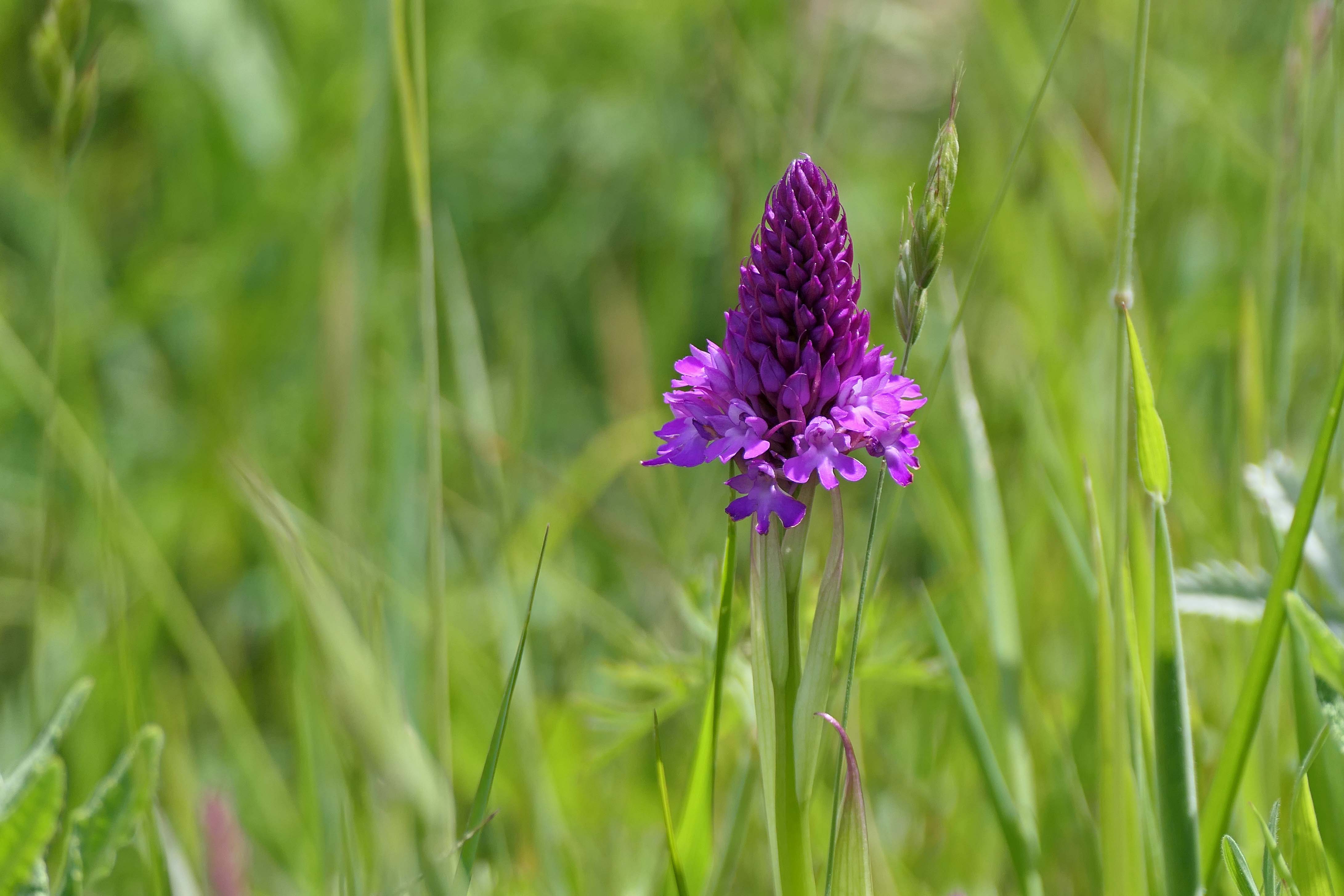
240602 pyramidal

Pyramidal orchid (Anacamptis pyramidalis)

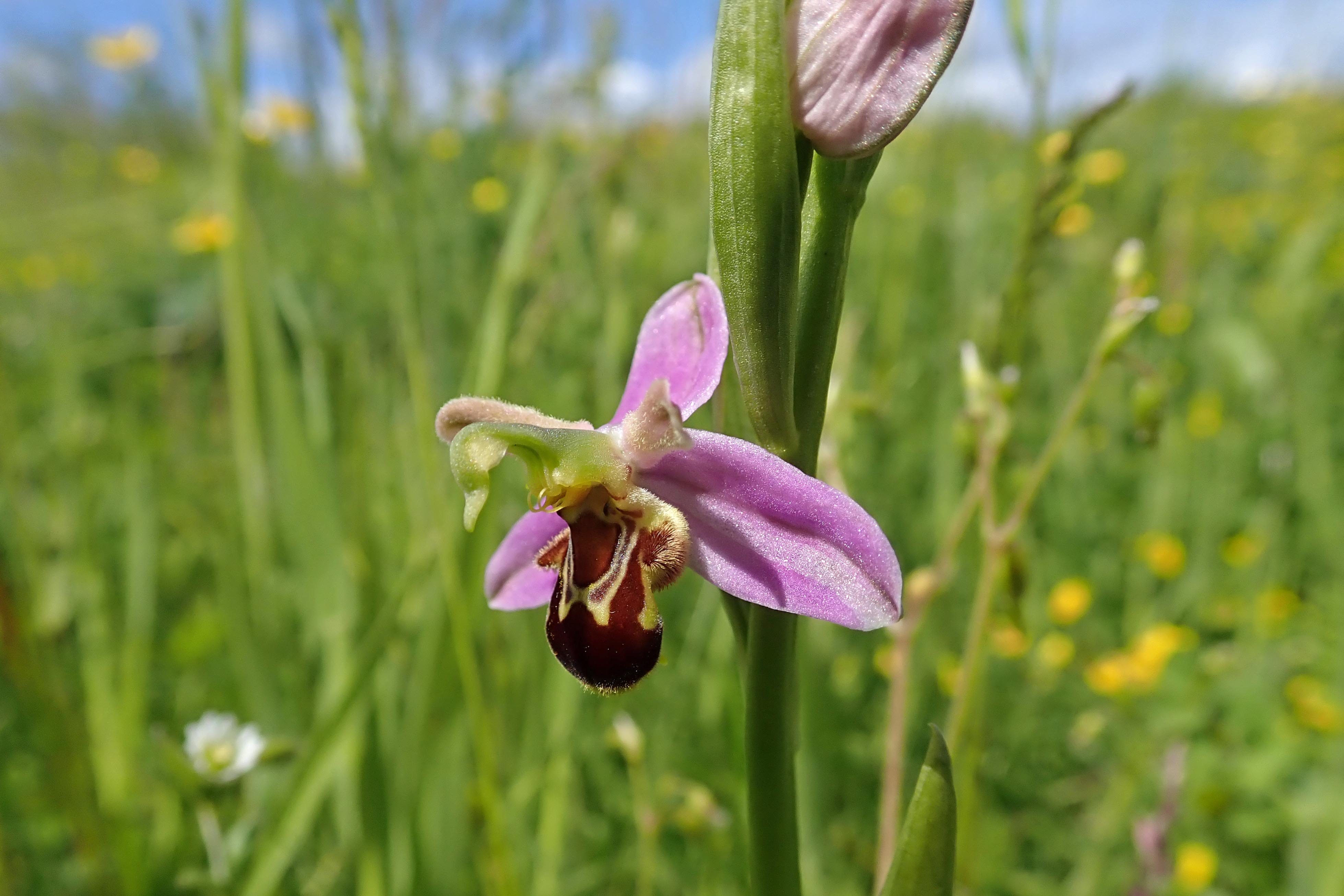
240602 bee

Bee orchid (Ophrys apifera)