Ghostly fungi

Tags

, , ,

‘Tis All Hallows’ Eve and all round the globe
the spirits are rising to roam and to probe,
to spook and to scare,
while you wonder ‘Who’s there?’

With their white colour and partial resemblance to the classic ‘white sheet over the head with holes for eyes’ ghost imitation, these fungi I found on Wednesday in a local park seem particularly appropriate for Halloween. These are White saddle (Helvella crispa), fungi that grow at this time of year in damp soil in deciduous woodland, often alongside paths, which is exactly where I found these.

An Egyptian goose comes to town

Tags

, , , , , , ,

The BTO (British Trust for Ornithology) website reckons that the Egyptian goose (Alopochen aegyptiaca) was introduced to England in the 17th century, presumably to enhance the parks and gardens of the rich with an exotic species – not quite a Peacock, but you get the idea.

Like many other introduced species, these geese have since spread their wings and flown to pastures new or, in this case, more likely lakes, though that colonisation has been quite gradual. The BTO site states:

In 1991 the population was estimated at c.900 individuals, 91% of which were in Norfolk. Since then, the species has colonised the rest of East Anglia, much of London and parts of the Home Counties.

And, from further down the page, by 2013-2017 the UK breeding population size had grown to 1850 pairs.

Sightings of these birds in south Wales have been relatively rare but do seem to have been increasing over the past couple of years. An Egyptian goose – possibly this same bird but there’s no way to be sure – spent several months on a local lake earlier in the year; it was first reported in the WhatsApp group on 23 March (though, of course, it may have been there before that, just not reported by any local birders) and then intermittently through April, May and June. Reports then stopped until ten days ago, when a birder posted that an ‘Egyptian goose set up residency a couple of weeks ago’, which would have been in early October.

As I’d not seen one of these geese since I was last in London six years ago, I decided to go take a look at this local bird. The lake it’s calling home is on the other side of Cardiff and I didn’t fancy the six mile walk through a very industrial area on busy roads so it was a bit of a trek by train and bus to get there … but definitely worth it.

With feathers in multiple shades of brown, with rich rust and bottle green highlights, Egyptian geese are very handsome birds, and this one’s no exception. It looked very settled amongst the other waterfowl, though the Coots were keeping a close eye on it. It was certainly not bothered by the presence of people and, though it turned its nose (beak?) up at my offering of suet pellets, which the other birds were happy to scoff, it happily grabbed the white bread thrown in the water by other visitors, so has presumably lived in a public park setting previously. I was very pleased I’d made the effort to go and see this exotic visitor.

Pretty in Porcelain

Tags

, , , ,

It’s been ages since I’ve seen Porcelain fungus (Oudemansiella mucida) so, though it was a bit sad to see an enormous old Beech tree had lost one of its huge branches, it was a real treat for me to see tiny bulb-shaped fungi emerging all over the wood.

There were hundreds of them, and I’ve just read on the First Nature website that this is due to the fact that ‘Oudemansiella mucida releases a powerful fungicide that deters or even annihilates competitors’, giving Porcelain fungus exclusive access to the nutrients of the fallen Beech.

Porcelain fungus is found exclusively on Beech, usually on dead or dying fallen branches on the ground but sometimes on dead branches high up in the canopy of an old tree.

The mucida in its scientific name refers to the slimy mucus that covers the upper sides of the caps of this fungus. And, though the idea of mucus might give a negative impression, these are stunning fungi, especially when the fruiting bodies are fully open. Their pure white colour and the translucence of their caps is where the common name Porcelain comes from.

Spider: Larinioides sclopetarius

Tags

, ,

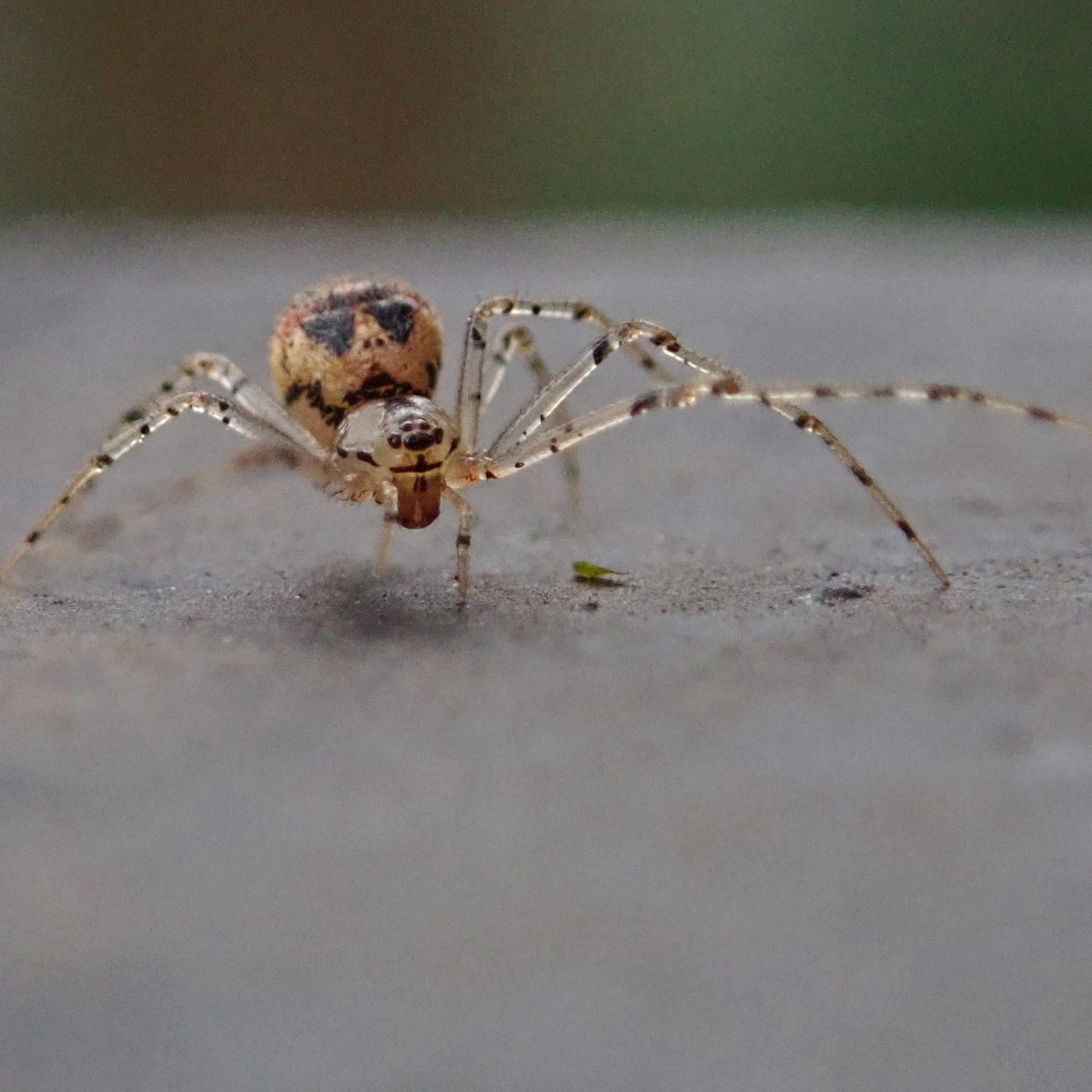
Meet my latest new spider find, Larinioides sclopetarius, also known as the Bridge orbweb spider. So, where did I find it? Why, under a bridge, of course! I must quickly add that I didn’t know what it was when I spotted it.

The railings, that make safe the riverside edge of the footpath that runs under a road bridge over the River Taff, were covered in spiders’ webs so I couldn’t resist having a peek to see what had created them. Most of the makers were hiding, as spiders often do in the daytime, but this one was sitting half in half out of its refuge, so I was able to get a couple of photos to post on social media. I was lucky to get a fairly quick identification from the British Arachnological Society, and the find has been attracting quite a lot of interest from arachnophiles. I’ll have to return to see what else I can find there.

Parasite of Bedellia somnulentella

Tags

, , , , , ,

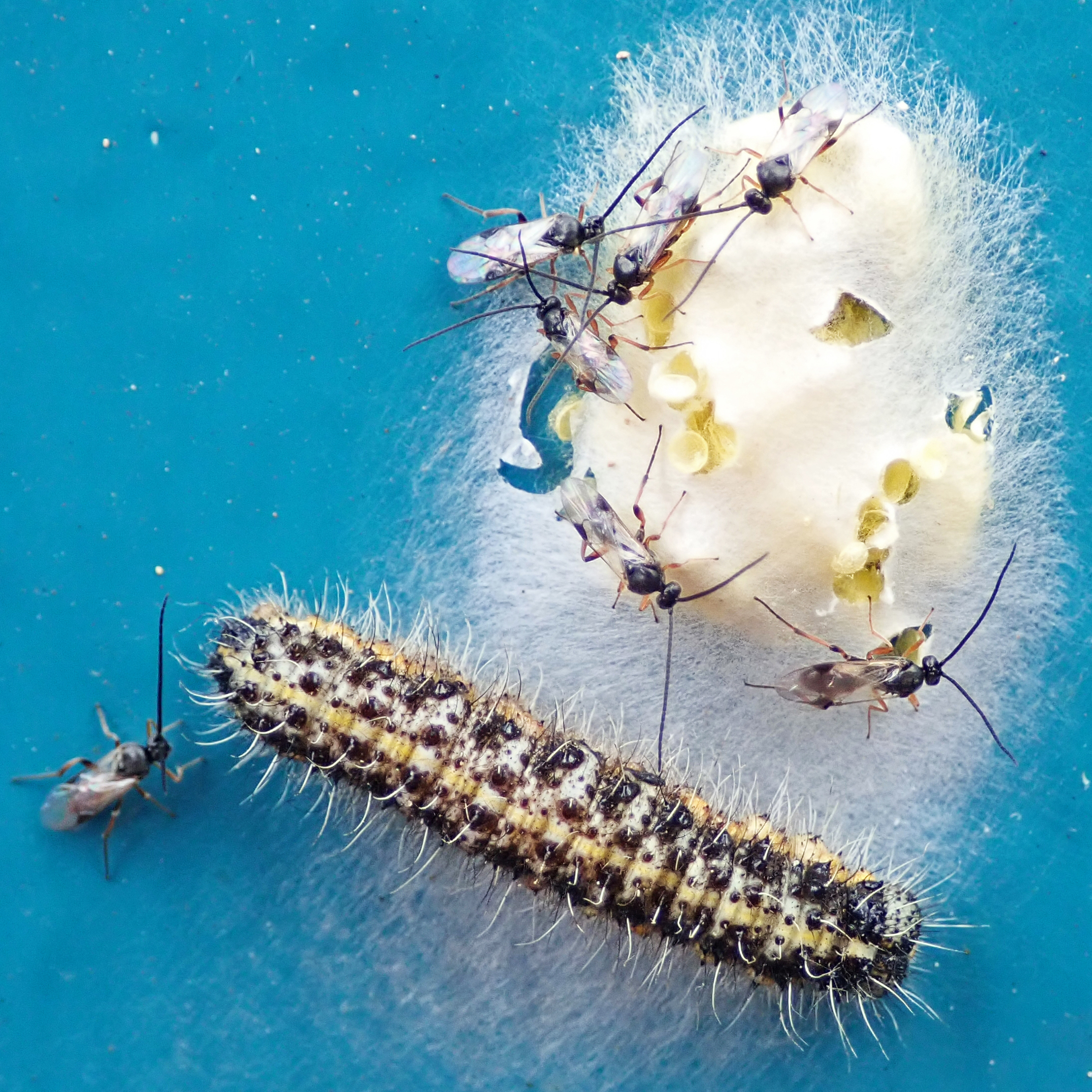
The two Field bindweed leaves I brought home from my coastal walk nearly two weeks ago, on the 14th, are the leaves that just keep on giving. As well as the three moth pupae I found on them – the reason I brought them home in the first place (see my blog Bedellia somnulentella revisited, 20 October), there was another pupa that looked to me to be that of a wasp, probably one that had parasitised another B. somnulentella larva.

That tiny wasp has now hatched. As is often the case with these miniscule creatures, I have no way of determining which exact species of parasitic wasp it is, and I do realise that the whole concept of a wasp larva eating a moth larva from the inside while it’s still alive is a bit gory (perhaps I should’ve posted this on Halloween!), but I find it fascinating, both the process of parasitism and also bringing the occasional things home to see what emerges. The little wasp, a male, has been released to live its best life.

Autumn trees: Norway maple

Tags

, , , ,

Today’s tree is not a British native – it was introduced as an ornamental, has been planted throughout Britain in parks and gardens, and from there has become naturalised, seeded by the wind, birds and critters, making itself at home in hedgerows, on scrubby waste ground and even in woodlands – I can see one from my living room window, growing on the edge of a small slice of regenerating ancient woodland.

The Norway maple (Acer platanoides) is handsome at all times of the year but, for me, the highlight of this tree, as with many maples, is its leaves in autumn. Their vibrant colours range from yellow through to the deepest red, and everything in between, sometimes all in one leaf.

Autumn on the Ivy

Tags

, , , ,

As soon as I get a whiff of the ‘wet flour’ smell of Ivy flowers, I know to keep an eye out for my first Ivy bees (Colletes hederae).

They appeared locally back in mid September – the Bumblebee Conservation Trust says they can be seen from late August through to early November – but, after a week of anti-cyclonic gloom when we didn’t see the sun at all, and then a week of mostly wet weather, I figured I probably wouldn’t see any more this year.

Fortunately for me, I was wrong. I happened to be in the right place at the right time earlier this week when the sun came out for a couple of hours and my walk had taken me past a row of old trees, all covered in Ivy whose flowers hadn’t yet begun to form fruit.

With its furry ginger thorax and ginger-and-black-striped abdomen, Colletes hederae is such an attractive little bee that is slowly colonising the British countryside, moving ever north, since its arrival here back in 2001.

Fungi: Black bulgar

Tags

, , , ,

I went looking for Fly agaric, the mushroom everyone recognises but which is surprisingly uncommon where I live; I found none but, almost immediately on arrival at north Cardiff’s Cefn Onn Park, I did spot this large log covered in small black button-like fungi.

These are the fruit of the fungus Black bulgar (Bulgaria inquinans), also known as Rubber buttons and Bachelor’s buttons. According to the First Nature website, they are known as Black Jelly Drops or Poor Man’s Licorice in the United States, though the site also cautions readers not to be fooled by those names – these fungi are not edible and may, indeed, be toxic.

As you can see in the photo above, the fruit bodies look a bit like short tacks; they start out flat on top but come to resemble little cups. The outer surface is, initially, brown and scaly looking but, as they age, they become black, blobby when wet, but tougher and rubbery when dry. Black bulgar is described as common, and can be seen, mostly on fallen Oaks but also on a few other tree species, from autumn through to spring.

Lingering

Tags

, , , , , ,

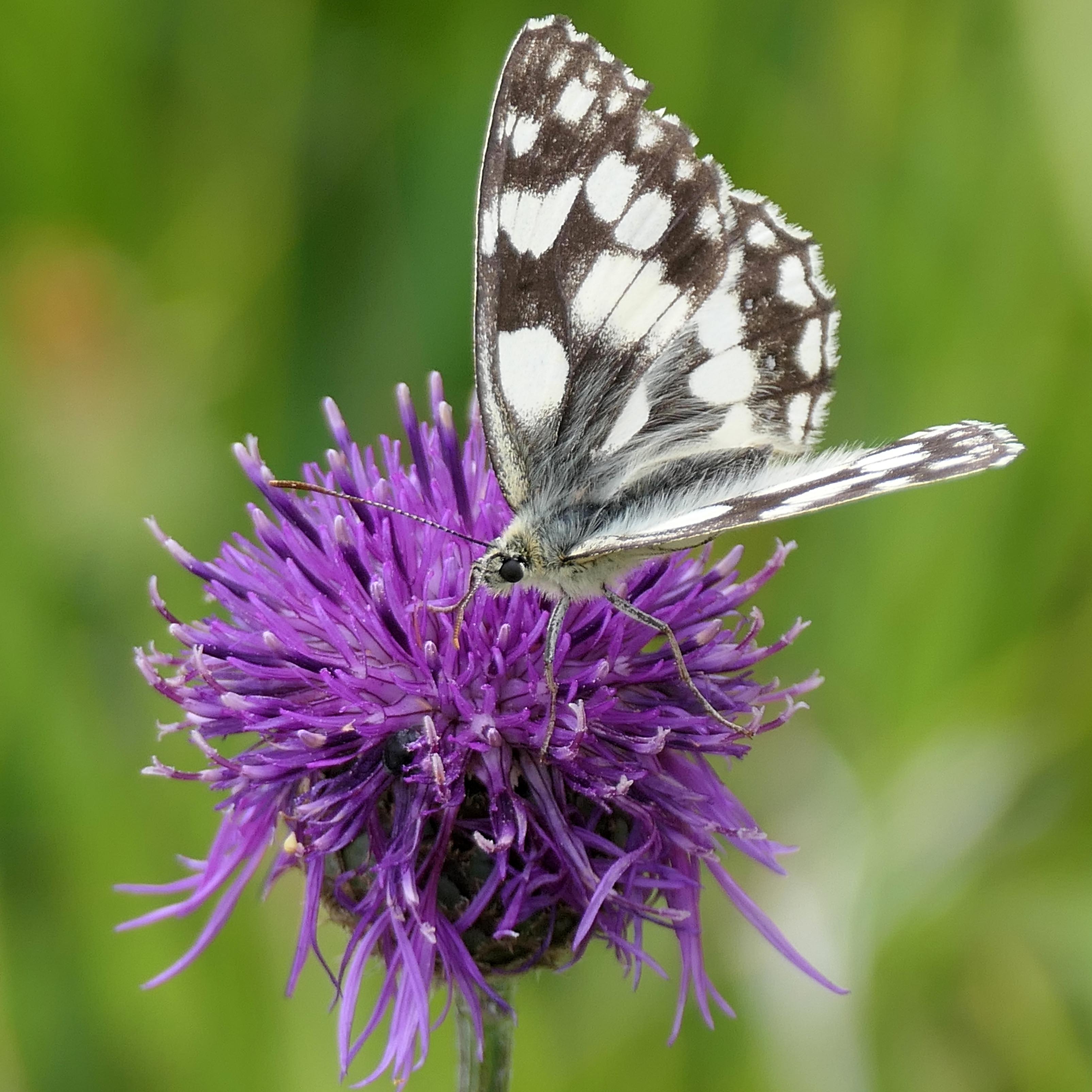
Looking out the window now, as Storm Benjamin drenches us with heavy rain, it seems hard to believe there was some bright sunshine this morning. I happened to be at Lavernock Nature Reserve at exactly the right time to feel the warmth of that sun and I wasn’t the only one to enjoy the feeling. Although I haven’t seen any butterflies or dragonflies for at least a week, and thought I’d probably seen my last for the year, but it turns out they’re still lingering unseen, and out they popped to bask in the sun’s heat:

A Red admiral

A Common darter

And a Speckled wood.

Waxcaps, but fleeting

Tags

, , , , ,

Last week I went for a meander around Cathays Cemetery in Cardiff, looking for waxcaps. The cemetery is a SSSI (a Site of Special Scientific Interest) because of its waxcaps, and they are stunning. The SSSI designation is supposed to ensure the site is protected from environmental damage, and managed in a way that benefits the flora and/or fauna that resulted in its designation, but it doesn’t.

All of the beautiful waxcaps pictured in this post would have been destroyed by the end of that day because a council worker was cutting the grass. In fact, I only had time to check a couple of the uncut blocks within the grounds before they too were mown.

This is typical of Cardiff Council’s assault on the natural environment. They’ve been told by ecologists how the cemetery should be managed but they ignore that advice, cut when the waxcaps are fruiting, and leave the clippings.

This is a deliberate decision by the Council; and the situation could easily be remedied either by mowing the grass a little earlier or a little later in the year. And, if budget cuts mean they can’t afford to purchase a mower than removes the clippings, then they could co-ordinate the mowing with the cemetery Friends group and other voluntary groups to rake the clippings. But they don’t.