With the festive season well underway and end-of-year / end-of-work / pre-holiday parties in full swing the phrase ‘Bottoms up!’ seems rather appropriate. But here it has nothing at all to do with drinking!
Bottoms up!
22 Thursday Dec 2016

22 Thursday Dec 2016
With the festive season well underway and end-of-year / end-of-work / pre-holiday parties in full swing the phrase ‘Bottoms up!’ seems rather appropriate. But here it has nothing at all to do with drinking!
18 Sunday Dec 2016
‘Christmas? Bah! Humbug!’
12 Monday Dec 2016
Tags
birding, birds, birdwatching, Greylag goose, jackdaw, Mallard, Moorhen, Roath Park Lake, Tufted duck
Just to show that the birds of Roath Park Lake aren’t all vicious killers (see yesterday’s post for that horror story), here are some I photographed before the swans attacked.


There’s a little concrete ledge under the water at this end of the lake, which is just perfect for the water birds to sit on and preen but still have the chance for a quick watery getaway if needed. It’s also perfect for bird watchers to get a better look at the cute little Tufted ducks as you rarely see them out of the water. I think this little black-and-white male knows exactly how handsome he is!

Further around the lake I was entertained by three Jackdaws searching through the leaf litter for food. Just as I’ve seen blackbirds and thrushes do, they would grab the leaves and fling them to one side, then look back quickly for signs of any insect movement.

Still further along the path, I stopped and fed the seed from one of the two containers I was carrying firstly to one of the Barnacle geese, and then to the Greylag and Canada geese, Mallards and Feral pigeons that rapidly came to flock around me. This Moorhen came last but was still able to pick up a few seeds the bigger birds had missed. Their feathers have such beautifully rich colours.

And last but certainly not least was this very sleepy Greylag goose, standing apart from all the rest on the edge of the pavement at the end of the lake. As I watched it tucked one leg up under its plump body and, though it tried to keep an eye on me just in case I was a threat, its eyes gradually closed for a mid-afternoon snooze.
01 Thursday Dec 2016
Tags
birding, birdwatching, British birds, coal tit, Forest Farm Nature Reserve, Kingfisher, Mallard, Moorhen, nuthatch, robin
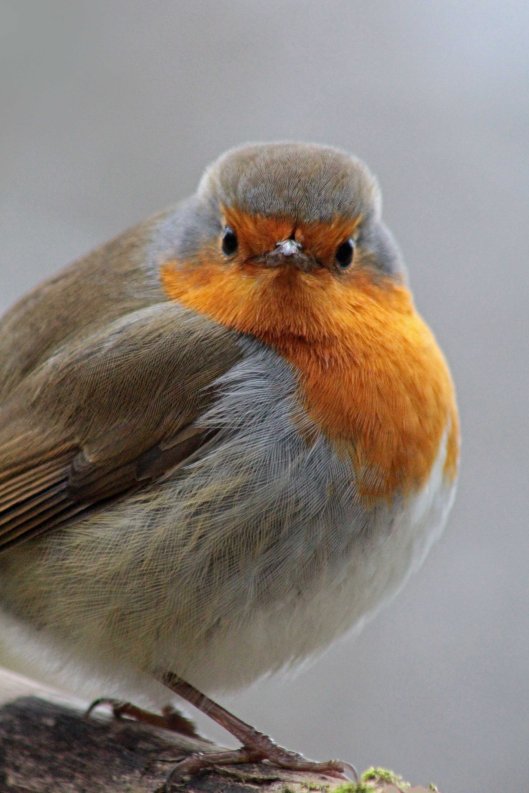
When deciding on a title for this post, I couldn’t help but wonder where the phrase ‘Watch the birdie’ originated, and I quickly discovered that as early as 1879 Victorian portrait photographers were using trained live birds and then mechanical chirping birds to hold the attention of their subjects. (This blog has more details if you’re interested.) My intentions were a little different: I was carrying small pottles of bird seed to try to hold the birdies’ attention so I could take their photographs! However, plenty of folk had beaten me to it and the birds were already scoffing into all their food presents.
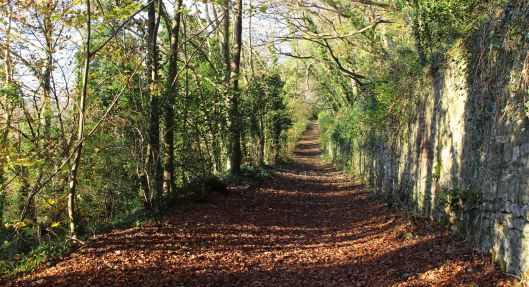
I hadn’t been to Forest Farm for a month or two so it was lovely to wander along the towpath of the old Glamorgan Canal and the meandering woodland paths, listening to bird song all around. A highlight was watching a kingfisher trying to spot the sprats in the canal – I only saw it dive once and that was unsuccessful but it was still an absolute delight to watch. It was a truly wonderful day watching the very-much-alive birdies.


09 Wednesday Nov 2016
For World wildlife Wednesday this week we head to my homeland to check out one of our many beautiful birds. The aptly named ‘king of the fishers’ is a highly entertaining bird to watch, especially when fishing. New Zealand’s Sacred kingfisher (Todiramphus sanctus) sits patiently on a strategically placed branch, pole or railing overlooking a mudflat or estuary then, with a sudden flash of turquoise, it’s off to snatch, catch or grab whatever has caught its sharp eye. Though its habits and habitats are similar to those of the British kingfisher I now see on local rivers and streams, the Sacred kingfisher’s colouring is somewhat different, as you can see from these photos – the British bird is on the left, the New Zealand bird on the right.


With its loud ‘kek kek kek’ call, the Sacred kingfisher is sure to announce its presence, especially if you stray within its territory during the mating season, when it will also dive-bomb other birds and even humans if it considers them a threat. Its burrows can often be seen up high in muddy cliffs and banks at the coast but it also nests in holes in trees. Luckily, the population is numerous and widespread so New Zealanders and visitors alike can enjoy its antics.

16 Tuesday Aug 2016
Posted in birds, insects, nature, parks, wildflowers
Tags
birding, birdwatching, British birds, chalk cliffs, Cuckmere River, East Sussex, Seven Sisters Country Park
Last Wednesday Jill and I walked the full length of the Seven Sisters Country Park in East Sussex twice, down to the sea and back on one side of the river, followed by a break for a delicious lunch at the Cuckoo Inn, and then down to the sea and back on the other side of the river.

We did the same walk on 13 August 2014 and it was top of my list to do again on this visit. Rather than the cloudless, bright blue sky of two years ago, this time it was quite overcast though no less beautiful as the clouds lent a different atmosphere to the landscape, creating a more moody feel that I almost prefer.
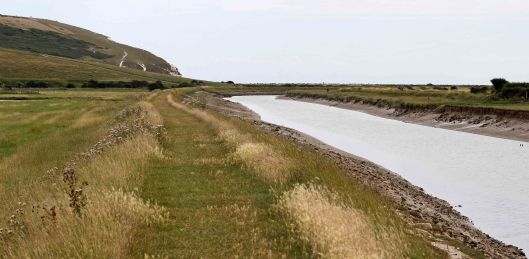
The huge chalk cliffs were just as awe-inspiring, the cliff tops were covered with luxuriant wildflower growth, and we delighted in sightings of birds and insects. It was a magical day!
To walk the landscapes of the Seven Sisters Country Park, check out my Sconzani blog posts: this was on a blue-sky day in 2014 and this was last week.


13 Saturday Aug 2016
When I went to stay with my friend Jill in East Sussex this week I didn’t expect to be woken early each morning by Herring gulls (scientific name Larus argentatus) screeching and squawking on hers and her neighbours’ rooftops as she lives several miles from the sea as the gull flies and nowhere near something that might attract them, like a rubbish tip. It seems the gulls have started moving inland in her area and she’s certainly noticed more of them about in the past year or so. According to the RSPB, Herring gull numbers have been declining in recent years so perhaps they are expanding their range in search of food.
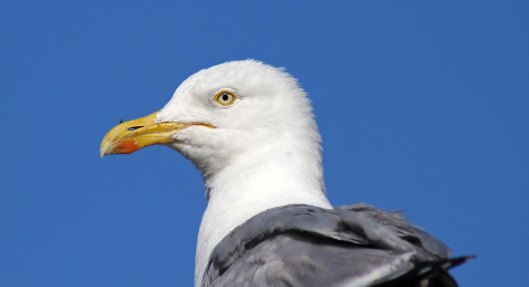
I enjoyed hearing them as it made me feel like I was on holiday at the seaside, though they could be very cheeky. Although Jill doesn’t feed them, they do scavenge food put out for the smaller birds, and one rather insistent gull has taken to tapping at the French doors in her bedroom in the morning in the hope of getting some breakfast. And I took these photos of the same (or another, equally brazen bird) outside the back door, giving me a very imperious ‘feed me now’ look, then mewing like a young gull when the glare didn’t produce the desired results. I’m afraid it went away hungry.


03 Wednesday Aug 2016
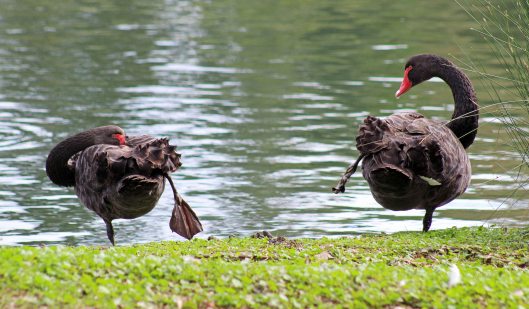
The Black swan (Cygnus atratus) is not common in Britain, where white Mute swans predominate, but they can still be seen here. Like peacocks, they were introduced to join the collections of exotic birds adorning the parks and estates of the wealthy, and some have since escaped those boundaries.

Many people think of the Black swan as an Australian bird – it is, after all, both are the state symbol and the state emblem of Western Australia. However, scientists have discovered that the Black swan was present in New Zealand at the time of first human settlement, but had been hunted to extinction by the time Europeans first arrived in the early 1800s. In the 1860s, they were deliberately reintroduced from Australia and, judging by how quickly the local population grew, they may, at the same time, also have re-colonised New Zealand naturally – flown or been blown across the Tasman Sea from Australia.


The Black swan’s Latin name atratus means ‘to be clothed in black for mourning’. Perhaps that’s why some people believe it to be a harbinger of bad luck. Personally, I think the swan dressed all in black is a very stylish and elegant-looking bird (except, perhaps, when it’s doing its morning exercises 😉 ).

01 Monday Aug 2016
Tags
birding, birdwatching, British birds, cygnet, Hans Christian Andersen, Mute swan, swan, The Ugly Duckling
You know Hans Christian Andersen’s story of ‘The Ugly Duckling’, right? The unlovely little bird, who is bullied and abused by his farmyard companions because he doesn’t look like the other ducklings, grows up to become not just another duck but, instead, a very beautiful swan. It was one of my favourite stories as a child, perhaps because I was bullied at a young age for wearing spectacles – not common when I was a kid – and I hoped, in vain, for a similar transformation.

Ever since, I have had a special love of swans, and it has been wonderful as the summer has progressed to watch the little Mute Swan cygnets at Roath Park lake grow into their beauty. Here are just a few of the very many photos in my swan album.


06 Wednesday Jul 2016
Tags
birding, birdwatching, Kuala Lumpur Bird Park, Lamprotornis superbus, starling, Superb starling, Tanzania
The Superb starling (Lamprotornis superbus) is native to many east African countries – Uganda, Somalia, Ethiopia, Kenya and Tanzania, where most of my photos were taken – but you only have to google their name to discover how widely they’ve spread throughout the world, either as specimens in zoos and bird parks (one of my photos was taken in the Kuala Lumpur Bird Park in 2013) or in the aviaries of bird collectors.

And it’s easy to see how they got their name – what truly stunning colours they are, from their iridescent blue backs and breasts and those glorious turquoise wings to their orange-red tummy and legs, all rounded off by a snowy white bottom! Like the starlings I’m more familiar with in Britain and New Zealand, Superb starlings are sociable birds, often to be heard chattering and singing their loud quavering songs in the company of others. Unlike their British and New Zealand counterparts, which are inclined to be nervous of people, the Superbs are quite bold and brassy and easily tamed.


 earthstar
You must be logged in to post a comment.