I’d seen ten Brimstones this year before I spotted this one today – nine of those zoomed past so rapidly I only managed blurry photos; one was still but very distant. So, I was delighted when I noticed this beauty snoozing under a bramble leaf. This may well have been where it had roosted during the night and it was waiting for the sunshine to warm it up before flying off.
Sorry if my title offends some of you but it can be difficult to put into words how much I adore these stunning creatures.
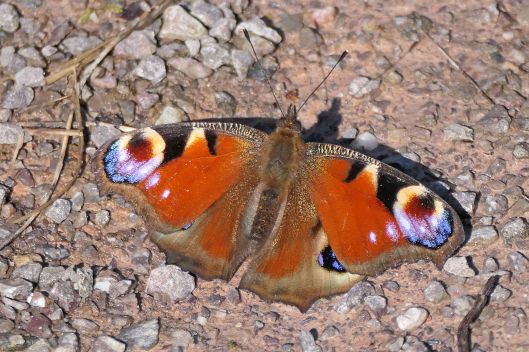
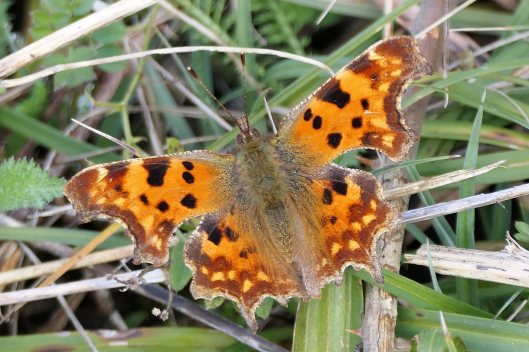
When first the Peacock and then this Comma, within a few minutes of each other, flew across my path and settled in the sunshine for me to admire and photograph, I felt as if I might burst with happiness. The beauty of these creatures speaks to my soul!
For a variety of reasons, I wasn’t able to venture far from home for my butterfly viewing opportunities this year. As a consequence, the number of species I saw was small, just 30. Of those, 26 species were seen within walking distance of home, which, even after seven and a half years here in Wales, I still find amazing. In my native New Zealand, you would usually only see two species so easily (the introduced White and the self-introduced Monarch), though this does depend, of course, on where you live. The other four species on my list were seen up the valleys, at Aberbargoed, Grayling on the coal spoil tip, and Small heath, Marsh fritillary and Small pearl-bordered fritillary in the Aberbargoed Grasslands National Nature Reserve. Only 29 species are shown in my video, as I didn’t manage to get close enough to the Purple hairstreaks I saw for viable photographs. I am hoping / intending / planning to see more species in 2023, and compiling this video has made me impatient for the return of my beloved, beautiful butterflies.
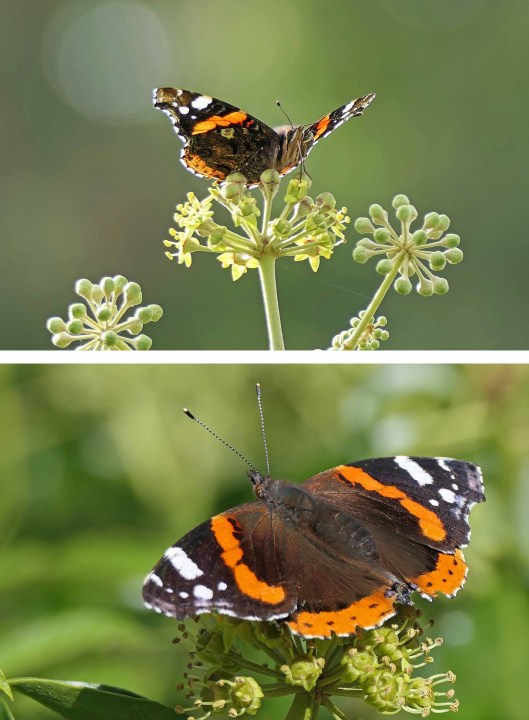
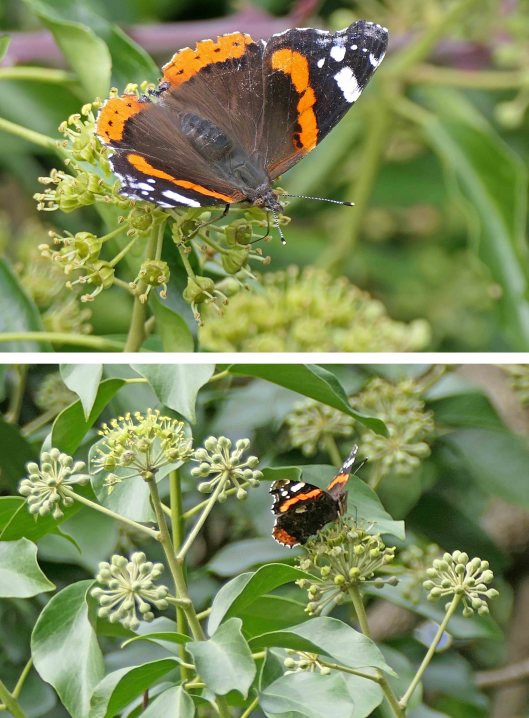
It’s not only the birds that head south in the autumn. During a walk along the coastal path earlier this week, I noticed several Red admirals getting ready to migrate.
Ivy flowers are essential for them at this time of year when they need to take on as many nutrients as possible before they take the big plunge and fly off over the cliffs, a feat that never ceases to amaze.
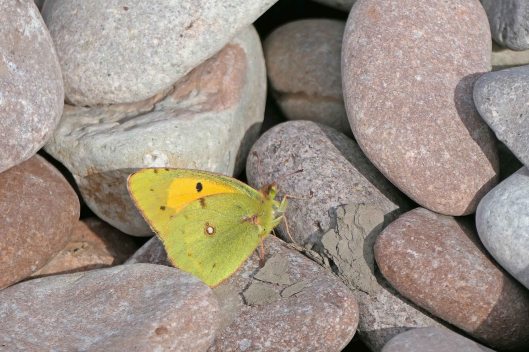
I went to Sully beach on Monday specifically to look for the two Grey plovers that have been frequenting the waterline on and off in recent days. (I saw them but too distantly for good photos – I’ll try again when the tide is higher, so may yet post about them.) What I did not expect to see was two – or perhaps, three – Clouded yellows along the beach. I only managed to get photos of two so can’t confirm the third sighting was a different individual – they fly so fast, one could easily have passed me! Doesn’t their amazing yellow pop against the colour of the beach pebbles?
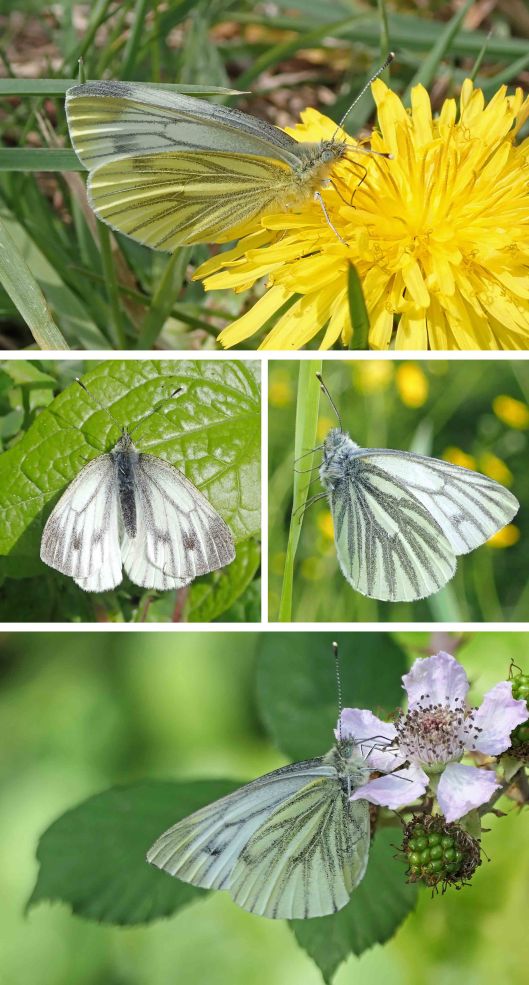
I don’t know what it’s like where you are but there seem to be gazillions of Small white butterflies around here at the moment, which is why, when I noticed a single Green-veined white butterfly, it stood out like a sore thumb. And then it occurred to me that I hadn’t really covered the various whites much on the blog this butterfly season. So, before all the butterflies fade away for the year, I am going to remedy that, and I will start by showcasing the Green-veined whites (Pieris napi), which are so much easier to identify precisely because of their ‘green veins’, which, the UK Butterflies website reminds me, are not actually green at all but rather ‘an illusion created by a subtle combination of yellow and black scales’. And here they are …
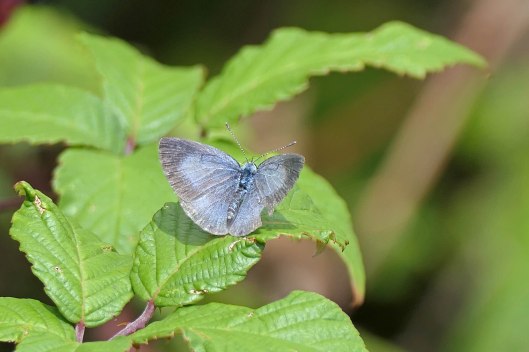
Well, this was a surprise sighting during today’s walk! Holly blue butterflies have two broods each year (very occasionally three in the right conditions) but even with a second brood, the adults have usually disappeared by the beginning of September. This female did look quite faded and a bit bird-pecked but she was still flying strongly. Butterflies continuously amaze me!
This Holly blue was a lovely unexpected surprise during this morning’s meander around Cosmeston. Holly blues do have two broods each year but this is quite late in the season to see adults of the second brood. A blue blessing!
Fleabane is a godsend. It starts to flower in mid summer and carries on flowering through to early autumn, providing a much-needed food source for a diverse range of insects at a time when many other wildflowers are beginning to wilt and wither. I’ve been accumulating the photos in this video for several weeks, and many of the featured insects have themselves now faded away, victims of the passing of time and also of the sizzling hot temperatures we’ve been experiencing. I’m sure those insects that have managed to survive the hot dry weather have been very grateful for the sustenance Fleabane has provided.
I couldn’t believe my luck (and wondered whether I should’ve bought a lottery ticket) but, after the first lucky day (Brown argus) and a second lucky day (the Silver-washed fritillary), the very next day my luck was in again. I’d seen Clouded yellow butterflies already in 2022 (one on 16 June; two – probably the first one and a friend – on 17 June; one – probably one of the previous two – on 20 June; all in the same general area) but hadn’t been able to get any reasonable photos. With the new camera, and a slightly more co-operative subject – it stopped a few times to feed, this time I managed to fire off several quick shots. This is the best of them.
p.s. I wrote this blog a few days ago and, since then, we’ve had an amazing influx of Clouded yellows, with five noted yesterday at Cosmeston Lakes Country Park, so here’s another of these beauties.
You must be logged in to post a comment.