Topknot or tonsure
14 Sunday Aug 2022
Posted in flowers, wildflowers
14 Sunday Aug 2022
Posted in flowers, wildflowers
07 Sunday Aug 2022
Posted in plants, wildflowers
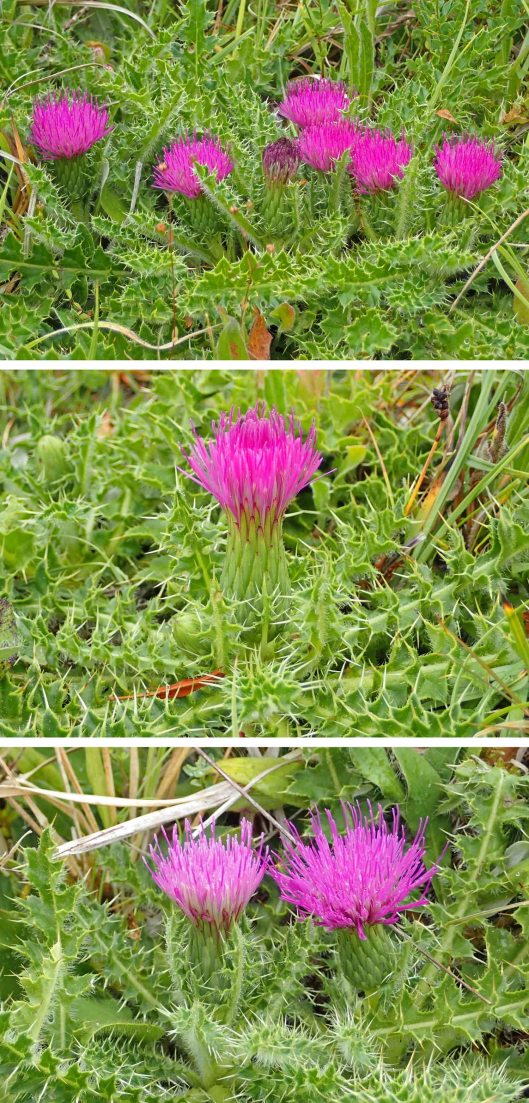
Sessile: adjective; Botany zoology (of a plant or animal structure) attached directly by its base without a stalk or peduncle (Oxford Dictionary).
Dwarf thistles (Cirsium acaule) are also known as Stemless thistles and are a good example of a sessile plant. The only local patch of Dwarf thistles I know is flourishing this year, as their preference is for ‘dry grassy habitats’ on ‘calcareous soils’ (Naturespot website).

31 Sunday Jul 2022
Posted in flowers, wildflowers
Yellow is summer, sunshine, heat. Even before the record temperatures of the recent heat wave, walking through fields of these bright yellow (and orange) wildflowers was making me feel hot.
24 Sunday Jul 2022
Posted in flowers, plants, wildflowers
Tags
British orchids, British wildflowers, Broad-leaved helleborine, Epipactis helleborine, native orchids, orchid
I took these photos of Broad-leaved helleborine (Epipactis helleborine) ten days ago, on 13 July, and even then I had expected them to have shrivelled in the sweltering heat. Now, after the heatwave, I imagine they will have wilted, drooped, possibly died off completely but I will go back soon to check on them as they have such lovely flowers.

23 Saturday Jul 2022
Posted in flowers, insects, wildflowers
Tags
5-spot Burnet moth, 6-spot Burnet moth, British wildflowers, Burnet moths, Burnet moths on pink flowers, pink wildflowers
There’s just something about pink flowers that Burnet moths find enticing. Whether they be thistles or Red clover or Knapweed, the 5-spots and the 6-spots seem to prefer them.

17 Sunday Jul 2022
Posted in flowers, plants, wildflowers
Tags
British wildflowers, Common figwort, Scrophularia nodosa, Vicia sylvatica, Wood vetch, woodland plants, woodland wildflowers
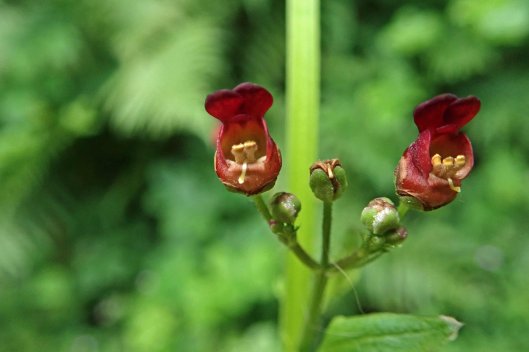
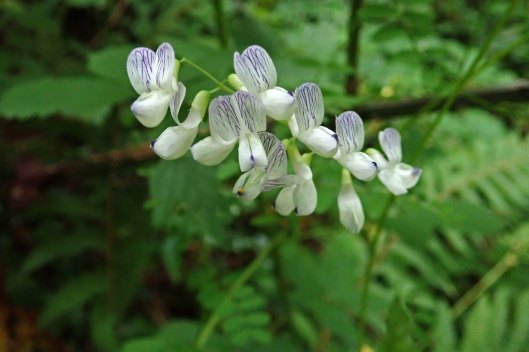
These new-to-me plant finds served as a welcome reminder that I should vary my walking routes more often, as I spotted both along a woodland path I don’t often wander.

This first plant is Common figwort (Scrophularia nodosa). Richard Mabey, in Flora Britannica, explains the name: ‘The “fig” in figwort is an old word for piles [haemorrhoids], which both the globular red flower-buds and the root-protuberances were thought to resemble. Figwort was recommended for piles and also for the tubercular swellings of scrofula, “the King’s Evil”.’
Common figwort is a rare plant locally so I returned to the site during last Friday’s walk, hoping for another look and better photos, but I was both dismayed and angered to find that the Woodland Trust’s maintenance team had been through shortly before I got to the location, and their overly aggressive strimming of the path’s edges had destroyed the plant. Sadly, this is just the latest in a series of issues I have noted with the Woodland Trust’s mismanagement of this glorious ancient woodland.

Fortunately, the Wood vetch (Vicia sylvatica) had not been affected, probably because it was scrambling along a backward-sloping bank so out of the strimmers’ line of attack. At a glance, this vetch’s flowers look white but a closer look reveals the delicate beauty of their fine purple lines.
10 Sunday Jul 2022
Posted in flowers, wildflowers
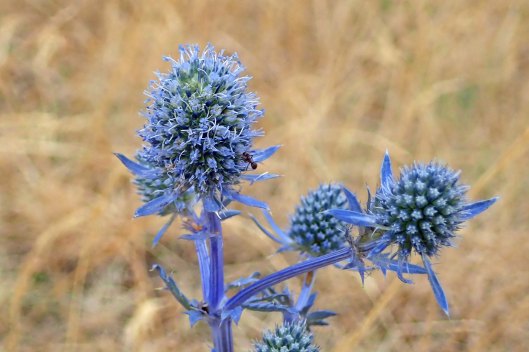
A parade of pink (and blue) wildflowers …
03 Sunday Jul 2022
Posted in flowers, insects, wildflowers
Tags
British insects, British wildflowers, insects as pollinators, insects on Oxeye daisies, Oxeye daisy, Pollinating insects
These photos were taken over 3 days, as I meandered around the local fields and meadows. The ‘friends’ are a wide variety of creatures that all pollinate Oxeye daisies just by flitting/hopping/flying from one to the other, including ladybirds and their larvae; an as-yet-unidentified mirid bug; at least two spider species, including crab spiders using their colour to camouflage their presence; a wide variety of flies; crickets young and old; solitary bees; good numbers of Swollen-thighed beetles, male and female; and a very confiding Meadow grasshopper – they usually hop off when I approach. And these are just the insect species I managed to photograph – I know there are more I missed.
26 Sunday Jun 2022
Posted in flowers, wildflowers
Tags
British orchids, British wildflowers, Cosmeston Lakes Country Park, native orchids, Pyramidal orchid
I learned, earlier this week, that the rangers and volunteers at Cosmeston Lakes Country Park do an annual count of the orchids growing in the east paddock. On Friday 17 June, they counted an amazing 4828 Pyramidal orchids (as well as 5254 Common-spotted and 155 Bee orchids). These are just a few of those splendorous Pyramidals.

12 Sunday Jun 2022
Posted in flowers, wildflowers
Yellow rattle (Rhinanthus minor), the meadow-maker, the miracle-working semi-parasitic plant that weakens the overwhelming grasses in our fields by feeding on their nutrients, thus allowing more delicate wildflowers their chance to thrive. The rattle in the name comes from the noise of the ripe seeds in their pods and, according to the Plantlife website, cattle love its taste – ‘when let into a field it is the first thing they will eat’, so it’s a win for the cattle, and a win for wildflowers.

You must be logged in to post a comment.