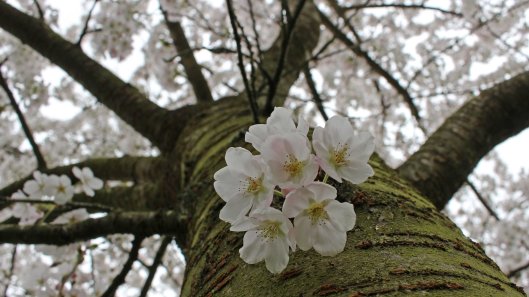
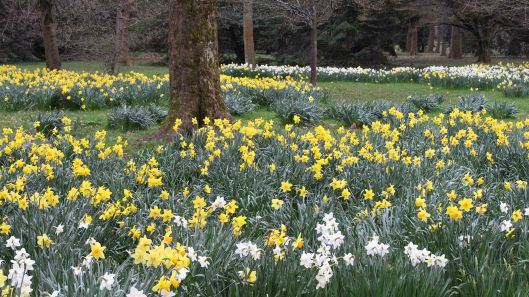
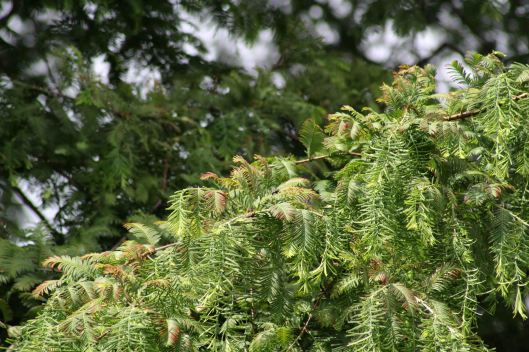
Bute blossom
02 Sunday Apr 2017
02 Sunday Apr 2017
18 Saturday Mar 2017
20 Sunday Nov 2016

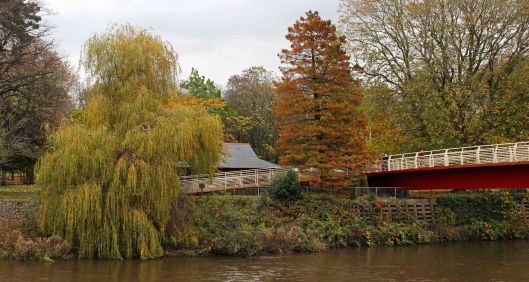
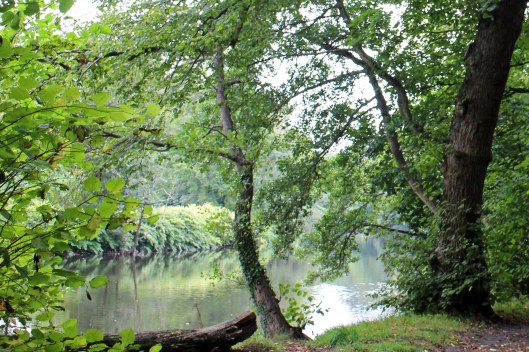
Bute Park is, well, beaut! Cardiff’s green heart has wilderness and playing fields; cycling tracks and walking paths; a stone circle; an ambling canal on one side and a roaring river on the other; grand avenues of ginkgoes and limes, and a botanical treasury of trees. Though some of my photos were taken 10 days ago, on a bright blue-sky day, the majority were taken during this afternoon’s long ramble hither and yon. Luckily, winter’s first official storm, Angus, which blasted the city with rain, hail and high winds over the past couple of days, hadn’t blown away all the splendid autumn hues but I fear this may be my last autumn post for this year … so, enjoy!
24 Monday Oct 2016
Tags
I enjoyed a lovely long meander around Cardiff’s Bute Park on the weekend, strolled the riverside paths, strode along the towering lime avenue, and scuffed through the occasional deep drift of autumn leaves. It was magical! I took a ton of photos, as I always do, and when I was editing them later that evening, I realised I had one scene that was almost a perfect fit for an image I took last year. In fact, it was exactly one year, one month and one day ago. These are those two images, the oldest first.


23 Friday Sep 2016
Tags
American nightshade, American pokeweed, berries, berry, Bute Park, Phytolacca americana, pokeweed
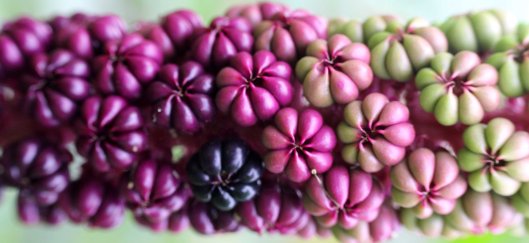
It’s toxic! If the sap touches your skin, it can burn. If you ingest the leaves, you might suffer a severe reaction. If you think these berries look delicious, think again – they will poison you. I think you get the picture – but what a beautiful picture it is, don’t you think? I am just entranced by the colours and shapes of the berries.

This is Phytolacca americana, the American pokeweed or American nightshade or just plain pokeweed, and I found it growing alongside the hydrangeas and rhododendrons in Cardiff’s Bute Park. It’s a herbaceous perennial that grows to a height of about 8 feet (2 metres) and is native to the USA, where it’s apparently considered a weed by the agricultural community. However, several species of bird and some small beasties are unaffected by its toxicity so enjoy an autumn feast on the berries. And, according to Mrs M. Grieve’s 1931 A Modern Herbal, various parts of the plant can be used for a range of natural remedies, from drenching cattle to treating chronic rheumatism and haemorrhoids. I think I’ll stick to admiring the berries!
09 Friday Sep 2016
Posted in nature, wildflowers
Tags
Autumn crocus, Bute Park, Colchium autumnale, Naked Boy, Naked Ladies, Roath Park, Son-of-the-father
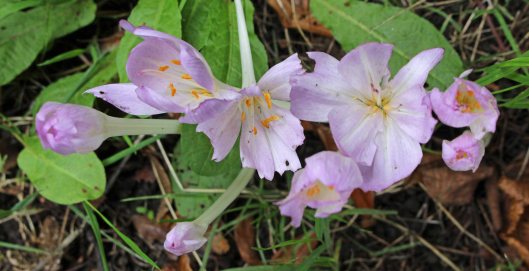
My colleagues at my voluntary job raised their eyebrows and smirks appeared on a couple of faces when I said I was going to photograph Naked Ladies after work last Tuesday, but it was true. I’d seen some in Cardiff’s Roath Park the previous weekend and I wanted to see if they were also performing in Bute Park … and they were!

Of course, I’m referring to the Autumn crocus, Colchium autumnale … what were you thinking?! As well as the common name Naked Ladies, they are also known as Naked boys and Sons-before-the-father because of their growth habit – they produce leaves in the springtime that die back over the summer and then flower, leafless, in the autumn. Their scientific name comes from Colchis, a place in Georgia from where they are believed to have originated, and they are not actually crosuses at all (crocuses are Iridiceae not Colchicaceae).

Though many of the flowers I saw had been nibbled, presumably by squirrels or slugs, the colchicine chemical these Naked Ladies contain is extremely poisonous and many people have died over the years from mistaking the leaves for wild garlic. Look, admire, enjoy but don’t touch!
30 Tuesday Aug 2016

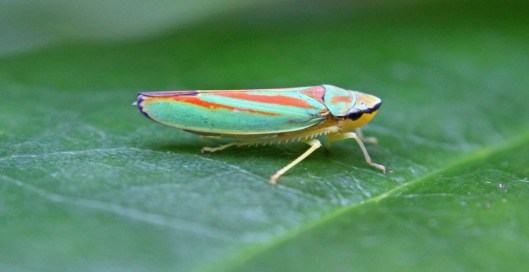
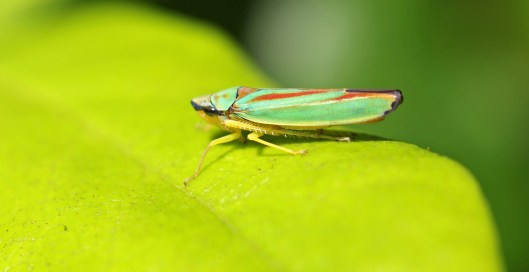
What dapper little critters these are, don’t you think? The fashionistas of the bug world in their pale-green orange-striped suits, with contrasting purple trim and coordinating pale yellow under-wear. No dull dark-grey pinstripes for these hoppers; they’re American immigrants and they’re happy to be noticed. It certainly makes them easy to identify, a huge bonus in the world of plant bugs!

Rhododendron leafhoppers (Graphocephala fennahi) were first introduced to Britain in the early 1900s and I was first introduced to them early last week, when walking a butterfly transect with a colleague, but I’ve been back twice to see them since then, just because they make me laugh. The ones in my pictures make their home in the rhododendron bushes in one small area of Cardiff’s Bute Park, and there are hundreds, if not thousands of them – so many, in fact, that you can actually hear the sproing as they flit from leaf to leaf. And, if you stand in front of the bushes, you’re in serious danger of straining your neck from watching them fly and spring back and forth. Yet another free entertainment package from Mother Nature (with a little voyeurism thrown in)!
07 Sunday Aug 2016
Midsummer has been and gone and, though we’ve had some glorious sunny days – and a short heat wave, we’ve also had some unseasonably cool weather. Perhaps that’s why there are definite signs of autumn to be seen in the foliage of trees and shrubs in my local parks and woodlands.
Even Dawn Redwood is showing small signs of the changing seasons and, remember, most unusually for a conifer, Dawn is deciduous. So, these tiny tinges of orange and red are just a hint of how spectacular she will be when the real autumn weather comes.

Some time during the month, Dawn seems to have suffered a little damage at the top of the tree. Either that or she’s had an incredible growth spurt in one particular branch, which I doubt. You can see the change in the photos below: the one on the left as taken in May 2016, the one on the right in late July 2016.
We haven’t had any particularly strong winds or stormy weather so I’m not sure what happened to cause this change but she looks rather wild and a little unkempt compared to her previously perfect pyramidal shape. It will be interesting to see if this corrects itself or if she loses that errant branch or if she just stays this way. Time alone will tell.
Tree following is fascinating and fun. Why not join in? You can find out more here.
22 Friday Jul 2016
Tags
We have a mixture of genuinely wild and cultivated wildflowers today, a selection from those I saw on my afternoon walk around Cardiff’s magnificent Bute Park, from the vibrant red of the poppy to the bluey-purples of the Field scabious that were abuzz with bees. Here’s wishing you all a flower-full weekend!
12 Tuesday Jul 2016
The longest day has come and gone, and autumn’s just around the corner. Though some trees are already dropping leaves, there’s none of that messy stuff happening around the very tidy Dawn Redwood.

The park staff at Bute Park keep her base neatly strimmed and regularly mow the grass that surrounds her, so she always looks tip top (except when untidy humans leave litter from their picnics or late evening drinking sessions!).

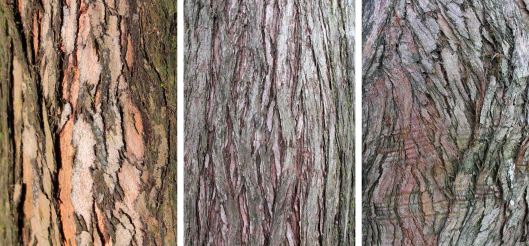
As you might expect from a tree named redwood, Dawn’s wood, if we could see it, would be a rich reddish colour. The bark that covers her wood is also a reddish brown, though it will become increasingly grey as she ages. This bark is quite fibrous and furrowed, and it exfoliates in long narrow strips.
Both the bark and the leaves are used in Chinese folk medicine to produce an ‘anti-microbic, analgesic and anti-inflammatory drug for dermatic diseases’. In 2015, a study was undertaken to determine if there was any scientific basis to this medical use and it found that Dawn Redwood does, indeed, contain chemicals that can reduce the symptoms in allergic contact dermatitis. So, Ms Metasequoia glyptostroboides is not only beautiful but useful too!
Tree following is fun. Why not join in? You can find out more here.

You must be logged in to post a comment.