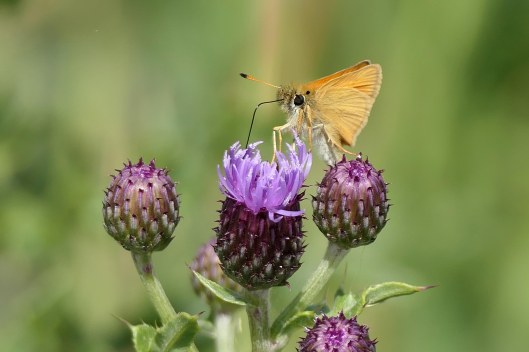
Posing perfectly to show off those distinctive black antennae tips, my first Essex skipper of the year popped up to greet me last Friday.

01 Saturday Jul 2023
Posted in insects
Posing perfectly to show off those distinctive black antennae tips, my first Essex skipper of the year popped up to greet me last Friday.
28 Wednesday Jun 2023
Posted in insects
I saw my first Small tortoiseshell butterfly for the year on the first day of May and then none at all until this one, on19 June. During those six weeks, things were happening: eggs were hatching, family groups of caterpillars were munching happily on Stinging nettles, larval skins were being shed when they got to bursting point, metamorphosis was happening within pupae. And then, as if by magic, the next generation of Small tortoiseshells emerged to begin the process all over again.

22 Thursday Jun 2023
Posted in insects
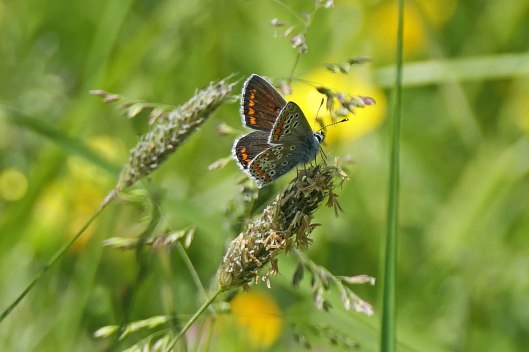
In his magnificent publication Life Cycles of British & Irish Butterflies, Peter Eeles quotes the words of James Tutt, from his 1906 work A Natural History of British Lepidoptera, about the flight pattern of the beautiful Brown argus (Aricia agestis)
This species may be called the ‘zigzagger’, for it darts swiftly to and fro in flight, showing first its grey underside and then its black upperside, so that one can hardly follow it with the eye.

Tutt describes the Brown argus’s movement perfectly. If you take your eye off this tiny butterfly for a second, it disappears, and I’ve spent many a minute, or ten, waiting patiently for it to move again before being able to get a good enough view first to identify the butterfly and then to edge close enough for photos. It’s certainly worth the wait though.
17 Saturday Jun 2023
Posted in insects
Tags
Aberbargoed Grasslands, British butterflies, butterfly, fritillaries, fritillary butterflies, Small Pearl-bordered Fritillary
On a very hot Thursday I made my annual pilgrimage to the Aberbargoed Grasslands National Nature Reserve to pay homage to these magnificent butterflies, the Small pearl-bordered fritillaries (SPBFs).
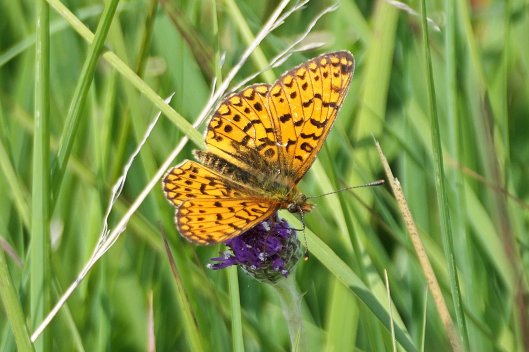
At first I thought I was going to be disappointed, as I headed to the field where I’d found them in 2022 and saw none. In fact, numbers of all butterflies were low – not as many Small heaths as in previous years, a couple of tatty Dingy skippers, a few Large skippers, a fly-past of a Red admiral, a single Speckled wood, and one very worn Marsh fritillary.

As I was retracing my steps to check the adjacent, much larger field, I bumped into two Rangers and we chatted butterflies. One said he’d only seen low numbers this year, and assumed our very wet Spring followed by the current very hot dry period was the cause of the decline in numbers. But they had just seen one SPBF in the big field so I was a little more hopeful.

And, as you can see, I was lucky! I’m not sure why numbers rise and fall in different areas of the reserve from one year to the next (particularly as the large field suffered a serious fire in 2022) but, turns out, this year the SPBFs were mostly concentrated in the centre of that large field, where I was fortunate to see at least six, possibly more, of these gliding orange beauties!
13 Tuesday Jun 2023
Posted in insects
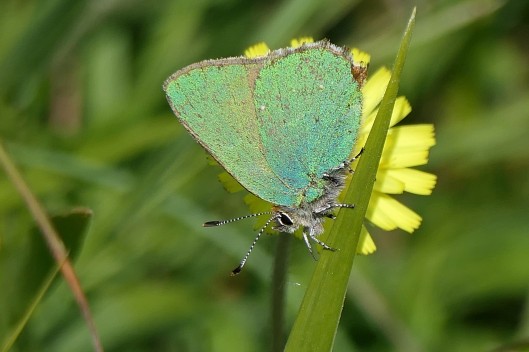
I just have to share one more find from my visit last week to Charlton King’s Common in Cheltenham, the gorgeous butterfly that is the Green hairstreak (Callophrys rubi). Its green wings provide this creature with such excellent camouflage that I was extremely lucky to spot it. They’re usually found on a favourite perch in a tree, from where they vigorously defend their territory, but this particular Green hairstreak flitted up from the ground as I walked along a narrow path. At first, I wasn’t sure what it was – a small flying creature in my peripheral vision – but I walked on a couple of paces, turned, waited and watched. I saw another flicker of movement and spotted the butterfly sitting on a flower. Fortunately, it stayed still long enough for me to get a few photos before flying up in to the foliage of a nearby tree and disappearing.
05 Monday Jun 2023
Posted in insects
It’s three weeks since I saw my first Painted lady of the year and I’ve not seen another since then. Apart from a sighting in early April some years ago, I don’t usually see them until the summer. Considering this beauty had flown across to south Wales from Europe, battling wind and weather along the way, it was looking remarkably good – a little faded on the wings perhaps, a couple of small snippets missing along the edges of its wings where birds had tried but failed to grab it. I’m looking forward to seeing many more Painted ladies as the summer progresses.

30 Tuesday May 2023
Posted in insects
It’s happening again. Some idiot is fiddling with our local butterflies, illegally. This month, Marsh fritillaries have been spotted at Lavernock Nature Reserve, at Cosmeston Lakes Country Park, and along one of the reens (streams) at Rumney, on the eastern outskirts of Cardiff.

The sightings at Cosmeston and Rumney were of solitary butterflies and, though Cosmeston is not much more than a mile from Lavernock, Rumney is nowhere near any known site and Marsh fritillaries are not strong fliers so neither of these butterflies is likely to have arrived accidently. Also, though Cosmeston does have some areas of Devil’s-bit scabious, the butterfly’s larval food plant, Rumney has none. Hence my description of the person doing this as an idiot – the butterflies at Cosmeston and Rumney have no chance at all of establishing a colony.
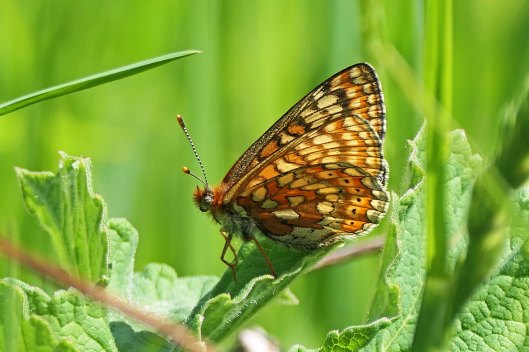
The situation at Lavernock is a little different, as at least three Marsh fritillaries were found there last year (see An illegal introduction, May 2022). There is a slim possibility those butterflies bred and this year’s fritillaries are the result, but the experts I’ve been in contact with believe it is much more likely these 2023 butterflies are more illegal introductions.

The British population of Marsh fritillaries has been in steady decline for many years so these gorgeous butterflies definitely need help but these random releases in unsuitable locations are not the answer. In south Wales, a large-scale, properly managed and licensed conservation project is already underway. If you’re interested in finding out more, check out the project page and the more recent news page on the Initiative for Nature Conservation Cymru (INCC) website.

23 Tuesday May 2023
Posted in insects
It was early April when I saw my first male Orange-tip this year but, as usual with those early hatching males, it zipped past at the speed of flight, and it’s taken several weeks to get close enough to one that had paused, briefly, to refuel to get some half-way decent photos. And most males continue to zoom quickly past, searching – always searching for an available female to mate with.

The females are much more laid back – no need to spend their time and energy searching when the males will almost certainly find them. Instead, they feed and rest, and pose very nicely for any passing photographer who wants to appreciate their beauty.

11 Thursday May 2023
Posted in insects
During Sunday’s wander around the boundaries of some local horse fields (minus the nosey horses, this time), the sun wasn’t shining or warm enough for any butterflies to be found on the thick hedges and scrubby edges. This lovely female Red admiral was the one exception, appearing suddenly from behind a large bramble patch.

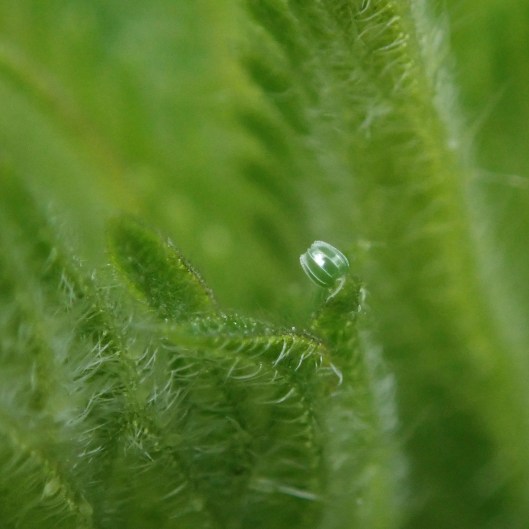
How do I know it was a female? Well, instead of flying off to patrol the bushes, she floated above and around the abundant, fresh Stinging nettles, looking for the best places to lay her eggs. How do I know they were Stinging nettles? Well, despite wrapping my fingers in the layers of my scarf, I still got stung on a couple of fingers while getting my first ever sighting and photographs of one of her eggs, a magnificent little ribbed barrel that should produce a tiny caterpillar in a week or so.
08 Monday May 2023
Posted in insects
My first confirmed sighting of a Green-veined white of 2023 came later than usual, last Thursday, 4 May, but it more than made up for its tardiness by posing beautifully on some not-quite-opened Hawthorn blossom. I love its scientific name Pieris napi, the Latin Pieris coming from the Ancient Greek Πιερίς meaning a muse and its specific name napi being a reference to one of its larval foodplants, Oil-seed rape (Brassica napus).

 earthstar
You must be logged in to post a comment.