• ABOUT
  • BIRDING 2018
  • Birding 2019
  • BLOG POSTS
  • Butterflies 2018
  • Resources

earthstar

~ a celebration of nature

earthstar

Tag Archives: Common blue damselfly

Three blues

11 Wednesday May 2022

Posted by sconzani in nature

≈ Leave a comment

Tags

Azure damselfly, Blue-tailed damselfly, British damselflies, Coenagrion puella, Common blue damselfly, Enallagma cyathigerum, Ischnura elegans, Odonata

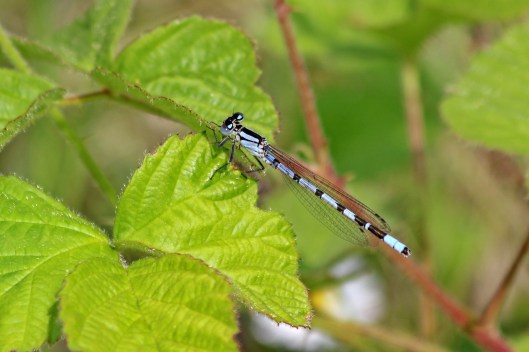
After spotting my first damselflies of the year (Large reds) on 21 April, there was quite a lull (probably dull-weather-induced) until any further species appeared. But, on a warmer, sunnier day last week (3 May), all three of the more common blue species appeared together. They are:

220511 azure damselfly

Azure damselfly (Coenagrion puella)

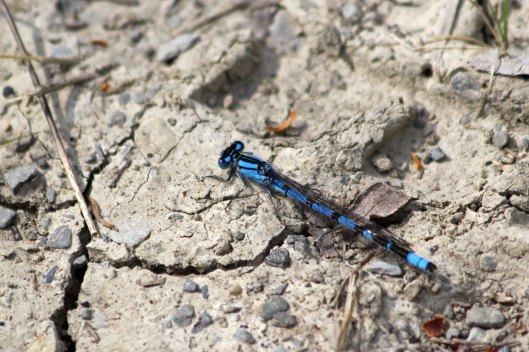
220511 common blue damselfly

Common blue damselfly (Enallagma cyathigerum)

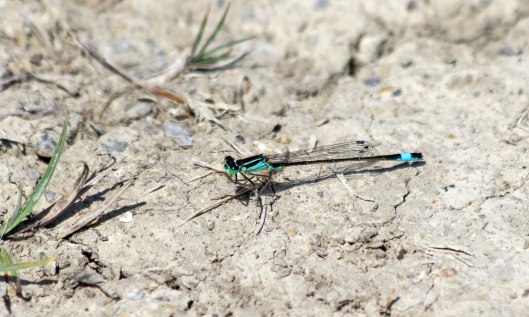
220511 blue-tailed damselfly

Blue-tailed damselfly (Ischnura elegans)

Like Loading...

Finally, odonata

19 Wednesday May 2021

Posted by sconzani in insects

≈ Leave a comment

Tags

Azure damselfly, British damselflies, British odonata, Common blue damselfly, Cosmeston Lakes Country Park, damselfly

My first damselflies (still no dragonflies) of 2021 have been a long time coming but, finally, yesterday, at Cosmeston Lakes Country Park, before a thunderstorm drenched both the insects and me, I saw a small number of both Azure and Common blue damselflies in some of the more sheltered places around the fields … and it was magical!

Azure damselfly

Common blue damselfly

Like Loading...

192/366 Damsels and dragons

10 Friday Jul 2020

Posted by sconzani in insects, nature

≈ 2 Comments

Tags

Blue-tailed damselfly, British damselflies, British dragonflies, Broad-bodied Chaser, Common blue damselfly, Common Darter, Emperor dragonfly

Last summer was so hot and dry that many of the local ponds dried up completely, which may be why I’m not seeing as many damselflies and dragonflies as I have in previous years – perhaps their larvae didn’t survive that dry period. Here are a few I have seen in recent weeks …

200710 blue-tailed damselfly

Blue-tailed damselfly: though the females come in several colour forms, both they and the males, like this one, have the blue spot on their lower abdomen, which is how they got their name.

200710 common blue immature female
200710 common blue male

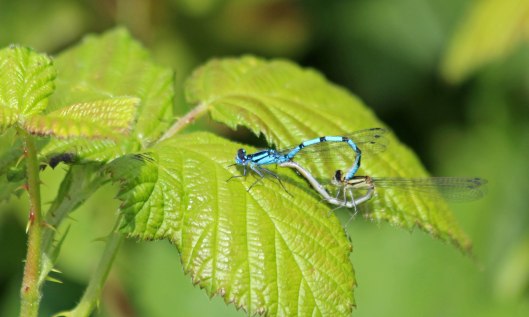
Common blue damselflies, here an immature female, a male and, below, a pair in classic mating pose.

200710 common blues mating200710 broad-bodied chaser

And the dragons: a glowing female Broad-bodied chaser

200710 common darter

I’ve seen my first two Common darters in recent days, which is late, as they can appear as early as May.

200710 emperor female ovipositing

A female Emperor laying her eggs (ovipositing) under the vegetation of a local pond. Let’s hope that pond retains enough water this year for her offspring to survive the winter months.

Like Loading...

139/365 Common and blue

19 Sunday May 2019

Posted by sconzani in 365DaysWildin2019, insects, nature

≈ Leave a comment

Tags

#365DaysWild, British butterflies, British damselflies, Common blue, Common blue butterfly, Common blue damselfly, Cosmeston, Cosmeston Lakes Country Park

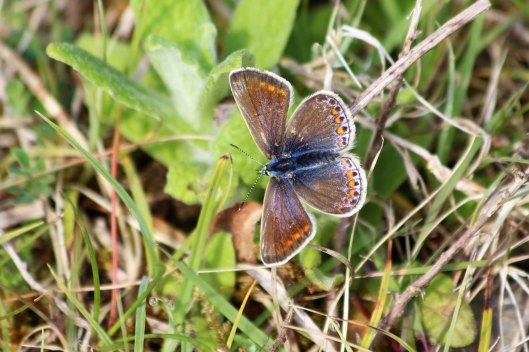
The colour of the day at Cosmeston today was blue: not only did I find numerous Common blue butterflies (I stopped counting at 25) but I also spotted several Common blue damselflies. And here they are …

190519 common blue male

A pristine male Common blue butterfly

190519 common blue female

A no-less-pristine but not as blue Common blue female

190519 damsel common blue male

A male Common blue damselfly

190519 damsel common blue female2

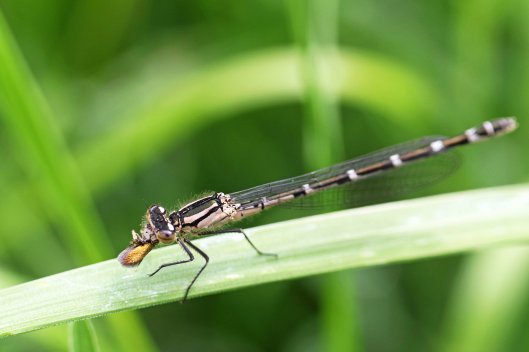
Don’t be fooled by the colour differences here – mature female Common blue damselflies can take three different colour forms: blue, brown (a yellowy orange) and the typical form, which is greenish.

190519 damsel common blue newly emerged male

And, just to confuse things, the males are usually a pinkish-purple when they first emerge and take a few days to acquire their true blue colouring. You can, however, tell they’re males by the solid blue colour of their two bottom abdominal segments.

Like Loading...

Cardiff’s old canals

04 Monday Jun 2018

Posted by sconzani in birds, flowers, insects, nature, wildflowers

≈ Leave a comment

Tags

#30DaysWild, 30 Days Wild, birding birdwatching, British birds, Cardiff's canals, Common blue damselfly, Coot, Coot chicks, Coots nesting, feral pigeon, Fringed water-lily, Little Venice, Mallard, vegetation in canals

I had to go in to Cardiff city today to do a few chores so, for day four of #30DaysWild, I thought I’d take a wander along the old canals, an area known locally as Little Venice. The area closest to the main road is quite unkempt, but, except for the human rubbish, I like how overgrown it is – and I’m sure the wildlife does too – and the submerged plants are particularly lovely at the moment, with long streaming fronds covered in pretty white flowers.
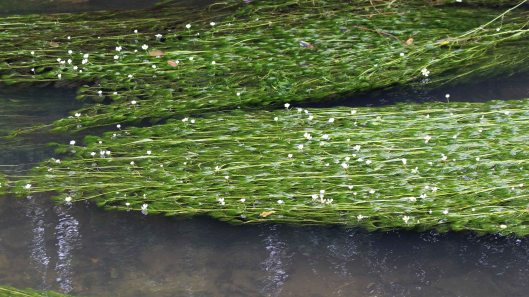
180604 1 flowering plant in canal180604 2 flowering plant in canal

The canals flow in a couple of different directions, both ultimately emptying into East Bute Dock, where once a million tons of coal a year was loaded on to waiting ships. The canals are bordered by various types of accommodation and office blocks, have footpaths along both sides, and in places are adorned with beautiful, currently flowering native Fringed Water Lily (Nymphoides peltata).
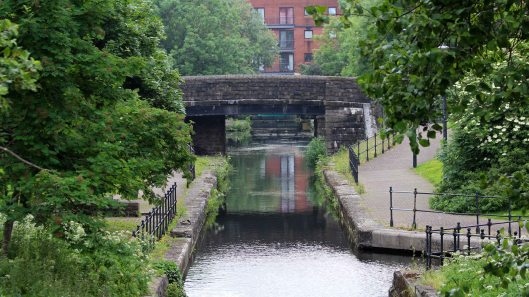
180604 3 canal180604 4 water lily in canal180604 5 water lily in canal

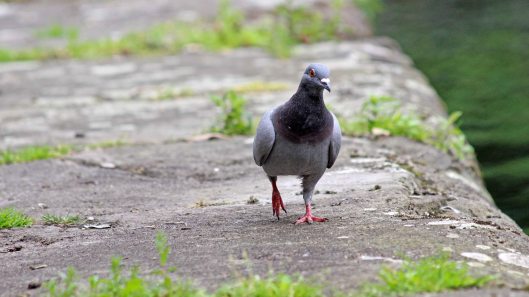
The canals also support a range of wildlife. Drake mallards snoozed on the warm stone edges, Common blue damselflies flitted back and forth, and a feral pigeon strutted towards me, hopeful of a spot of lunch.
180604 6 common blue damselfly
180604 7 drake mallard

180604 8 feral pigeon

The big drawcard of these waterways for me, though, is that Coots can usually be found nesting here, often very successfully. In their large sturdy nest structures, built of sticks and plant material and human detritus, I’ve seen broods of up to 6 chicks.

180604 9 coot nest
180604 10 coot nest
180604 11 coot nest

Today there were two pairs with quite well-grown young, and three more birds sitting, possibly with little ones tucked under their wings. And very cute they all were too!

180604 12 coot
180604 13 coot
180604 14 coot
180604 15 coot
180604 16 coot
180604 17 coot


Like Loading...

National Dragonfly Week: Common Blue damselfly

29 Friday Jul 2016

Posted by sconzani in insects, nature

≈ 13 Comments

Tags

Common blue damselfly, damselflies, damselfly, Enallagma cyathigerum, National Dragonfly Week 2016

We’re over half way through National Dragonfly Week 2016 and now we get to some of the trickier critters to identify because there are several blue-coloured damselflies. In fact, in the course of preparing this and tomorrow’s blog posts, I’ve had to call in the experts to check a couple of my photos. When my books and keys don’t quite cover it, the ‘experts’ I use are all the wonderfully helpful folks on the UK Dragonflies & Damselflies group on Facebook – highly recommended!

160729 Common blue male (1)
160729 Common blue male (2)

As we don’t get Southern damselflies (also blue) in Cardiff, the two blues I sometimes have trouble with are the Common Blue and the Azure. The key features to look out for in the Common Blue damselfly (Enallagma cyathigerum) can be seen in the photos above: no Coenagrion spur (a short black line below the other markings) on the thorax, and broad antehumeral stripes (the blue stripes on the top of the body are wider than the black stripes beneath them). The males also have that thistle-shaped mark at the top of their ‘tail’ but this is not so easy to see in the females (which, as you can see below, are not blue) because of their blacker markings. If this all sounds like gobbledygook, you can get more ID help on the British Dragonfly Society webpage.

160729 common blue fem (1)
160729 common blue fem (2)
160729 common blue fem (3)
160729 common blue fem (4)
160729 common blue fem (5)
160729 common blue fem (6)

The Common Blues are the only damselflies I’ve managed to catch in their full mating ritual, showing the ‘mating wheel’. Sometimes, when you see these, they are the exact shape of a heart … awwwww!

160729 Common blue mating

Like Loading...

Death in the cemetery

07 Thursday Jul 2016

Posted by sconzani in insects, nature

≈ 4 Comments

Tags

Cathays Cemetery, Cinnabar moth, Common blue damselfly, Common crab spider, Leptopterna species, micro moth, Xysticus cristatus, Xysticus species

The association of death with a cemetery is not exactly unexpected but, in this case, I’m documenting the death of wildlife rather than humans because, just as I see the beginnings of life happening in the cemetery (those Common red soldier beetles were just one example!), so I also see its ending.

160707 death Cinnabar & Common crab CathaysCem

Here a beautiful Cinnabar moth (Tyria jacobaeae) has met its end in the fangs of a spider, probably a Common crab spider (Xysticus cristatus) but please correct me if I’m wrong. I’m not good at identifying spiders. It seems the spider pounced while the moth was concentrating on laying her eggs on the undersides of these leaves.

160707 death Common Blue female CathaysCem

Common blue damselflies (Enallagma cyathigerum) are quite small but this female’s lunch is even smaller and is probably a micro moth, but, as there are 1627 species of micro moths in the British Isles, I’m not even going to hazard a guess as to which one this is.

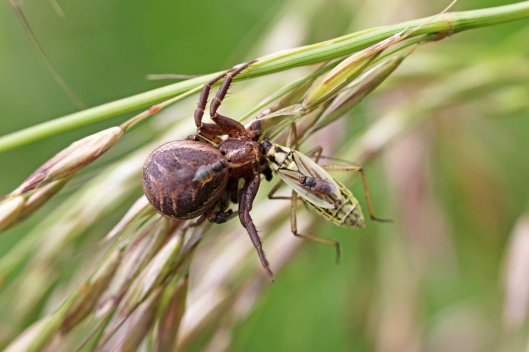
160707 death Xysticus sp & Leptopterna sp nymph CathaysCem

Once again, a lurking spider has successfully captured its next meal. I’m reliably informed this is also one of the Xysticus species of crab spiders, and its victim is a nymph of the Leptopterna species of grass bugs. The tiny flies are an intriguing mystery – they appeared to be travelling around with the spider like the pilot fish that live as ectoparasites in the company of sharks.

Like Loading...

About me

sconzani

sconzani

I'm a writer and photographer; researcher and blogger; birder and nature lover; countryside rambler and city strider; volunteer and biodiversity recorder.

View Full Profile →

Follow earthstar on WordPress.com

Enter your email address to follow this blog and receive notifications of new posts by email.

Recent blog posts

  • O is for Odonata December 20, 2025
  • N is for nest December 19, 2025
  • M is for mite December 18, 2025
  • L is for lepidopteran lifers December 17, 2025
  • K is for Keeled skimmers December 16, 2025

From the archives

COPYRIGHT

Unless otherwise acknowledged, the text and photographs on this blog are my own and are subject to international copyright. Nothing may be downloaded or copied without my permission.

Fellow Earth Stars!

  • Unknown's avatar
  • Unknown's avatar
  • Unknown's avatar
  • Unknown's avatar
  • Unknown's avatar
  • Unknown's avatar
  • Unknown's avatar
  • Unknown's avatar
  • Unknown's avatar
  • Unknown's avatar
  • Unknown's avatar
  • Unknown's avatar
  • Unknown's avatar
  • Unknown's avatar
  • Unknown's avatar
  • Unknown's avatar
  • Unknown's avatar
  • Unknown's avatar
  • Unknown's avatar
  • Unknown's avatar
  • Unknown's avatar
  • Unknown's avatar
  • Unknown's avatar
  • Unknown's avatar
  • Unknown's avatar
  • Unknown's avatar
  • Unknown's avatar
  • Unknown's avatar
  • Unknown's avatar
  • Unknown's avatar
  • Unknown's avatar
  • Unknown's avatar
  • Unknown's avatar
  • Unknown's avatar
  • Unknown's avatar
  • Unknown's avatar
  • Unknown's avatar
  • Unknown's avatar
  • Unknown's avatar
  • Unknown's avatar
  • Unknown's avatar
  • Unknown's avatar
  • Unknown's avatar
  • Unknown's avatar
  • Unknown's avatar
  • Unknown's avatar
  • Unknown's avatar
  • Unknown's avatar
  • Unknown's avatar
  • Unknown's avatar

Blog at WordPress.com.

Privacy & Cookies: This site uses cookies. By continuing to use this website, you agree to their use.
To find out more, including how to control cookies, see here: Cookie Policy
  • Subscribe Subscribed
    • earthstar
    • Join 667 other subscribers
    • Already have a WordPress.com account? Log in now.
    • earthstar
    • Subscribe Subscribed
    • Sign up
    • Log in
    • Report this content
    • View site in Reader
    • Manage subscriptions
    • Collapse this bar
 

Loading Comments...
 

You must be logged in to post a comment.

    %d