Not only did yesterday’s walk bring me the amazing sighting of a Mandarin duck, it also delighted me with this drop of golden sunlight come to earth, my first Lesser celandine flower of 2020.


09 Thursday Jan 2020
Posted in nature, wildflowers, winter
Not only did yesterday’s walk bring me the amazing sighting of a Mandarin duck, it also delighted me with this drop of golden sunlight come to earth, my first Lesser celandine flower of 2020.
27 Sunday Jan 2019
Posted in 365DaysWildin2019, flowers, nature, wildflowers, winter
Tags
#365DaysWild, #WildflowerHour, Blackthorn blossom, Crocuses, first flowers of spring, Lesser Celandine, Primroses, Snowdrops

Though we are currently shivering our way through a day of wintery gales and low temps, our January weather here in south Wales has generally been much milder than usual and, so, the flowers of springtime are already beginning to appear. As well as the Blackthorn I spotted on the boundary hedges at Cosmeston today, I’ve also this week seen my first Crocuses and Snowdrops and, yesterday, my first Primroses and Lesser Celandine in bloom. Although I love winter, even I will admit it’s cheering to see these first signs of spring appearing.


23 Friday Mar 2018
Posted in flowers, nature, spring, wildflowers
Tags
#FloralFriday, British flora, British wildflowers, Colt's-foot, Daisy, dandelion, gorse, Groundsel, Lesser Celandine, Red dead-nettle, Speedwell, Three-cornered garlic, wildflowers
What a week it’s been weather wise! We’ve gone from a generous dumping of snow and temperatures hovering around -5°C last Sunday through occasional rain, sunny periods, UV factors up and down, zephyr winds and mustang gales. Is it spring or isn’t it? Well, I’m seeing increasingly more wildflowers so I guess it must be. Here’s a selection from this week’s wanders.

Colt’s-foot (Tussilago farfara)

Daisy (Bellis perennis)

a type of Dandelion (Taraxacum sp.)

a type of Gorse (Ulex sp.)

Groundsel (Senecio vulgaris)
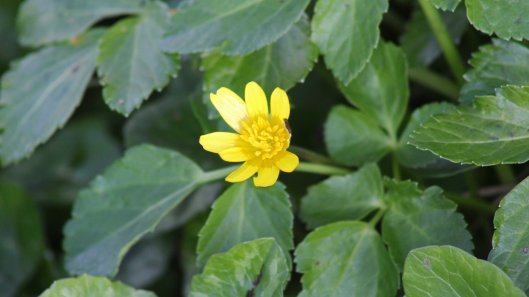
Lesser celandine (Ficaria verna)

Red dead-nettle (Lamium purpureum)

a species of Speedwell (probably Germander) (Veronica sp.)
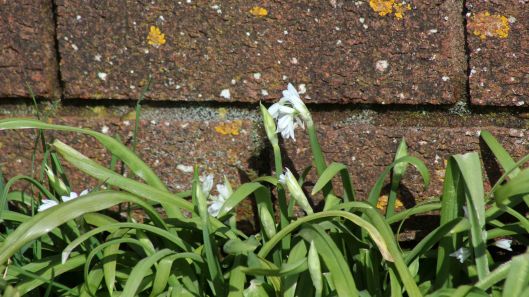
Three-cornered leek (Allium triquetrum)
17 Saturday Mar 2018
Posted in insects, nature, plants, wildflowers
Tags
Ficaria verna, flies, fly, leaf mines, leaf mining fly, leafminer, Lesser Celandine, Phytomyza ranunculi
I was handing out the cigars last Monday!
Now, you might well think me more than a little mad to be excited about the birth of a fly but this was the first time I had tried rearing one … and it was actually successful, which bodes well for the fact that I’m intending to take part in a fly-rearing investigation this summer (more on that closer to the time).


The fly is Phytomyza ranunculi, a creature whose larvae often make their home in the leaves of Lesser celandine (Ficaria verna). I blogged about this leafminer, its larvae and the pupa here, and it is that pupa which finally hatched earlier this week. I had been told it would take about 3 weeks to hatch but it was, in fact, longer than that – it was 6 February when I found the pupa and 12 March when it hatched, so 34 days in total.

Now, here I must admit to a rookie error. As it was well over the 3 weeks, I had almost given up on its hatching so, on Monday night, when I had a sudden notion to open the container, I didn’t look inside first. The fly popped straight out, perched on the edge for a very brief time – and I managed to get just one photo, and then it flew off. I’ve searched for it in my flat, and it did a quick fly by when I was washing the dishes yesterday, but I haven’t been able to find it, neither to take more photos nor to let it outside.
11 Sunday Mar 2018
Posted in nature, plants, wildflowers
Tags
#PavementPlants, #WildflowerHour, British flora, Groundsel, Hairy bittercress, Lesser Celandine, plants in pavement, Shepherd's purse, wild plants, wildflowers
This week’s Wildflower Hour challenge was to check out your local pavement for #PavementPlants. As the challenge says: ‘It is amazing how many plants are able to eke out a living where they were never invited. Growing in seemingly inhospitable cracks and crevices, thriving where there is little soil, these tough little plants are often overlooked.’ So, it was eyes down this week as I wandered around Penarth and, though I decided to look just for plants that were flowering and ignore the ubiquitous grasses and mosses, I did manage to find a few little treasures in my local pavements, steps and paths.
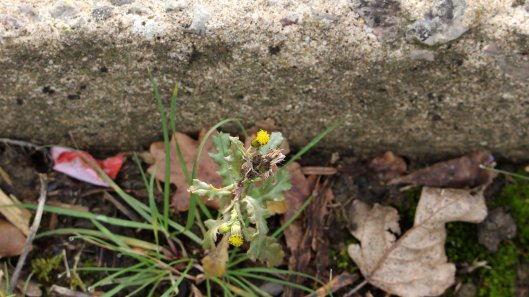
Groundsel (Senecio vulgaris)
I’m sure most people recognise Groundsel when they see it, as it’s very common in areas of disturbed ground. I just learned today that Senecio comes from the Latin for ‘old man’, a reference to the bare ‘scalp’ that remains once the plant’s fluffy white seeds have blown away.
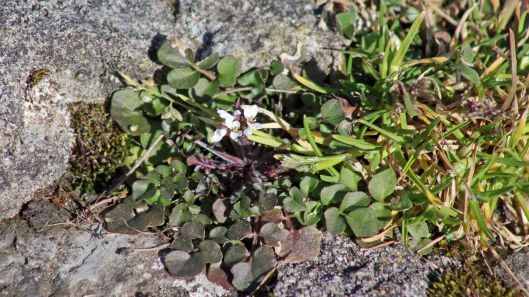
Hairy bittercress (Cardamine hirsuta)
I was initially confused about which bittercress this was, Hairy or Wavy but my trusty wildflower guide tells me that Hairy has four stamens and Wavy usually has six, so that clinched it. Apparently, this plant is edible, though bitter – hence its name: I think I’ll pass.

Lesser celandine (Ficaria verna)
Once known as Pilewort, as it was believed to be a remedy for haemorrhoids, Lesser celandine contains high levels of vitamin C and was also used to prevent scurvy.
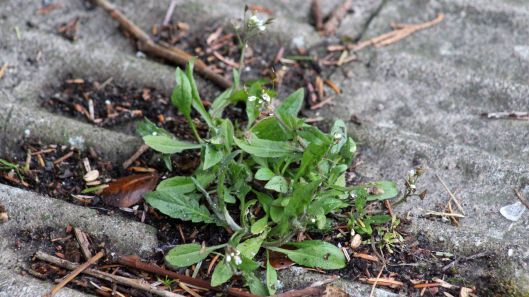
Shepherd’s purse (Capsella bursa-pastoris)
This very common wild plant’s common name comes from the purse-like shape of its seed pods.
16 Friday Feb 2018
Posted in flowers, nature, spring, wildflowers
Tags
#FloralFriday, British wildflowers, Ficaria verna, Lesser Celandine, Ranunculus ficaria, signs of spring

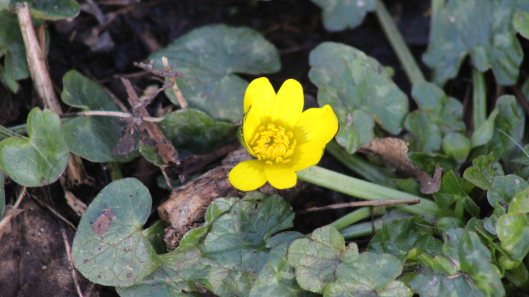
Not only was it the favourite flower of William Wordsworth (who wrote three poems about it) and considered to be a herbal remedy for haemorrhoids (due to the shape of its roots), but the pretty Lesser celandine (was Ranunculus ficaria, now Ficaria verna) is one of the first floral heralds of spring.


The flowers are supposed to appear around the same time that the Swallows arrive back in Britain (hence the name Celandine, which comes from the Greek chelidon, meaning Swallow) (flower and bird are out of sync this year, though) so we need to keep our eyes on the skies, as well as on the ground.
11 Sunday Feb 2018
Tags
Buttercup, fly, fly larva, fly puparium, leaf mine on buttercup, leaf mine on Lesser celandine, leaf mines, leafminer, Lesser Celandine, Phytomyza ranunculi
You might think there are no insects around in winter but you’d be wrong, as I’ve been discovering in the past week or so. In my checks for blooming wildflowers, I’ve seen the odd Lesser celandine and Buttercup flower and, looking more closely at the plants, I’ve noticed leaf mines on some. And where there are leaf mines, there are insects laying eggs and larvae developing from those eggs to create the mines.


These particular mines are created by Phytomyza ranunculi, an incredibly tiny fly which I haven’t yet seen. But I have seen – and can show you here – a larva and a puparium. I brought home a couple of Lesser celandine leaves, intending to take better photos of them, but I didn’t reckon on them shrivelling up overnight. On the positive side, when I picked up one leaf, a tiny larva was sitting underneath, presumably having popped out of the leaf as it dried up.


A couple of days later I brought home another couple of leaves, for the same purpose, but this time left them in a sealed container. The next day, when I opened it, I saw this tiny speck in the bottom of the container and realised a larva from one of the leaves must have pupated. I’m trying to hatch it so I – and you – get to see the fly. Fingers crossed!


28 Friday Apr 2017
Posted in fungi, nature, wildflowers
Tags
Bluebell, citizen science, Glamorgan Fungus Group, Lesser Celandine, Nettle, Puccinia urtica, rust, rust fungi, Uromyces dactylis, Uromyces muscari
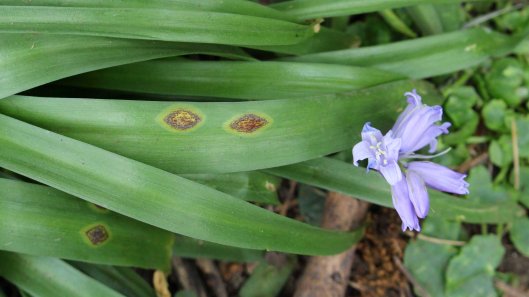
Back in January I posted about the Cobalt crust-finding challenge I was taking part in with my friends from the Glamorgan Fungus Group. This month we’ve been at it again but our challenge species are rusts, specifically Uromyces dactylis (below right) and Uromyces ficaria which are both found on Lesser Celandine; Puccinia urtica (below left) on Nettles; Uromyces muscari (the other four photos) on native, cultivated and hybrid Bluebells; and on Nipplewort Lapsana communis.


Though finding and photographing the Nettle rust is more for the masochist than the faint-hearted – our group has joked about buying thick rubber gloves up to our elbows(!), the other rusts are less dangerous though no less of a challenge. I’ve had most success with the Bluebell rust – probably a reflection of the fact that everyone loves Bluebells so they’ve been planted almost everywhere, but have found only one specimen of one of the rusts on Lesser Celandine, despite the flowers being very plentiful and numerous in my local parks and wild areas. And I have yet to find a specimen of Nipplewort rust – probably because I have yet to positively identify Nipplewort (this is why I’ve taken up a botany menteeship!).


Still, just as we did with Cobalt crust, our group members have thrown themselves into this challenge and, to date, our combined total stands at over 140 separate finds. And, just like last time, our finds are being fed into our local biodiversity database so our challenge is helping to increase the knowledge base for these under-recorded fungi. Citizen science rocks!
23 Monday Jan 2017
Tags
crocus, Galanthus nivalis, Lesser Celandine, primrose, Primula vulgaris, snowdrop, spring flowers in January
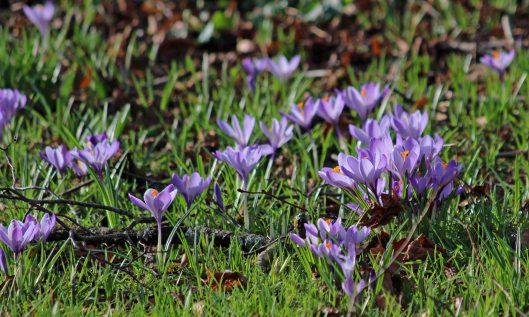
It’s not even the end of January and the spring flowers are starting to open. I saw these Snowdrops (Galanthus nivalis), Crocuses (Crocus sp.), Lesser celandines (Ficaria verna) and Primroses (Primula vulgaris) yesterday during a walk through my local park and cemetery. They’re wonderful to see but I have a feeling winter hasn’t quite finished with us yet.


17 Sunday Apr 2016
Posted in nature, spring, wildflowers
Tags
Bluebell, Bute Park, Common dog-violet, Daisy, dandelion, Germander speedwell, Golden saxifrage, gorse, Greater stitchwort, Green alkanet, Herb Robert, Lesser Celandine, primrose, Red campion, Sweet violet, White deadnettle, Wild garlic, Wild strawberry, Wood anemone
This weekend I could have paid £12 to see what I’m sure would have been gorgeous flowers and inspirational displays at the Royal Horticultural Society’s Flower Show being held here in Cardiff’s Bute Park but, as I don’t have that kind of cash to splash at the moment, I decided to see what flowers I could find in Bute Park for nothing. With 18 different types of wildflowers currently in bloom I certainly wasn’t disappointed. Enjoy!


There were: Bluebell (mostly Spanish but I found a few natives) (Hyacinthoides non-scripta); Daisy (Bellis perennis); Dandelion (Taraxacum officinale); White deadnettle (Lamium album); Herb Robert (Geranium robertianum); Germander speedwell (Veronica Chamaedrys); Gorse (Ulex europaeus); Greater stitchwort (Stellaria holostea); Green alkanet (Pentaglottis sempervirens); Lesser celandine (Ranunculus ficaria); Opposite-leaved golden saxifrage (Chrysosplenium oppositifolium); Primrose (Primula vulgaris); Red campion (Silene dioica); Common dog-violet (Viola riviniana) and Sweet violet (Viola odorata); Wild garlic (Allium ursinum); Wild strawberry (Fragaria vesca); and Wood anemone (Anemone nemorosa).
 earthstar
You must be logged in to post a comment.