• ABOUT
  • BIRDING 2018
  • Birding 2019
  • BLOG POSTS
  • Butterflies 2018
  • Resources

earthstar

~ a celebration of nature

earthstar

Monthly Archives: July 2017

A blast of orange

11 Tuesday Jul 2017

Posted by sconzani in insects, nature

≈ 4 Comments

Tags

British ladybirds, Halyzia 16-guttata, Halyzia secedimguttata, ladybird, ladybird larva, ladybug, Orange ladybird

170711 Orange Ladybird (1)

When I’m out and about on my wanders, it’s usually a preponderance of Harlequin ladybirds that I see but this day was different. Instead of Harlequins, there seemed to be beautiful little Orange ladybirds (Halyzia 16-guttata) wherever I looked. And there weren’t just adult ladybirds – almost every leaf I turned over had their larvae as well. And this was across two different parks, not just in one location.

170711 Orange ladybird nymph (1)
170711 Orange ladybird nymph (2)

We are constantly warned that the invasive Harlequins, first recorded in Britain in October 2004, are a serious threat to Britain’s native ladybirds, and surveys have shown that most native ladybirds are in serious decline, partly due to the Harlequin but also due to habitat loss. Perhaps the Orange ladybird is fighting back. It has apparently adapted to living on different tree species, first the sycamore and more recently the ash, so this may be aiding its apparent increase in abundance. I certainly hope so!

170711 Orange Ladybird (2)
170711 Orange Ladybird (3)
170711 Orange Ladybird (4)
170711 Orange Ladybird (5)

Don’t forget that we can’t know what’s happening with British ladybirds (or, indeed, any other living species) unless sightings are recorded. You can record yours through your local biodiversity records centre or directly with the UK Ladybird Survey website here.
Like Loading...

Bird babies

10 Monday Jul 2017

Posted by sconzani in birds, nature

≈ Leave a comment

Tags

baby birds, birding, birdwatching, British birds, Coot, cootlet, cygnet, duckling, Mallard, Mute swan, Roath Park Lake

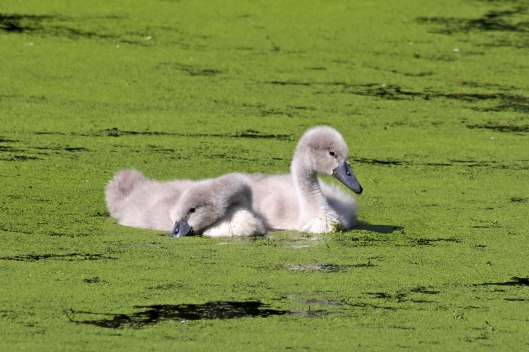
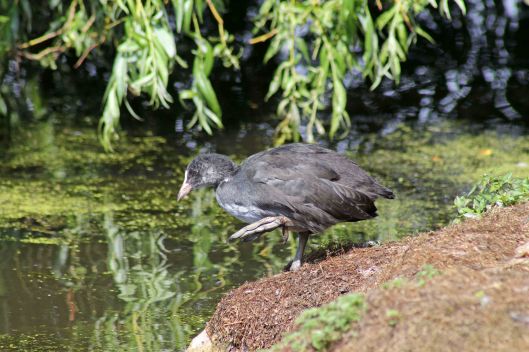
While it was a pleasure to see the Little egrets at Roath Park on Thursday, it was the other birds that brought me the most joy, especially because there were so many babies to be seen.

170710 bird babies (2)

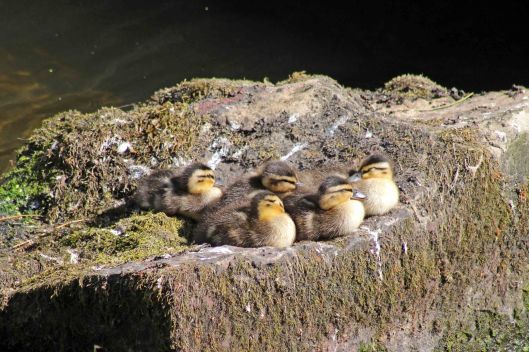
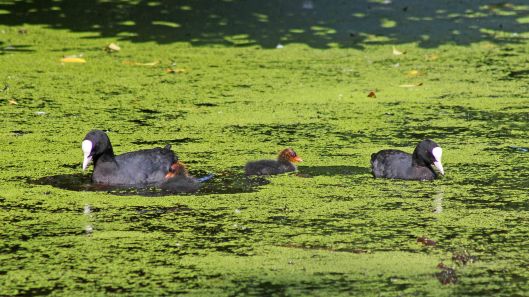
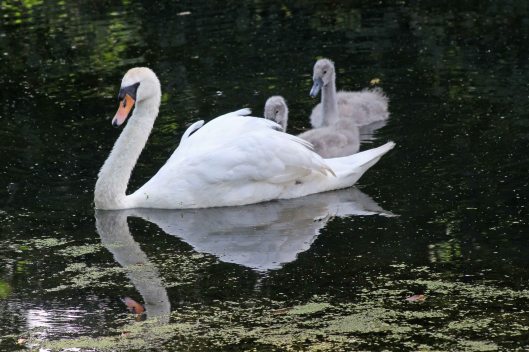
Cygnets, cootlets, ducklings, all at various stages of development, could be seen swimming, being fed by their parents and learning to feed themselves, and just sitting dozing in the warm sunshine.

170710 bird babies (1)170710 bird babies (3)

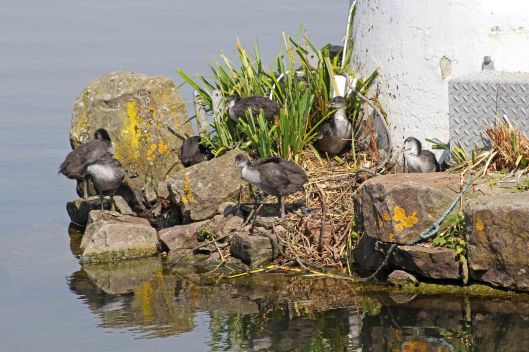
Even the base of the Scott memorial lighthouse has become a nursery for a family of seven little coots.

170710 bird babies (4)170710 bird babies (5)

I defy anyone to look at these and not smile!

170710 bird babies (6)

Like Loading...

Little egrets

09 Sunday Jul 2017

Posted by sconzani in birds, nature, parks

≈ 5 Comments

Tags

birding, birds, birdwatching, British birds, Egretta garzetta, Little egret

After reading reports of a Great white egret being seen at Roath Park lake last Wednesday evening, I decided a visit was in order for Thursday. Unfortunately, the Great white had flown the coop but I did manage to see Little egrets, which was almost as good.

170709 Little egrets (3)

Twenty years ago these birds were a rarity in Britain but, with the warming of our climate, the Little egret (Egretta garzetta) has been expanding its European range and was added to the British breeding list in 1996. They are still not that common in Cardiff so to see two birds together at the lake was a treat. (Apologies for the photos: the birds were a bit distant for my lens and their bright white makes them difficult to photograph in full sun.)

170709 Little egrets (2)
170709 Little egrets (1)
170709 Little egrets (4)
170709 Little egrets (5)

I wonder what their larger, much more common cousin and frequent lake visitor, the Grey heron, made of their visit.

170709 Grey heron (2)
170709 Grey heron (1)
Like Loading...

‘A Natural History of the Hedgerow’

08 Saturday Jul 2017

Posted by sconzani in animals, birds, fungi, nature, plants, trees, wildflowers

≈ 8 Comments

Tags

British countryside, British hedgerows, field boundaries, hedge, hedgerow, hedgerow trees

170708 hedgerows (1)

Reading John Wright’s excellent book A Natural History of the Hedgerow and ditches, dykes and dry stone walls (Profile Books, London, 2016) has led me to look at the countryside with slightly more knowledgeable eyes, at least when it comes to field boundaries.

170708 hedgerows (6)

Not only does Wright’s book provide a superbly researched history of the hedges, dykes, ditches and dry stone walls that divide up the countryside, it also provides detailed information on the plants, birds, invertebrates and animals that inhabit Britain’s hedgerows, as well as including practical details on how the various boundaries are constructed and maintained.

170708 hedgerows (2)
170708 hedgerows (3)
170708 hedgerows (5)

Now, when I go out on my rural rambles or I’m being transported through the countryside by train, car or bus, I can recognise where hedges must once have grown by the broken line of mature trees marching across a field, I shake my head at the neglect of the hedgerows on so many farms (though I can appreciate the sculptural beauty of ancient hedgerow trees), I can spot where farmers have removed existing boundaries to create huge open fields, and I can appreciate how well-maintained hedges add an extra dimension to the landscape.

170708 hedgerows (4)

Wales and England now have legislation in place to protect hedgerows that meet certain criteria but it would be good if all hedgerows were protected and if more was done to ensure existing hedges were also properly nurtured and maintained.

Like Loading...

Purr-plish

07 Friday Jul 2017

Posted by sconzani in flowers, nature, wildflowers

≈ Leave a comment

Tags

#FloralFriday, British flora, British wildflowers, lilac flowers, pink wildflowers, purple flowers, wildflowers

For those of you who are not overly fond of yellow flowers – you know who you are! – I’ve been out and about looking for other hues, and the result this Floral Friday is a selection of blooms in shades of pink, lilac and purple. The flowers include Betony (Stachys officinalis), Bush vetch (Vicia sepium), Centaury (Centaurium erythraea), Devil’s-bit scabious (Succisa pratensis), Foxglove (Digitalis purpurea), Hedge woundwort (Stachys sylvatica), Herb-Robert (Geranium robertianum), Red clover (Trifolium pratense), Common restharrow (Ononis repens), Rosebay willowherb (Chamerion angustifolium), Tufted vetch (Vicia cracca) and a couple of thistley thingies. Enjoy!

170707 another thistle
170707 Betony
170707 Bush vetch
170707 Centaury
170707 Devil's-bit scabious
170707 Foxglove
170707 Hedge woundwort
170707 Herb-Robert
170707 Red clover
170707 Restharrow
170707 Rosebay willowherb
170707 thistle
170707 Tufted vetch
Like Loading...

The sputnik spider

06 Thursday Jul 2017

Posted by sconzani in insects, nature

≈ 5 Comments

Tags

British arachnids, British spiders, egg sac, oddly-shaped egg sac, Paidiscura pallens, spider egg sac, spiders, sputnik-shaped egg sac

The weirdest thing I found when I was out square-bashing last week was this sputnik-shaped thing, stuck to the underside of an oak leaf. It was incredibly tiny, about 2mm across, and I had no idea what it might be.

170706 Paidiscura pallens egg sac (3)

Luckily, I belong to some really excellent wildlife groups on Facebook and, when I posted a photo on the Insects of Britain and Northern Europe page, I got an answer almost immediately. This is the egg sac of the spider Paidiscura pallens. At just 1.5mm, the spider is even smaller than its egg sac and, because of its tiny size, is rarely even noticed.

170706 Paidiscura pallens (1)

So, the next time I was out for a wander I decided to check the undersides of more leaves – they prefer stiff leaves, like oak, sycamore and holly – to see if I could find any others. And bingo, I quite quickly spotted three more egg sacs and their creators, sitting not far away on the leaves. So, next time you’re out for a walk, take a look under some leaves. You never know what you might find.

170706 Paidiscura pallens (2)

Like Loading...

A new Cicadellidae

05 Wednesday Jul 2017

Posted by sconzani in insects, nature

≈ 4 Comments

Tags

British bugs, bugs, Cicadellidae, Evacanthus interruptus, leafhoppers

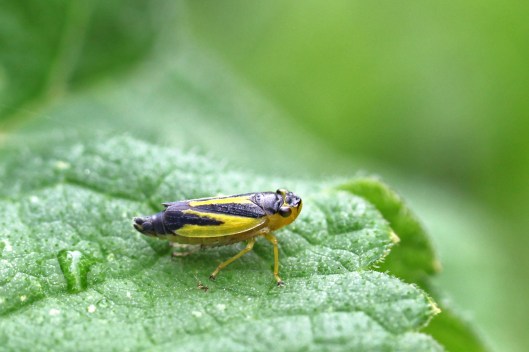
I had to chuckle when the British Bugs website described this little bug, which is no more than 6mm long, as ‘large’ but, compared to others in the Cicadellidae family – i.e. the leafhoppers – it’s a giant. The website also says it’s a common species but this was the first I’d seen so I obviously haven’t been looking closely enough.

170705 Evacanthus Interruptus (1)

This is Evacanthus interruptus (a female, I believe, as her wings are shorter than the length of her abdomen). They favour tall herbaceous vegetation in meadows, scrubby areas and woodlands, and can be seen between June and October. I’ll be on the look out for more.

170705 Evacanthus Interruptus (2)
170705 Evacanthus Interruptus (3)
Like Loading...

Moths at Parc Slip

04 Tuesday Jul 2017

Posted by sconzani in insects, nature

≈ Leave a comment

Tags

British moths, Common carpet moth, Crambus pascuella, Large Yellow Underwing, moths, Parc Slip Nature Reserve, Phtheochroa inopiana, Silver Y, White Ermine, White ermine caterpillar

As well as the reptiles we saw on our ramble around Parc Slip Nature Reserve and in spite of the constant light rain, we also saw quite a few moths, the odd butterfly, a few damselflies, and an abundance of pretty wildflowers. Here are the moths I managed to photograph (some poorly!): Common Carpet (Epirrhoe alternata), Inlaid grass-veneer (Crambus pascuella), Large Yellow Underwing (Noctua pronuba), Phtheochroa inopiana, Silver Y (Autographa gamma), and the larva of the White ermine (Spilosoma lubricipeda).

170704 Common Carpet Epirrhoe alternata
170704 Inlaid grass-veneer Crambus pascuella
170704 Large Yellow Underwing Noctua pronuba
170704 Phtheochroa inopiana
170704 Silver Y Autographa gamma
170704 White ermine Spilosoma lubricipeda
Like Loading...

Rambling with reptiles

03 Monday Jul 2017

Posted by sconzani in 'Dedicated Naturalist' Project, nature, parks, reptiles, walks

≈ Leave a comment

Tags

adder, British reptiles, grass snake, Mary Gillham Archive Project, Parc Slip Nature Reserve, reptile ramble, reptile refugia, slow-worm, volunteering

If you’ve been following my ‘wild’ life for a while, you’ll remember that, in August last year, I went on a reptile ramble at the Wildlife Trust of South & West Wales’s Parc Slip Nature Reserve. Well, last Wednesday our team of trusty Mary Gillham Archives Project staff and volunteers went for another ramble, partly because we enjoyed the last one so much and partly as a way of farewelling the lovely Natalie, a university student who’s been working with us since last September. Though tinged with sadness at saying goodbye to Nat, we had an exciting ramble.

170703 Volunteers (1)
170703 Volunteers (2)

I thought perhaps the persistent drizzle might mean we wouldn’t see many reptiles but I was wrong. In fact, the reverse might actually have been true – the rain may well have encouraged the beasties to stay put under their refugia – except, that is, for one large adder, which I almost stepped on, as it was lying in the grass close to one of the shelters. So, though we didn’t see any lizards this time, we saw more adders, grass snakes and slow-worms than last year. Oh, and the bird’s-nest-shaped dried-grass vole nests under some of the refugia were really cute too.

170703 adder (1)
170703 adder (2)
170703 adder (3)
170703 grass snake
170703 slow-worm (1)
170703 slow-worm (2)
170703 Vole nest under refugia
Like Loading...

Square-bashing: SS9073

02 Sunday Jul 2017

Posted by sconzani in fungi, insects, molluscs, nature, walks

≈ 2 Comments

Tags

biodiversity, biodiversity in Wales, biological diversity, biological recording, biological records, square-bashing

170702 Square-bashing SS9073 (1)

A few days ago I posted about my square-bashing adventure near Llanbeder, in Gwent. Hilary and I have now also square-bashed another under-biodiversity-recorded 1-km square, this time near St Brides Major in Glamorgan.

170702 Square-bashing SS9073 (2)

As the seagull flies we were within a kilometre of the sea and the geological substrate was very different, so the habitats we surveyed were more diverse. One public path led us down a heavily wooded driveway to an old house, another ran between the edge of that same woodland and fields sown with cereal crops (and there the hogweed was flowering which greatly improved my insect tally), and the third took us over paddocks of rough unimproved grassland, with patches of low rushes, all bordered by a wild old hedgerow.

170702 Square-bashing SS9073 (3)

Interestingly, this time Hilary’s plant list was about 20% lower than that from our previous square (though she still had around 80 species), whereas my list of everything else was about the same percentage higher (at around 100 species of insects, fungi and lichens, molluscs, etc).

170702 Banded burdock fly
170702 Bombus vestalis
170702 Cheilosia illustrata
170702 Chlorociboria sp Green elfcup
170702 Common marble moth
170702 Dark bush-cricket
170702 Fly
170702 fungi on cow dung Cheilymenia sp
170702 Horsefly
170702 Leptopterna dolabrata
170702 Small whites
170702 Snails and woodlice
Like Loading...
← Older posts
Newer posts →

About me

sconzani

sconzani

I'm a writer and photographer; researcher and blogger; birder and nature lover; countryside rambler and city strider; volunteer and biodiversity recorder.

View Full Profile →

Follow earthstar on WordPress.com

Enter your email address to follow this blog and receive notifications of new posts by email.

Recent blog posts

  • Chiffchaffs chiffchaffing April 4, 2026
  • Bearded tit!!! April 3, 2026
  • A Portland Bill Kestrel April 2, 2026
  • A proliferation of Peacocks April 1, 2026
  • Little owl March 31, 2026

From the archives

COPYRIGHT

Unless otherwise acknowledged, the text and photographs on this blog are my own and are subject to international copyright. Nothing may be downloaded or copied without my permission.

Fellow Earth Stars!

  • Unknown's avatar
  • Unknown's avatar
  • Unknown's avatar
  • Unknown's avatar
  • Unknown's avatar
  • Unknown's avatar
  • Unknown's avatar
  • Unknown's avatar
  • Unknown's avatar
  • Unknown's avatar
  • Unknown's avatar
  • Unknown's avatar
  • Unknown's avatar
  • Unknown's avatar
  • Unknown's avatar
  • Unknown's avatar
  • Unknown's avatar
  • Unknown's avatar
  • Unknown's avatar
  • Unknown's avatar
  • Unknown's avatar
  • Unknown's avatar
  • Unknown's avatar
  • Unknown's avatar
  • Unknown's avatar
  • Unknown's avatar
  • Unknown's avatar
  • Unknown's avatar
  • Unknown's avatar
  • Unknown's avatar
  • Unknown's avatar
  • Unknown's avatar
  • Unknown's avatar
  • Unknown's avatar
  • Unknown's avatar
  • Unknown's avatar
  • Unknown's avatar
  • Unknown's avatar
  • Unknown's avatar
  • Unknown's avatar
  • Unknown's avatar
  • Unknown's avatar
  • Unknown's avatar
  • Unknown's avatar
  • Unknown's avatar
  • Unknown's avatar
  • Unknown's avatar
  • Unknown's avatar
  • Unknown's avatar
  • Unknown's avatar

Blog at WordPress.com.

Privacy & Cookies: This site uses cookies. By continuing to use this website, you agree to their use.
To find out more, including how to control cookies, see here: Cookie Policy
  • Subscribe Subscribed
    • earthstar
    • Join 642 other subscribers
    • Already have a WordPress.com account? Log in now.
    • earthstar
    • Subscribe Subscribed
    • Sign up
    • Log in
    • Report this content
    • View site in Reader
    • Manage subscriptions
    • Collapse this bar
 

Loading Comments...
 

You must be logged in to post a comment.

    %d