• ABOUT
  • BIRDING 2018
  • Birding 2019
  • BLOG POSTS
  • Butterflies 2018
  • Resources

earthstar

~ a celebration of nature

earthstar

Monthly Archives: May 2018

May at Cosmeston

31 Thursday May 2018

Posted by sconzani in birds, flowers, nature, reptiles, walks, wildflowers

≈ 2 Comments

Tags

Azure damselfly, Bird’s-foot trefoil, Bugle, Common blue butterfly, Common whitethroat, Coot, Cosmeston, Cosmeston Lakes Country Park, cuckoo spit, Dingy Skipper, Flax, Hawthorn blossom, Large Red damselfly, Mallard ducklings, Scarlet pimpernel, Swallow, tadpoles

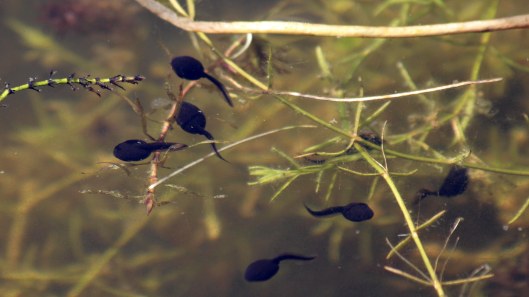
I literally dipped in and out of Cosmeston on 2 May, for a quick look at the dipping pond to see if I could spot any Water voles. I dipped on the voles but I did see Ma Mallard and her two gorgeous ducklings, and a gazillion tadpoles.

180531 1 duckling
180531 2 duckling
180531 3 duckling
180531 4 duckling

180531 5 tadpoles

11 May  I needed to stretch my legs after spending the previous day sorting out after my birding trip so off to Cosmeston I headed. I came in from the north end via Old Cogan farm, where a pair of Swallows was sitting on the wires. I suspect they nest in the old barn as I see them there often over the summer months.

180531 6 swallows

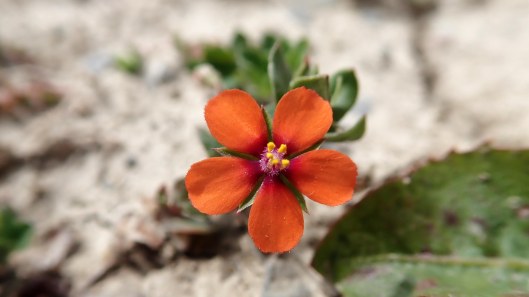
Apart from those Swallows, it was quiet on the bird front and, as a cool wind was blowing, there were no butterflies about either. So, I took lots of photos of newly blooming wildflowers  …
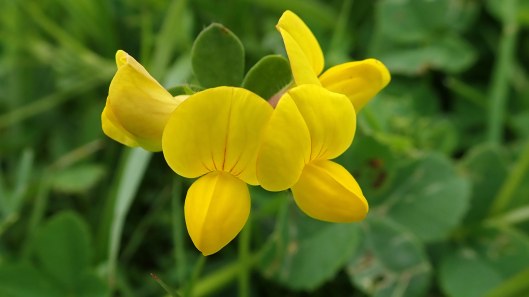
180531 7 Bird's foot trefoil180531 8 Bugle180531 9 Flax180531 10 Scarlet pimpernel

While doing that, I found an interesting little critter mooching around on some leaves (it looked like a weevil without a long snout but I haven’t positively identified it), and I spotted my first cuckoo spit of the season (I just know you’ll be delighted with that find!).

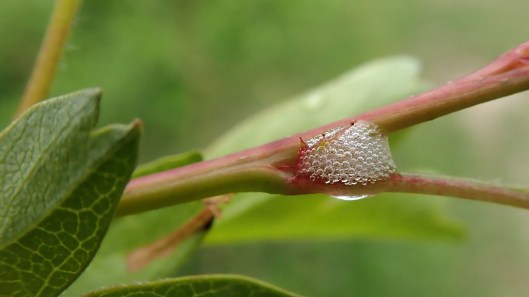
180531 11 snoutless weevil lookalike180531 12 cuckoo spit

15 May  A brief walk through on my way home from Lavernock. I wandered along the edges of Sully brook and then, once again, stopped for a few minutes at the dipping pond. The bad news was that mother Mallard only had one duckling remaining – fingers crossed it makes it to adulthood. The good news was that I saw my first damselflies for the year – both Azure and Large reds were out in numbers.

180531 13 Azure damselfly
180531 14 Large red damselfly

17 May  I passed through Cossie again, this time on my way home from Sully. A Common whitethroat was showing well in the reeds near the cafe, and a Coot was shepherding her three young offspring around the west lake. The chicks were well developed, which bodes well for their survival.

180531 15 Common whitethroat180531 16 Ma Coot and 3 offspring

20 May  This time my 3-hour mooch was all concentrated at Cosmeston. I went early to avoid the Sunday crowds and the scorching sun, and walked the east and west paddocks from one end to the other and back again, along the various trails. I was looking particularly for orchids but saw only leaves, a few with the stalks of flower buds just emerging, and for butterflies. The Dingy skippers and Common blue butterflies were out in good numbers, and it was a pleasure to watch them flitting to and fro.

180531 18 Dingy skipper
180531 17 Common blue

24 May  I went early again to Cosmeston but not early enough, as the rain came in almost as soon as I arrived and I didn’t have a coat with me. I lingered long enough to enjoy the glorious Hawthorn blossom that covers the hedgerows like summer snow, before striding quickly homewards.
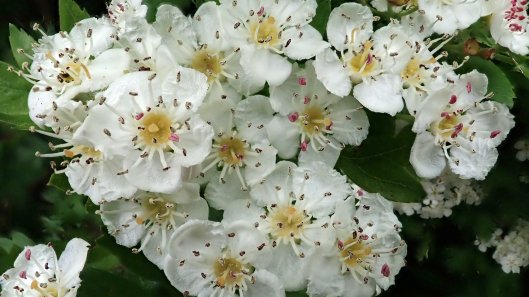
180531 19 Hawthorn blossom

Like Loading...

The elegant Eider

30 Wednesday May 2018

Posted by sconzani in birds, nature

≈ 1 Comment

Tags

birding, birdwatching, British birds, Eider, Eider duck, Farne Islands, nesting Eiders

I am now almost ashamed to admit that, as a child, I had an eiderdown on my bed, to keep me warm during the frosty Waikato nights. If you don’t recognise the name, an eiderdown is a quilt stuffed full with the breast down of the female Eider duck. It was certainly very warm and cosy but these days I couldn’t even contemplate owning such a thing, especially after enjoying my first Eider encounters recently in Northumberland.

180604 Eider (4)

I saw my first while enjoying a fish-and-chip-supper-by-sunset by the harbour in Seahouses, where Eiders were just metres away. That’s also where I first heard their fantastic call – so that’s where comedian Frankie Howerd got his inspiration! (Here’s a link to a youtube video – not mine – if you don’t know what I mean.)

180604 Eider (5)
180604 Eider (6)

180604 Eider (2)

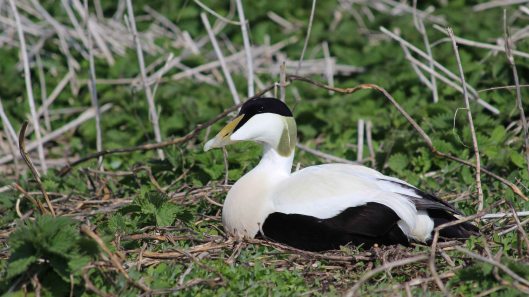
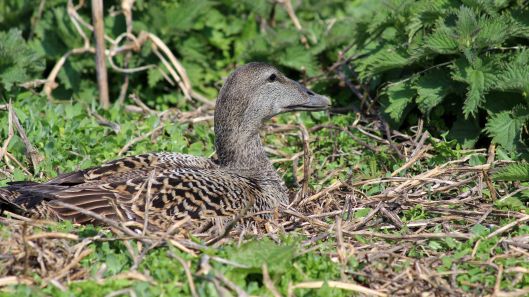
We also encountered Eiders during our trip to the Farne Islands, some so perfectly camouflaged / hidden amongst the vegetation that the local rangers had marked their nesting sites with sticks.

180604 Eider (3)

As usual in the bird world, the male birds are the most colourful, and look very handsome in their black, white (with a pink blush) and light green, but, personally, I prefer the delicate hues and intricate patterning of the females. They are both very elegant birds.

180604 Eider (1)

Like Loading...

First, soak your pellet

29 Tuesday May 2018

Posted by sconzani in birds, mammal, nature

≈ Leave a comment

Tags

Barn owl pellets, bird pellets, birding, British birds, dissecting pellets, Field voles, mammal bones, voles bones

If you’d told me 5 years ago that I would one day google ‘How to dissect owl pellet’, I would’ve laughed in your face, but guess what I did today? Three pellets were very kindly sent to me, at my request, by an understanding friend. What can I say? I was curious! I was curious to see what the owl had been eating. (And I must ask my friend what his reply was when the Post Office staff asked what was in his parcel.)

180529 owl pellets (2)180529 owl pellets (3)

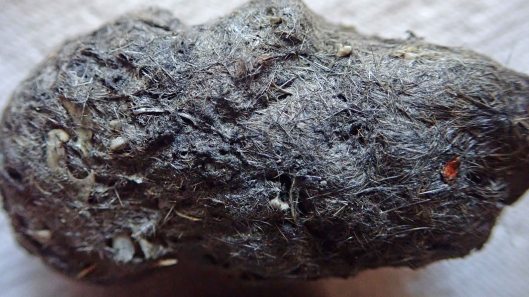
Here is what I received, and a look at the external features. Are they tiny teeth? What is that bone? The pellets have been dried and are very light and look to be full of fur.

180529 owl pellets (5)
180529 owl pellets (7)

Just to be clear, an owl pellet is not pooh. Owls usually swallow their prey whole or, if it’s too large, then in big chunks. The food gets broken down in the gizzard, then digested in the stomach but the more solid, indigestible bits like fur and bone get compacted into pellets in the gizzard and are then ejected. So, a pellet will usually contain whole bones, sometimes whole skulls, which can be used to find out what the bird has been eating.

180529 owl pellets (4)

According to the instructions I found on Discover Wildlife.com:

  • To see what is in an owl pellet, soak it in water. When soft, gently tease it apart with forceps.
  • Slowly pick out all of the bones and bits of insect and put to one side for identification.
  • Count everything – you may only have one skull but three lower jaws, so check carefully to see how many animals are represented in the pellet.

180529 owl pellets (8)

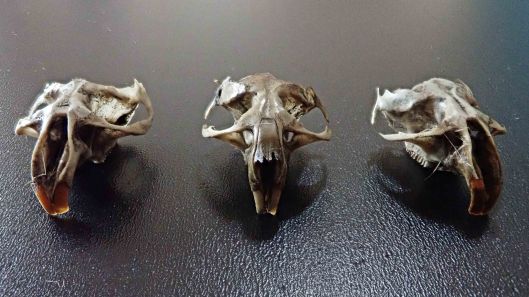
I have now dissected all three pellets, leaving me with a pile of fur and a ton of tiny bones. It was fascinating stuff and I felt a bit like an archaeologist, teasing away the unwanted material from around the fragile bones. Everything has now gone in to soak in biological washing power (as per another website I found) (the enzymes in biological powder should help remove the small bits of fur and ‘other matter’) to clean the bones (bone collectors would probably use hydrogen peroxide at this point but I don’t plan on making a hobby of this so haven’t bought any chemicals). At a glance, I think the bones are mostly of Field voles but there is also one Common shrew. I’ll report back on the findings, with photos of the bones, in a few weeks.

Field vole skulls

Like Loading...

My favourite Sedge warbler

28 Monday May 2018

Posted by sconzani in birds, nature

≈ Leave a comment

Tags

Acrocephalus schoenobaenus, birding, birdwatching, British birds, Sedge warbler

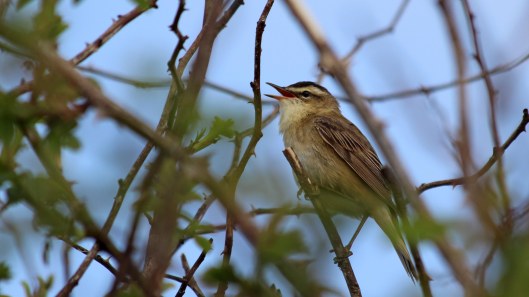
A friend asked me recently what my three favourite birds were from my recent birding trip: I think she was a little surprised by my answer. Number one, not surprisingly, was the Puffin – so beautifully marked, so much character; number two was the Glossy ibis – I loved that we got such close views and were able to observe its behaviour; and number three was this little bird, the Sedge warbler (Acrocephalus schoenobaenus).

180528 sedge warbler (1)

Though usually very vocal, often loudly so, they are more often heard than seen, and I’d only had brief glimpses of Sedge warblers hiding amongst reed beds before this trip.

180528 sedge warbler (2)
180528 sedge warbler (3)
180528 sedge warbler (4)
180528 sedge warbler (5)
180528 sedge warbler (6)
180528 sedge warbler (7)

So, having the opportunity to see this little bird at very close quarters and listen to him belting out his song, intent on advertising himself to any potential mates and stake his claim on his little bit of the planet, oblivious to the likes of me and others taking his photo, and watching and listening intently to him, was pure dead brilliant!

180528 sedge warbler (8)

Like Loading...

Orange-tips

27 Sunday May 2018

Posted by sconzani in insects, nature

≈ Leave a comment

Tags

Anthocharis cardamines, British butterflies, butterfly, Orange-tip, Orange-tip butterfly

The various white butterflies can be difficult to tell apart but the Orange-tips (Anthocharis cardamines) are a little easier to spot. The male sports the orange tips on its wings that give the species its common name and which are, according to the UK Butterflies website, caused by an accumulation of the mustard oils that were ingested when it was a caterpillar.

180527 Orange-tip male

The female Orange-tip doesn’t have those bright wing tips but she does share with the male the equally characteristic mottled green pattern on her underwings.

180527 Orange-tip female.jpg

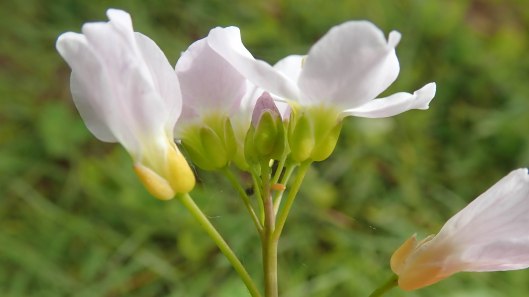
The female lays a single egg – the caterpillars will devour other eggs and fellow caterpillars given the chance, hence the single egg – on one of the preferred larval food plants, their favourites being Cuckooflower (Cardamine pratensis) and Garlic Mustard (Alliaria petiolata). Eggs are white when first laid, changing to orange as they near maturity, a process that takes a week or two.

Newly laid white egg
Maturing orange egg
Maturing orange egg

180527 Orange-tip egg (3)

I haven’t yet found a caterpillar but, in the next week or so, I will be re-checking the places where I found these eggs. If you want to read more about Orange-tips, you can check the Butterfly Conservation website here.

Like Loading...

Birding at St David’s Vale

26 Saturday May 2018

Posted by sconzani in birds, insects, nature

≈ Leave a comment

Tags

birding, birdwatching, British birds, Broad-bodied Chaser, Cockchafer, Common heath moth, Glamorgan Bird Club, Meadow pipit, Skylark, Small heath butterfly, St David's Vale, Stonechat, Tree pipit, Whinchat, Willow warbler

I might also have called this blog post ‘One hundred and eighty!’. Let me explain …

180525 St Davids Vale (1)

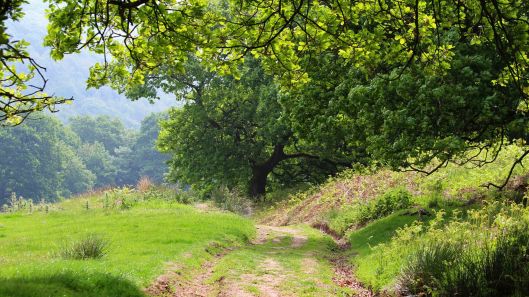
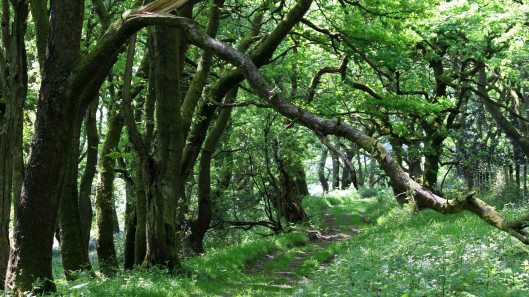
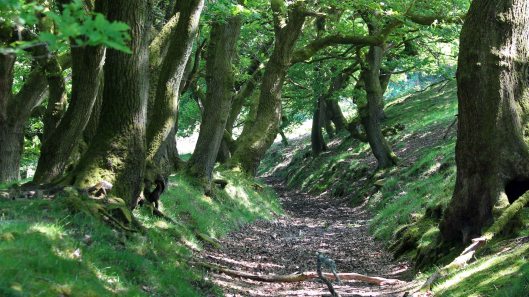
Last Wednesday I joined fourteen other members of the Glamorgan Bird Club for a day’s birding in the stunning scenery of St David’s Vale, near Abergavenny. We walked part of an ancient hollow way …

180525 St Davids Vale (4)180525 St Davids Vale (6)

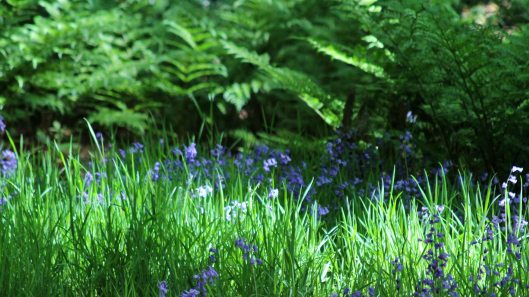
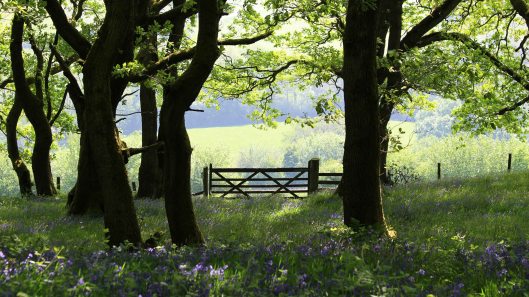
Beneath mighty oaks in an equally ancient woodland carpeted with bluebells …

180525 St Davids Vale (2)180525 St Davids Vale (3)

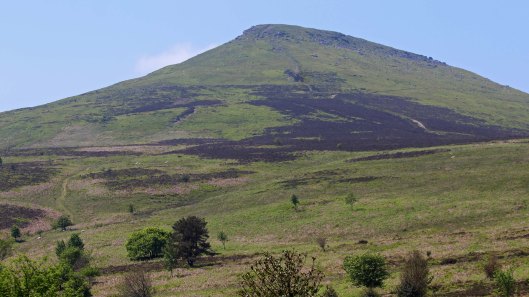
And then, as the sun broke through the low cloud that had earlier floated across the border from England, we climbed up on to the broad open moorland, with panoramic views all around and the impressive peak of Sugarloaf looming to our right.

180525 St Davids Vale (5)

Most of the birds mocked my photographic skills and no-so-long lens as they perched on distant tree tops and bushes but I was delighted to hear and then see my very first Wood warbler, and then, on the moorland, several beautiful Whinchats. And those two sightings brought my year list to – yes, you guessed it – one hundred and eighty!

180525 b willow warbler
180525 b stonechat
180525 b whinchat
180525 b tree pipit
180525 b meadow pipit
180525 b skylark

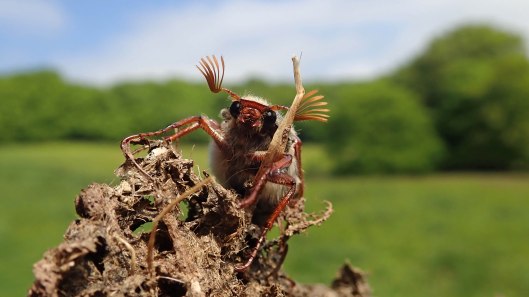
Our keen amateur naturalists also spotted a Small heath butterfly and two Common heath moths (this is the male; the female landed on my trouser leg so another birder got that picture), and a Broad-bodied chaser dragonfly. And we were entertained by the bumbling flights of several Cockchafers (I’ll cover those in a future post.)

Small heath butterfly
Common heath moth
Common heath moth
Broad-bodied chaser
Broad-bodied chaser

Cockchafer

My bird list for the today was: Mistlethrush, Robin, Goldfinch, Blackbird, Great tit, Carrion crow, Meadow pipit, Willow warbler, Swallow, Woodpigeon, Blue tit, Blackcap, Skylark, Buzzard, Chaffinch, Garden warbler, Long-tailed tit, Wood warbler, Stonechat, Raven, Tree pipit, Linnet, Whinchat, Wren, Cuckoo, House sparrow, Pied wagtail, Dunnock, Magpie and Jackdaw. It was a perfectly wonderful day!

Like Loading...

A wildflower catch-up

25 Friday May 2018

Posted by sconzani in flowers, nature, wildflowers

≈ 5 Comments

Tags

British wildflowers, Bush vetch, Common vetch, Herb Bennet, Oxeye daisy, Ragged robin, Russian comfrey, Wood avens

Time to catch up on which wildflowers are currently flowering in the waysides …

180525 Bush vetch

I often see the mottled purplish flowers of Bush vetch (Vicia sepium) in the wonderfully scruffy areas on the edges of roads and paths.

180525 Common vetch

Often accompanying its Bush cousin, the Common vetch (Vicia sativa) has a delicate pink, often single flower, very much like the popular garden plant the Sweet pea, to which it is also related.

180525 Oxeye daisy

There’s something innately cheerful about the Oxeye daisy (Leucanthemum vulgare), which also goes by the common names of Dog daisy, Horse daisy, Moon daisy and Moonpenny (I almost typed Moneypenny!).

180525 Ragged-robin

The perfectly named Ragged-Robin (Lychnis flos-cuculi) likes to have its feet in damp places so look for it in marshy areas, near drains and streams.

180525 Russian Comfrey

Given the deep purple of its flowers, I think this might be Russian comfrey (Symphytum x uplandicum), a hybrid of Common and Creeping comfrey. I found it growing well in a coastal location near where I live.

180525 Wood avens

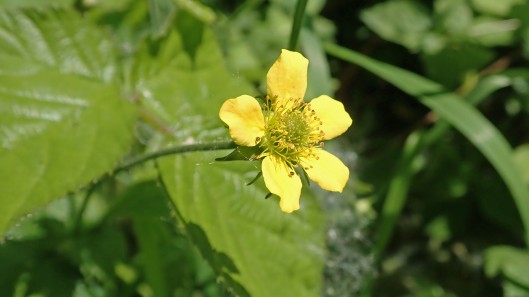
Though officially known as Wood avens (Geum urbanum) I always think of this plant as Herb Bennet, which, according to Flora Britannica, is a corruption of the medieval Latin herba benedicta, meaning the blessed herb. Its roots were widely used in herbal medicine.

Like Loading...

Razorbills

24 Thursday May 2018

Posted by sconzani in birds, nature

≈ Leave a comment

Tags

Alca torda, birding, birdwatching, British birds, Farne Islands, Razorbill, seabirds

180524 Razorbills (1)

Though it’s darker in colour, the Razorbill (Alca torda) looks, at first glance, a lot like the Guillemot but then you notice that beak, the sharpness of which is how the bird got its name. It’s a fish eater, which is why its population has been steadily declining – there just aren’t the numbers of sprats, herrings and sandeels in the ocean any more to feed these beautiful creatures.

180524 Razorbills (2)

Like the Guillemot, the Razorbill only comes ashore to breed, which is how I got to see them close up, on my recent trip to the Farne Islands.

180524 Razorbills (3)

Razorbills partner for life – I wonder how long these two have been together?

180524 Razorbills (4)180524 Razorbills (5)

Like Loading...

Wild word: mnemonic

23 Wednesday May 2018

Posted by sconzani in birds, nature

≈ 4 Comments

Tags

#WildWords, birding, birdwatching, British birds, mnemonic, mnemonic for bird song, ways to remember bird songs, wild words

Mnemonic: Noun; a system such as a pattern of letters, ideas, or associations which assists in remembering something; from the Greek mnēmonikos, from mnēmōn, meaning ‘mindful’ (Oxford Dictionary).

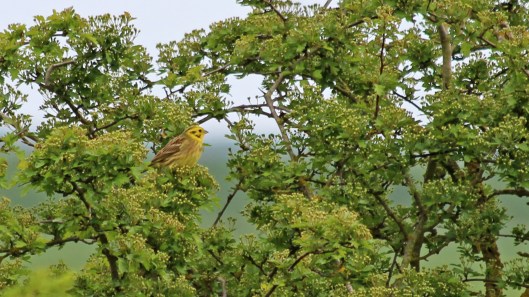
I’ve found mnemonics particularly useful when trying to remember bird songs. Apart from the very obvious sounds, where the bird is, in fact, named for its song – I’m thinking here of the Chiffchaff and the Kittiwake – there are also some well-known phrases that many birders know, like ‘a little bit of bread and no cheeeeese’ for the song of the Yellowhammer, ‘chissick’ for the Pied wagtail, and ‘teacher, teacher’ for the Great tit. Do you have any bird song mnemonics you can share?

yellowhammer

The yellowhammer: ‘a little bit of bread and no cheeeeese’

Like Loading...

The Shieldbug red-light district

22 Tuesday May 2018

Posted by sconzani in insects, nature

≈ Leave a comment

Tags

British insects, Dolycoris baccarum, Green shieldbug, Hairy shieldbug, Palomena prasina, shield bugs, shieldbug

There’s a little track I often walk down, or up, between my home and Penarth Marina, that’s not been touched by the Council’s destructive strimmers (so far), so it’s a great place to look for wildflowers and critters, and it can take me 30 minutes or more to walk its 100 metres.

OLYMPUS DIGITAL CAMERA

When I walked this way the other day, I came across this little Green shieldbug (Palomena prasina). Just look at that innocent-looking face … but don’t be fooled. It was probably the only one of maybe 30 Green shieldbugs I saw that was on its own – all the others were working on ensuring the continuation of their species.

OLYMPUS DIGITAL CAMERA

Even the Hairy shieldbugs (Dolycoris baccarum) I found (only 3 of those) were at it! Given all the bad news we hear these days about declining insect populations, I hope this means the shieldbugs are doing okay.

OLYMPUS DIGITAL CAMERA
Like Loading...
← Older posts

About me

sconzani

sconzani

I'm a writer and photographer; researcher and blogger; birder and nature lover; countryside rambler and city strider; volunteer and biodiversity recorder.

View Full Profile →

Follow earthstar on WordPress.com

Enter your email address to follow this blog and receive notifications of new posts by email.

Recent blog posts

  • An influx of Painted ladies May 9, 2026
  • A bumper day, part 2 May 8, 2026
  • A bumper day, part 1 May 7, 2026
  • NFY: Dingy skipper May 6, 2026
  • NFY: Small copper May 5, 2026

From the archives

COPYRIGHT

Unless otherwise acknowledged, the text and photographs on this blog are my own and are subject to international copyright. Nothing may be downloaded or copied without my permission.

Fellow Earth Stars!

  • Unknown's avatar
  • Unknown's avatar
  • Unknown's avatar
  • Unknown's avatar
  • Unknown's avatar
  • Unknown's avatar
  • Unknown's avatar
  • Unknown's avatar
  • Unknown's avatar
  • Unknown's avatar
  • Unknown's avatar
  • Unknown's avatar
  • Unknown's avatar
  • Unknown's avatar
  • Unknown's avatar
  • Unknown's avatar
  • Unknown's avatar
  • Unknown's avatar
  • Unknown's avatar
  • Unknown's avatar
  • Unknown's avatar
  • Unknown's avatar
  • Unknown's avatar
  • Unknown's avatar
  • Unknown's avatar
  • Unknown's avatar
  • Unknown's avatar
  • Unknown's avatar
  • Unknown's avatar
  • Unknown's avatar
  • Unknown's avatar
  • Unknown's avatar
  • Unknown's avatar
  • Unknown's avatar
  • Unknown's avatar
  • Unknown's avatar
  • Unknown's avatar
  • Unknown's avatar
  • Unknown's avatar
  • Unknown's avatar
  • Unknown's avatar
  • Unknown's avatar
  • Unknown's avatar
  • Unknown's avatar
  • Unknown's avatar
  • Unknown's avatar
  • Unknown's avatar
  • Unknown's avatar
  • Unknown's avatar
  • Unknown's avatar

Blog at WordPress.com.

Privacy & Cookies: This site uses cookies. By continuing to use this website, you agree to their use.
To find out more, including how to control cookies, see here: Cookie Policy
  • Subscribe Subscribed
    • earthstar
    • Join 644 other subscribers
    • Already have a WordPress.com account? Log in now.
    • earthstar
    • Subscribe Subscribed
    • Sign up
    • Log in
    • Report this content
    • View site in Reader
    • Manage subscriptions
    • Collapse this bar

Loading Comments...

You must be logged in to post a comment.

    %d