• ABOUT
  • BIRDING 2018
  • Birding 2019
  • BLOG POSTS
  • Butterflies 2018
  • Resources

earthstar

~ a celebration of nature

earthstar

Author Archives: sconzani

Ruffing it

13 Saturday Sep 2025

Posted by sconzani in autumn, birds

≈ Leave a comment

Tags

autumn migration, birding, birdwatching, British birds, female Ruff, Philomachus pugnax, Reeve, RSPB Lodmoor, Ruff

I’ve just returned from another few days on England’s south coast, in Weymouth and on the Isle of Portland, this time, due to its being migration season and the often inclement weather, mostly birding. And, despite the blasting westerly winds and the frequent heavy rain, it was wonderful!

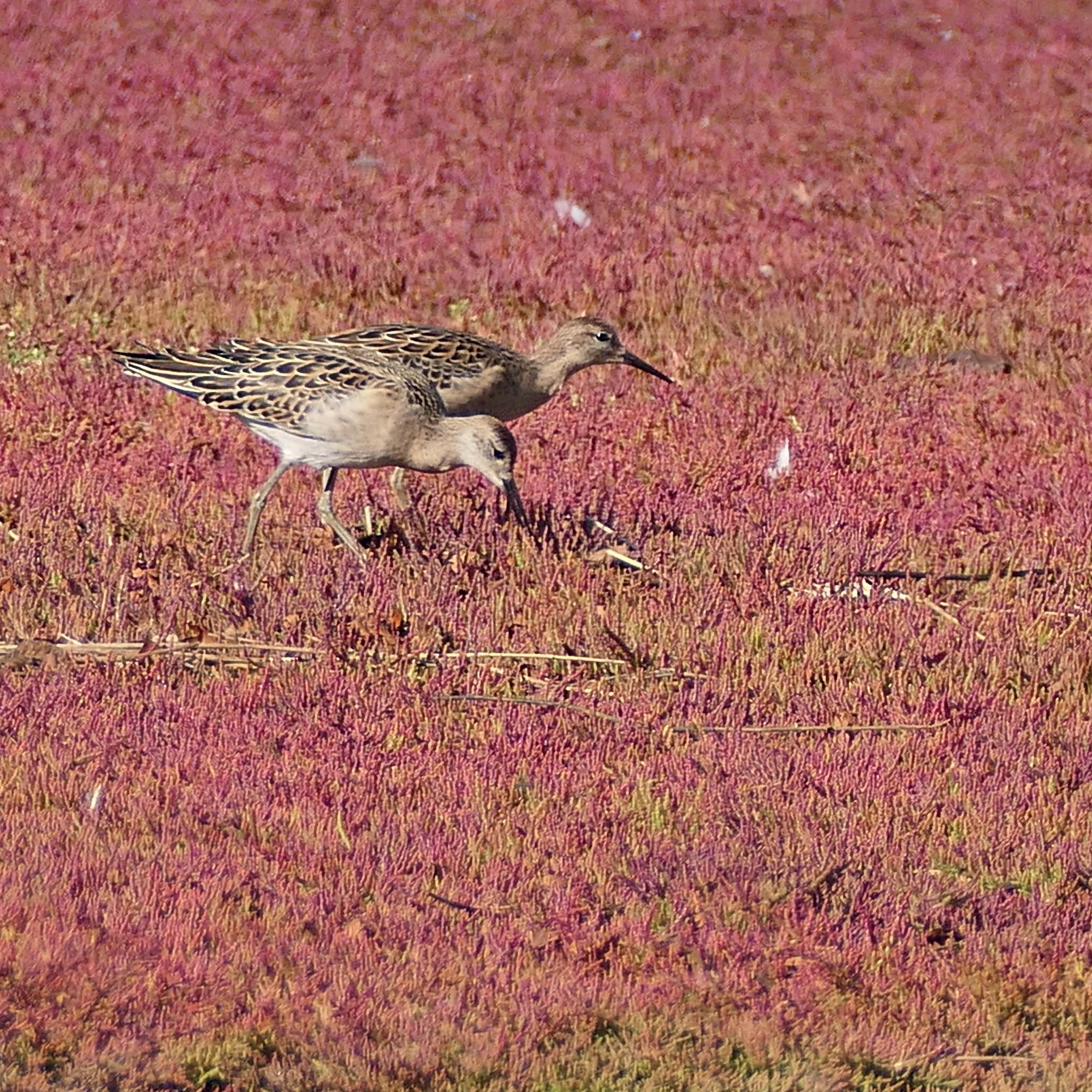
After arriving mid afternoon on Monday, I took myself on a walk – to stretch my old body after five hours’ train travel and to get some fresh air in my lungs – to RSPB Lodmoor. It’s such a convenient distance from Weymouth town centre and always has something to delight my birding senses. And Monday’s visit did not disappoint, providing my first sighting this year of Ruff (Philomachus pugnax).
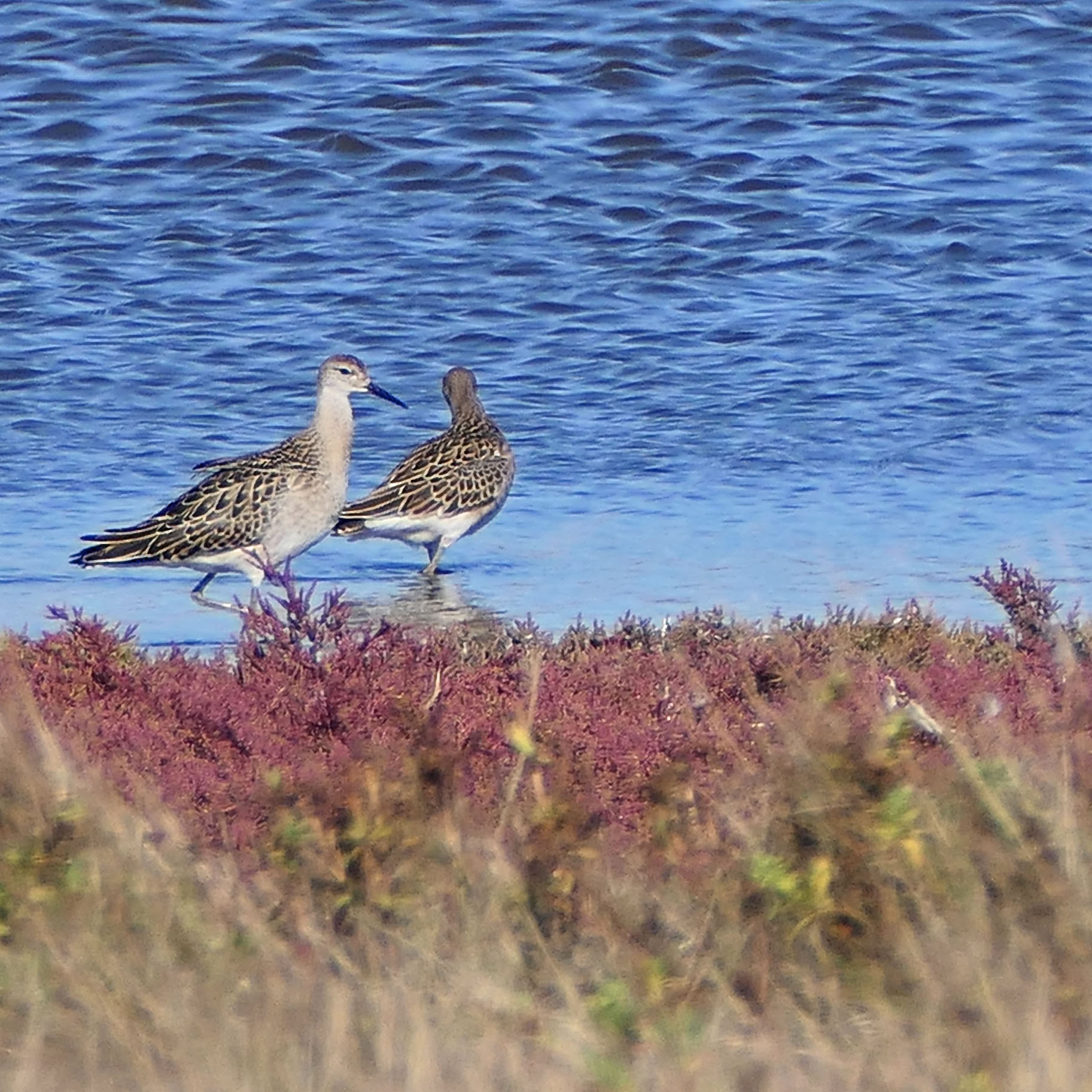
The story of the Ruff in Britain is a sad one. My guide book recounts that Ruff became extinct as a breeding bird in Britain around 1850, though it managed to re-establish itself in East Anglia for a time in the 1960s. Now, few if any young are raised in Britain, with the bird’s main breeding grounds ranging from Scandinavia as far east as Siberia, and south as far as the Netherlands. Though some Ruff are present throughout the year in Britain, and several hundred over-winter here, most are seen during autumn migration when the birds pass through on their way to Africa, some flying as far as South Africa.

The Ruff is red-listed in Britain and is globally threatened, as its population has declined dramatically and its breeding and non-breeding ranges have also declined. The two birds I saw are female (though the species name is Ruff, the male bird is known as Ruff due to its extraordinary breeding plumage, while the female is known as Reeve). I felt very privileged to enjoy reasonably close sightings of these large waders and spent quite a lot of time watching them feeding up for their long journey south.
Like Loading...

Bug: Megacoelum infusum

12 Friday Sep 2025

Posted by sconzani in insects, trees

≈ Leave a comment

Tags

British miridae, bugs on Oak, Megacoelum infusum, mirid bugs on Oak, Miridae

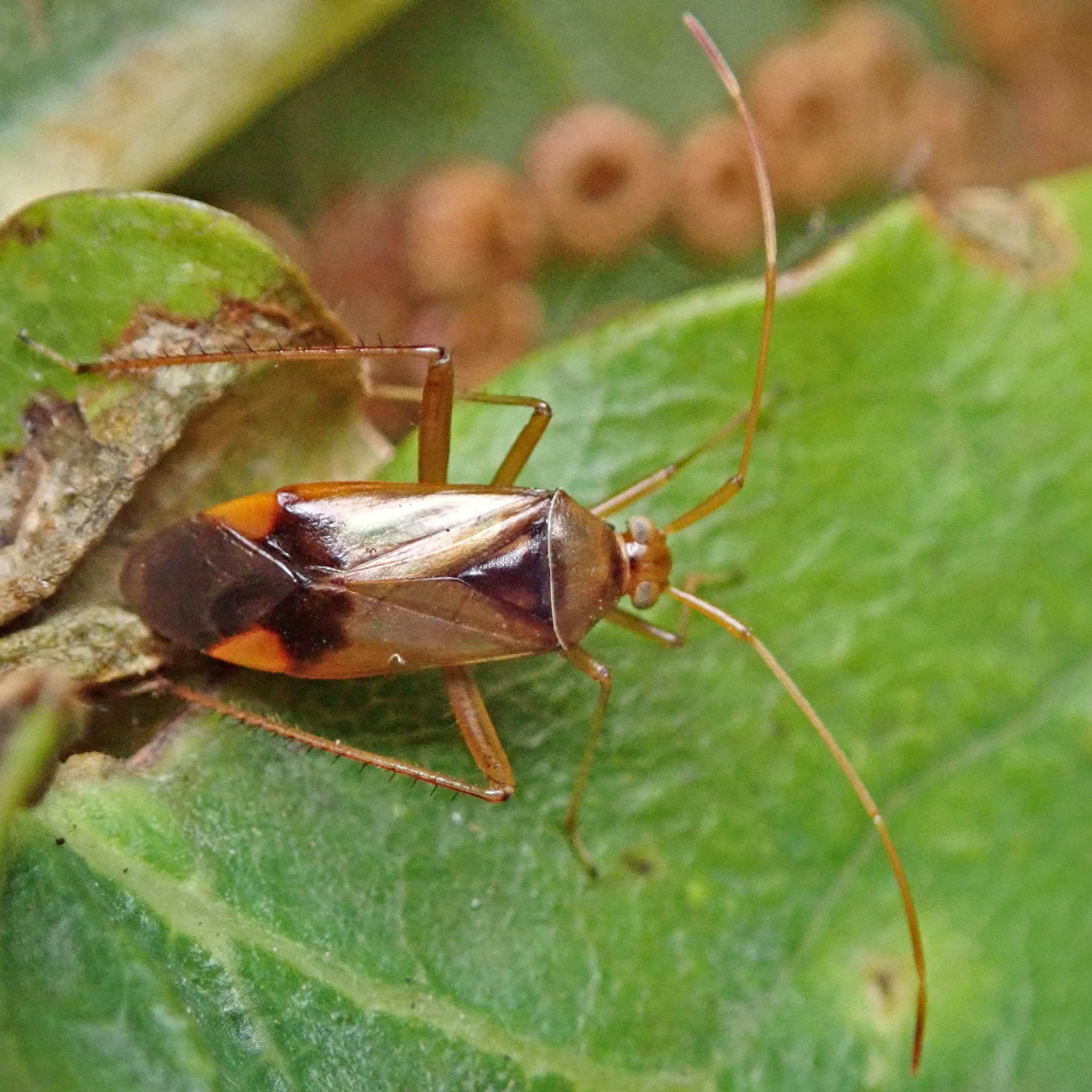
Here’s another of this year’s new bug finds, a handsome little mirid bug coloured a rich brown and orange, Megacoelum infusum. I found it on a local Oak tree, which was fortunate, as there’s a very similar looking bug (Megacoelum beckeri) that lives on Scots pine (Pinus sylvestris). The British Bugs website entry for this species says it is both vegetarian and carnivorous, supping on Oak sap and tiny insects.

Like Loading...

Fly: Merzomyia westermanni

11 Thursday Sep 2025

Posted by sconzani in insects

≈ Leave a comment

Tags

British flies, British fruit flies, British Tephritidae, flies on Ragwort, fruit fly, Merzomyia westermanni, Tephritidae

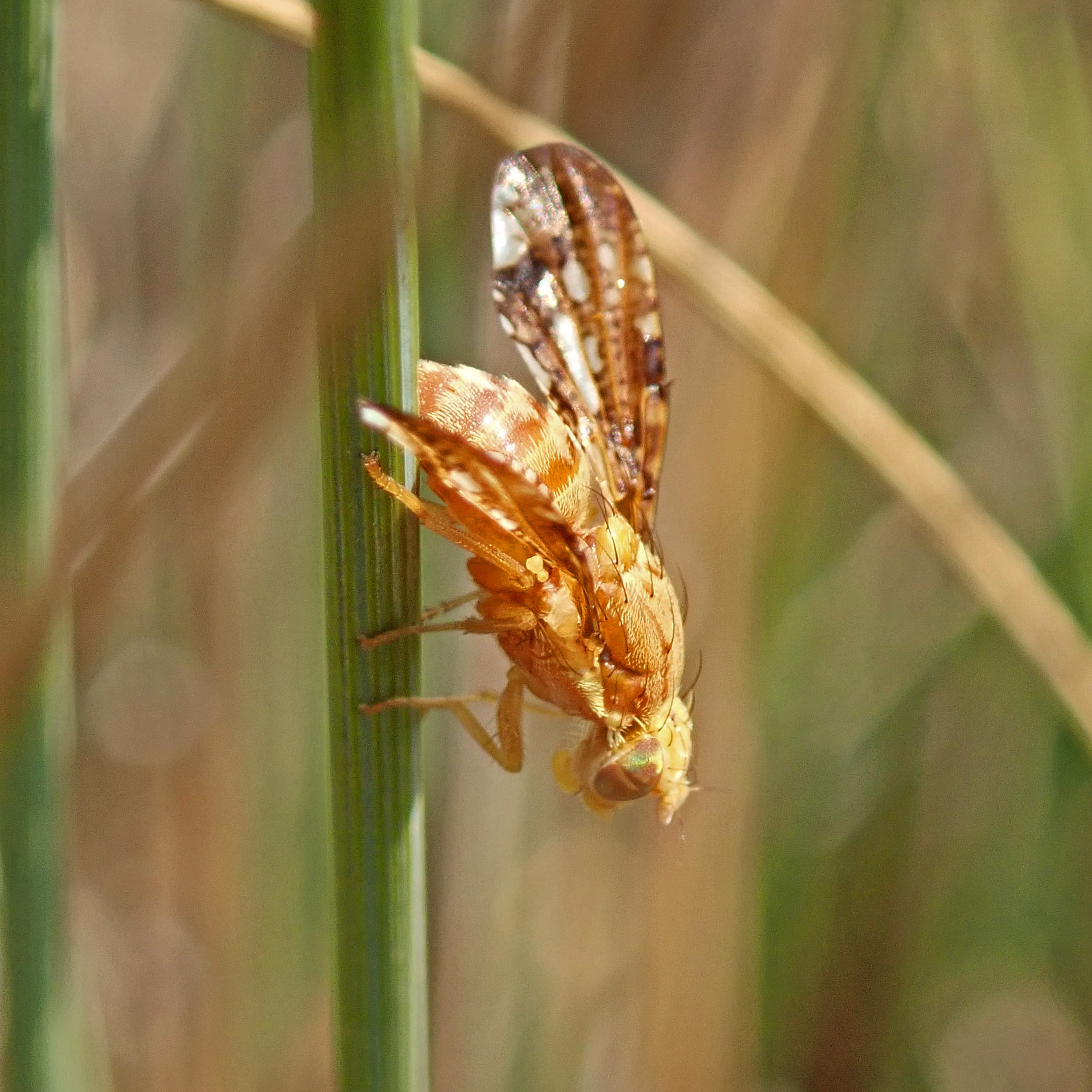
This little beauty is one of the Tephritidae, the fruit flies, and its name is Merzomyia westermanni. As I’m sure you all know by now, flies can be tricky to identify but, fortunately, the patterns on the wings of this creature are unique so, as long as you get a clear photo of its wings, it can be recorded with confidence. Even better, in my brief experience of this species – I’ve only seen them twice, they are more settled, more confiding than many fly species so getting a photo is less difficult. Look for these fruit flies in grassland, particularly around the Ragwort flowers they favour.

Like Loading...

More moth appreciation

10 Wednesday Sep 2025

Posted by sconzani in insects

≈ Leave a comment

Tags

Bird-cherry ermine, British moths, moth, Nomophila noctuella, Orchard ermine, Pleuroptya ruralis, Pyrausta aurata, Yponomeuta evonymella, Yponomeuta padella

It’s moth appreciation time. Here are a few recent finds …

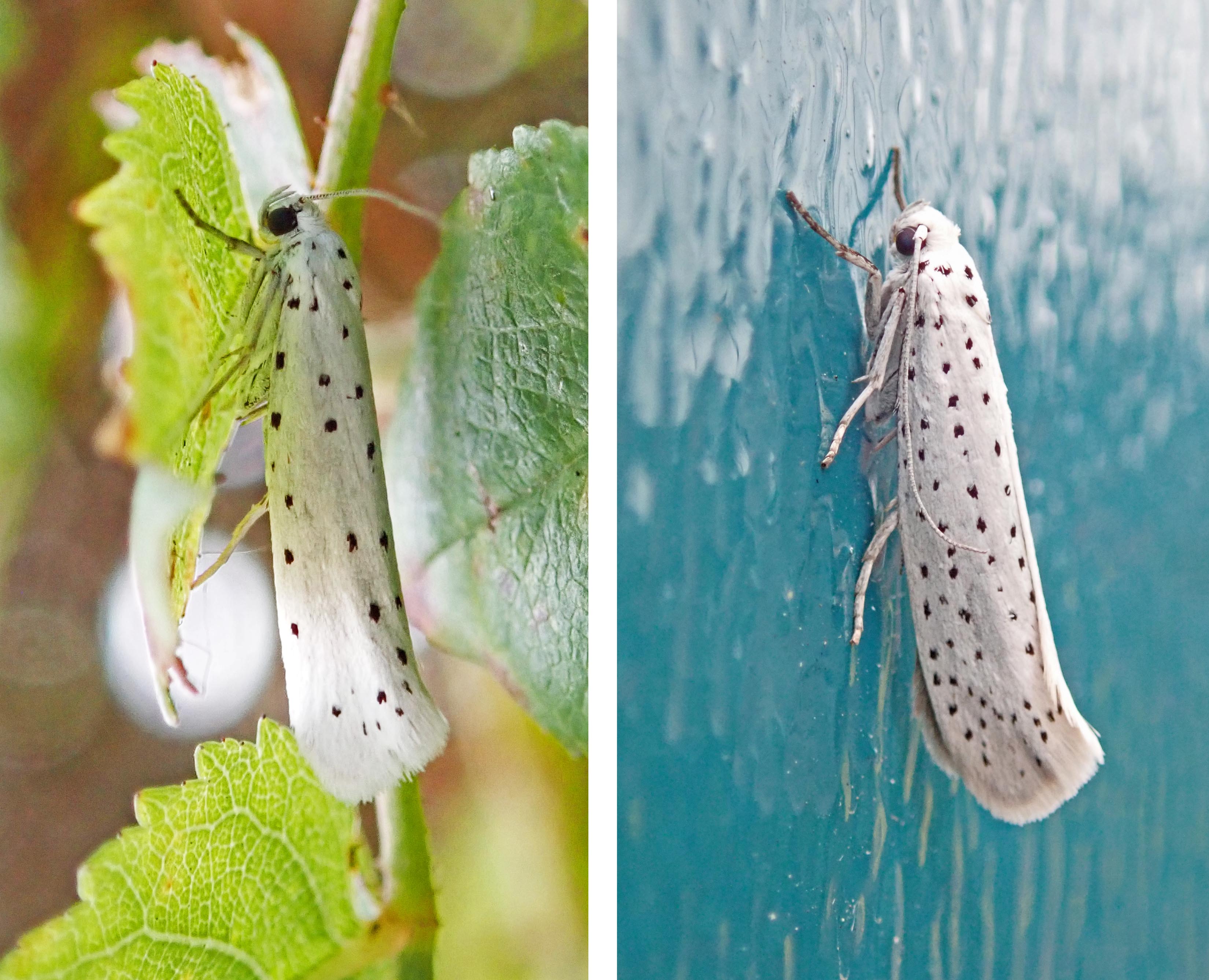
I thought it would be interesting to place these two ermine moths together so as to show their differences. On the left is an Orchard ermine (Yponomeuta padella), on the right a Bird-cherry ermine (Yponomeuta evonymella). To identify these and the several other species of ermine moths, you need to look carefully at the patterns of their spots and also at their food plants. The Bird-cherry has five rows of black dots on the forewing, so is quite distinctive. The Orchard ermine is very similar in appearance to a couple of other ermines, the Apple ermine and the Spindle ermine, so knowing their food plants is a great help (for the Orchard, they are Blackthorn, Hawthorn and Cherry, while the key to the other two is in their names, Apple and Spindle).

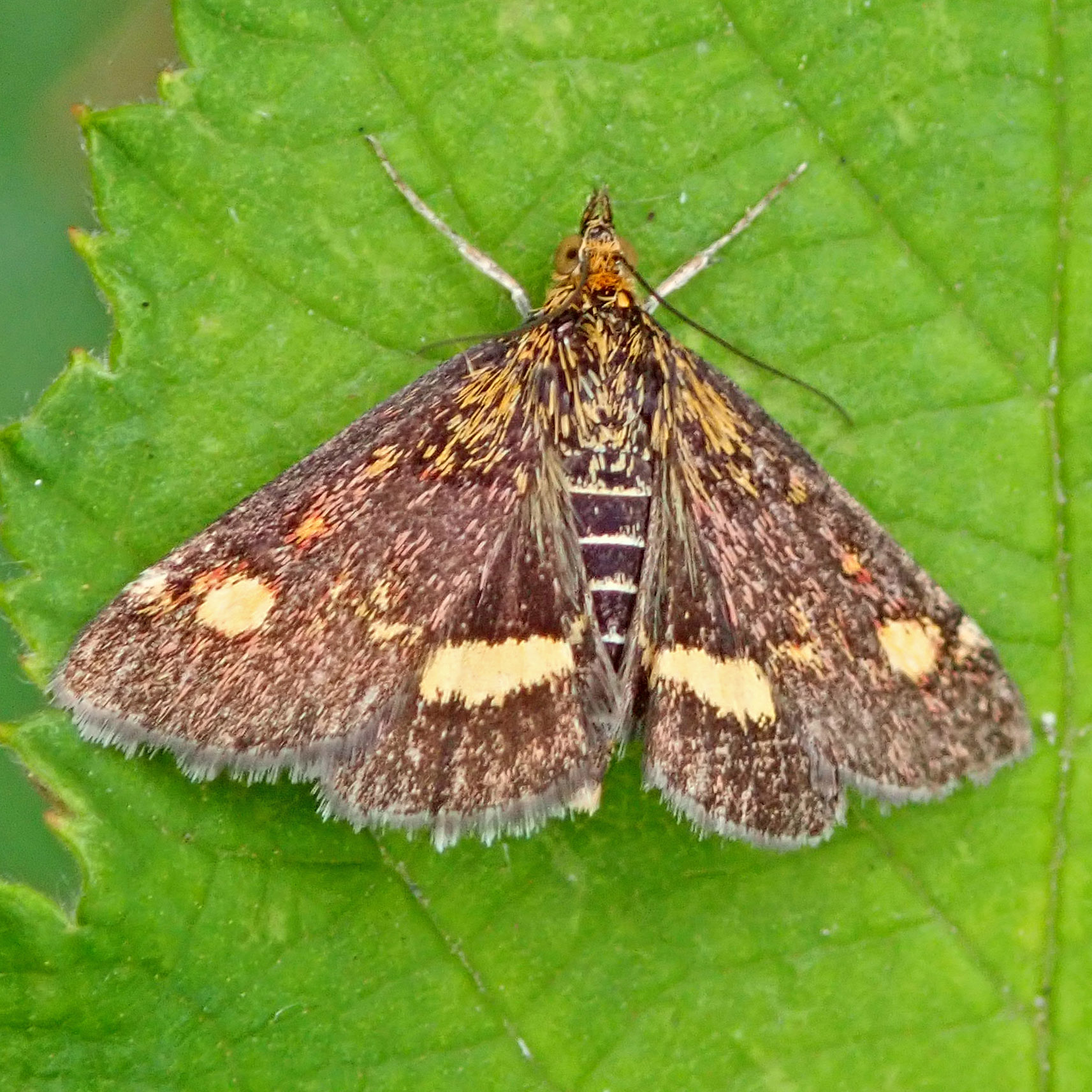
The Mint moth (Pyrausta aurata) can also be a bit tricksy to ID, as it’s very similar to the Common purple-and-gold (Pyrausta purpuralis), but the latter has distinctive light spots on its hind wings, which the Mint moth does not. Unsurprisingly, the Mint moth is often found on or near plants from the Mint (Mentha) family.

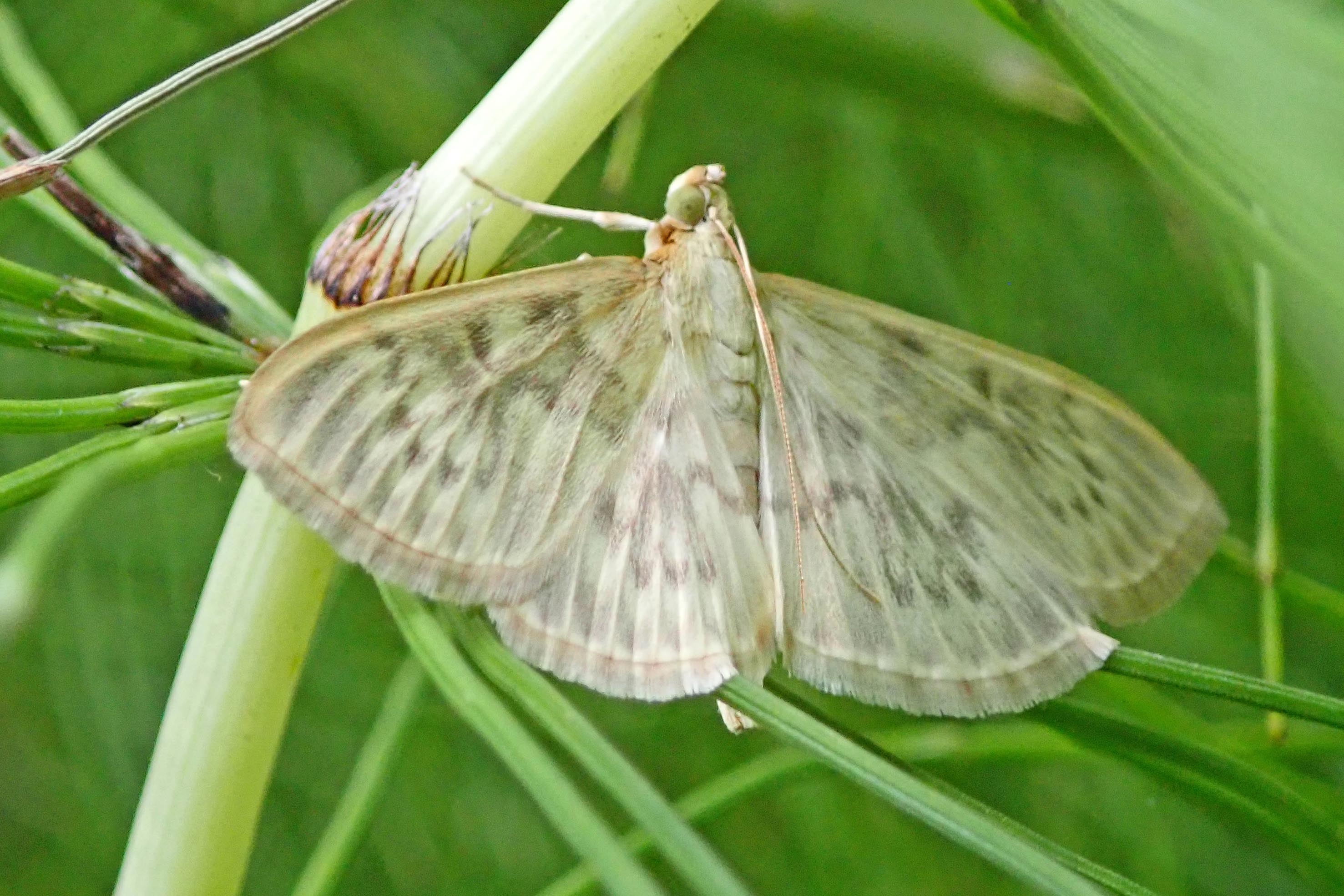
This, in my opinion, is the loveliest of today’s moths, the Mother of pearl (Pleuroptya ruralis), named for the pearlescent sheen of its wings. I must remember to look for its larvae, which feed in rolled-up leaves on Nettle plants (I can feel those stings already!).

For me, seeing a Rush veneer (Nomophila noctuella) – or, usually, several Rush veneers in one day – means warm winds are blowing from the south, bringing in migrating insects from Europe. And they are exactly the weather conditions we were experiencing over a couple of days very recently, when I saw more than six of these moths in just a few hours during a coastal walk.

Like Loading...

Spider: Agalenatea redii

09 Tuesday Sep 2025

Posted by sconzani in spiders

≈ Leave a comment

Tags

Agalenatea redii, British spiders, Gorse orbweb spider, spider on Knapweed flower head

I met this handsome little spider, a Gorse orbweb spider (Agalenatea redii) in a local field where once there had been a medieval village (no trace of the village remains above ground, except perhaps if you squint a certain way at small lumps and bumps in the grass).

I was actually checking the dying flower heads of Knapweed for insects, now difficult to find after our prolonged period of drought, and didn’t at first notice the little spider, so well did its colours blend with its surroundings. But then I noticed a series of tiny black eyes watching me from behind a fringe of long pale hairs.

My guide book observes that Agalenatea redii is most often found ‘amongst heath and gorse, and in rough grassland, often in rather damp situations, where it spins its web fairly low down amongst the stems. A retreat is often constructed in an adjacent dead flower head.’ So, perhaps, I had found my watchful little friend sitting comfortably in its retreat, waiting for its next meal to stumble into, and be ensnared in, its web.

Like Loading...

Leafmines: Bedellia somnulentella

08 Monday Sep 2025

Posted by sconzani in insects, leaves, plants

≈ Leave a comment

Tags

Bedellia somnulentella, Bedellia somnulentella larva, Bedellia somnulentella pupa, British leafminers, British moths, leaf-mining moth larvae, leaf-mining moths, leafmines on Field bindweed

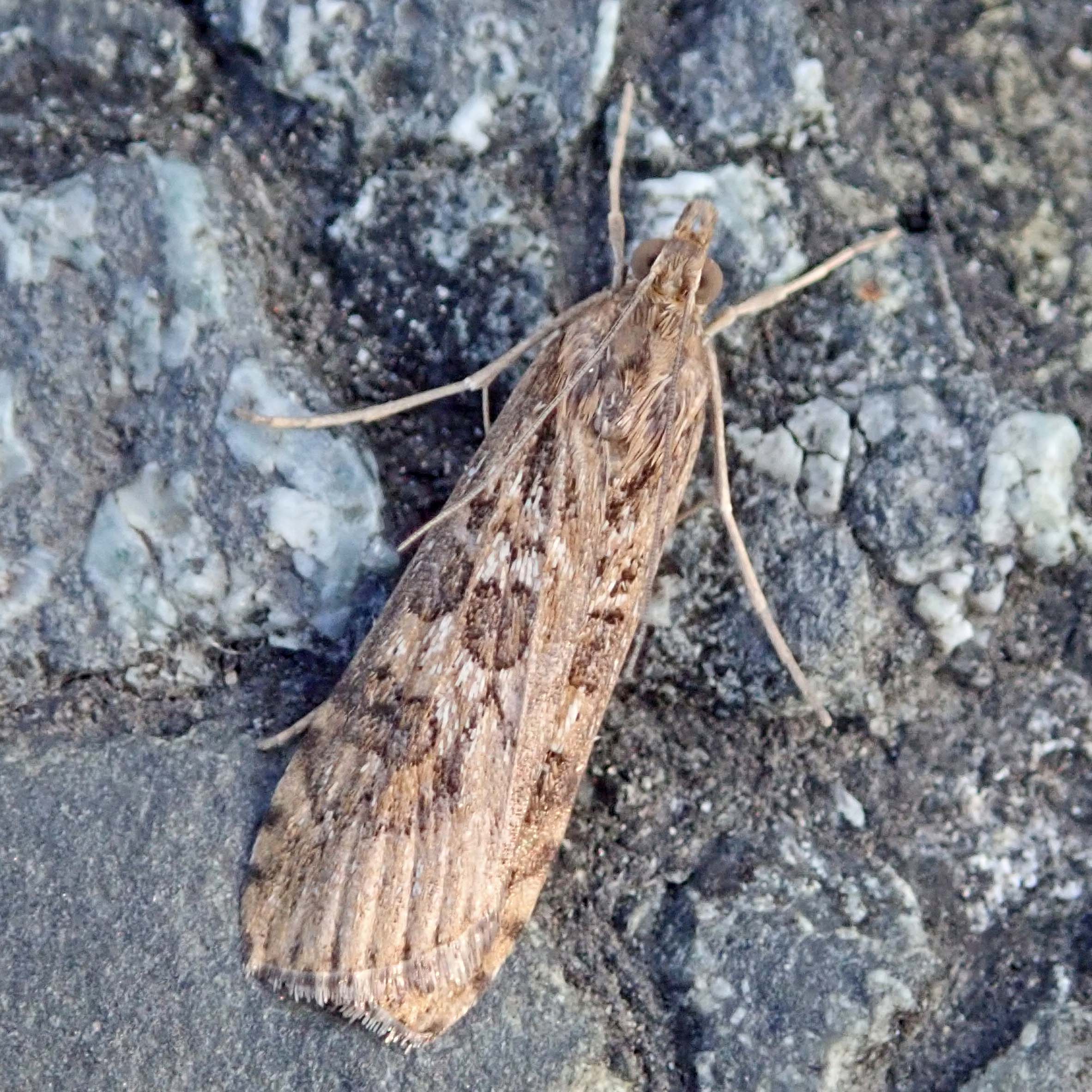
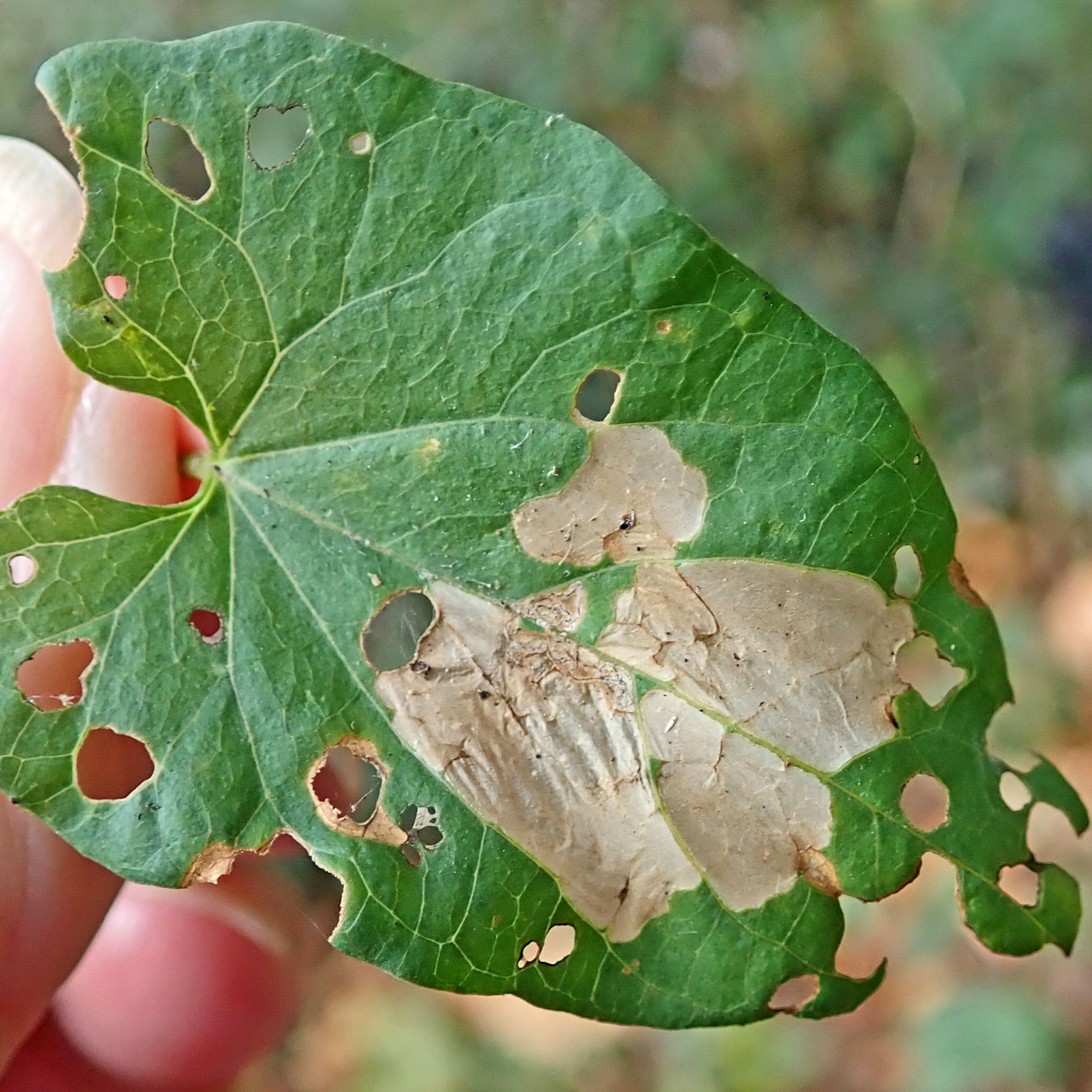
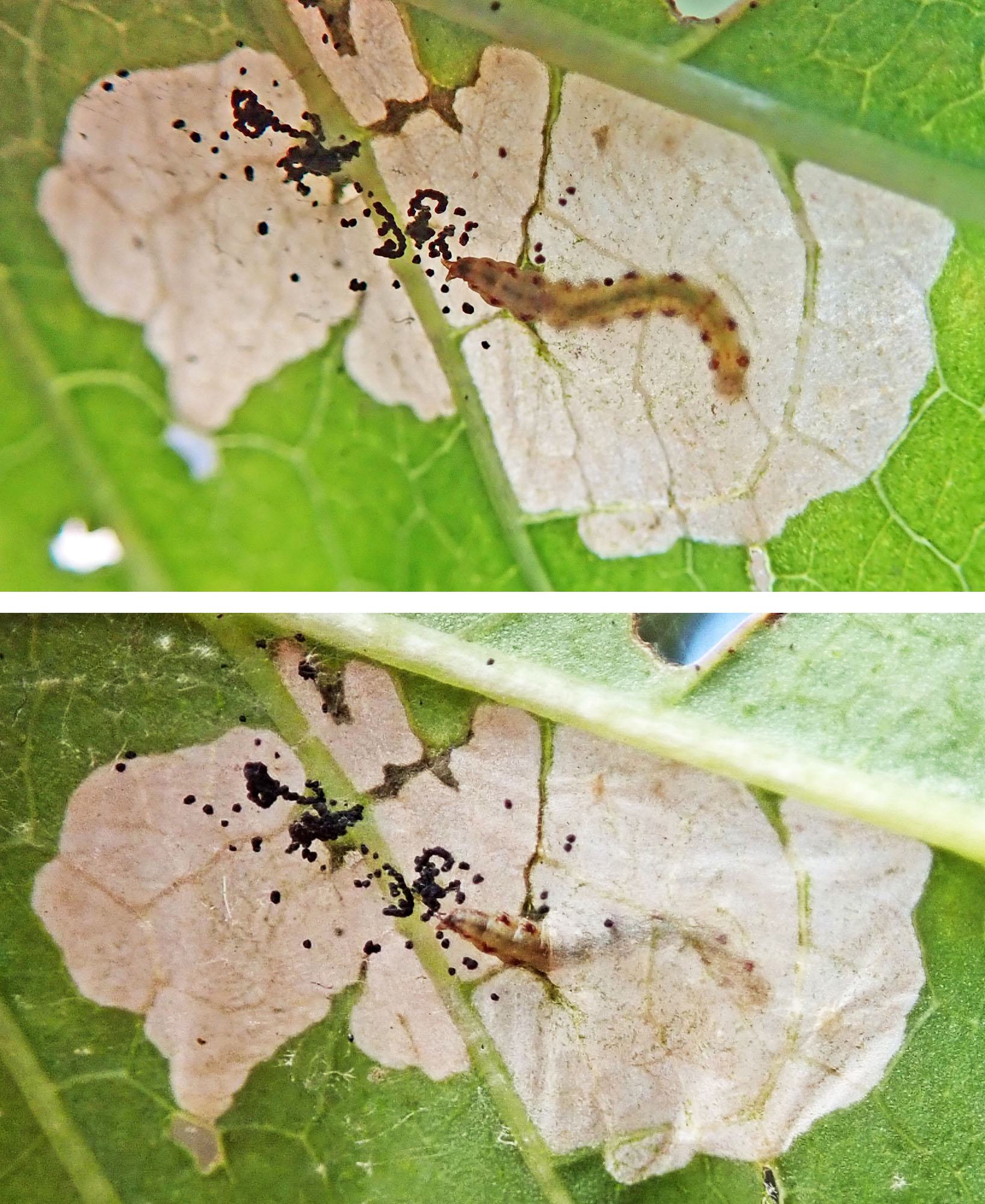
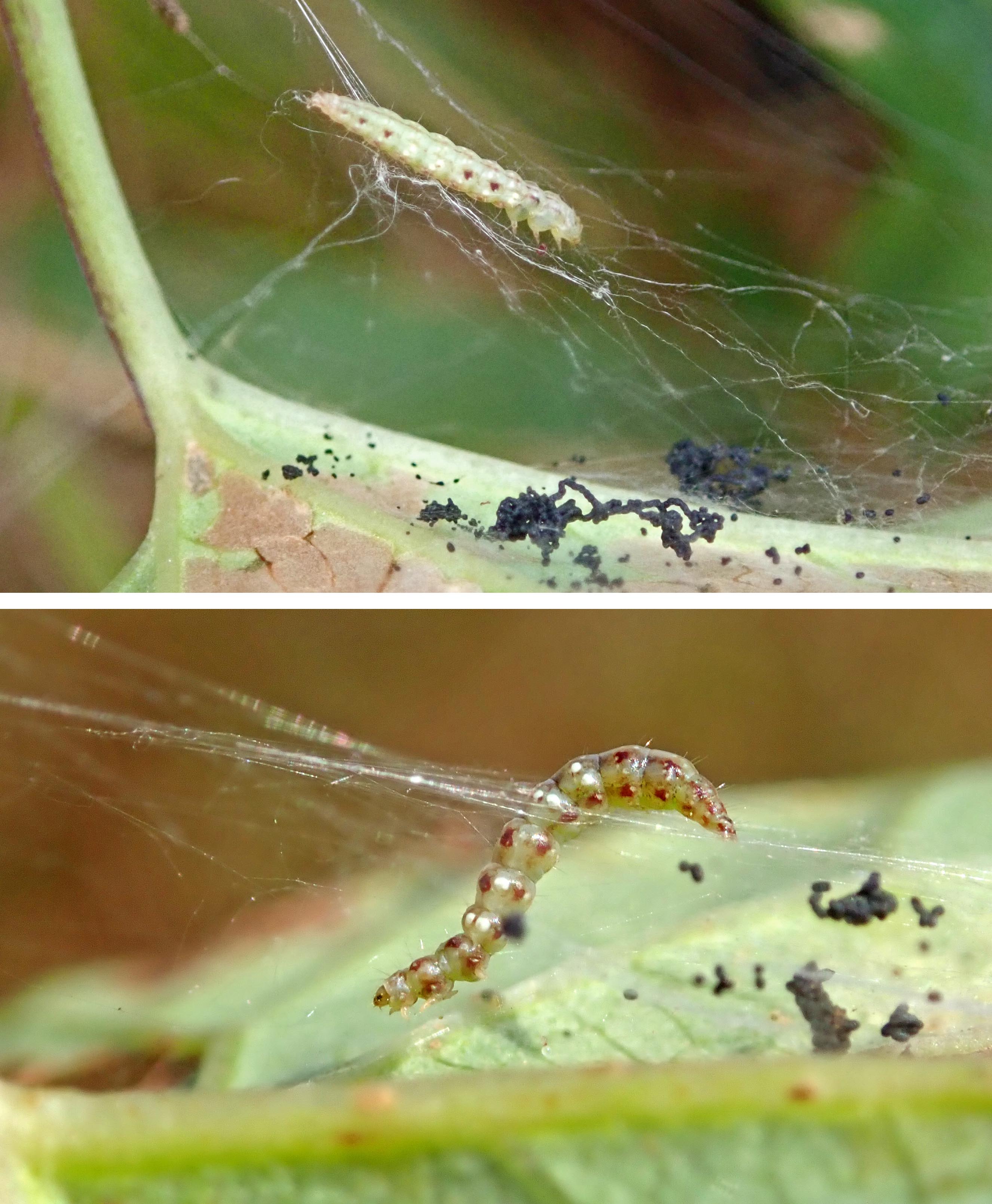
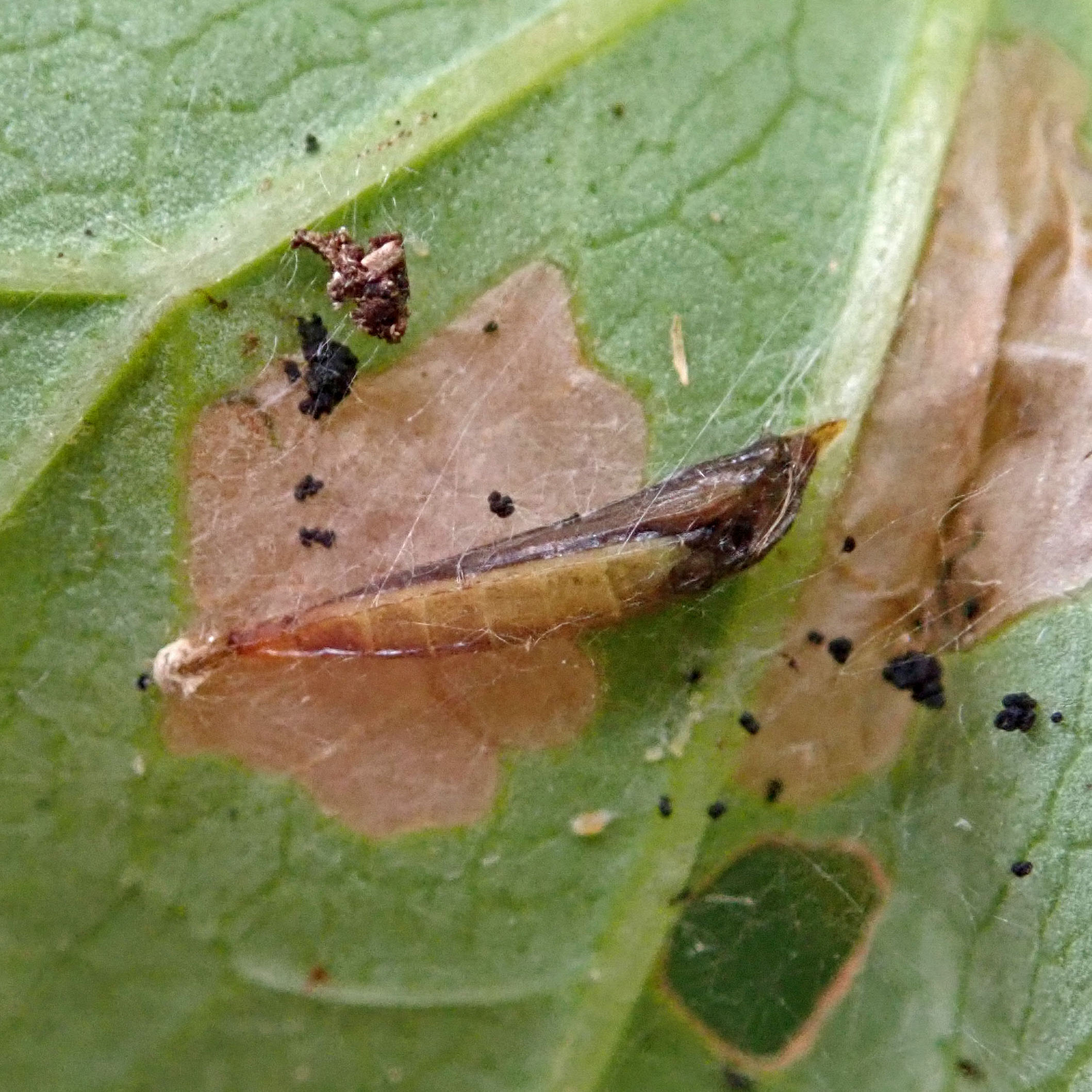
I’m particularly pleased to share this new leafminer as it’s not often that I find the signs of the mine, a larva within said mine, larvae resting outside their mines, and also a pupa, but here they are. These were found during two walks around the edge of a local recreation ground with, perhaps surprisingly, the pupa being seen on 9 August, a couple of weeks before I found the larvae (on 27 August) on plants that were a couple of hundred metres from the initial find site.

These mines are the work of the larvae of the moth Bedellia somnulentella, the adult of which is something of a ‘little brown job’, as you can see on the UK Moths website. The larval plants include both Field bindweed (as shown here) and Hedge bindweed, as well as Morning glory, and, though the mine begins as a gallery, this appears to be subsumed by the later blotch, as blotches were all I noticed.

These larvae have some interesting habits: they weave silken threads below their mines to create resting places outside their mines (an unusual habit). The threads would not be easy to spot, except for the fact that the larvae’s frass is also caught by them and so appears as scattered clumps and strings of pooh.

When they’ve finished feeding and their development is complete, the larvae exit their blotches and pupate suspended amongst their silken threads. They’re fascinating little creatures.


Like Loading...

Butterflies on Creeping thistle

07 Sunday Sep 2025

Posted by sconzani in insects

≈ Leave a comment

Tags

Butterflies on Creeping thistle, Cirsium arvense, Common blue, Common blue butterfly, Common blue on Creeping thistle, Creeping thistle, Small copper, Small copper on Creeping thistle

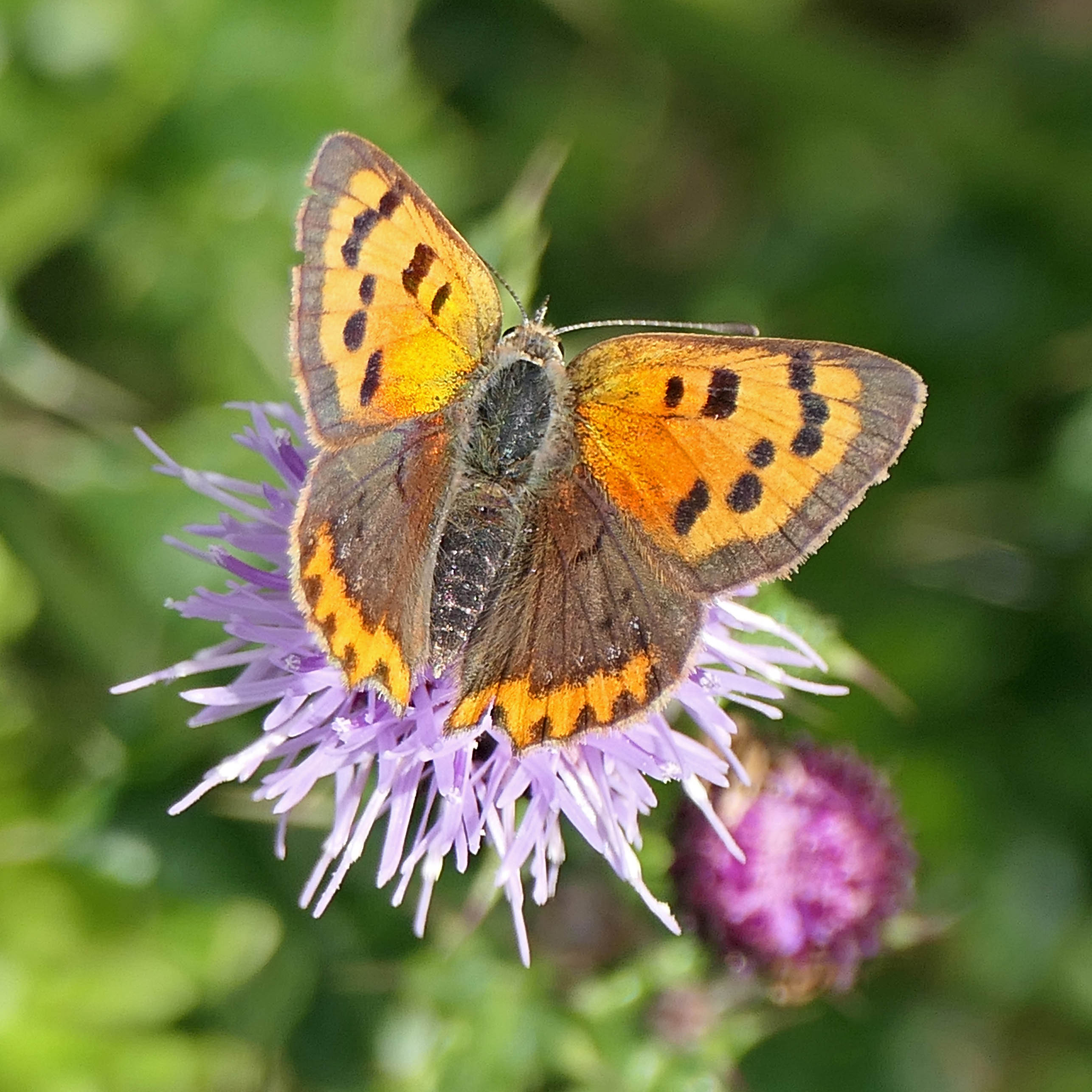
Creeping thistle (Cirsium arvense) is a much maligned plant. I understand that it can be prolific and somewhat invasive given the right growth conditions but, at this time of year, when many other wildflowers are going over and the last of the summer insects are struggling to find food, it is a gift from the gods.

This is especially true this year, following a long hot and very dry summer. Though we’ve had rain on and off this past week, the remaining wildflowers have been slow to bounce back to life – and many are past recovering.

Not so the Creeping thistle, which I have seen providing much-needed nectar to thirsty flies, beetles, and butterflies, like the Small coppers and Common blues shown here.

Like Loading...

Finally, a Grey seal

06 Saturday Sep 2025

Posted by sconzani in mammal

≈ Leave a comment

Tags

British mammals, British seals, Grey seal, Halichoerus grypus, seal, seal by Cardiff Bay Barrage, seals in Bristol Channel

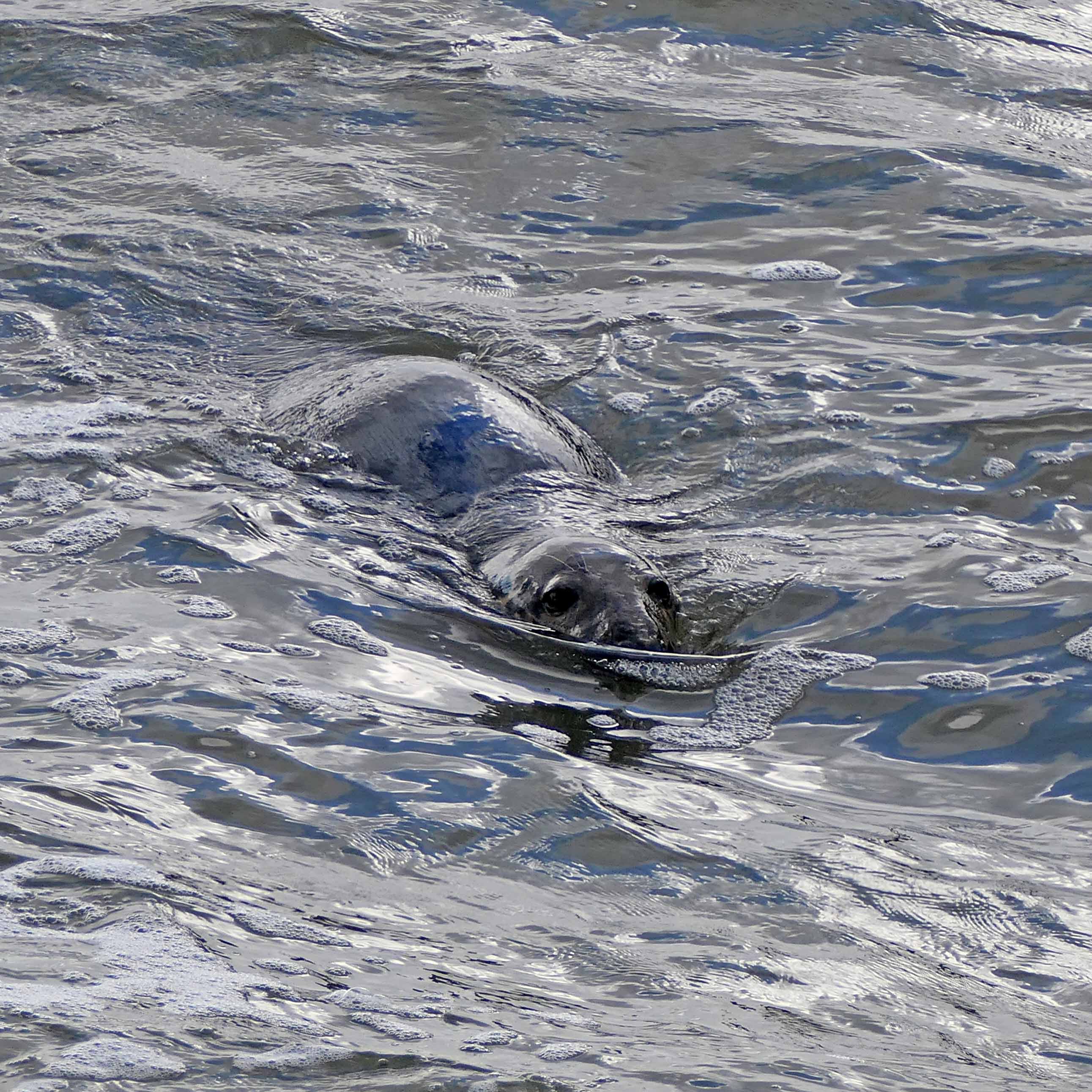
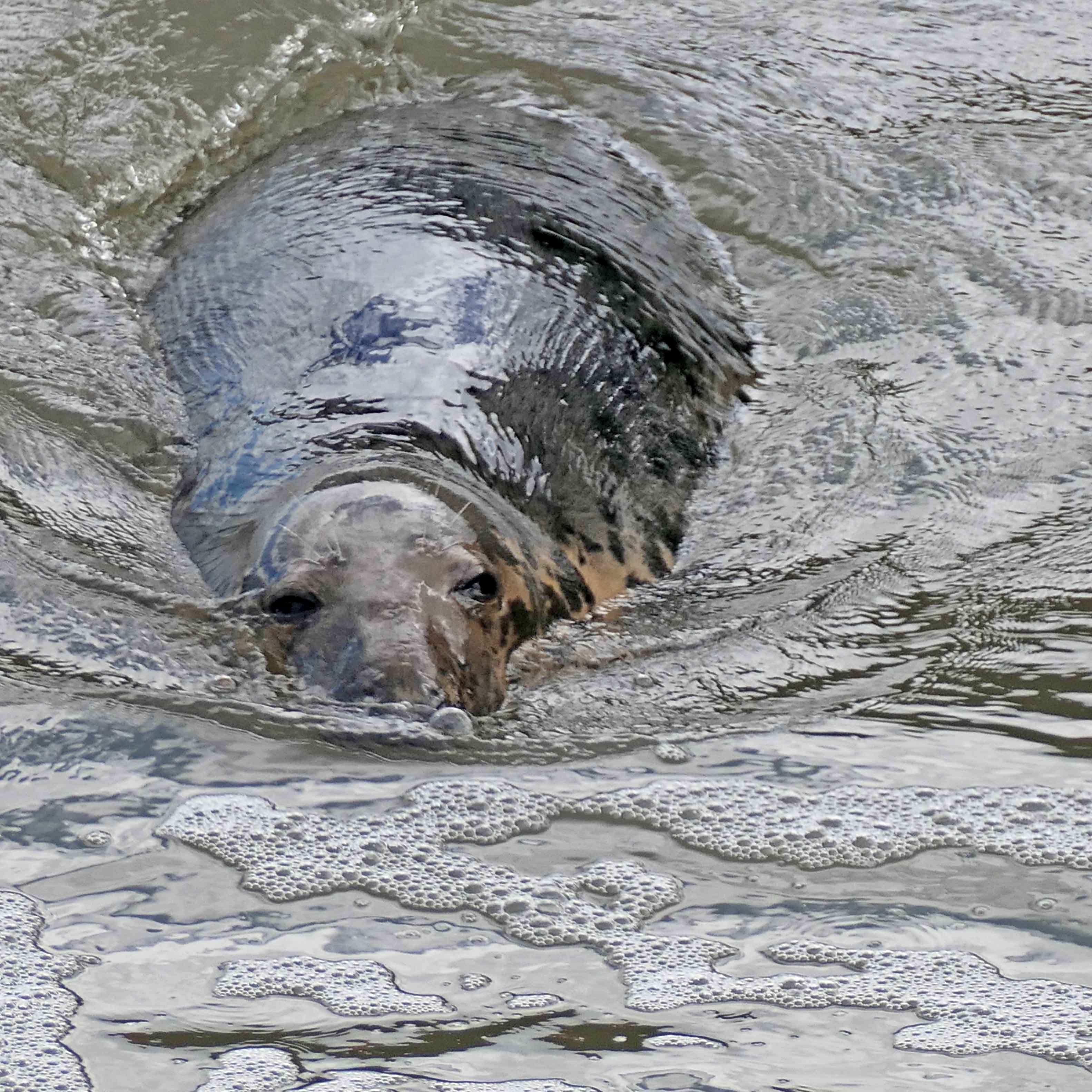
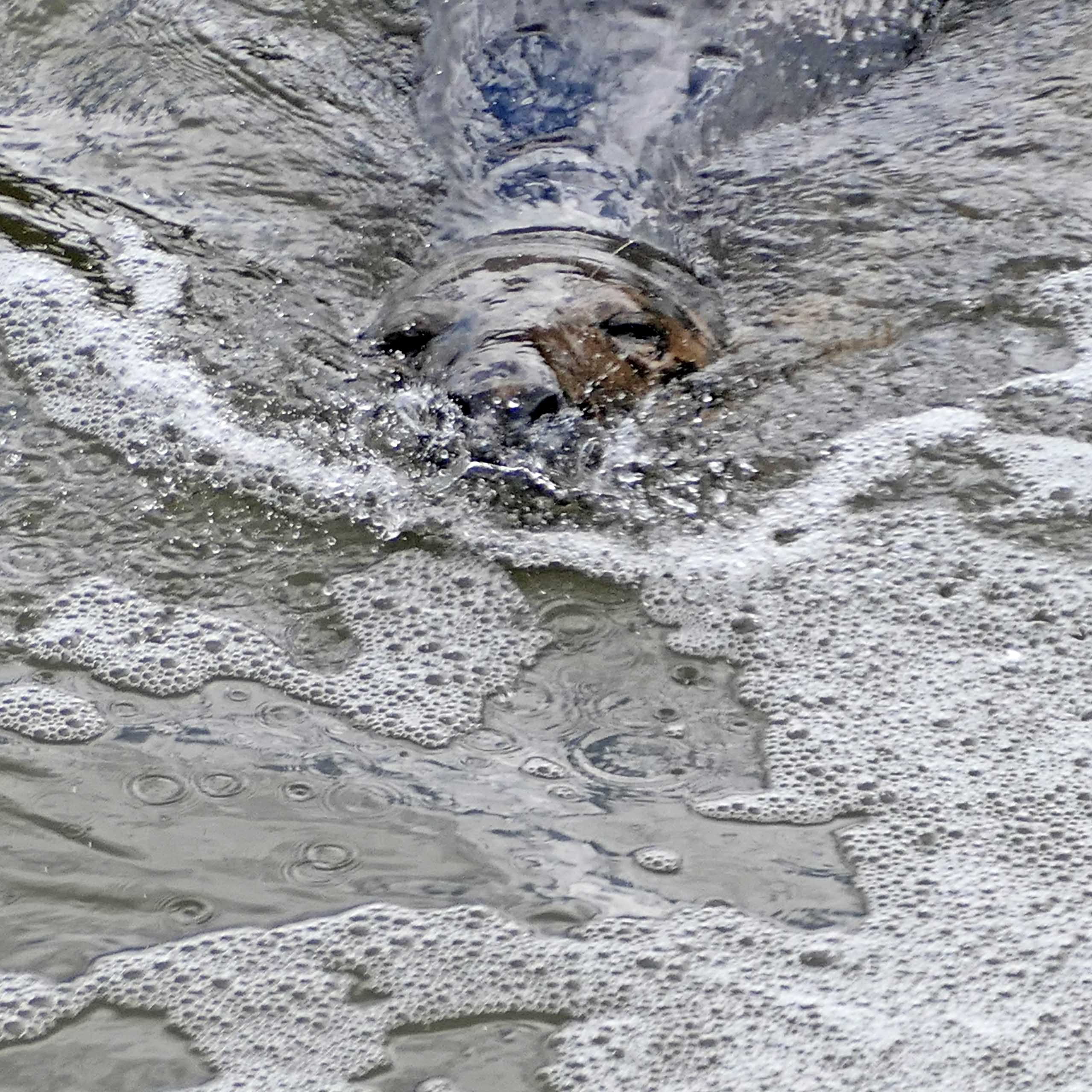
I’ve lost count of the number of times I’ve seen birding friends in my local WhatsApp group post about the seals they’ve seen while birding around the Cardiff Bay Barrage. I’ve lived in this area for 10 years and it wasn’t until the Wednesday just past that I saw my first. I’d stomped down to the Bay between squally showers to try to see the Arctic tern that had blown in – and I did see that, distantly fishing on the other side of the Bay, but I was completely mesmerised when I spotted the seal.

It was very close to the Barrage sluice gates that control the amount of water in the Bay; the gates are opened to allow water that flows in to the Bay from the rivers Taff and Ely to flow out to the Bristol Channel. The outgoing water often contains fish, hence the frequent sight of Cormorants diving near the sluices for their lunch and the occasional visit from a hungry seal.

As I don’t see them very often, I don’t know much about seals but I do know this is a Grey seal (Halichoerus grypus) and, from its large size, most likely a male/bull. There is a breeding colony of Grey seals further down the Bristol Channel on Lundy, an island owned by the National Trust. From reading the information on their website, I’ve just learned why the seal kept disappearing for long periods, when I thought it should be surfacing to breathe. It turns out they can dive for up to 20 minutes at a time when searching for fish. I didn’t see this one with a fish, though I guess it could’ve gobbled down any it caught while still underwater. It was a joy to watch, between squalls.

Like Loading...

Fungus: Ergot

05 Friday Sep 2025

Posted by sconzani in fungi

≈ Leave a comment

Tags

#FungiFriday, British fungi, dangers of ergot, ergot, ergotism, fungal pathogens, fungi on cereals

I’m sure most of you will have heard of ergot poisoning or, at the very least, some of the notable times in history when humans have felt its effects. The Salem witch trials, which took place in Massachusetts in 1692-93 and where over 200 people were accused of witchcraft and 20 were executed, are probably the most well known; the unfortunate ‘witches’ are now thought to have been suffering from a form of ergotism. Through researching this post, I’ve also learned that ‘severe ergot epidemics in France between 900 AD and 1300 AD killed between 20,000 to 50,000 people’, and that ‘Julius Caesar lost legions of soldiers to ergot poisoning during his campaigns in Gaul’. And these are just a few of the more well-known examples; ergotism has been affecting humans since our ancestors first began eating grains and cereals.

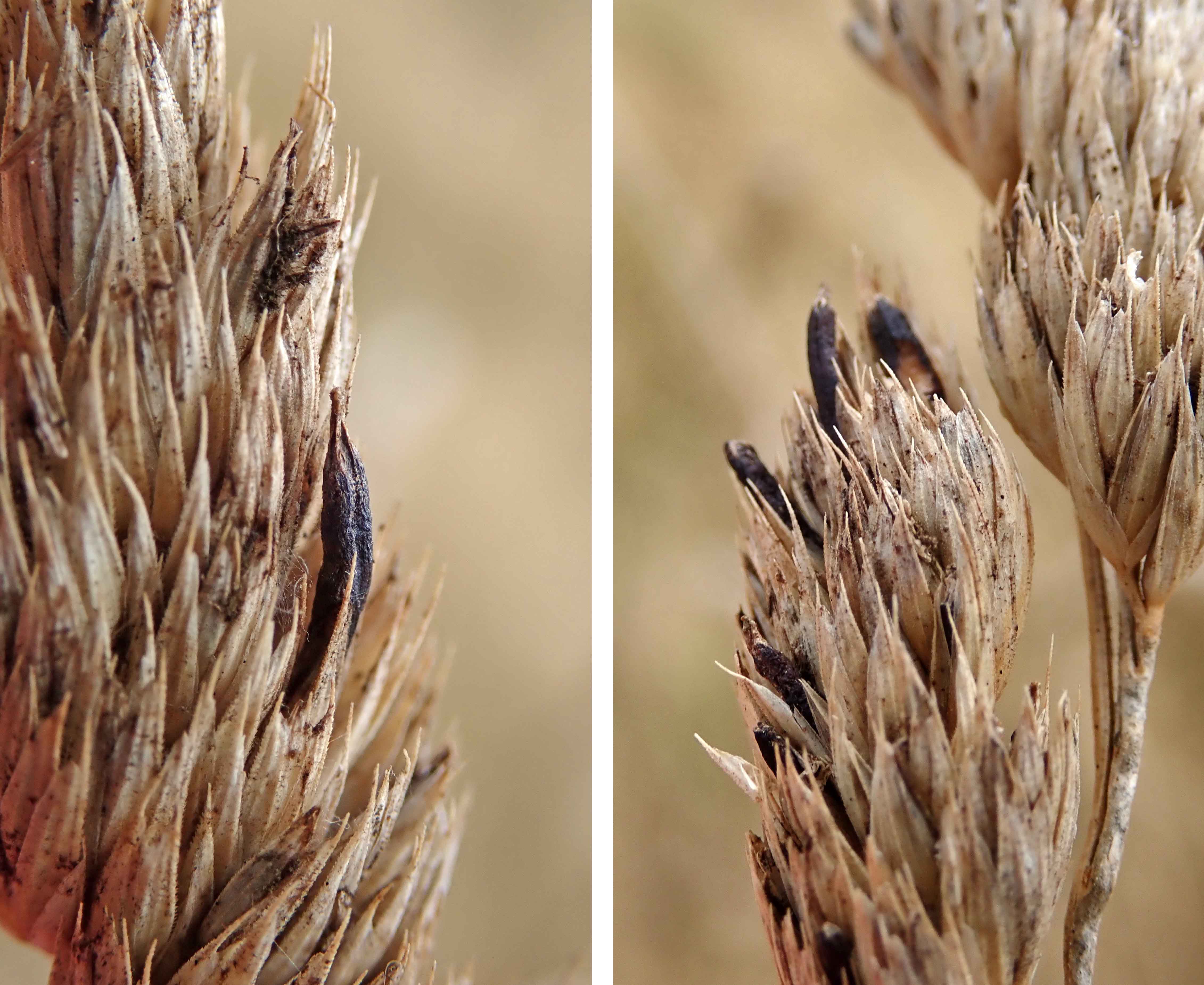
Ergot (Claviceps purpurea) is a fungal pathogen that grows on many cereal species, including wheat, rye and barley. When ingested by humans and animals, the toxins contained in the fungus cause ergotism, the effects of which can include convulsions, hallucinations, gangrenous limbs, and, in severe cases, even death. These days, cereal producers and government regulatory bodies are very much aware of the dangers of ergot, and have precautionary measures in place to reduce its presence in food and feed to an absolute minimum. This is excellent news, as 2025 seems to be a good year, in terms of climate and environmental conditions, for the growth of the ergot fungus, if my finds in local fields are anything to go by. The small dark horn-shaped masses you can see in my photos indicate that these plants are infected with ergot; the masses, which replace the grains in cereals and grasses, are called sclerotia. So, with the subject of today’s post, it’s a case of look and be fascinated but definitely don’t be tempted to consume.

Amongst many other places, you can read more about ergot on the UK website of the Agriculture and Horticulture Development Board and, in the US, on the United States Forest Service agency website.

Like Loading...

Two lacewings

04 Thursday Sep 2025

Posted by sconzani in insects

≈ Leave a comment

Tags

British lacewings, Brown lacewings, Hemerobiidae, Hemerobius humulinus, Hemerobius micans, lacewings

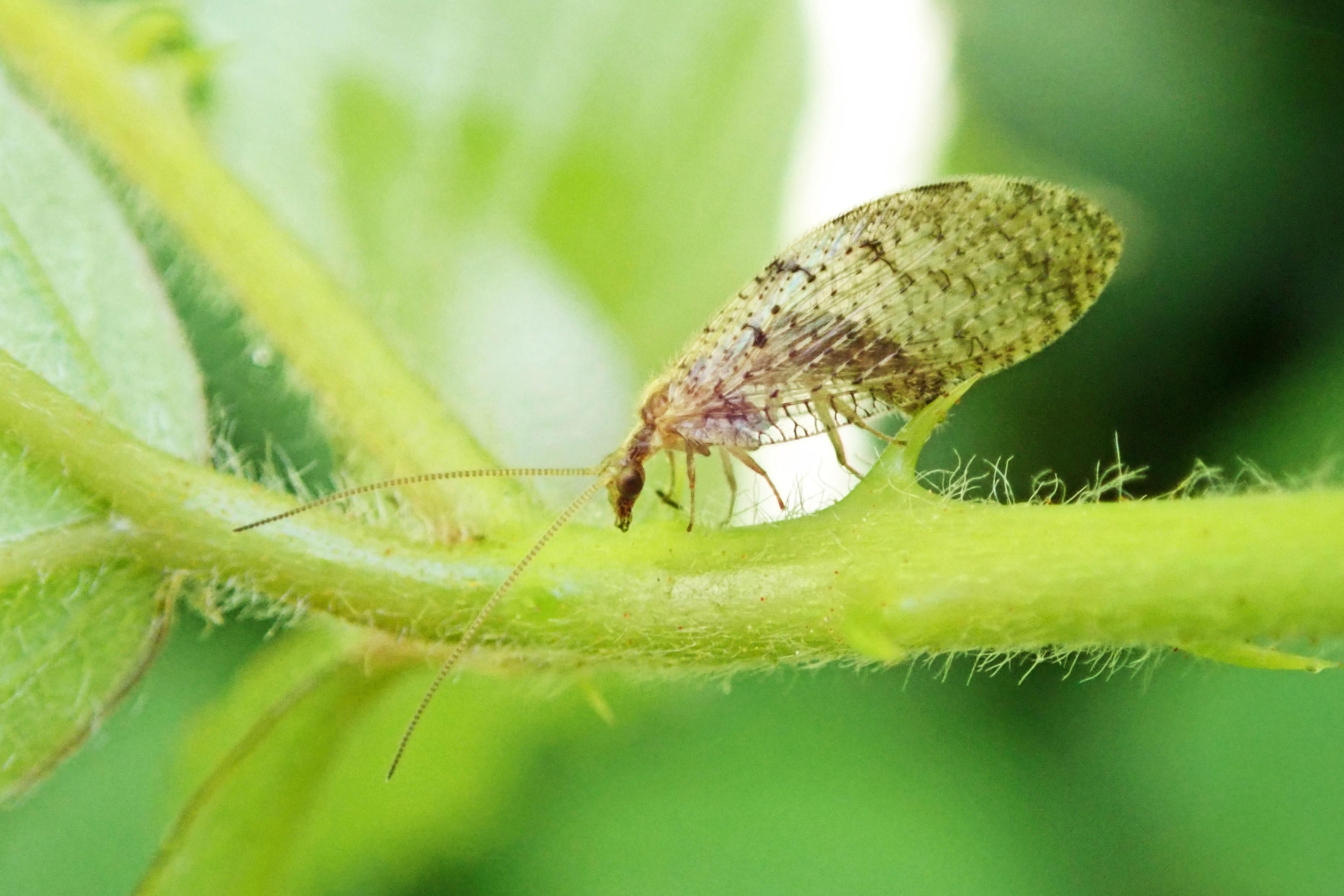
This is one of those posts where I need to add a cautionary note at the beginning: the species of these lacewings have not yet been verified. In fact, I don’t think any of my lacewing records have ever been verified, which likely means that there is no lacewing expert able to volunteer their time for this task (I must add that I am full of praise for those experts that do volunteer their time as local or national recorders/verifiers) and also that it may not be possible to definitively identify these creatures without microscopic examination. Still, they are beautiful, and I felt them worth sharing.

So, after looking closely at the markings on their wings and checking they were in habitats where they might be expected to live, I think these are both Hemerobiidae (Brown lacewing) species, and I have tentatively labelled the lacewing pictured above as Hemerobius micans. The Naturespot entry for this species states that it ‘has wings which are quite yellow in colour and which have dark dashes on some longitudinal veins, not dots as in some similar species’ and is found ‘with deciduous trees, especially mature oaks’, which is consistent with my findings for this specimen.

I am even more wary of naming this second lacewing but I wonder if it might be Hemerobius humulinus. After once again consulting the Naturespot website, I found one particular image which shows the wing venation and this appears consistent with what I can see in my photograph. Both these species were found in deciduous woodland, which also fits the species description.

Nb. I did find a Lacewings and Allies Recording Scheme website but it has thus far been populated with very little information; there is a link to a winter 2024 newsletter but many of the pages are relatively empty.

Like Loading...
← Older posts
Newer posts →

About me

sconzani

sconzani

I'm a writer and photographer; researcher and blogger; birder and nature lover; countryside rambler and city strider; volunteer and biodiversity recorder.

View Full Profile →

Follow earthstar on WordPress.com

Enter your email address to follow this blog and receive notifications of new posts by email.

Recent blog posts

  • Springtime invasives March 22, 2026
  • Singing Dunnocks March 21, 2026
  • New cat: Large yellow underwing March 20, 2026
  • Curious Coal tit March 19, 2026
  • A huddle of 7-spots March 18, 2026

From the archives

COPYRIGHT

Unless otherwise acknowledged, the text and photographs on this blog are my own and are subject to international copyright. Nothing may be downloaded or copied without my permission.

Fellow Earth Stars!

  • Unknown's avatar
  • Unknown's avatar
  • Unknown's avatar
  • Unknown's avatar
  • Unknown's avatar
  • Unknown's avatar
  • Unknown's avatar
  • Unknown's avatar
  • Unknown's avatar
  • Unknown's avatar
  • Unknown's avatar
  • Unknown's avatar
  • Unknown's avatar
  • Unknown's avatar
  • Unknown's avatar
  • Unknown's avatar
  • Unknown's avatar
  • Unknown's avatar
  • Unknown's avatar
  • Unknown's avatar
  • Unknown's avatar
  • Unknown's avatar
  • Unknown's avatar
  • Unknown's avatar
  • Unknown's avatar
  • Unknown's avatar
  • Unknown's avatar
  • Unknown's avatar
  • Unknown's avatar
  • Unknown's avatar
  • Unknown's avatar
  • Unknown's avatar
  • Unknown's avatar
  • Unknown's avatar
  • Unknown's avatar
  • Unknown's avatar
  • Unknown's avatar
  • Unknown's avatar
  • Unknown's avatar
  • Unknown's avatar
  • Unknown's avatar
  • Unknown's avatar
  • Unknown's avatar
  • Unknown's avatar
  • Unknown's avatar
  • Unknown's avatar
  • Unknown's avatar
  • Unknown's avatar
  • Unknown's avatar
  • Unknown's avatar

Blog at WordPress.com.

Privacy & Cookies: This site uses cookies. By continuing to use this website, you agree to their use.
To find out more, including how to control cookies, see here: Cookie Policy
  • Subscribe Subscribed
    • earthstar
    • Join 668 other subscribers
    • Already have a WordPress.com account? Log in now.
    • earthstar
    • Subscribe Subscribed
    • Sign up
    • Log in
    • Report this content
    • View site in Reader
    • Manage subscriptions
    • Collapse this bar
 

Loading Comments...
 

You must be logged in to post a comment.

    %d