• ABOUT
  • BIRDING 2018
  • Birding 2019
  • BLOG POSTS
  • Butterflies 2018
  • Resources

earthstar

~ a celebration of nature

earthstar

Author Archives: sconzani

Black mummies

19 Thursday Oct 2023

Posted by sconzani in insects

≈ Leave a comment

Tags

Aphelinus species, aphid, aphid mummies, aphid parasitised by wasp, British aphids, Drepanosiphum platanoidis, parasitic wasp, parasitised aphids

Unless I find something particularly noteworthy, this might be my last venture into the confusing world of aphids and their parasites, at least for the winter months. You might remember my post about Aphid mummies on 26 September. Well, the tiny creature pictured below is also an aphid mummy and, thanks to my local expert, I can identify this as a nymph of the aphid Drepanosiphum platanoidis that has been parasitised by one of the Aphelinus species of parasitic wasps. Within its now-blackened body, a wasp larva has been eating its host, will pupate and eventually emerge as an adult wasp. (Perhaps I should have saved this post until 31 October as it has something of the Halloween / zombie / walking dead feel to it.)

Like Loading...

First Shovelers

18 Wednesday Oct 2023

Posted by sconzani in birds

≈ Leave a comment

Tags

birding, birdwatching, British birds, Roath Park Lake, shoveler

We usually see the odd Shoveler or two at Cosmeston Lakes Country Park but none have turned up so far in 2023 so on Monday I took myself off on the train for a meander around the watery areas of north Cardiff. First, a circuit of the newly reopened Llanishen and Lisvane Reservoirs turned up distant views of a Ring-necked duck and a Goldeneye, then I stomped down through Nant Fawr woodland for a circuit of Roath Park Lake where there were at least six Shovelers.

231018 shoveler (1)

Some were hiding between the islands so I could only see them through binoculars but three were more obliging, nearer the lake’s edge on the eastern side. They rarely kept still enough for photos though, constantly employing their shovel-shaped bills to sieve small pieces of plant material and insects from the water’s surface. It was a pleasure to watch them, and I went home happy with my Shoveler fix!

231018 shoveler (2)

Like Loading...

Galls: Rabdophaga rosaria

17 Tuesday Oct 2023

Posted by sconzani in insects, trees

≈ Leave a comment

Tags

gall midges, gall-causing midges, galls, galls made by midges, galls on willow, Rabdophaga rosaria, Rabdophaga strobilina / rosaria agg, willow species

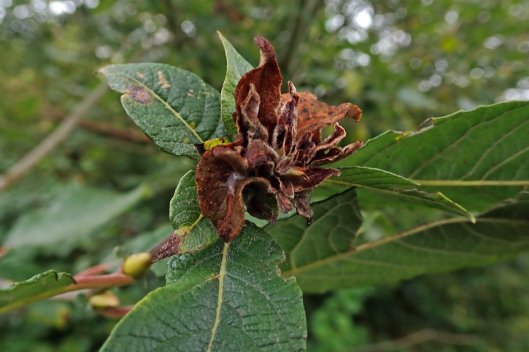
Although I’ve named this blog post Rabdophaga rosaria, it is apparently difficult to be specific as to which exact species has caused galls like the one pictured below, so finds are recorded as Rabdophaga strobilina / rosaria agg. The gall causer is a midge, of the family Cecidomyiidae, of which there are more than 600 species in Britain. All are tiny, less than 5mm in length, and it is their larvae that cause the plants they inhabit to form galls. In this instance, the galls are formed in the buds of willow species.

231017 Rabdophaga rosaria

Like Loading...

Leafmines: Agromyza alnivora

16 Monday Oct 2023

Posted by sconzani in insects, leaves, trees

≈ Leave a comment

Tags

Agromyza alnivora, Alder, British leafminers, fly mines, leaf-mining fly larvae, leafmines, leafmines on Alder

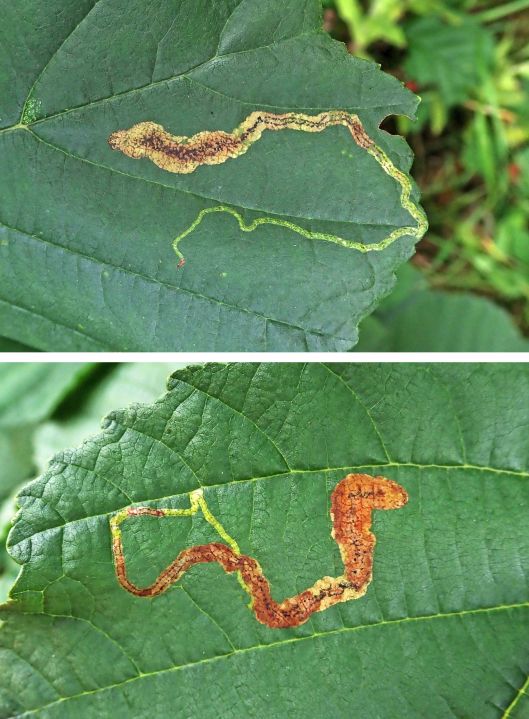
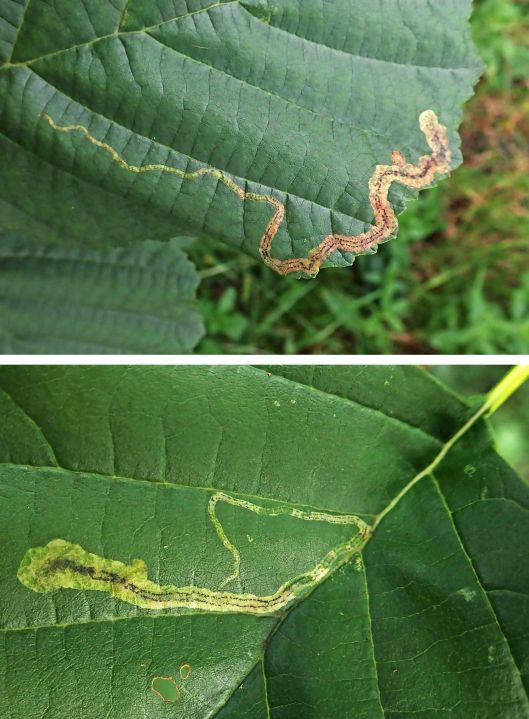
These are new leafmines for me, found during time recently spent checking the leaves of Alder trees, both the more frequently seen Alder (Alnus glutinosa) and the Italian alder (Alnus cordata), a common planting here along street edges and in parks. To me, these mines all look very snake-like!

231016 Agromyza alnivora (1)

These are the work of larvae of the fly species Agromyza alnivora. As the British Leafminers website describes, they create ‘An upper surface corridor, gradually widening, which is not associated with leaf margin or veins’, but the most distinctive feature of these mines is the frass, which is always deposited in two rows. The larvae make their mines twice each year – the technical term is bivoltine – in summer and in early autumn.

231016 Agromyza alnivora (2)

Like Loading...

Small white on purple

15 Sunday Oct 2023

Posted by sconzani in insects, wildflowers

≈ 2 Comments

Tags

British butterflies, British wildflowers, butterfly, Common knapweed, purple flower, Small white, Small white butterfly

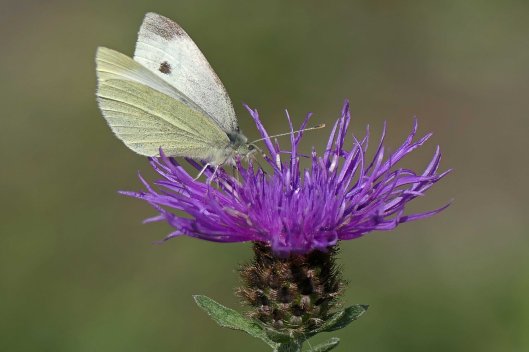
I had something different planned for today but ‘the best laid plans’ and all that. So, here is the first scene that greeted when I arrived at the local country park this chilly autumn morning, a lovely little Small white butterfly sipping from a pretty purple Common knapweed flower.

Like Loading...

Redwings come rolling in

14 Saturday Oct 2023

Posted by sconzani in autumn, birds

≈ Leave a comment

Tags

autumn migration, birding, birdwatching, British birds, migrating birds, Redwing, winter thrushes

A week or so earlier than in recent years, the winter thrushes came rolling in, in small flocks and large, across the North Sea from northern Europe, to spend their winter months with us here in the British isles. Have you seen them? Here in south Wales, these first flocks tend to fly on through, south and west, and ‘our’ birds are either later arrivals or those earlier flocks coming back after eating up all the berries where they first alight. I’ve seen small numbers so far but I’m looking forward to getting closer views, of both the beautiful Redwings and the stunning Fieldfares, once they settle locally. (This photo is from a previous year.)

231014 redwing

Like Loading...

A Vapourer cocoon

13 Friday Oct 2023

Posted by sconzani in insects

≈ Leave a comment

Tags

British moths, moth cocoon, Orgyia antiqua, Vapourer, Vapourer cocoon, Vapourer larva

Here’s an intriguing find I made when doing a little leaf-turning during yesterday’s rather damp local meander – a hairy cocoon on willow.

231013 vapourer cocoon

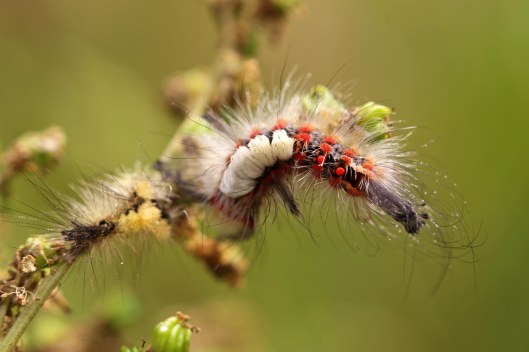
From looking at the yellow and black hairs contained within the silk, I thought perhaps this might have been created by a Pale tussock moth. Fortunately, Andy, one of the moth-ers I follow on Twitter, recognised this cocoon and was able to correct my identification. This was, in fact, created by a Vapourer moth larva (Orgyia antiqua) – below is one I photographed a few years back (it had just shed its skin, the remnants of which can be seen to the left of the caterpillar).

231013 vapourer larva

I’ve not yet seen an adult Vapourer but they are a particularly interesting species, as the female is virtually wingless – you can read more and see some images on the UK Moths website. Andy also introduced me to the Lepiform e.V. website, which, though it is in German, can still be searched using a moth’s scientific name and has an excellent and comprehensive range of images for each species, including larval stages, cocoons, pupae, etc.

Like Loading...

A Jay and its acorn

12 Thursday Oct 2023

Posted by sconzani in autumn, birds, trees

≈ 2 Comments

Tags

birding, birdwatching, British birds, Jay, Jay and acorn, Oak

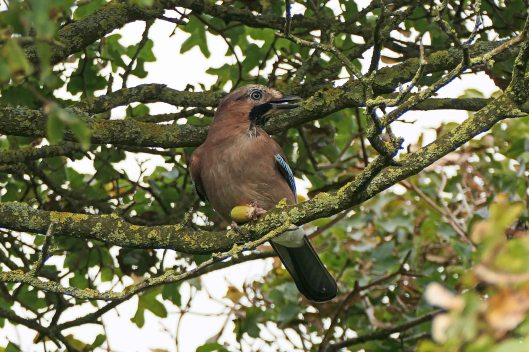
This morning I spent a lovely half hour watching two Jays flying back and forth from Oak trees to their nut-stashing places, secreting away plenty of goodies to tide them over the winter months.

231012 jay (1)

But, apparently, this particular acorn was so good it had to be eaten immediately.

231012 jay (2)

Like Loading...

The rabbit finds a way

11 Wednesday Oct 2023

Posted by sconzani in animals, mammal

≈ 2 Comments

Tags

British mammals, European rabbit, rabbit, rabbit on Cardiff Bay Barrage, rabbits in Cardiff

I don’t know how they’ve managed it but there are rabbits living next to the port just off the Barrage in Cardiff Bay. Don’t get me wrong – I really enjoy seeing them, especially this little cutie, and their numbers seem to have increased this year.

What intrigues me how on earth they got there. I’ve marked the area they inhabit in red on the map below. I can’t think of anywhere on that map where rabbits are currently living that could be the origin of the Barrage bunnies. It’s a mystery!

Like Loading...

A confusion of pie crusts

10 Tuesday Oct 2023

Posted by sconzani in insects

≈ Leave a comment

Tags

aphids parasitised by wasps, Drepanosiphum platanoidis, Drepanosiphum platanoidis parasitised by Dyscritulus planiceps, Dyscritulus planiceps, parasitic wasp, parasitised aphids, Praon flavinode, Tuberculatus parasitised by Praon flavinode, Tuberculatus species

You can tell I’m no baker – I got my pie crusts confused, what should’ve been puff pastry was really a pizza base. And now you’re confused … let me explain.

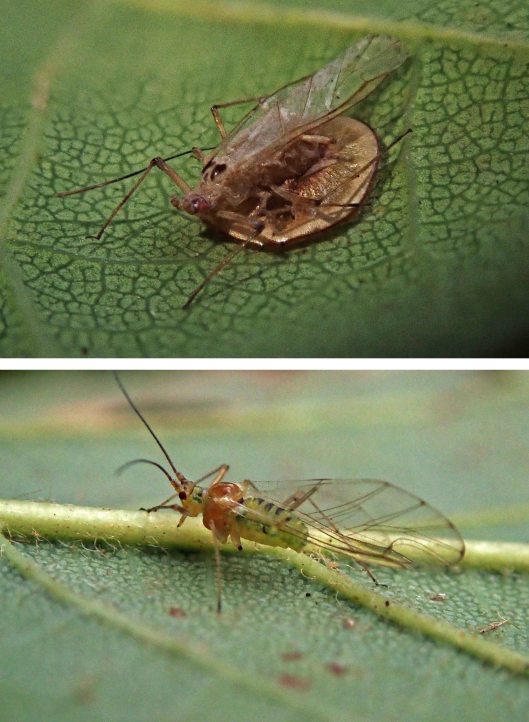
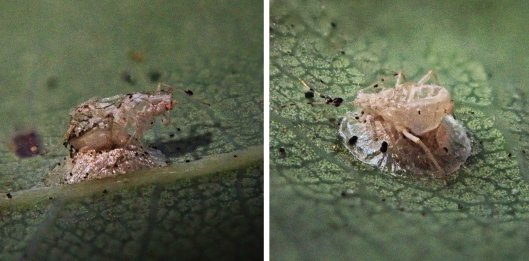
Back on 19 September, I wrote about A parasitised aphid, and said that ‘The Praon genus of parasitic wasps are the only ones that create this disc-shaped attachment beneath their host’. That was wrong (and I’ve now edited that post). The Praon wasps are actually responsible for an attachment beneath their host that looks more like puff pastry. Here are examples of the two types of pie crust.

231010 Drepanosiphum platanoidis parasitised by Dyscritulus planiceps and live

First, the pizza base. The first photo above shows the aphid Drepanosiphum platanoidis, which has been parasitised by the wasp Dyscritulus planiceps. The second photo, just for comparison, shows the same species of aphid when alive.

231010 Tuberculatus parasitised by Praon flavinode

Second, the puff pastry. And these two are both Tuberculatus species of aphids that have been parasitised by Praon wasps, most likely Praon flavinode (the local expert I’ve now made contact with tells me ‘There are quite a few species of Praon/Praini but flavinode will almost certainly be the species involved with Tuberculatus on oak’). What was that I said about ‘standing at the top of a very slippery slope, at the bottom of which is a chasm filled with aphids and their parasites!’ (Aphid mummies, 26 September)? Always learning!

Like Loading...
← Older posts
Newer posts →

About me

sconzani

sconzani

I'm a writer and photographer; researcher and blogger; birder and nature lover; countryside rambler and city strider; volunteer and biodiversity recorder.

View Full Profile →

Follow earthstar on WordPress.com

Enter your email address to follow this blog and receive notifications of new posts by email.

Recent blog posts

  • Gorse and its weevil April 5, 2026
  • Chiffchaffs chiffchaffing April 4, 2026
  • Bearded tit!!! April 3, 2026
  • A Portland Bill Kestrel April 2, 2026
  • A proliferation of Peacocks April 1, 2026

From the archives

COPYRIGHT

Unless otherwise acknowledged, the text and photographs on this blog are my own and are subject to international copyright. Nothing may be downloaded or copied without my permission.

Fellow Earth Stars!

  • Unknown's avatar
  • Unknown's avatar
  • Unknown's avatar
  • Unknown's avatar
  • Unknown's avatar
  • Unknown's avatar
  • Unknown's avatar
  • Unknown's avatar
  • Unknown's avatar
  • Unknown's avatar
  • Unknown's avatar
  • Unknown's avatar
  • Unknown's avatar
  • Unknown's avatar
  • Unknown's avatar
  • Unknown's avatar
  • Unknown's avatar
  • Unknown's avatar
  • Unknown's avatar
  • Unknown's avatar
  • Unknown's avatar
  • Unknown's avatar
  • Unknown's avatar
  • Unknown's avatar
  • Unknown's avatar
  • Unknown's avatar
  • Unknown's avatar
  • Unknown's avatar
  • Unknown's avatar
  • Unknown's avatar
  • Unknown's avatar
  • Unknown's avatar
  • Unknown's avatar
  • Unknown's avatar
  • Unknown's avatar
  • Unknown's avatar
  • Unknown's avatar
  • Unknown's avatar
  • Unknown's avatar
  • Unknown's avatar
  • Unknown's avatar
  • Unknown's avatar
  • Unknown's avatar
  • Unknown's avatar
  • Unknown's avatar
  • Unknown's avatar
  • Unknown's avatar
  • Unknown's avatar
  • Unknown's avatar
  • Unknown's avatar

Blog at WordPress.com.

Privacy & Cookies: This site uses cookies. By continuing to use this website, you agree to their use.
To find out more, including how to control cookies, see here: Cookie Policy
  • Subscribe Subscribed
    • earthstar
    • Join 642 other subscribers
    • Already have a WordPress.com account? Log in now.
    • earthstar
    • Subscribe Subscribed
    • Sign up
    • Log in
    • Report this content
    • View site in Reader
    • Manage subscriptions
    • Collapse this bar
 

Loading Comments...
 

You must be logged in to post a comment.

    %d