• ABOUT
  • BIRDING 2018
  • Birding 2019
  • BLOG POSTS
  • Butterflies 2018
  • Resources

earthstar

~ a celebration of nature

earthstar

Category Archives: flowers

251/365 Sericomyia silentis

08 Sunday Sep 2019

Posted by sconzani in 365DaysWildin2019, flowers, insects, nature, wildflowers

≈ 2 Comments

Tags

#365DaysWild, Bog hoverfly, British hoverflies, Devil's-bit scabious, hoverfly, Lavernock Nature Reserve, pink scabious, Sericomyia silentis

It looks a bit like a wasp but this black-and-yellow-striped minibeastie is a hoverfly with the rather tongue-twisting name Sericomyia silentis. Perhaps Bog hoverfly would be easier but, in my opinion, its common name doesn’t do this little beauty justice.

190908 sericomyia silentis (1)

I spent a couple of hours today at Lavernock Nature Reserve, where the Devil’s-bit scabious is looking simply stunning and is attracting myriads of insects. I took lots of butterfly photos but thought to post one of the other little critters today. The Devil’s-bit is usually a lilac colour but some at Lavernock are this subtle shade of pink instead. Its nectar obviously tastes just as good!

190908 sericomyia silentis (2)
190908 sericomyia silentis (4)
190908 sericomyia silentis (5)
190908 sericomyia silentis (6)
Like Loading...

246/365 On the scabious

03 Tuesday Sep 2019

Posted by sconzani in 365DaysWildin2019, autumn, flowers, insects, nature, wildflowers

≈ 4 Comments

Tags

bees, Devil's-bit scabious, hoverflies, insects on scabious, Painted Lady, scabious, Small white butterfly

190903 devil's-bit scabious (1)

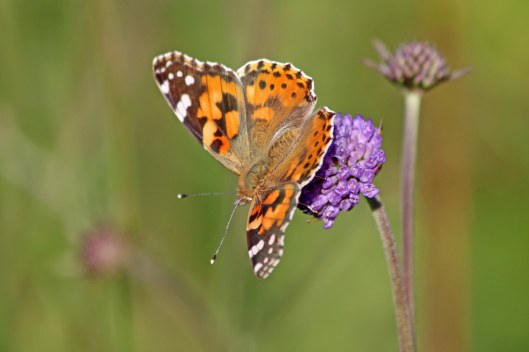
At this time of year, the delicate lilac tinge of Devil’s-bit scabious casts its imperial purple shadow across the meadows at Cosmeston and at Lavernock. I love it, and I’m not the only one.

190903 devil's-bit scabious (7)

It’s proving extremely popular as a late-summer early-autumn source of nectar for all manner of bees, butterflies and hoverflies. Here are a few I’ve seen in recent days …

This slideshow requires JavaScript.

Like Loading...

244/365 Autumn lady’s-tresses

01 Sunday Sep 2019

Posted by sconzani in 365DaysWildin2019, autumn, flowers, nature, seasons, wildflowers

≈ 8 Comments

Tags

#365DaysWild, Autumn Lady’s-tresses, British orchids, British wildflowers, Cosmeston, Cosmeston Lakes Country Park, orchids, Spiranthes spiralis

Happy (calendar) Autumn!

190901 autumn lady's-tresses (1)

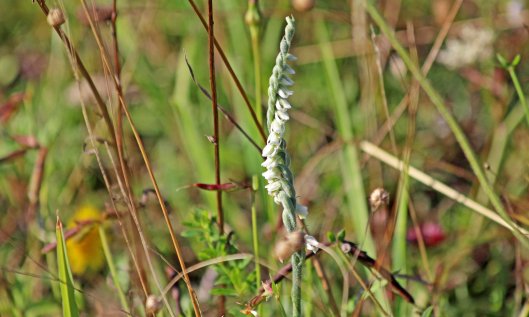
Today’s plant couldn’t be more appropriate – these are Autumn lady’s-tresses (Spiranthes spiralis). True to their name, they usually appear when the weather turns more autumnal, and their twirling spiral form apparently reminded their original namer of the ringlets once popular in women’s hairstyles.

190901 autumn lady's-tresses (4)
190901 autumn lady's-tresses (5)

Though they like to grow in very short turf, Autumn lady’s-tresses are themselves quite small and, surrounded as these were by other wildflowers, especially the superficially similar Eyebright, they weren’t easy to spot.

190901 autumn lady's-tresses (2)
190901 autumn lady's-tresses (3)

Luckily for me, when I was having an early wander around Cosmeston this morning, I bumped into a friend of a friend, who is extremely knowledgeable about the local flora, and he very kindly showed me where these gorgeous little orchids were growing.

190901 autumn ladies tresses (6)

Like Loading...

229/365 Field scabious

17 Saturday Aug 2019

Posted by sconzani in flowers, nature, wildflowers

≈ 4 Comments

Tags

British wildflowers, Cosmeston Lakes Country Park, Field scabious, Knautia arvensis, scabious, wildflowers

190817 field scabious

Most of the scabious I see in local parks and reserves is Devil’s-bit but there is a small area of Field scabious (Knautia arvensis) at Cosmeston Lakes Country Park. The insects love it for its nectar and the birds, in autumn, for its seeds. Can you see what’s lurking on the stem?

Like Loading...

227/365 Teasel

15 Thursday Aug 2019

Posted by sconzani in flowers, nature, plants, wildflowers

≈ 3 Comments

Tags

British wildflowers, Dipsacus fullonum, lilac flowers, Teasel

190815 teasel

One of my favourite plants, the Teasel (Dipsacus fullonum) looks fabulous whether wreathed with its tiny lilac flowers, which insects of all kinds find delicious, or bare and dry and oh-so-sculptural during the winter months.

Like Loading...

225/365 Carline thistle

13 Tuesday Aug 2019

Posted by sconzani in flowers, nature, wildflowers

≈ Leave a comment

Tags

British wildflowers, Carlina vulgaris, Carline thistle, thistle

190813 carline thistle

The Carline thistle (Carlina vulgaris): in the summer months it looks like an everlasting flower; in the autumn it glistens silver and gold.

Like Loading...

219/365 High on Hemp agrimony

07 Wednesday Aug 2019

Posted by sconzani in 365DaysWildin2019, flowers, insects, nature, wildflowers

≈ 4 Comments

Tags

British wildflowers, Dingy footman, Gatekeeper, Hemp agrimony, Painted Lady, Red Admiral, Ringlet, Six-spot burnet, Speckled wood, Willow beauty moth

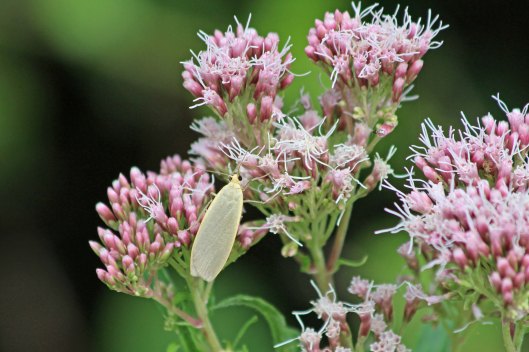
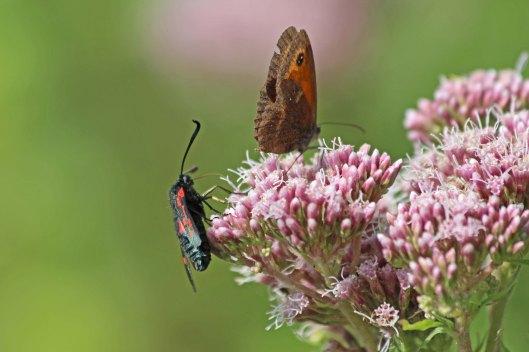
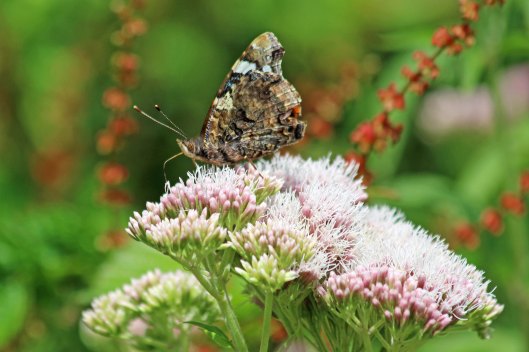
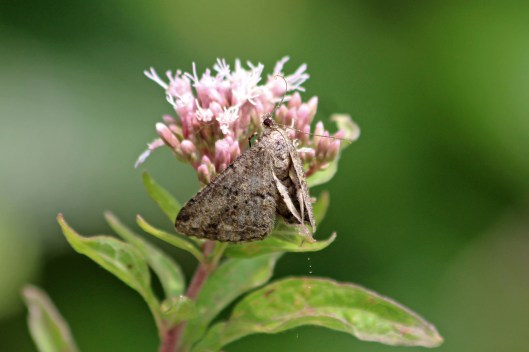
I’ve been spending a lot of time over the past couple of weeks staring at Hemp agrimony flowers. I’ve not yet found what I’ve been searching for – you’ll be the first to know when/if I do – but, in the meantime, here are just a few of the lovely creatures I’ve spotted nectaring on these pretty flowers: a Dingy footman moth, a Six-spot burnet moth and a Gatekeeper, a Painted lady, a Red admiral, a Ringlet, a Speckled wood and what might be a Willow beauty moth, but the jury’s still out on that one.

190807 dingy footman190807 gatekeeper 6-spot burnet190807 painted lady190807 red admiral190807 ringlet190807 speckled wood190807 willow beauty maybe

Like Loading...

212/365 The pollinators

31 Wednesday Jul 2019

Posted by sconzani in 365DaysWildin2019, flowers, insects, nature, wildflowers

≈ 2 Comments

Tags

British insects, insect pollinators, insects, insects on umbellifers, pollination, umbellifers

190731 pollinators

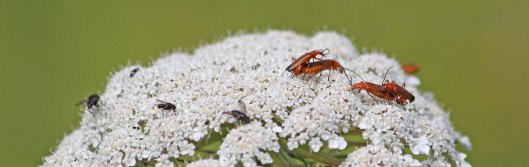
It seems unbelievable to me that some people still think that bees – in particular, honey bees, which are essentially a farmed species – are the only insects that pollinate flowers. You have only to look at a particular type of flower – in this case, umbellifers – to see the wide range of insects that visit and feed on them. And each of these little creatures gets covered in pollen while feeding so, when they fly on to the next flower, they are automatically contributing to flower pollination.

190731 pollinators (1)
190731 pollinators (2)
190731 pollinators (3)
190731 pollinators (4)
190731 pollinators (5)
190731 pollinators (6)
190731 pollinators (7)
190731 pollinators (8)
190731 pollinators (9)
190731 pollinators (10)
190731 pollinators (11)
190731 pollinators (12)
190731 pollinators (13)
190731 pollinators (14)
190731 pollinators (15)
190731 pollinators (16)
190731 pollinators (17)
190731 pollinators (18)
Like Loading...

209/365 Broad-leaved helleborines

28 Sunday Jul 2019

Posted by sconzani in 365DaysWildin2019, flowers, nature, wildflowers

≈ 6 Comments

Tags

British orchids, Broad-leaved helleborine, Grangemoor Park, native orchids

I almost left it too late!

190728 broad-leaved helleborines (1)

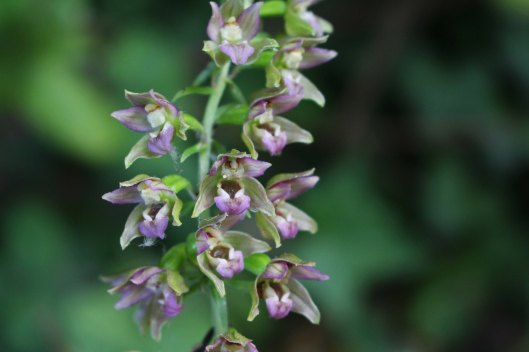
I’ve been keeping an eye on these Broad-leaved helleborines for over a month now: at my first visit, the flowers scarcely showed a tinge of red; at my second visit, on 14 July, a couple were in bloom but most still to open; and this morning, many of them had already started to go over.

190728 broad-leaved helleborines (5)
190728 broad-leaved helleborines (6)
190728 broad-leaved helleborines (7)

And, as today was quite windy, my photos are not very sharp so I’ve added in a couple from two weeks ago.

190728 broad-leaved helleborines (2)

Hey ho, at least I managed to see them in all their beauty before they disappear for another year.

190728 broad-leaved helleborines (3)
190728 broad-leaved helleborines (4)
Like Loading...

195/365 Imperial colours

14 Sunday Jul 2019

Posted by sconzani in 365DaysWildin2019, flowers, nature, wildflowers

≈ 2 Comments

Tags

British wildflowers, Dyer’s greenweed, imperial colours, Marsh woundwort, purple wildflowers, Rosebay willowherb, Yellow loosestrife, yellow wildflowers

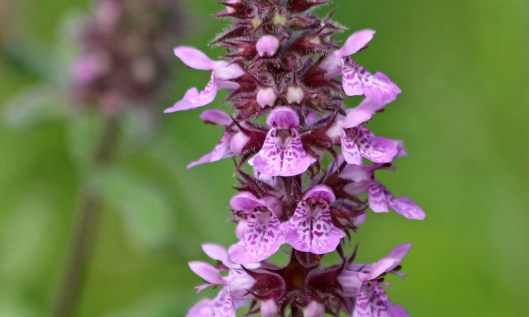
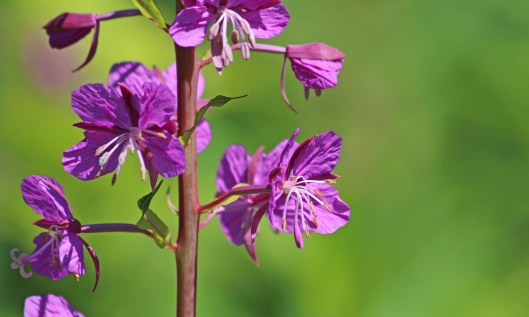
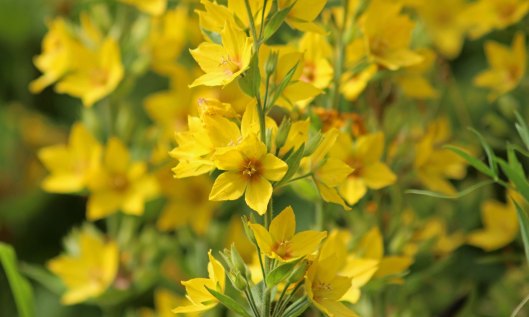
It occurs to me when looking at recent flower photos I’ve taken that the wildflowers currently in bloom have a very imperial look to them: masses of purple, the colour favoured by the emperors of Rome, and swathes of yellow, the colour that dominated the imperial wardrobe in China.

190714 1 marsh woundwort

Marsh woundwort (Stachys palustris), found growing in the wildflower meadows in Cardiff’s Hailey Park this week; once regarded as the most effective of the wound-healing woundwort family.

190714 dyers greenweed

Dyer’s greenweed (Genista tinctoria), plentiful at Lavernock Nature Reserve; also found in archaeological remains left by Vikings in York, proving its use as a yellow dye since at least the 9th century.

190714 rosebay willowherb

Rosebay willowherb (Chamerion angustifolium), firing up the conservation areas at Cathays Cemetery; nicknamed ‘bombweed’ during World War II when it grew in the London ruins created by German bombing raids.

190714 yellow loosestrife

Yellow loosestrife (Lysimachia vulgaris), ablaze beside the River Taff in Cardiff; named in honour of Macedonian King Lysimachus who supposedly fed it to his cattle to calm them, hence lose + strife!

The interesting snippets about these plants were mostly extracted from my Flora Britannica.

Like Loading...
← Older posts
Newer posts →

About me

sconzani

sconzani

I'm a writer and photographer; researcher and blogger; birder and nature lover; countryside rambler and city strider; volunteer and biodiversity recorder.

View Full Profile →

Follow earthstar on WordPress.com

Enter your email address to follow this blog and receive notifications of new posts by email.

Recent blog posts

  • My first Holly blue April 10, 2026
  • Alder flies April 9, 2026
  • Lily beetle April 8, 2026
  • First bee-flies April 7, 2026
  • Bloody-nosed beetle April 6, 2026

From the archives

COPYRIGHT

Unless otherwise acknowledged, the text and photographs on this blog are my own and are subject to international copyright. Nothing may be downloaded or copied without my permission.

Fellow Earth Stars!

  • Unknown's avatar
  • Unknown's avatar
  • Unknown's avatar
  • Unknown's avatar
  • Unknown's avatar
  • Unknown's avatar
  • Unknown's avatar
  • Unknown's avatar
  • Unknown's avatar
  • Unknown's avatar
  • Unknown's avatar
  • Unknown's avatar
  • Unknown's avatar
  • Unknown's avatar
  • Unknown's avatar
  • Unknown's avatar
  • Unknown's avatar
  • Unknown's avatar
  • Unknown's avatar
  • Unknown's avatar
  • Unknown's avatar
  • Unknown's avatar
  • Unknown's avatar
  • Unknown's avatar
  • Unknown's avatar
  • Unknown's avatar
  • Unknown's avatar
  • Unknown's avatar
  • Unknown's avatar
  • Unknown's avatar
  • Unknown's avatar
  • Unknown's avatar
  • Unknown's avatar
  • Unknown's avatar
  • Unknown's avatar
  • Unknown's avatar
  • Unknown's avatar
  • Unknown's avatar
  • Unknown's avatar
  • Unknown's avatar
  • Unknown's avatar
  • Unknown's avatar
  • Unknown's avatar
  • Unknown's avatar
  • Unknown's avatar
  • Unknown's avatar
  • Unknown's avatar
  • Unknown's avatar
  • Unknown's avatar
  • Unknown's avatar

Blog at WordPress.com.

Privacy & Cookies: This site uses cookies. By continuing to use this website, you agree to their use.
To find out more, including how to control cookies, see here: Cookie Policy
  • Subscribe Subscribed
    • earthstar
    • Join 642 other subscribers
    • Already have a WordPress.com account? Log in now.
    • earthstar
    • Subscribe Subscribed
    • Sign up
    • Log in
    • Report this content
    • View site in Reader
    • Manage subscriptions
    • Collapse this bar
 

Loading Comments...
 

You must be logged in to post a comment.

    %d