Patterns in Nature, 6
19 Sunday Aug 2018
Posted in flowers, nature, plants, wildflowers
19 Sunday Aug 2018
Posted in flowers, nature, plants, wildflowers
10 Friday Aug 2018
Tags
7-spot ladybirds, aphids, Cosmeston, Cosmeston Lakes Country Park, harlequin ladybird, ladybirds, Wild parsnip
I googled ‘What do ladybirds eat?’ today because I was trying to work out why there are so many ladybirds – about a 50 / 50 split between 7-spots and Harlequins – on the Wild parsnip plants at Cosmeston Lakes Country Park. It turns out ladybirds are particularly keen on aphids and, as you can see in some of my photos, there are rather a lot of aphids on these plants. Good news for the ladybirds!
03 Friday Aug 2018
Posted in flowers, insects, nature, wildflowers
Tags
British butterflies, British wildflowers, butterflies, Common fleabane, fleabane, insects on fleabane, Lavernock Nature Reserve, Pulicaria dysenterica
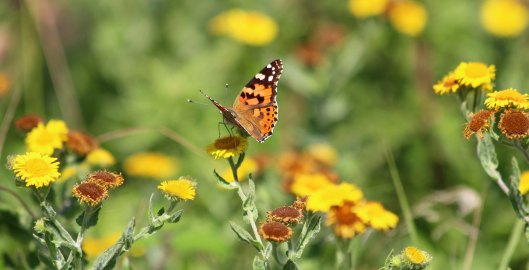
The flower of the moment is Fleabane (Pulicaria dysenterica) or, at least it is at Lavernock Nature Reserve.

I’ve read that Fleabane usually grows in ditches and damp meadows so, despite the recent drought conditions, I guess there must be water somewhere below the wildflower meadows at Lavernock, as they are currently awash with these bright golden flowers. And, at a time when most other wildflowers have dried up and died off, the Fleabane is providing a much-needed source of pollen and nectar for butterflies and other assorted mini-beasties.
14 Saturday Jul 2018
Posted in flowers, insects, nature, wildflowers

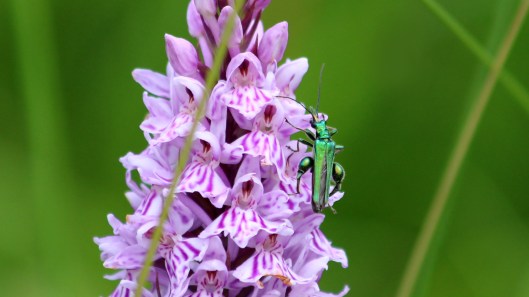
The Swollen-thighed beetle (Oedemera nobilis) is very easy going when it comes to what nectar or pollen it eats. Judging by the number of different flowers I’ve seen it on, my conclusion is that it will slurp and snack almost anywhere, and this would seem to be a very good tactic for its future survival because the more specific the dietary requirements of an insect, the greater the chance it will suffer from changes to its environment and food plants. Being a generalist makes the Swollen-thighed beetle one smart critter!
13 Friday Jul 2018
Posted in flowers, nature, wildflowers
Tags
#FloralFriday, British flora, Common Stork's-bill, Crane's-bill, Cut-Leaved Cranesbill, geranium, Meadow crane's-bill, Pencilled crane’s-bill, Stork's-bill, wildflowers
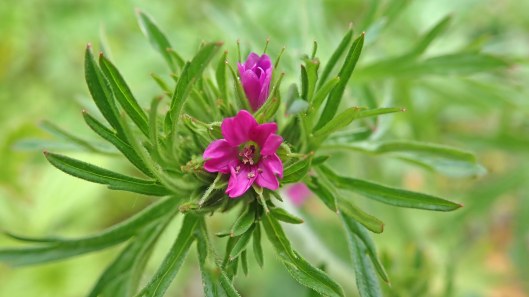
It’s Floral Friday so I thought we’d take a look at a few more of the beautiful Crane’s-bill family and one of their cousins, a Stork’s-bill. I think you’ll agree that they’re all rather lovely.

Cut-Leaved Cranesbill (Geranium dissectum)

Meadow Crane’s-bill (Geranium pratense)

Pencilled crane’s-bill (Geranium versicolor)

Common stork’s bill (Erodium cicutarium)
11 Wednesday Jul 2018
Posted in flowers, nature, wildflowers
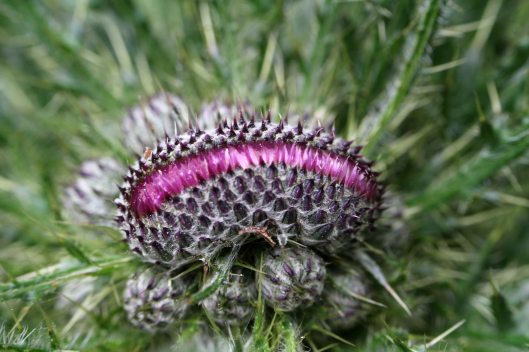
Fasciated: Adjective; (Botany) Showing abnormal fusion of parts or organs, resulting in a flattened ribbon-like structure (Oxford Dictionary).
The thistle in my photo is an example; instead of developing in the circular shape that is usual for this plant, the flower has, for some unknown reason, become distorted into a flattened and elongated, almost oblong shape.

10 Tuesday Jul 2018
Posted in flowers, insects, nature, wildflowers
23 Saturday Jun 2018
Posted in flowers, insects, nature, walks, wildflowers
Tags
#30DaysWild, British butterflies, British insects, flowers for pollinators, National Insect Week, Penarth, wildflowers, Zigzag path

For day 23 of #30DaysWild, as it’s National Insect Week, I went seeking insects along one my local trails, the zigzag path that runs from upper Penarth down to the marina. This was once a heavily wooded hillside but now has a concrete path that gives pedestrians and cyclists easy access up and down the steep hill. Of course, people sometimes want a more direct route and you can see that the frequent stomping of feet has worn alternate paths down the hillside.

Though it looks quite grassy in this photo from a couple of weeks ago, the hillside is now a mass of self-sown native wildflowers and today it was alive with insects, from bees and hoverflies to butterflies, beetles and damselflies. This is a perfect site for wildflowers to grow – it is steep so difficult and presumably expensive to mow, and its steepness means it can’t be safely used by children playing (though, with a covering of snow, it is perfect for sledging!).
Though the local council usually strim this slope to death, utterly destroying the wildflowers and the wildlife, they have recently – and rather ironically – ploughed up a small flat area and dumped upon it soil seeded with wildflowers. That might sound hopeful, a positive action, but the ploughed area has not been maintained and, though I may be wrong, I doubt whether the wildflowers were locally sourced. I wonder too why the council would go to the expense of ploughing up perfectly good local wildflowers to plant others – do they think wildflowers should only be of the type they prescribe and only grow within a prescribed rectangular area? Surely they misunderstand the very essence of WILDflowers.
This blog post, then, is partly a celebration of the amazing variety of insects that enjoy the wildflowers that grow naturally around the zigzag path and partly a plea to the council not to kill those wildflowers and their pollinators but instead to celebrate and foster this wonderfully biodiverse area of Penarth.

19 Tuesday Jun 2018
Posted in flowers, insects, nature, wildflowers
Tags
#30DaysWild, 30 Days Wild, British beetles, British insects, Common spotted orchid, National Insect Week, Oedemera nobilis, Swollen-thighed beetle
Not only is this day 19 of #30DaysWild, but today is also the second day of National Insect Week. To celebrate, here is one of my favourite British insects, the Swollen-thighed Beetle (Oedemera nobilis). I see these little guys on almost every type of flower at this time of year – this one’s on a Common spotted-orchid – and they always make me smile. It’s the male beetles that have those fat thighs – I haven’t been able to find out why, so if you know, please do tell.

15 Friday Jun 2018
Posted in birds, flowers, nature, walks, wildflowers
Tags
#30DaysWild, 30 Days Wild, Cardiff Bay, Carrion crow, Coot, Ely embankment, feral pigeon, Linnet, Mallard, Mute swan, Pied wagtail, River Ely, Small tortoiseshell
My regular followers will remember that, over the winter months, when there were more birds around, I posted a regular monthly roundup of the action along the embankment where the River Ely flows in to Cardiff Bay. Today, for day 15 of #30DaysWild, I thought I’d take another look. Here’s what I found …

The embankment is a riot of colour, with both native wildflowers and garden escapees in full bloom.

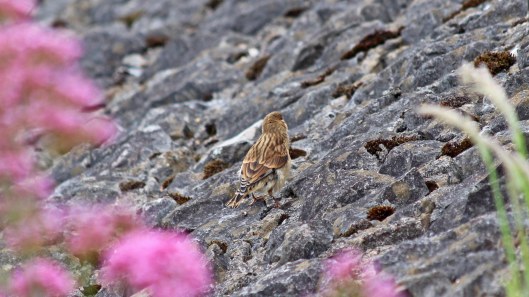
Two Linnets were foraging on flower seeds but were very skittish.

Loving these Oxeye daisies.

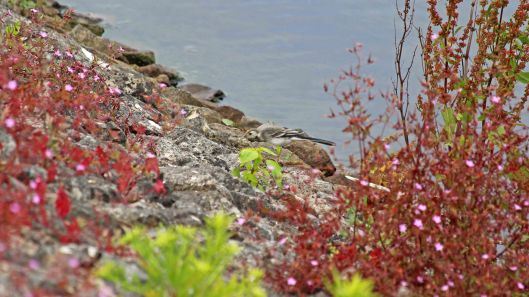
A juvenile Pied wagtail was feeding near the waterline.

A flock of 7 Feral pigeons was also foraging amongst the flowers

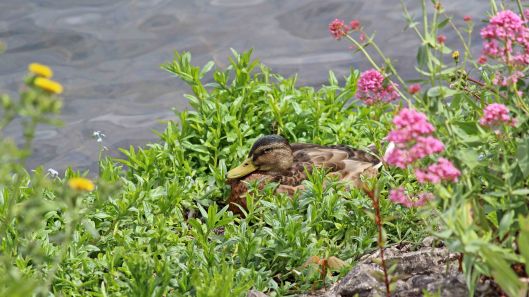
This Mallard had found a sunny spot for a snooze.

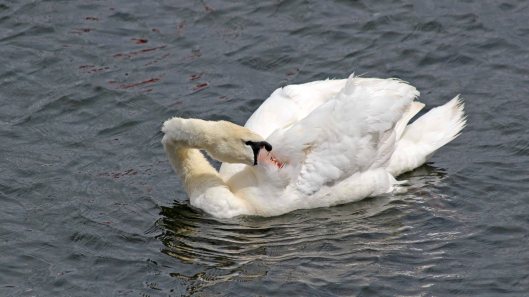
23 Mute swans were floating up the river, many taking the opportunity to preen as they went.

9 Coots were congregating at the water’s edge.

I saw my first Small tortoiseshell butterfly of the year.

Looking back up the river as an Aquabus shows sightseers the river. The black hulk is a new apartment block.

And finally, a Carrion crow was prospecting for tasty morsels.
You must be logged in to post a comment.