• ABOUT
  • BIRDING 2018
  • Birding 2019
  • BLOG POSTS
  • Butterflies 2018
  • Resources

earthstar

~ a celebration of nature

earthstar

Category Archives: insects

Migrant hawker

02 Wednesday Aug 2017

Posted by sconzani in insects, nature

≈ 4 Comments

Tags

Aeshna mixta, British dragonflies, dragonflies, dragonfly, Migrant hawker

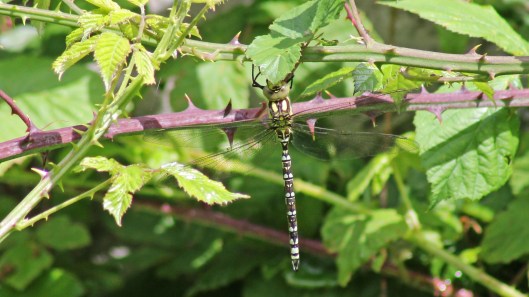
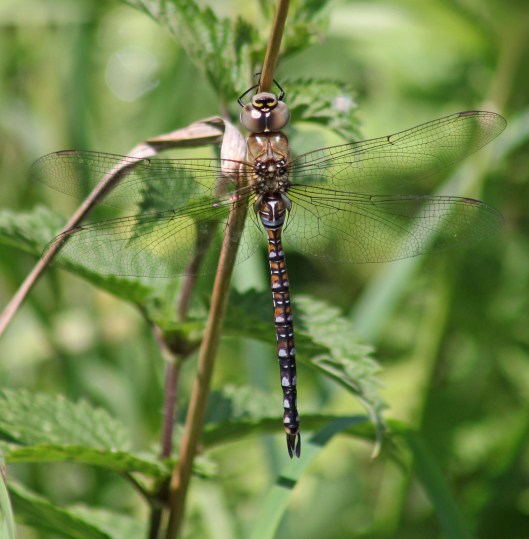
This is my very first Migrant Hawker dragonfly (Aeshna mixta) – isn’t she a beauty?

170802 Migrant hawker

Before the 1940s, these dragonflies visited Britain but didn’t breed here – hence the name ‘Migrant’ – but they have since become established and are gradually increasing their range northwards. They’re described as small to medium size dragonflies but, at around 63mm long, I think they’re quite big, and this one was certainly quite prominent as she hawked for food along a hedgerow, the nearest standing water probably 500 metres away as the dragon flies. Migrant hawkers have a later flying season than many other dragon- and damselflies, usually ranging from August to October, so there’s plenty of time yet to spot one flying along a hedgerow or woodland edge near you. And I’ll be keeping an eye out for the male of the species.

Like Loading...

Lacewings

29 Saturday Jul 2017

Posted by sconzani in insects, nature

≈ 2 Comments

Tags

aphid-eaters, British insects, Chrysopidae, Lacewing, umbellifer flowers

170729 lacewing (2)

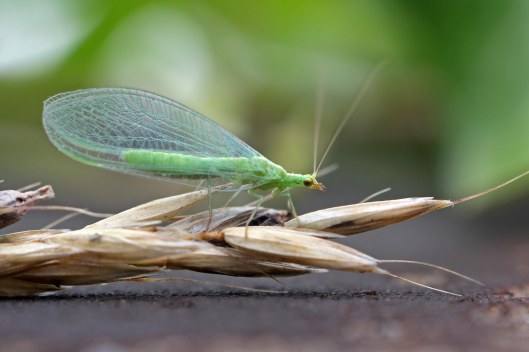
All of a sudden I’m seeing Lacewings everywhere I look. Flying from May through to August, they’re usually creatures of the night, and they’re very partial to a fat juicy aphid (which is why gardeners love them and encourage them in to their gardens) but, just in the last couple of days, I’ve been seeing them during my day-time walks, often sitting on umbellifer flower heads, apparently drinking nectar.

170729 lacewing (4)

There are 14 species of green Lacewings in Britain so I’m not sure which these are but, with their delicate green bodies, bright metallic eyes and gossamer-thin wings, they are simply exquisite.

170729 lacewing (5)


Like Loading...

Sharing

27 Thursday Jul 2017

Posted by sconzani in insects, nature

≈ 3 Comments

Tags

bumblebee, Bumblebee and moths on flower, Burnet moth, food sharing, quote about sharing food, sharing, Six-spot burnet

170727 sharing food

There is no ‘we’ in ‘food’!

Like Loading...

The Brimstone flyers

26 Wednesday Jul 2017

Posted by sconzani in insects, nature

≈ 6 Comments

Tags

Brimstone, Brimstone butterfly, Brimstone moth, British butterflies, British moths, Gonepteryx rhamni, Opisthograptis luteolata

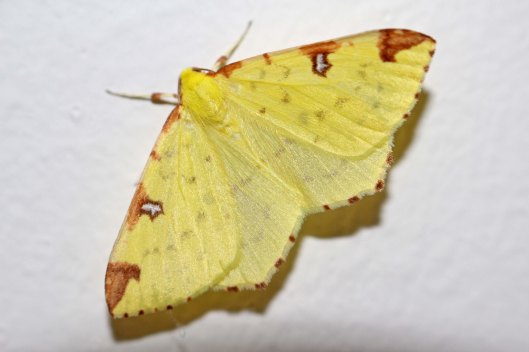
Recording the biodiversity around us can sometimes be a tricky business. Take, for example, the Magpie: there’s a bird called Magpie (Pica pica) and a moth (Abraxas grossulariata) and even a fungus (Coprinopsis picacea). The same is true of the Grayling: there are both a butterfly (Hipparchia semele) and a fish (Thymallus thymallus) of that name. Then there are the Brimstones: in this case, it’s even more confusing as both are lepidoptera – one’s a butterfly (Gonepteryx rhamni) and one’s a moth (Opisthograptis luteolata). And by sheer coincidence, I saw both Brimstones yesterday.

170726 Brimstone butterfly

I spotted the butterfly drinking from a Buddleja bush while I was out walking and the moth came to visit me here at home. I had left my windows open until around 10pm and this little moth came into my kitchen. I tried putting it out but it flew straight back in again and is still sitting on my kitchen bench, despite the window again being open. Not that I’m complaining, as it’s a beautiful little creature.

170726 Brimstone moth

Like Loading...

Happy hour

25 Tuesday Jul 2017

Posted by sconzani in insects, nature

≈ 9 Comments

Tags

British dragonflies, Broad-bodied Chaser, dragonflies, dragonfly, female Broad-bodied Chaser, Lavernock Nature Reserve, Libellula depressa, Odonata

170725 Broad-bodied chaser (1)

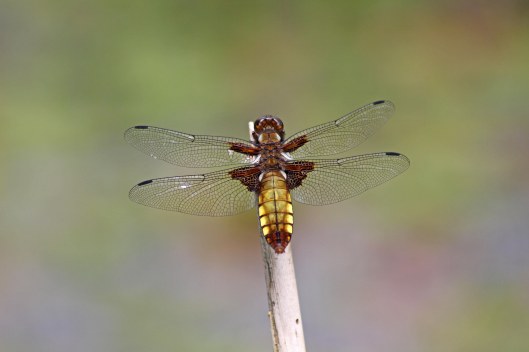
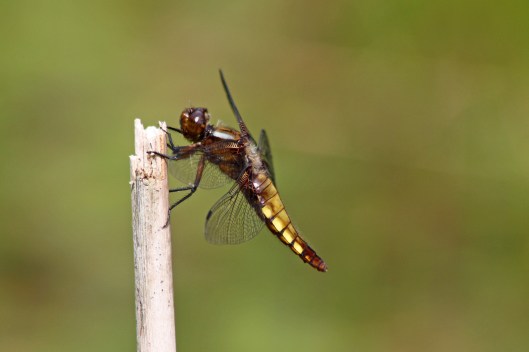
These stunning female Broad-bodied chasers (Libellula depressa) were at the pond at Lavernock Nature Reserve today. Watching them fly, perch, and lay their eggs was an hour very well spent. Bliss!

170725 Broad-bodied chaser (2)

Like Loading...

The Butterfly bush

24 Monday Jul 2017

Posted by sconzani in flowers, insects, nature

≈ Leave a comment

Tags

British butterflies, British dragonflies, Buddleia, Buddleja davidii, butterflies, Butterfly bush, Comma, dragonfly, Penarth Rail Trail, Red Admiral, Southern hawker

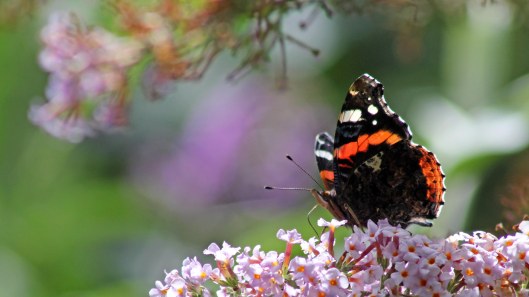
Buddleja davidii is not called the Butterfly bush for nothing.

170724 Buddleja & butterfly (1)

Running through the town where I live there’s a rail trail – the path of a former railway line that was closed to rail traffic back in the 60s and is now a wonderful walking and cycling trail, lined with trees, shrubs and wildflowers. At one point along the trail, there’s a group of several Buddleja bushes that have now reached small tree height and are currently covered in their gorgeous lilacy purplish flowers. When I walked past today, they were alive with butterflies: I counted at least nine Red admirals, three Commas, two Speckled woods and a selection of Whites.

170724 Buddleja & butterfly (2)
170724 Buddleja & butterfly (3)
170724 Buddleja & butterfly (4)
170724 Buddleja & butterfly (5)
170724 Buddleja & butterfly (6)
170724 Buddleja & butterfly (7)
170724 Buddleja & butterfly (8)

An added bonus was a Southern hawker dragonfly that was also patrolling the area. Just brilliant!

170724 Southern hawker

Like Loading...

Spots before my eyes

22 Saturday Jul 2017

Posted by sconzani in insects, nature

≈ 5 Comments

Tags

6-spot Burnet, British moths, Cosmeston Lakes Country Park, moth, moths, Six-spot burnet, UK moths, Zygaena filipendulae

170722 6-spot Burnet moth (1)

I have never before seen as many 6-spot Burnet moths (Zygaena filipendulae) as I saw last Monday in one of the fields at Cosmeston Lakes Country Park. I stopped counting at one hundred and there were many many more. They are gorgeous little flying machines and glowed like wee red bumblebees as they flitted from the sunshine-yellow ragwort flowers to the more subtle but no less glorious lilac and purple blooms of knapweed, meadow thistle and teasel. They were wondrous to behold.

170722 6-spot Burnet moth (2)
170722 6-spot Burnet moth (3)
170722 6-spot Burnet moth (4)
170722 6-spot Burnet moth (5)
170722 6-spot Burnet moth (6)
170722 6-spot Burnet moth (7)
170722 6-spot Burnet moth (8)
170722 6-spot Burnet moth (9)
170722 6-spot Burnet moth (10)
170722 6-spot Burnet moth (11)
170722 6-spot Burnet moth (12)
170722 6-spot Burnet moth (13)
Like Loading...

Not so Common darters

20 Thursday Jul 2017

Posted by sconzani in insects, nature

≈ 8 Comments

Tags

British dragonflies, Common Darter, dragonflies, dragonfly, National Dragonfly Week, Sympetrum striolatum

170720 Common darter (1)

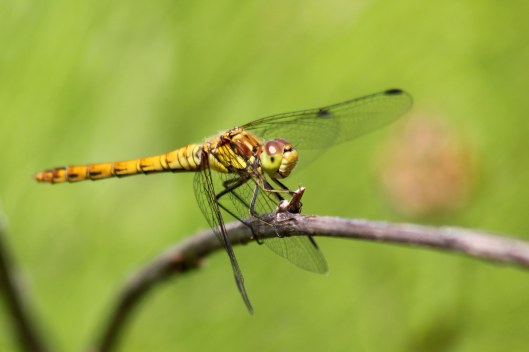
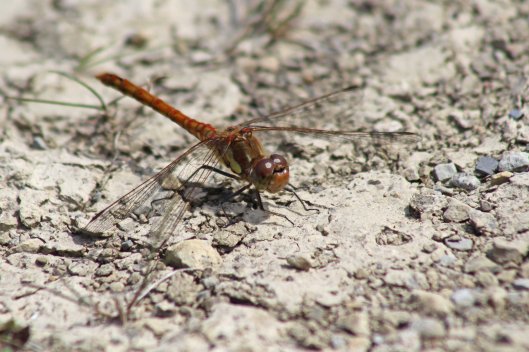
I haven’t been seeing a lot of dragonflies this year – probably just me not going to the right places, rather than an actual scarcity – but I have seen two Common darters (Sympetrum striolatum) in the past week. Although I blogged about these beauties around this time last year, I thought I’d share these latest images to celebrate National Dragonfly Week, which is happening right now.

170720 Common darter (2)

I had a bit of luck this week as I finally managed to photograph one of these lovely creatures in flight. It’s not the sharpest of shots but I’ll take it.

170720 Common darter (3)

Like Loading...

Two more leafhoppers

16 Sunday Jul 2017

Posted by sconzani in insects, nature

≈ 2 Comments

Tags

British bugs, British insects, British leafhoppers, Cicadellidae, Eurhadina cocinnia, Eurhadina loewii, leafhopper

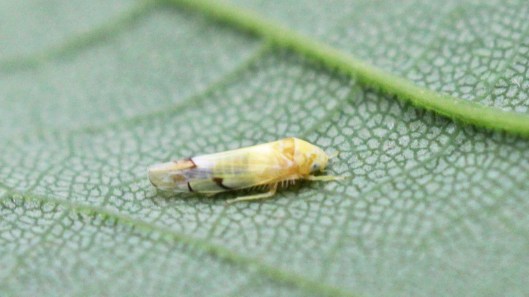
I’ve been leaf-turning again and one thing you’re almost sure to find if you turn over enough leaves is a leafhopper. These are two recent finds, their identities now confirmed by the national recorder. Both are small – around 4mm long when adults, and both can be seen from around June to September.

170712 Eurhadina cocinnia

Eurhadina cocinnia
These little guys have a preference for oak trees but can also be found on other deciduous tree, and are common throughout Britain.

170712 Eurhadina loewii

Eurhadina loewii
E. loewii prefers Sycamore trees and, occasionally, Field maple, and lives in most English counties and in south Wales, but hasn’t yet crossed the Brecon Beacons.

The two photos below are interesting, I think. The one on the left shows E. loweii in its larval form and the photo on the right shows an empty skin, after the larva has gone through one of several moults between its emergence from an egg until the time it’s ready to pupate.

170712 Eurhadina loewii larva
170712 Eurhadina loewii larval skin
Like Loading...

A little hoverating

13 Thursday Jul 2017

Posted by sconzani in insects, nature

≈ 4 Comments

Tags

British hoverflies, hoverflies, hoverfly, Leucozona glaucia, Leucozona laternaria, Merodon equestris, Xylota segnis, Xylota sylvarum

I admit to not taking as many photos of hoverflies this year as last. This is partly due to an overwhelming fascination with everything, meaning I tend not to focus on one family for long (I’m sure this will pass once I’ve lived in Britain a few more years and have seen a lot of the more common species of everything), but also because the area where I now live has less hoverfly-friendly habitats. Still, I do photograph them when I see them, especially any newbies. Here are a few …

170713 Leucozona glaucia
170713 Leucozona laternaria

Leucozona glaucia and Leucozona laternaria
These are not hoverflies I see very often but they are quite distinctive and that makes them easy to identify, not something you can say about many invertebrates. They’re woodland species but can often be found grazing on the hogweed flowers that frequently grow along woodland rides and edges. The two species are almost identical, except for the colour of their front legs (not always easily seen) and their scutellum (much easier – that’s the half moon shaped bit on their backs between their wings). The scutellum is yellow in Leucozona glaucia (above left) and dark in L. laternaria (above right).
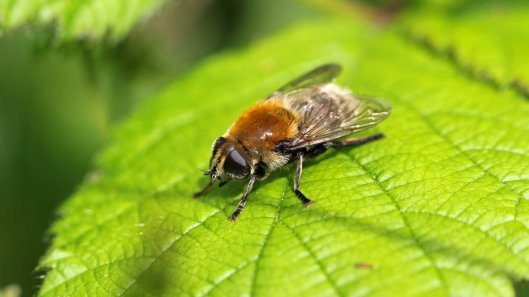
170713 Merodon equestris

Merodon equestris
This medium-sized hoverfly looks a lot like a bumblebee, but the shape of its head and its large eyes are easy ways to tell that it’s not. In their top-notch field guide Britain’s Hoverflies, Stuart Ball and Roger Morris note that Merodon equestris is ‘believed to have been introduced into Britain in daffodil bulbs imported from Europe around the end of the 19th century’. That’s because the larvae of this hoverfly develop inside bulbs and have a particular liking for daffodils.

170713 Xylota segnis
170713 Xylota sylvarum

Xylota segnis and Xylota sylvarum
These are just two of the seven members of the Xylota genus – I have yet to see the others. With their lanky legs, they look a bit like sawflies and they also prefer gathering pollen and honeydew from leaves rather than flowers, so they’re not your run-of-the-mill hoverflies. I find these quite difficult to tell apart but X. segnis has a black bottom (above left) whereas X. sylvarum’s is yellow (above right) (not easy to see when they’re resting and covering their bottoms with their wings, as in my photo).

Like Loading...
← Older posts
Newer posts →

About me

sconzani

sconzani

I'm a writer and photographer; researcher and blogger; birder and nature lover; countryside rambler and city strider; volunteer and biodiversity recorder.

View Full Profile →

Follow earthstar on WordPress.com

Enter your email address to follow this blog and receive notifications of new posts by email.

Recent blog posts

  • NFY: Orange-tip April 20, 2026
  • All the yellows April 19, 2026
  • Spider: Dysdera crocata April 18, 2026
  • Recent Reed buntings April 17, 2026
  • Tiny but feisty April 16, 2026

From the archives

COPYRIGHT

Unless otherwise acknowledged, the text and photographs on this blog are my own and are subject to international copyright. Nothing may be downloaded or copied without my permission.

Fellow Earth Stars!

  • Unknown's avatar
  • Unknown's avatar
  • Unknown's avatar
  • Unknown's avatar
  • Unknown's avatar
  • Unknown's avatar
  • Unknown's avatar
  • Unknown's avatar
  • Unknown's avatar
  • Unknown's avatar
  • Unknown's avatar
  • Unknown's avatar
  • Unknown's avatar
  • Unknown's avatar
  • Unknown's avatar
  • Unknown's avatar
  • Unknown's avatar
  • Unknown's avatar
  • Unknown's avatar
  • Unknown's avatar
  • Unknown's avatar
  • Unknown's avatar
  • Unknown's avatar
  • Unknown's avatar
  • Unknown's avatar
  • Unknown's avatar
  • Unknown's avatar
  • Unknown's avatar
  • Unknown's avatar
  • Unknown's avatar
  • Unknown's avatar
  • Unknown's avatar
  • Unknown's avatar
  • Unknown's avatar
  • Unknown's avatar
  • Unknown's avatar
  • Unknown's avatar
  • Unknown's avatar
  • Unknown's avatar
  • Unknown's avatar
  • Unknown's avatar
  • Unknown's avatar
  • Unknown's avatar
  • Unknown's avatar
  • Unknown's avatar
  • Unknown's avatar
  • Unknown's avatar
  • Unknown's avatar
  • Unknown's avatar
  • Unknown's avatar

Blog at WordPress.com.

Privacy & Cookies: This site uses cookies. By continuing to use this website, you agree to their use.
To find out more, including how to control cookies, see here: Cookie Policy
  • Subscribe Subscribed
    • earthstar
    • Join 642 other subscribers
    • Already have a WordPress.com account? Log in now.
    • earthstar
    • Subscribe Subscribed
    • Sign up
    • Log in
    • Report this content
    • View site in Reader
    • Manage subscriptions
    • Collapse this bar
 

Loading Comments...
 

You must be logged in to post a comment.

    %d