• ABOUT
  • BIRDING 2018
  • Birding 2019
  • BLOG POSTS
  • Butterflies 2018
  • Resources

earthstar

~ a celebration of nature

earthstar

Category Archives: insects

Two more leafhoppers

16 Sunday Jul 2017

Posted by sconzani in insects, nature

≈ 2 Comments

Tags

British bugs, British insects, British leafhoppers, Cicadellidae, Eurhadina cocinnia, Eurhadina loewii, leafhopper

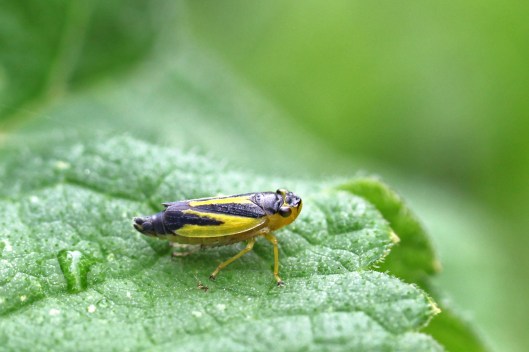
I’ve been leaf-turning again and one thing you’re almost sure to find if you turn over enough leaves is a leafhopper. These are two recent finds, their identities now confirmed by the national recorder. Both are small – around 4mm long when adults, and both can be seen from around June to September.
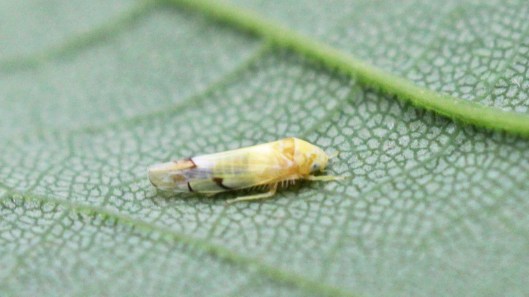
170712 Eurhadina cocinnia

Eurhadina cocinnia
These little guys have a preference for oak trees but can also be found on other deciduous tree, and are common throughout Britain.

170712 Eurhadina loewii

Eurhadina loewii
E. loewii prefers Sycamore trees and, occasionally, Field maple, and lives in most English counties and in south Wales, but hasn’t yet crossed the Brecon Beacons.

The two photos below are interesting, I think. The one on the left shows E. loweii in its larval form and the photo on the right shows an empty skin, after the larva has gone through one of several moults between its emergence from an egg until the time it’s ready to pupate.

170712 Eurhadina loewii larva
170712 Eurhadina loewii larval skin
Like Loading...

A little hoverating

13 Thursday Jul 2017

Posted by sconzani in insects, nature

≈ 4 Comments

Tags

British hoverflies, hoverflies, hoverfly, Leucozona glaucia, Leucozona laternaria, Merodon equestris, Xylota segnis, Xylota sylvarum

I admit to not taking as many photos of hoverflies this year as last. This is partly due to an overwhelming fascination with everything, meaning I tend not to focus on one family for long (I’m sure this will pass once I’ve lived in Britain a few more years and have seen a lot of the more common species of everything), but also because the area where I now live has less hoverfly-friendly habitats. Still, I do photograph them when I see them, especially any newbies. Here are a few …

170713 Leucozona glaucia
170713 Leucozona laternaria

Leucozona glaucia and Leucozona laternaria
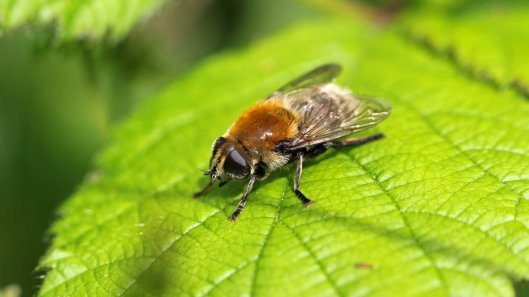
These are not hoverflies I see very often but they are quite distinctive and that makes them easy to identify, not something you can say about many invertebrates. They’re woodland species but can often be found grazing on the hogweed flowers that frequently grow along woodland rides and edges. The two species are almost identical, except for the colour of their front legs (not always easily seen) and their scutellum (much easier – that’s the half moon shaped bit on their backs between their wings). The scutellum is yellow in Leucozona glaucia (above left) and dark in L. laternaria (above right).

170713 Merodon equestris

Merodon equestris
This medium-sized hoverfly looks a lot like a bumblebee, but the shape of its head and its large eyes are easy ways to tell that it’s not. In their top-notch field guide Britain’s Hoverflies, Stuart Ball and Roger Morris note that Merodon equestris is ‘believed to have been introduced into Britain in daffodil bulbs imported from Europe around the end of the 19th century’. That’s because the larvae of this hoverfly develop inside bulbs and have a particular liking for daffodils.

170713 Xylota segnis
170713 Xylota sylvarum

Xylota segnis and Xylota sylvarum
These are just two of the seven members of the Xylota genus – I have yet to see the others. With their lanky legs, they look a bit like sawflies and they also prefer gathering pollen and honeydew from leaves rather than flowers, so they’re not your run-of-the-mill hoverflies. I find these quite difficult to tell apart but X. segnis has a black bottom (above left) whereas X. sylvarum’s is yellow (above right) (not easy to see when they’re resting and covering their bottoms with their wings, as in my photo).

Like Loading...

A 10 lepidoptera day!

12 Wednesday Jul 2017

Posted by sconzani in insects, nature

≈ 4 Comments

Tags

British butterflies, butterflies, butterfly, Comma, Common blue, Gatekeeper, Large skipper, Meadow Brown, Ringlet, Six-spot burnet, Small skipper, Small white, Speckled wood

It’s Monday. I’ve had a meeting about a forthcoming fungi presentation, followed by a busy morning on the computer and feel I need a blast of fresh air so decide to do one of my local walk circuits, taking in one side of Cardiff Bay and Penarth Marina. And I’m so glad I do ’cause the air is alive with butterflies and moths. They are common enough species but I am amazed and delighted to see such a variety and so many in just a 2-hour walk.

There are Comma (Polygonia c-album), Common blue (Polyommatus icarus), Gatekeeper (Pyronia tithonus), Large skipper (Ochlodes sylvanus), Meadow brown (Maniola jurtina), Ringlet (Aphantopus hyperantus), Six-spot burnet (Zygaena filipendulae), Small skipper (Thymelicus sylvestris), Small white (Pieris rapae), and Speckled wood (Pararge aegeri). This is my idea of heaven!

This slideshow requires JavaScript.

Like Loading...

A blast of orange

11 Tuesday Jul 2017

Posted by sconzani in insects, nature

≈ 4 Comments

Tags

British ladybirds, Halyzia 16-guttata, Halyzia secedimguttata, ladybird, ladybird larva, ladybug, Orange ladybird

170711 Orange Ladybird (1)

When I’m out and about on my wanders, it’s usually a preponderance of Harlequin ladybirds that I see but this day was different. Instead of Harlequins, there seemed to be beautiful little Orange ladybirds (Halyzia 16-guttata) wherever I looked. And there weren’t just adult ladybirds – almost every leaf I turned over had their larvae as well. And this was across two different parks, not just in one location.

170711 Orange ladybird nymph (1)
170711 Orange ladybird nymph (2)

We are constantly warned that the invasive Harlequins, first recorded in Britain in October 2004, are a serious threat to Britain’s native ladybirds, and surveys have shown that most native ladybirds are in serious decline, partly due to the Harlequin but also due to habitat loss. Perhaps the Orange ladybird is fighting back. It has apparently adapted to living on different tree species, first the sycamore and more recently the ash, so this may be aiding its apparent increase in abundance. I certainly hope so!

170711 Orange Ladybird (2)
170711 Orange Ladybird (3)
170711 Orange Ladybird (4)
170711 Orange Ladybird (5)

Don’t forget that we can’t know what’s happening with British ladybirds (or, indeed, any other living species) unless sightings are recorded. You can record yours through your local biodiversity records centre or directly with the UK Ladybird Survey website here.

Like Loading...

The sputnik spider

06 Thursday Jul 2017

Posted by sconzani in insects, nature

≈ 5 Comments

Tags

British arachnids, British spiders, egg sac, oddly-shaped egg sac, Paidiscura pallens, spider egg sac, spiders, sputnik-shaped egg sac

The weirdest thing I found when I was out square-bashing last week was this sputnik-shaped thing, stuck to the underside of an oak leaf. It was incredibly tiny, about 2mm across, and I had no idea what it might be.

170706 Paidiscura pallens egg sac (3)

Luckily, I belong to some really excellent wildlife groups on Facebook and, when I posted a photo on the Insects of Britain and Northern Europe page, I got an answer almost immediately. This is the egg sac of the spider Paidiscura pallens. At just 1.5mm, the spider is even smaller than its egg sac and, because of its tiny size, is rarely even noticed.

170706 Paidiscura pallens (1)

So, the next time I was out for a wander I decided to check the undersides of more leaves – they prefer stiff leaves, like oak, sycamore and holly – to see if I could find any others. And bingo, I quite quickly spotted three more egg sacs and their creators, sitting not far away on the leaves. So, next time you’re out for a walk, take a look under some leaves. You never know what you might find.

170706 Paidiscura pallens (2)

Like Loading...

A new Cicadellidae

05 Wednesday Jul 2017

Posted by sconzani in insects, nature

≈ 4 Comments

Tags

British bugs, bugs, Cicadellidae, Evacanthus interruptus, leafhoppers

I had to chuckle when the British Bugs website described this little bug, which is no more than 6mm long, as ‘large’ but, compared to others in the Cicadellidae family – i.e. the leafhoppers – it’s a giant. The website also says it’s a common species but this was the first I’d seen so I obviously haven’t been looking closely enough.

170705 Evacanthus Interruptus (1)

This is Evacanthus interruptus (a female, I believe, as her wings are shorter than the length of her abdomen). They favour tall herbaceous vegetation in meadows, scrubby areas and woodlands, and can be seen between June and October. I’ll be on the look out for more.

170705 Evacanthus Interruptus (2)
170705 Evacanthus Interruptus (3)
Like Loading...

Moths at Parc Slip

04 Tuesday Jul 2017

Posted by sconzani in insects, nature

≈ Leave a comment

Tags

British moths, Common carpet moth, Crambus pascuella, Large Yellow Underwing, moths, Parc Slip Nature Reserve, Phtheochroa inopiana, Silver Y, White Ermine, White ermine caterpillar

As well as the reptiles we saw on our ramble around Parc Slip Nature Reserve and in spite of the constant light rain, we also saw quite a few moths, the odd butterfly, a few damselflies, and an abundance of pretty wildflowers. Here are the moths I managed to photograph (some poorly!): Common Carpet (Epirrhoe alternata), Inlaid grass-veneer (Crambus pascuella), Large Yellow Underwing (Noctua pronuba), Phtheochroa inopiana, Silver Y (Autographa gamma), and the larva of the White ermine (Spilosoma lubricipeda).

170704 Common Carpet Epirrhoe alternata
170704 Inlaid grass-veneer Crambus pascuella
170704 Large Yellow Underwing Noctua pronuba
170704 Phtheochroa inopiana
170704 Silver Y Autographa gamma
170704 White ermine Spilosoma lubricipeda
Like Loading...

Square-bashing: SS9073

02 Sunday Jul 2017

Posted by sconzani in fungi, insects, molluscs, nature, walks

≈ 2 Comments

Tags

biodiversity, biodiversity in Wales, biological diversity, biological recording, biological records, square-bashing

170702 Square-bashing SS9073 (1)

A few days ago I posted about my square-bashing adventure near Llanbeder, in Gwent. Hilary and I have now also square-bashed another under-biodiversity-recorded 1-km square, this time near St Brides Major in Glamorgan.

170702 Square-bashing SS9073 (2)

As the seagull flies we were within a kilometre of the sea and the geological substrate was very different, so the habitats we surveyed were more diverse. One public path led us down a heavily wooded driveway to an old house, another ran between the edge of that same woodland and fields sown with cereal crops (and there the hogweed was flowering which greatly improved my insect tally), and the third took us over paddocks of rough unimproved grassland, with patches of low rushes, all bordered by a wild old hedgerow.

170702 Square-bashing SS9073 (3)

Interestingly, this time Hilary’s plant list was about 20% lower than that from our previous square (though she still had around 80 species), whereas my list of everything else was about the same percentage higher (at around 100 species of insects, fungi and lichens, molluscs, etc).

170702 Banded burdock fly
170702 Bombus vestalis
170702 Cheilosia illustrata
170702 Chlorociboria sp Green elfcup
170702 Common marble moth
170702 Dark bush-cricket
170702 Fly
170702 fungi on cow dung Cheilymenia sp
170702 Horsefly
170702 Leptopterna dolabrata
170702 Small whites
170702 Snails and woodlice
Like Loading...

National Meadows Day

01 Saturday Jul 2017

Posted by sconzani in flowers, insects, nature, parks, seaside, walks, wildflowers

≈ Leave a comment

Tags

Lavernock Point, Lavernock Reserve, National Meadows Day, Wildlife Trust for South & West Wales

170701 Lavernock Reserve (3)

Happy National Meadows Day!

170701 Lavernock Reserve (2)

I had a slightly premature celebration by joining a Wildlife Trust walk around Lavernock Reserve on the south Wales coast yesterday. It’s an interesting place that has only become a reserve relatively recently. Due to its prime coastal position, a gun battery was built here back in 1860s and added to during the Second World War – these now form a scheduled ancient monument.

170701 Lavernock Reserve (1)

The meadows sit upon a substrate of clay over Jurassic limestone and, thanks to the tremendous efforts of dedicated volunteers who work constantly to contain the invading scrub, the grasslands are home to many lovely plant, insect and animal species, as well as a succession of migrating birds in spring and autumn.

170701 7-spot ladybird
170701 Centaury
170701 Common red soldier beetle
170701 Common spotted orchid & Selfheal
170701 Large skipper
170701 Marmalade hoverfly
170701 Orange-spot piercer
170701 Plume moth
170701 Restharrow
170701 Ringlet
170701 Snipe fly
170701 Swollen-thighed beetle
Like Loading...

In praise of hogweed

30 Friday Jun 2017

Posted by sconzani in insects, nature, plants, wildflowers

≈ 2 Comments

Tags

British flora, British wildflowers, food for insects, Heracleum sphondylium, Hogweed

170630 hogweed (1)

Hogweed is so named because the flowers are said to have a pig-like smell, though I can’t say that I’ve noticed. It has a ton of interesting-sounding common names, of which Bilers, Caddy, Eltrot, Limperscrimps, Cow-weed, Kirk, Chirk and Kek are just a few. Its Latin name, Heracleum sphondylium, is also interesting: Heracleum is a reference to the mythical Greek hero Heracles, who was said to have introduced the medicinal use of the plant to humans, and sphondylium comes from the Greek sphondylo, meaning backbone, and refers to the plant’s segmented stem.

170630 hogweed (3)

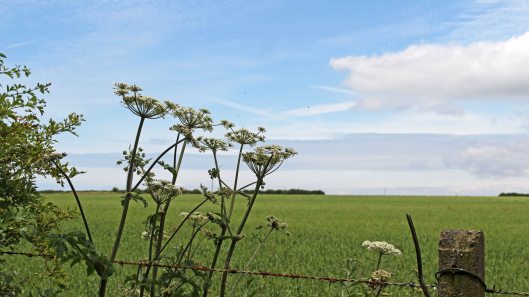
Hogweed is just coming in to flower now, adorning the roadsides, hedgerows and track edges in many of the parts of south Wales that I’ve visited recently.

170630 hogweed (2)

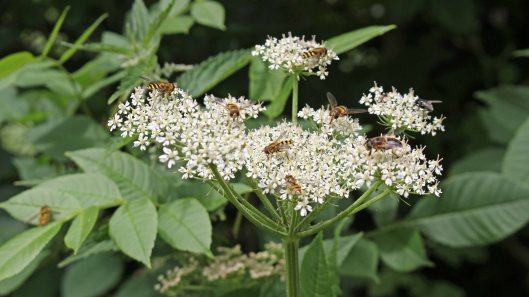
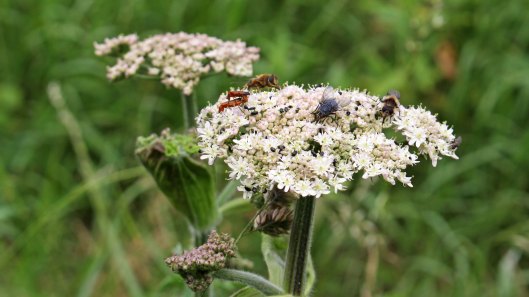
The statuesque purple-coloured-when-young stalks and those large white flower heads are glorious, indeed, but the very best thing about Hogweed, I think, is the food it provides for all manner of creatures, from flies and hoverflies to ants, bees and wasps, bugs and beetles.

170630 1 Common red soldier beetle
170630 2 Swollen-thighed beetle
170630 3 Cheilosia illustrata
170630 4 Noon fly
170630 5 Hogweed
170630 6 Broad centurion female
170630 7 Willow mason-wasp
170630 8 Stilt bug
170630 9 Hogweed leafminer
Like Loading...
← Older posts
Newer posts →

About me

sconzani

sconzani

I'm a writer and photographer; researcher and blogger; birder and nature lover; countryside rambler and city strider; volunteer and biodiversity recorder.

View Full Profile →

Follow earthstar on WordPress.com

Enter your email address to follow this blog and receive notifications of new posts by email.

Recent blog posts

  • Bug: Harpocera thoracica April 22, 2026
  • A female Tawny April 21, 2026
  • NFY: Orange-tip April 20, 2026
  • All the yellows April 19, 2026
  • Spider: Dysdera crocata April 18, 2026

From the archives

COPYRIGHT

Unless otherwise acknowledged, the text and photographs on this blog are my own and are subject to international copyright. Nothing may be downloaded or copied without my permission.

Fellow Earth Stars!

  • Unknown's avatar
  • Unknown's avatar
  • Unknown's avatar
  • Unknown's avatar
  • Unknown's avatar
  • Unknown's avatar
  • Unknown's avatar
  • Unknown's avatar
  • Unknown's avatar
  • Unknown's avatar
  • Unknown's avatar
  • Unknown's avatar
  • Unknown's avatar
  • Unknown's avatar
  • Unknown's avatar
  • Unknown's avatar
  • Unknown's avatar
  • Unknown's avatar
  • Unknown's avatar
  • Unknown's avatar
  • Unknown's avatar
  • Unknown's avatar
  • Unknown's avatar
  • Unknown's avatar
  • Unknown's avatar
  • Unknown's avatar
  • Unknown's avatar
  • Unknown's avatar
  • Unknown's avatar
  • Unknown's avatar
  • Unknown's avatar
  • Unknown's avatar
  • Unknown's avatar
  • Unknown's avatar
  • Unknown's avatar
  • Unknown's avatar
  • Unknown's avatar
  • Unknown's avatar
  • Unknown's avatar
  • Unknown's avatar
  • Unknown's avatar
  • Unknown's avatar
  • Unknown's avatar
  • Unknown's avatar
  • Unknown's avatar
  • Unknown's avatar
  • Unknown's avatar
  • Unknown's avatar
  • Unknown's avatar
  • Unknown's avatar

Blog at WordPress.com.

Privacy & Cookies: This site uses cookies. By continuing to use this website, you agree to their use.
To find out more, including how to control cookies, see here: Cookie Policy
  • Subscribe Subscribed
    • earthstar
    • Join 642 other subscribers
    • Already have a WordPress.com account? Log in now.
    • earthstar
    • Subscribe Subscribed
    • Sign up
    • Log in
    • Report this content
    • View site in Reader
    • Manage subscriptions
    • Collapse this bar
 

Loading Comments...
 

You must be logged in to post a comment.

    %d