• ABOUT
  • BIRDING 2018
  • Birding 2019
  • BLOG POSTS
  • Butterflies 2018
  • Resources

earthstar

~ a celebration of nature

earthstar

Category Archives: insects

Leafminers: Eriocrania semipurpurella

06 Monday May 2024

Posted by sconzani in insects, trees

≈ Leave a comment

Tags

British leafminers, British moths, Eriocrania semipurpurella, Eriocraniidae, leaf-mining moth larvae, leafmine on Birch

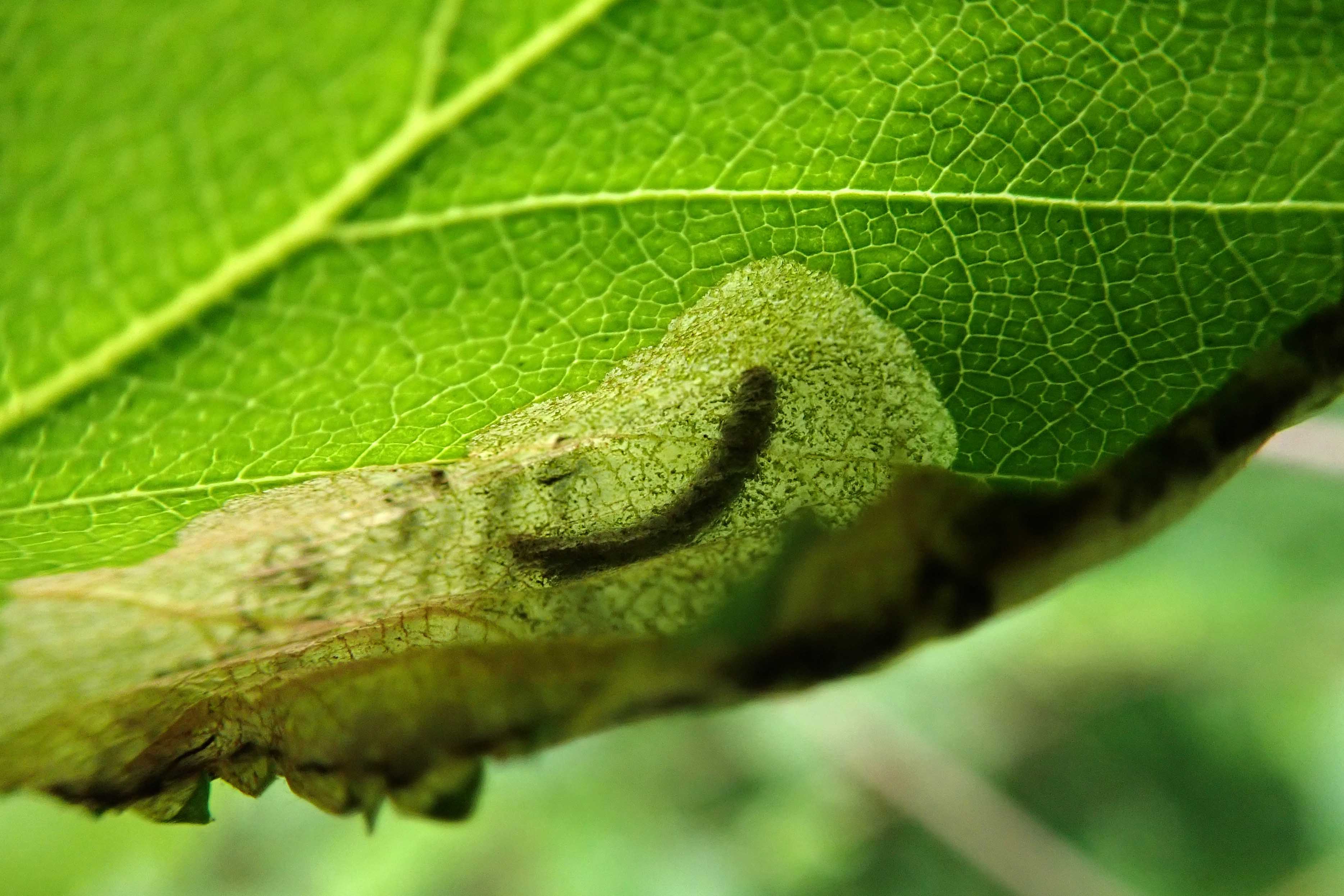
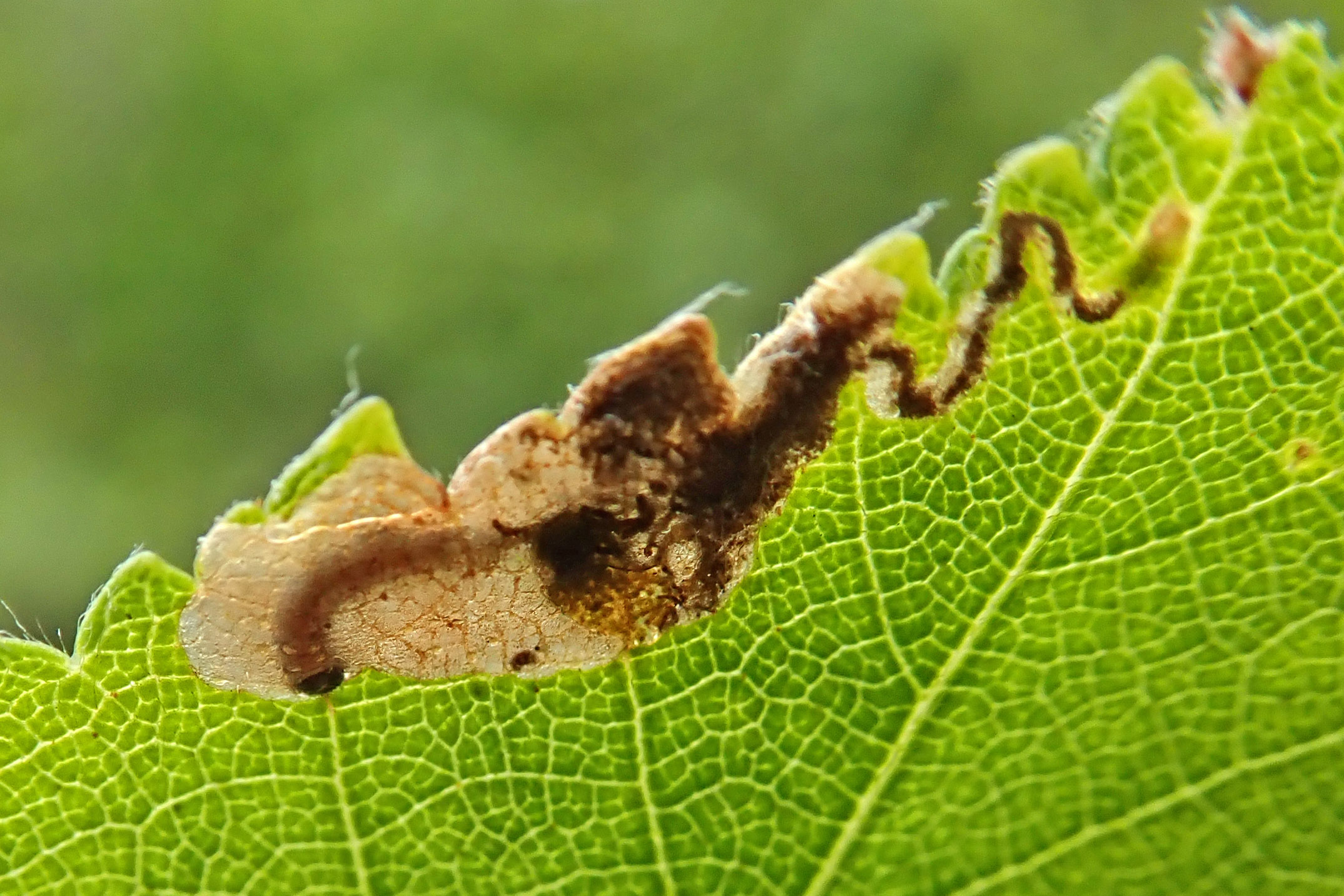
There are eight Eriocraniidae species of moth in Britain, the larvae of which can all be found mining the leaves of Birch trees at this time of year. And this means that, whenever I’m out walking and pass a Birch tree, I have to stop and stare at its leaves, looking for the signs of leaf mining. This is the first one I’ve found, Eriocrania semipurpurella, and it’s the biggest and most common of the Eriocraniidae. You can see what the adult moth looks like on the UK Moths website here.

240506 Eriocrania semipurpurella (1)

The entry on the British Leafminers website explains: ‘The mine starts at or near the leaf edge and then widens into a blotch. The young larva has a dark head and sclerotizations on the prothorax (as shown) [click the link to see the images]. As the larva matures it loses these dark markings….’ I am still finding these mines tricky to differentiate – the British Leafminers site has a page of images that is a good starting point, and I’m lucky to have contact with one of the site managers, Rob Edmunds, so can easily get my finds checked.

240506 Eriocrania semipurpurella (2)

Like Loading...

Box tree moth cats

02 Thursday May 2024

Posted by sconzani in insects, plants

≈ 2 Comments

Tags

Box moth, Box tree moth, Buxus sp, caterpillars on Box, Cydalima perspectalis, invasive non-native, moth caterpillars

A few days ago, our local moth expert posted a fascinating thread on Twitter/X about the population explosion of the non-native invasive Box tree moth (Cydalima perspectalis) in Cardiff. As George noted, this moth was first recorded in Kent, England in 2007, and spread rapidly across the southern counties of England before arriving in Cardiff in 2018. George runs a regular moth trap in his garden and, though the moth didn’t appear in his trap until 2020, by 2023 it had become the most common species he trapped.

240502 box tree cats (2)

This rapid escalation in adult moths means, of course, that there has also been a huge increase in the numbers of moth caterpillars and, as a result, Box bushes and hedges are being decimated by the caterpillars’ voracious appetites. George talked about ‘widespread defoliation’ in Cardiff so I went looking at a location nearer to home where I knew there was a Box hedge. It wasn’t quite as bad as the reports from north Cardiff and there was quite a lot of new growth on the bushes but there were also huge numbers of caterpillars munching their way through the foliage. I imagine it’s only a matter of time before this hedge has been totally stripped of leaves.

240502 box tree cats (1)

It’s such a shame that the Box tree moth is so destructive as both the adult moth and the caterpillars are very attractive creatures. Apparently, many gardeners are already removing Box from their gardens so any gardeners out there, be aware, your Box (Buxus species) will be targeted by this moth when it spreads to your area.

240502 box tree cats (3)

Like Loading...

Beetles on dead Ash

01 Wednesday May 2024

Posted by sconzani in insects, trees

≈ Leave a comment

Tags

bark beetles, beetle burrows on Ash, beetles on Ash, British beetles, burrows of Ash bark beetles, Vincenzellus ruficollis

When I first spotted my mystery beetle, I thought perhaps it, and others of its kind, had been responsible for making the burrowing marks under the bark of the many dead Ash trees I saw around me.

240501 ash bark beetle (1)

But no. Those marks were likely made by the Ash bark beetle (Hylesinus varius), a small brown beetle that you can see on the NatureSpot website here. I’ve yet to find one of those destructive little creatures. And, when I got home and searched online, I struggled to find the name of the tiny metallic-green beetle I had found but, luckily, my friendly local bee expert had a couple of suggestions: ‘The beetle is either Salpingus ruficollis or Vincenzellus ruficollis’.

240501 ash bark beetle (2)

I checked both those names and decided, from the distinctive shape of the snout, that mine was likely to be Vincenzellus ruficollis, though this hasn’t yet been confirmed. It seems I was fortunate to spot this little critter as the UK Beetles website says, amongst other things, that they are ‘exclusively nocturnal and easy to spot as they crawl around on trunks and branches predating small insects and their early stages. Breeding occurs in the spring and larvae develop under bark, they are predatory and often occur near bark beetle burrows or among masses of mycelia and have been recorded from a wide range of deciduous trees….’

240501 ash bark beetle (3)

Like Loading...

Down by the stream

29 Monday Apr 2024

Posted by sconzani in insects

≈ Leave a comment

Tags

Baetis rhodani, insect near water, Large dark olive mayfly, mayfly, Microtendipes pedellus

As I mentioned in Saturday’s post, I spent some time last Friday staring at leaves and found some interesting mini-beasties, including these two that were found on the leaves of a tree adjacent to a small stream. Unfortunately, I don’t know anyone who can help with the identification of these so my information here has not been confirmed. I’m fairly confident that this first creature is a mayfly, and I think it may be a Large dark olive mayfly (Baetis rhodani) [UPDATE: identity confirmed 1 May 2024] because it seems to have the distinguishing characteristics outlined on the NatureSpot website, namely

The pairs of short veins between each of the long veins in the forewing indicate that this is a Baetis species. B. rhodani is the largest sized member of this group, especially the early hatch, later in the year specimens become smaller. It is also one of the earlier mayflies to hatch out.

240429 mayfly

The second insect found near water was this weird-looking creature. I think this might be Microtendipes pedellus because, once again, it seems to fit with the NatureSpot description of its key features:

This striking species has dark brown thorax, and a pale green abdomen with the final three tergites brown. The legs are pale with dark tips to the femora. The wings are unpatterned. Males have plumose antennae.

The second photo below is not very sharp but I simply had to include it to show the superb antennae.

240429 Microtendipes pedellus

If I manage to get confirmation of the identity of these creatures, I’ll edit and update this post. [As marked above, the mayfly was confirmed as Baetis rhodani sensu stricto on 1 May 2024.]

Like Loading...

Two mining bees

27 Saturday Apr 2024

Posted by sconzani in insects

≈ 2 Comments

Tags

Andrena nitida, Andrena scotica, Andrena species, Chocolate mining bee, Grey-patched mining bee, mining bees

It was still very windy after the rain cleared yesterday so I decided to head to some local but out-of-the-way, sheltered places to spend some time staring at leaves, as you do – well, as I do anyway. I didn’t find any leafminers, which is what I was hoping for (it’s still a little cold for many of them), but I did find a nice assortment of other mini-beasties that I will share over a couple of posts. First up, two mining bees, the identities of which have been verified by an acquaintance of mine who’s a local expert.

240427 andrena scotica

This first is the Chocolate mining bee, Andrena scotica. I spotted it sitting on a leaf that was blowing about a little in the wind. I thought it might fly away when I took hold of the leaf tip to stabilise it so I could get some photos. Instead, it crawled along the leaf and on to my hand. I think perhaps my relative warmth attracted it to me as it continued to sit there while I walked further along the path and found a more sheltered spot with a few flowers to move it to. A special moment!

240427 andrena nitida

And the beautiful creature above is a Grey-patched mining bee (Andrena nitida), a rather drab name for such a lovely foxy coloured bee. Both of these mining bees can be difficult to identify so I was lucky to have expert help. I’ve linked both bees to the specific photo albums posted by Steven Falk on Flickr, where there are stunning images that might help with identification and further information.

Like Loading...

The need to breed

26 Friday Apr 2024

Posted by sconzani in birds, insects, spring

≈ Leave a comment

Tags

bird reproduction, insect reproduction, mating Dock beetles, mating ladybirds, Mating Lesser black-backed gulls

One of the main purposes of all life on this planet must surely be reproduction to ensure the survival of the species of which they are a part.

240426 MATING ladybirds

Some life forms have the ability to reproduce asexually but most require the act of copulation between male and female to fertilise their eggs.

240426 MATING LBB gulls

And, this being spring in the northern hemisphere, evidence of that urge to reproduce can be seen everywhere.

240426 MATING dock beetles

These are just a few recent examples I’ve noticed: ladybirds, Lesser black-backed gulls and Dock beetles.

Like Loading...

Species 11

23 Tuesday Apr 2024

Posted by sconzani in insects, wildflowers

≈ Leave a comment

Tags

British butterflies, butterfly, Green-veined white, Pieris napi, Red campion

This gorgeous female (the spring females are more heavily marked than the males) was my first Green-veined white (Pieris napi) of the year. It occurred to me later that I should’ve watched her for longer as I’ve not yet seen any of this species’ eggs or caterpillars. I might start checking the larval foodplants they use – Cuckooflower, Garlic mustard, Hedge mustard, Wild Cabbage and Wild radish, amongst others – to see what I can find. If I find anything, I’ll report back.

240423 green-veined white

Like Loading...

Leafminers : Coleophora lusciniaepennella

22 Monday Apr 2024

Posted by sconzani in insects, trees

≈ 2 Comments

Tags

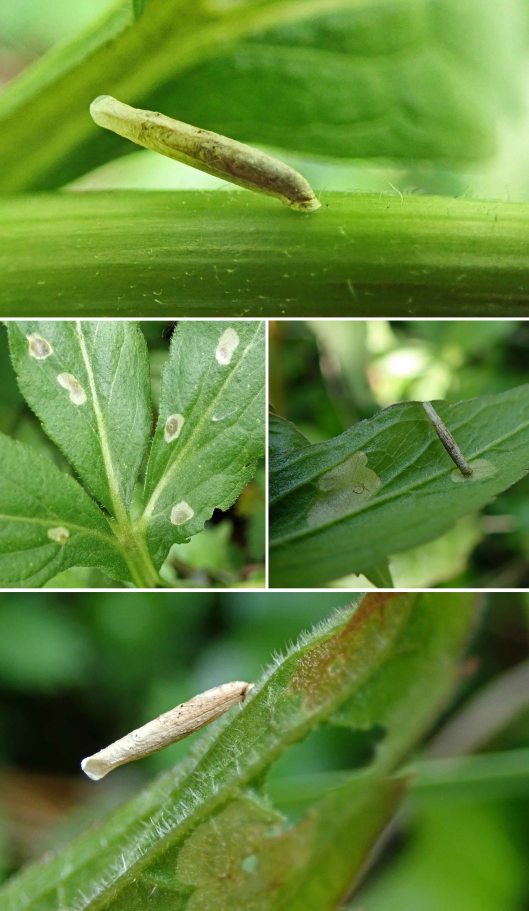
British moths, case-bearing caterpillar, case-bearing moth larva, Case-bearing moth on willow, Coleophora, Coleophora lusciniaepennella, Willow case-bearer

Last Wednesday I found my first active case-bearing moth larva of the year and it was a new species for me, the appropriately named Willow case-bearer (Coleophora lusciniaepennella), feeding, as its name implies, on Willow (one of the Salix species). There are not a lot of local records for this moth but Rob Edmunds of the British Leafminers website explained that these larvae feed up and disappear (to pupate) very quickly, so it seems a case of blink and you miss them. I was just very lucky. You can see the rather non-descript adult moth on the UK Moths website and find more about its larval stage on the British Leafminers website.

240422 Coleophora lusciniaepennella

My photos show the general location of the casebearer within the tree, what you see on the top side of the leaf, and views of either side of its cosy looking case.

Like Loading...

Seven damsels flying

20 Saturday Apr 2024

Posted by sconzani in insects, spring

≈ 7 Comments

Tags

British damselflies, British odonata, damselfly, Large Red damselfly, Pyrrhosoma nymphula

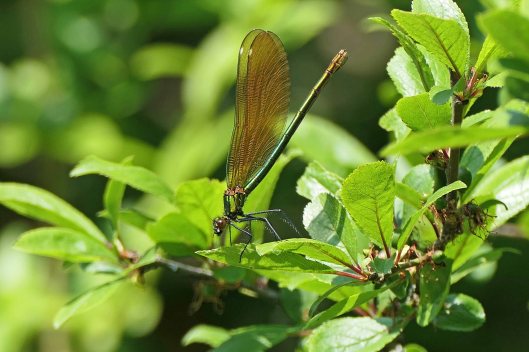
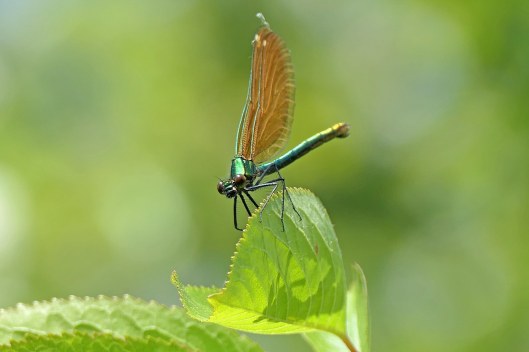
The odonata season has kicked off for me several days earlier than in previous years with the emergence locally of the Large red damselflies (Pyrrhosoma nymphula).

240420 large red damselfly (1)

The two shown here are from a total of seven of these little beauties I found in three different locations at Cosmeston Lakes Country Park on Thursday.

240420 large red damselfly (2)

Like Loading...

Sunday’s gift

17 Wednesday Apr 2024

Posted by sconzani in insects, spring

≈ 2 Comments

Tags

Anthocharis cardamines, British butterflies, butterfly, Orange-tip, spring butterflies

I was trudging slowly along a muddy path, trying not to slip (it’s happened before), so I wasn’t paying attention when my first Orange-tip butterfly (Anthocharis cardamines) of the year flitted up in front of me, disturbed from feeding on a flower of Herb Robert. Typically, it flew back along the way I had come, meaning I had to retrace my slippery steps while trying to keep an eye on where it landed once, twice, three times. By the time I got to the start of the path, the butterfly had disappeared and, though I lingered a while, it didn’t reappear.

240417 orange-tip

On my way home, I was more lucky and spotted my second Orange-tip of the year. I could easily have missed it, so well camouflaged was it amongst the lush new growth of Cow parsley plants, but the breeze had picked up and it was having to flap its wings just a little to hold on to its perch. The flash of its orange tips gave its location away.

Like Loading...
← Older posts
Newer posts →

About me

sconzani

sconzani

I'm a writer and photographer; researcher and blogger; birder and nature lover; countryside rambler and city strider; volunteer and biodiversity recorder.

View Full Profile →

Follow earthstar on WordPress.com

Enter your email address to follow this blog and receive notifications of new posts by email.

Recent blog posts

  • My first moth of the year February 18, 2026
  • Three Common sandpipers February 17, 2026
  • Beetle: Athous bicolor February 16, 2026
  • Crocus flower power February 15, 2026
  • Delightful doves February 14, 2026

From the archives

COPYRIGHT

Unless otherwise acknowledged, the text and photographs on this blog are my own and are subject to international copyright. Nothing may be downloaded or copied without my permission.

Fellow Earth Stars!

  • Unknown's avatar
  • Unknown's avatar
  • Unknown's avatar
  • Unknown's avatar
  • Unknown's avatar
  • Unknown's avatar
  • Unknown's avatar
  • Unknown's avatar
  • Unknown's avatar
  • Unknown's avatar
  • Unknown's avatar
  • Unknown's avatar
  • Unknown's avatar
  • Unknown's avatar
  • Unknown's avatar
  • Unknown's avatar
  • Unknown's avatar
  • Unknown's avatar
  • Unknown's avatar
  • Unknown's avatar
  • Unknown's avatar
  • Unknown's avatar
  • Unknown's avatar
  • Unknown's avatar
  • Unknown's avatar
  • Unknown's avatar
  • Unknown's avatar
  • Unknown's avatar
  • Unknown's avatar
  • Unknown's avatar
  • Unknown's avatar
  • Unknown's avatar
  • Unknown's avatar
  • Unknown's avatar
  • Unknown's avatar
  • Unknown's avatar
  • Unknown's avatar
  • Unknown's avatar
  • Unknown's avatar
  • Unknown's avatar
  • Unknown's avatar
  • Unknown's avatar
  • Unknown's avatar
  • Unknown's avatar
  • Unknown's avatar
  • Unknown's avatar
  • Unknown's avatar
  • Unknown's avatar
  • Unknown's avatar
  • Unknown's avatar

Blog at WordPress.com.

Privacy & Cookies: This site uses cookies. By continuing to use this website, you agree to their use.
To find out more, including how to control cookies, see here: Cookie Policy
  • Subscribe Subscribed
    • earthstar
    • Join 670 other subscribers
    • Already have a WordPress.com account? Log in now.
    • earthstar
    • Subscribe Subscribed
    • Sign up
    • Log in
    • Report this content
    • View site in Reader
    • Manage subscriptions
    • Collapse this bar
 

Loading Comments...
 

You must be logged in to post a comment.

    %d