• ABOUT
  • BIRDING 2018
  • Birding 2019
  • BLOG POSTS
  • Butterflies 2018
  • Resources

earthstar

~ a celebration of nature

earthstar

Category Archives: insects

Holes

03 Saturday Apr 2021

Posted by sconzani in animals, birds, insects

≈ Leave a comment

Tags

animal hole, burrow, hole, insect hole

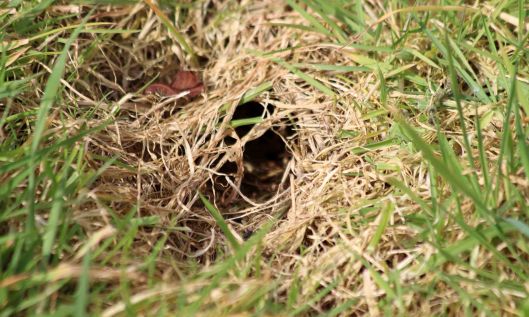
One of the many definitions of the word hole is ‘an animal’s burrow’, and some of hole’s many synonyms are cavity, chamber, cave, cleft, cranny, den, lair, nest, shelter, and tunnel. These photos show a few such places, possibly but not definitely created and occupied by Great spotted woodpeckers, rabbits, voles and/or shrews, bees, and beetles. What amazes me is how perfectly engineered so many of them are.

210402 holes (1)
OLYMPUS DIGITAL CAMERA

210402 holes (3)

210402 holes (4)
210402 holes (5)

210402 holes (6)210402 holes (7)

Like Loading...

To a Butterfly

31 Wednesday Mar 2021

Posted by sconzani in insects

≈ Leave a comment

Tags

British butterflies, butterfly, butterflying, Large white butterfly, Small tortoiseshell, Small white butterfly

‘Stay near me – do not take thy flight!
A little longer stay in sight!’

These are the opening lines of William Wordsworth’s 1802 poem ‘To a Butterfly’, lines I can easily identify with, thoughts I also utter often – though not in Wordsworth’s exact words, of course.

Fortunately, the butterflies occasionally, and unknowingly, heed my pleas and stay long enough for me to take photographs, like these recent new sightings for 2021, the beautiful Large and Small whites, and Small tortoiseshell.

Like Loading...

Alfred’s cakes

26 Friday Mar 2021

Posted by sconzani in fungi, insects

≈ Leave a comment

Tags

British fungi, British insects, Daldinia concentrica, King Alfred's Cakes, springtail, woodlouse

King Alfred’s been back in the kitchen but a Great British Bake Off winner he is not. His cakes, otherwise known as Daldinia concentrica, even when you can peek inside their blackened exteriors, never look palatable. With these I found in the woods this week though, Alfred has certainly produced some creative shapes.

210326 king alfreds cakes (1)
210326 king alfreds cakes (2)

And, even if inedible, they are sturdy enough to provide a home to tiny creatures, in this case a woodlouse and a springtail.

210326 king alfreds cakes (4)
210326 king alfreds cakes (3)
Like Loading...

Blossom and bumbles

22 Monday Mar 2021

Posted by sconzani in flowers, insects, spring, trees

≈ Leave a comment

Tags

British bumblebees, Buff-tailed bumblebee, Cherry blossom, Spring blossom

At this time of year the ornamental cherry tree outside my flat is awash with blossom, of a warm white shade flushed with the merest tinge of pink.

210322 blossom and bumbles (1)

It looks glorious, especially on sunny days, and, at a time when there are few flowers in bloom, it’s a magnet for newly emerging, hungry insects of the flying kind.

210322 blossom and bumbles (2)

Yesterday, as well as a few Honey bees, I spotted half a dozen, all Buff-tailed, bumblebees doddering from one flower to the next, before lurching haphazardly to the next branch, dislodging the delicate petals as they passed.

210322 blossom and bumbles (3)

Like Loading...

It’s a beetle

19 Friday Mar 2021

Posted by sconzani in insects

≈ 4 Comments

Tags

beetles, British beetles, ground beetle

First, I read that there are around 4000 species of beetle in Britain. But I remained optimistic and figured I might be able to narrow it down by location – it was bumbling along on the ground, so perhaps it was a ground beetle (the Carabidae). Next, I read that there are 374 species of ground beetle. But I continued to be optimistic and thought I might be able to narrow it down by shape or colour. Then, I looked through the gallery of photos on the Coleoptera website and also on the Nature Spot website, and realised that these creatures are a whole lot more difficult to identify than I first thought. So, here’s a beetle, a rather gorgeous beetle with a metallic green sheen, but a beetle none-the-less.

210319 beetle

Like Loading...

Red spots

18 Thursday Mar 2021

Posted by sconzani in insects, ladybird, spring

≈ Leave a comment

Tags

7-spot ladybird, British ladybirds, Coccinella septempunctata, Seven-spot ladybird, Spring colour

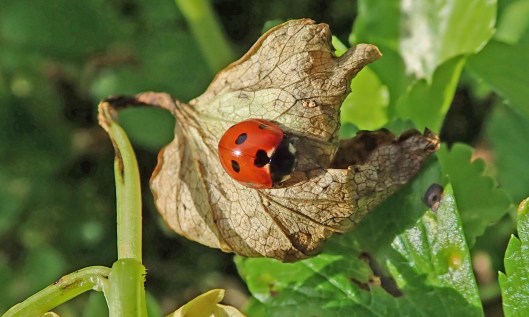
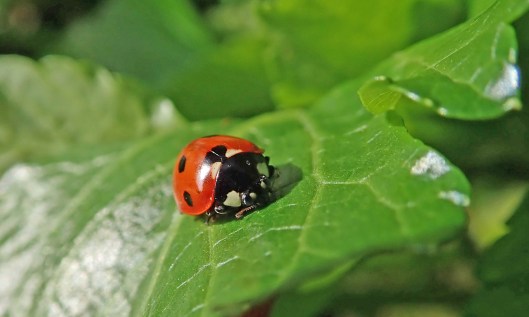
A tiny spot of red caught my eye, and then, close by, another – my first ladybirds of the year, both Seven-spot ladybirds (Coccinella septempunctata).

210318 ladybird (1)

If you’re lucky, you may have had these little beauties hibernating in your garden shed but, in this case, these two are countryside dwellers so have probably spent the winter inside a plant stem, or perhaps tucked securely within the dense branches of ivy, or maybe in a deep crack in tree bark. A few sunny days and warmer overnight temperatures will have triggered their emergence from hibernation, and produced another spring treat for me to enjoy!

210318 ladybird (2)

Like Loading...

A five-Brimstone day!

17 Wednesday Mar 2021

Posted by sconzani in insects, spring

≈ 8 Comments

Tags

Brimstone, Brimstone butterfly, British butterflies, butterfly, Grangemoor Park

Though yesterday’s weren’t my first butterfly sightings of the year (I’ve seen two different species fly rapidly past in recent weeks but haven’t managed photos), they were simply splendid. A walk around Cardiff’s Grangemoor Park produced five (!) Brimstones and, though most were patrolling their chosen territories at speed, I waited patiently for one to stop for a rest and managed to get close enough to get some good images. I can’t tell you how truly wonderful it feels to be sharing my air space with butterflies again. They are such magical creatures!

210317 brimstone

Like Loading...

A rare sighting

10 Wednesday Mar 2021

Posted by sconzani in insects

≈ Leave a comment

Tags

Andrena bees, bee parasites, British bees, British insects, male Stylops emerging from bee, parasitic relationships, Stylops

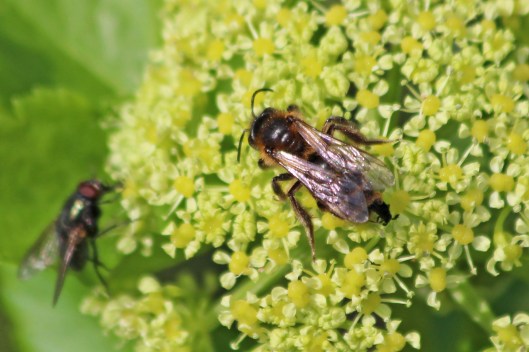
These photos had the entomologists on Twitter getting excited when I first posted them Monday evening. Though I didn’t realise it at the time, what I was seeing was a parasite emerging from the back of the bee’s body. The parasite is a Stylops, a species that has a rather gruesome but incredibly fascinating lifestyle.
210310 bee parasite (1)

The female Stylops lives permanently in the body of its host, often, as here, one of the Andrena species of bee. Her head and thorax poke out of the bee’s abdomen so she can release male-attracting pheromones and mate. I managed to photograph these and blogged about them in April 2020 (Wild word: stylopised). When the resulting larvae emerge, they pop out onto flowers the bee is feeding on, so they can then hitch a ride with another bee, burrow into it, and start the process all over again.

210310 bee parasite (2)

Some of the Stylops larvae are male, with wings. They do not have mouth parts for feeding as their only purpose is to find a female and mate. It is one of those emerging winged males that can be seen in my photos and, apparently, this process is rarely seen. Unfortunately, someone came walking along the path where I was watching this bee and I had to move to one side to allow them to pass at a safe distance. When I looked back, the bee had disappeared.

If you want to read more about the Stylops, there’s an interesting article on the Royal Entomological Society website – the male Stylops has the distinction of appearing as the emblem on the society’s official seal and logo.

Like Loading...

Three more hoverflies

06 Saturday Mar 2021

Posted by sconzani in insects

≈ Leave a comment

Tags

British hoverflies, Episyrphus balteatus, Eristalis tenax, hoverfly, Meliscaeva auricollis, spring hoverflies

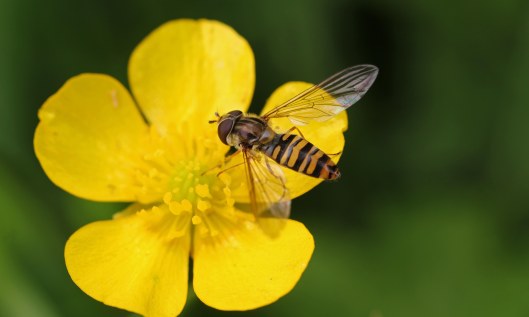
These three are often the first hoverflies seen in the springtime as they all over-winter as adults, so it’s no surprise that I’ve now seen these three species as well my first for 2021, the Melanostoma scalare I blogged about 10 days ago (First hoverfly, 25 February). We’ll need a bit more sun and warmer temperatures before more hoverflies are out and about though.

210306 Episyrphus balteatusEpisyrphus balteatus

210306 eristalis tenaxEristalis tenax

210306 Meliscaeva auricollisMeliscaeva auricollis

Like Loading...

Leaf mines: Chromatomyia scolopendri

01 Monday Mar 2021

Posted by sconzani in insects, plants

≈ Leave a comment

Tags

Agromyzidae, Chromatomyia scolopendri, Hart's tongue, leaf mine on Hart's tongue, leaf miners, leaf mines, leaf-mining fly larvae

Another week, another leaf mine – in fact, lots of mines in the glossy, lush leaves of Hart’s-tongue ferns (Asplenium scolopendrium).

210301 Chromatomyia scolopendri (1)

I have actually blogged about these before (Leaf mine in Hart’s-tongue, January 2018) but those finds were made in Somerset and I’m now finding lots of these mines in my local area in south Wales. The mines are made by the larvae of the fly Chromatomyia scolopendri, one of the Agromyzidae family of flies, and their long, winding gallery mines are unmistakeable.

210301 Chromatomyia scolopendri (2)
210301 Chromatomyia scolopendri (3)
210301 Chromatomyia scolopendri (4)
210301 Chromatomyia scolopendri (5)

You can read more about these flies on the newly launched Agromyzidae Recording Scheme website, and, if you’re interested in finding out which leaf mines to look out for and when, the scheme has a page that lists which species are most commonly recorded each month. Can you find Chromatomyia scolopendri mines in your area?

Like Loading...
← Older posts
Newer posts →

About me

sconzani

sconzani

I'm a writer and photographer; researcher and blogger; birder and nature lover; countryside rambler and city strider; volunteer and biodiversity recorder.

View Full Profile →

Follow earthstar on WordPress.com

Enter your email address to follow this blog and receive notifications of new posts by email.

Recent blog posts

  • A surprise Slow-worm April 11, 2026
  • My first Holly blue April 10, 2026
  • Alder flies April 9, 2026
  • Lily beetle April 8, 2026
  • First bee-flies April 7, 2026

From the archives

COPYRIGHT

Unless otherwise acknowledged, the text and photographs on this blog are my own and are subject to international copyright. Nothing may be downloaded or copied without my permission.

Fellow Earth Stars!

  • Unknown's avatar
  • Unknown's avatar
  • Unknown's avatar
  • Unknown's avatar
  • Unknown's avatar
  • Unknown's avatar
  • Unknown's avatar
  • Unknown's avatar
  • Unknown's avatar
  • Unknown's avatar
  • Unknown's avatar
  • Unknown's avatar
  • Unknown's avatar
  • Unknown's avatar
  • Unknown's avatar
  • Unknown's avatar
  • Unknown's avatar
  • Unknown's avatar
  • Unknown's avatar
  • Unknown's avatar
  • Unknown's avatar
  • Unknown's avatar
  • Unknown's avatar
  • Unknown's avatar
  • Unknown's avatar
  • Unknown's avatar
  • Unknown's avatar
  • Unknown's avatar
  • Unknown's avatar
  • Unknown's avatar
  • Unknown's avatar
  • Unknown's avatar
  • Unknown's avatar
  • Unknown's avatar
  • Unknown's avatar
  • Unknown's avatar
  • Unknown's avatar
  • Unknown's avatar
  • Unknown's avatar
  • Unknown's avatar
  • Unknown's avatar
  • Unknown's avatar
  • Unknown's avatar
  • Unknown's avatar
  • Unknown's avatar
  • Unknown's avatar
  • Unknown's avatar
  • Unknown's avatar
  • Unknown's avatar
  • Unknown's avatar

Blog at WordPress.com.

Privacy & Cookies: This site uses cookies. By continuing to use this website, you agree to their use.
To find out more, including how to control cookies, see here: Cookie Policy
  • Subscribe Subscribed
    • earthstar
    • Join 642 other subscribers
    • Already have a WordPress.com account? Log in now.
    • earthstar
    • Subscribe Subscribed
    • Sign up
    • Log in
    • Report this content
    • View site in Reader
    • Manage subscriptions
    • Collapse this bar
 

Loading Comments...
 

You must be logged in to post a comment.

    %d