• ABOUT
  • BIRDING 2018
  • Birding 2019
  • BLOG POSTS
  • Butterflies 2018
  • Resources

earthstar

~ a celebration of nature

earthstar

Category Archives: nature

October on the Ely embankment

31 Tuesday Oct 2017

Posted by sconzani in birds, coastal fauna, nature, walks

≈ Leave a comment

Tags

birding, birdwatching, British birds, Cardiff Bay, Ely embankment, Great Crested Grebe, Linnet, little grebe, Pied wagtail, Redshank, River Ely, Rock pipit, Turnstone, Wheatear

At least once a week I take a turn along the embankment where the River Ely flows out into Cardiff Bay as it makes a nice circular walk from my home on the cliff-top above in Penarth. (It’s good exercise too, as what goes down there must walk back up!) I always record what I see – usually birds – so thought I would share my sightings in an end-of-monthly post.

171031a Ely embankment map
171031b turnstone & coot

A variety of birds make their home in this stretch of water, which they share with a yachting marina and associated water traffic coming and going. There are almost always Turnstones in varying quantities (from one to nine), Mallards, Mute swans, one or two Great Crested Grebes (including their progeny this year), a proliferation of Coots, the occasional Cormorant fishing, usually a couple of Grey wagtails and a couple of Pieds. Gulls fly overhead and there are plenty of hirundines, in the season.

171031c Wheatear
171031d Pied wagtail
171031e Rock pipit

2 October: A Wheatear, an unusual visitor, almost certainly on a migration stopover, was dotting about on the embankment stones; a Pied wagtail was doing its morning stretches, and a Rock pipit was browsing for titbits.

171031f Little grebe

171031g Great crested grebe (1)
171031g Great crested grebe (2)
171031g Great crested grebe (3)

16 October: This was the day before ex-hurricane Ophelia made her presence felt, the day of the jaundiced yellow sky and the rusty red sun, which you can see reflected in my photo of the four Little grebes that were sheltering from the incoming weather. A juvenile Grey wagtail was dotting along the embankment, calling incessantly for its parent; and a Great crested grebe was enjoying a very successful fishing session, coming up with fish in two successive dives.
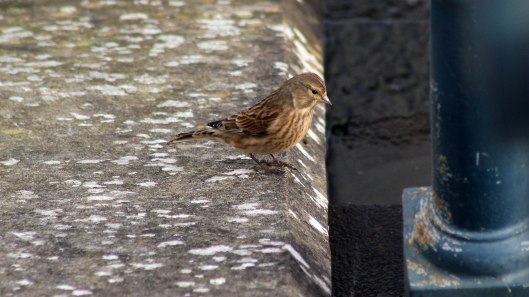
171031h Linnet

22 October: The day after Storm Brian I walked the embankment to see if any unusual birds had been blown in. The usual suspects were present, except that, most unusually, there wasn’t a single Turnstone. A solitary Linnet flitted back and forth from pavement to stones, and three rather exhausted-looking Redshanks dozed warily along the water line. One of these was colour-ringed and might possibly be the bird I saw back in March but I couldn’t see its rings well enough to be sure.

171031i Redshank

Like Loading...

Stinking Iris

30 Monday Oct 2017

Posted by sconzani in flowers, nature, wildflowers

≈ 2 Comments

Tags

British flora, British wildflowers, flower seeds, Iris, Iris foetidissima, plant seeds, Roast-beef plant, seeds, Stinking iris

I gave it a really good sniff but I smelled nothing. It was only later that I read the smell comes from the leaves, but only when you crush or rub them, which I didn’t do. And, even then, some people can’t smell the ‘slightly stale, raw beef’ smell that Stinking iris is named for. Even its scientific name, Iris foetidissima, refers to the smell, as do two of its vernacular names: Roast-beef plant and Bloody bones.

171030 Stinking iris (7)

However, I’m not here to warn about this iris’s smell nor, in fact, to extol the virtues of the plant itself, which is often a bit untidy and tatty looking, but rather to praise the beauty of its seeds. The flowers themselves are nothing to write home about, being a rather dull greyish-purple but the seeds erupt in the autumn, like bright orange peas in a papery brown pod. As the weather gets colder, if they’re not plundered as food by birds, they turn a fabulous scarlet and then, eventually, if the weather’s not too wet, dry to a rich golden brown. Just beautiful!

171030 Stinking iris (1)
171030 Stinking iris (2)
171030 Stinking iris (3)
171030 Stinking iris (4)
171030 Stinking iris (5)
171030 Stinking iris (6)
Like Loading...

The return of the tufties

29 Sunday Oct 2017

Posted by sconzani in birds, nature

≈ Leave a comment

Tags

Aythya fuligula, birding, birdwatching, British birds, British ducks, ducks, Tufted duck

171029 Tufted ducks (a)

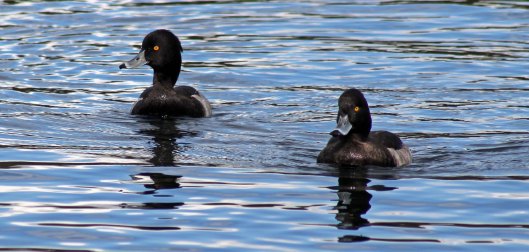
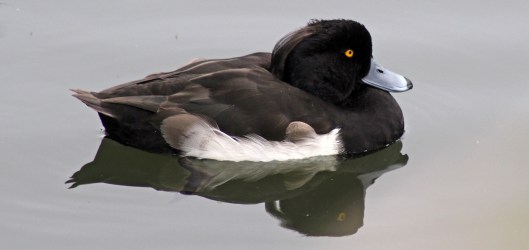
They always make me smile so it’s a joy to see Tufted ducks (Aythya fuligula) back on my local lakes here in south Wales. These ducks tend not to live in Wales year-round: instead, they spend most of the year in England and Scotland, only heading south-west when the days get shorter and the temperatures cooler. Numbers throughout Britain also increase during the winter months as birds from Iceland and northern Europe head to our slightly milder isles.

171029 Tufted ducks (b)
171029 Tufted ducks (c)
171029 Tufted ducks (d)
171029 Tufted ducks (e)
171029 Tufted ducks (f)
171029 Tufted ducks (g)

171029 Tufted ducks (h)

Like Loading...

Life in an Oak Marble gall

28 Saturday Oct 2017

Posted by sconzani in insects, nature, trees

≈ 2 Comments

Tags

Andricus kollari, gall wasps, galls on oak trees, hymenoptera in Oak marble galls, hymenoptera living in galls, Marble gall, oak galls, oak tree

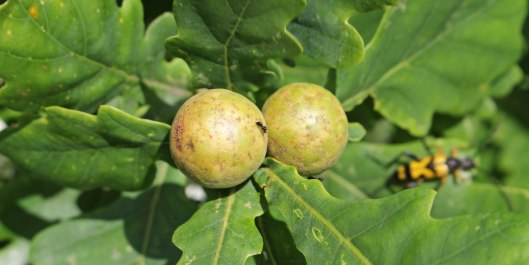
Back in August, as part of a mini-series on some of the galls to be found on Oak trees, I posted about the Marble galls caused by the incredibly tiny wasp, Andricus kollari. Although most of the galls I’ve found have had tiny holes in them, meaning the wasps had already pupated and flown, a couple of weeks ago I found a couple with no holes. So, my curiosity got the better of me and I brought them home to see what might eventuate.

171028 Oak marble gall

Note the tiny creature sitting on the gall.

Today, when I looked in the jar I’d put them in, I was so excited to see a tiny creature had appeared. Now, I initially thought this must be A. kollari, the gall-maker, but I was wrong … and, looking at images online, I don’t think I’m the only one who’s ever been fooled by this. However, with the help of friends who questioned and strangers who know much more than me, I’ve discovered there are at least 29 (twenty-nine!!) species of hymenoptera (bees, wasp, ants and sawflies) that might live within an Oak marble gall.

171028 Wasp living in Oak marble gall (1)
171028 Wasp living in Oak marble gall (2)

Though some of these critters simply use the gall for shelter, it seems that, for others, the gall tissue is a good source of nutrients, while still others are parasites whose larvae kill some or all of the larvae of the original gall-making wasp. Without detailed microscopic examination, I’m not able to determine which species this tiny wasp is but I thought you might like to see this little video of it performing its ablutions earlier. I have now released it back in the area where I found it so let’s hope it survives.

Like Loading...

Taking great pleasure …

27 Friday Oct 2017

Posted by sconzani in autumn, flowers, nature, wildflowers

≈ 2 Comments

Tags

#FloralFriday, autumn colour, autumn flowers, British wildflowers, white wildflowers, wildflowers, yellow wildflowers

‘Who would live happily in the country
must be wisely prepared to take great pleasure in little things.’
~ Henry Beston, in Northern Farm: A chronicle of Maine, Reinhart & Co, 1948

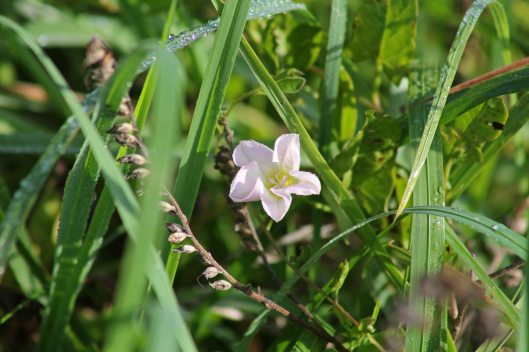
171027 Bindweed
171027 Sow thistle
171027 Daisy
171027 Dandelion agg
171027 Yarrow
171027 Buttercup agg


Like Loading...

Arne and the Sika

26 Thursday Oct 2017

Posted by sconzani in animals, mammal, nature

≈ Leave a comment

Tags

Avocet, birding, birdwatching, Cervus nippon, Corfe Castle, Glamorgan Bird Club, RSPB Arne, Sika deer, Sika fawn, Sika hind

171028 Arne (1)

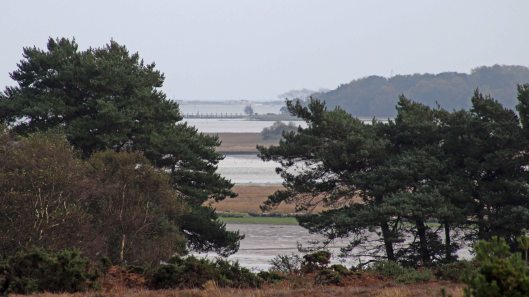
On the way back from Portland our group of Glamorgan Bird Clubbers detoured to RSPB Arne to follow up on the reported sighting of a Stilt sandpiper.

171028 Arne (2)
171028 Arne birders (7)
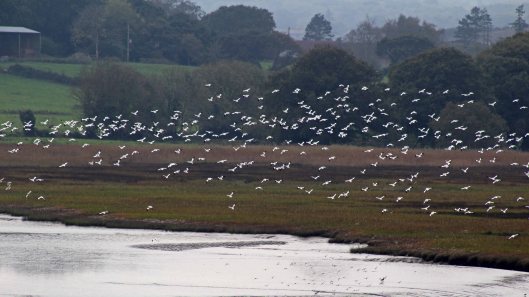
171028 Arne Avocets

It was down there somewhere, amidst the large numbers of waders – it was a real treat to see so many Avocets together – but I can’t definitively say I saw it.

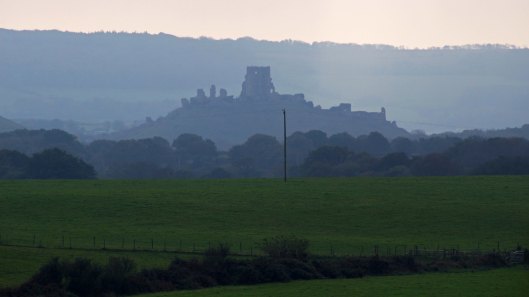
171028 Corfe Castle from Arne

However, we did have fabulous views of the surrounding countryside and the distant Corfe Castle – another place added to my list of ‘must visits’ – and, to my delight, we also had wonderful views of a Sika deer mother and fawn, the first time I’ve seen these deer.

171028 Arne Sika deer (1)

The Sika (Cervus nippon) is about the size of a Fallow deer – this hind would’ve been between 50 and 90cm at the shoulder, her fawn, obviously, smaller – but the Sika’s coat is generally darker. They do have whitish spots in the summer but these can be very faint, almost invisible in the winter months. Fawns are usually born in May – June so this little one must’ve been 4 to 5 months old.

171028 Arne Sika deer (2)
171028 Arne Sika deer (3)
171028 Arne Sika deer (4)

The countryside at Arne is perfect for Sika as they prefer coniferous woodlands and acidic heathland, where they nibble away at grasses and heather. Although these Sika are not a native British species – three different Asian species have been kept on estates and parklands, escapees from the Japanese species (hence C. nippon) can be found through much of Britain where the habitat is right, particularly in parts of Scotland.

Like Loading...

Wild words: nyctinasty

25 Wednesday Oct 2017

Posted by sconzani in flowers, nature, wildflowers

≈ 2 Comments

Tags

#WildWords, nyctinastic movement, Nyctinasty, opening and closing of flowers

Here’s one from my volunteering on the Mary Gillham Archive Project. According to the Oxford Dictionary, nyctinasty is ‘the periodic movement of flowers or leaves caused by nightly changes in light intensity or temperature’, though I have also read that these movements, particularly the opening and closing of flowers, don’t always occur at night. When the weather is very dull due to thick cloud, or when the weather changes dramatically, as with the onset of a sudden storm, from a bright sunny day to a dark, grey, heavily cloudy sky, some flowers react by closing up. The word nyctinasty comes from the Greek and is a combination of nux or nukt meaning night and nastos meaning press or squeeze together.

171025 nyctinasty

Like Loading...

Leps at Combefield Quarry

24 Tuesday Oct 2017

Posted by sconzani in insects, nature

≈ Leave a comment

Tags

British butterflies, butterflies, butterfly, Clouded yellow, Colias croceus, Colias croceus f. helice, Combefield Quarry, Comma, Peacock, Red Admiral

171024 Combefield Quarry

We went for a wander around Combefield Quarry in Portland looking for birds but found butterflies instead. And very nice butterflies they were too, especially considering we are now half way through autumn. There were two Peacocks, a Comma, Speckled woods and Red admirals …

171024 Peacock (1)

171024 Comma
171024 Red admiral

And the icing on the cake was not one but two Clouded yellows (Colias croceus). But wait there’s more … I’ve been told that the paler of these Clouded yellows may well be the helice variety (Colias croceus f. helice), which is something of a rarity. So, we were privileged indeed with our Lepidoptera sightings that day.

171024 Clouded Yellow f. helice
171024 Clouded yellow
Like Loading...

Birding at Portland

23 Monday Oct 2017

Posted by sconzani in birds, nature

≈ 2 Comments

Tags

birding, birdwatching, Cormorant, Dorset coastline, Gannet, Glamorgan Bird Club, Kestrel, Little owl, Portland, Portland Bird Observatory, Portland stone

One more birding blog from my wonderful weekend at the Portland Bird Observatory and then no more about Portland … till next year.

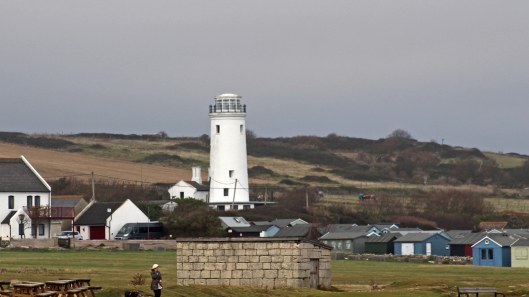
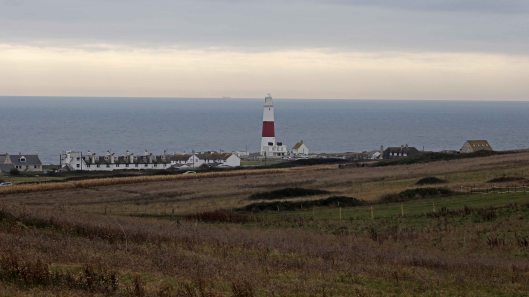
171023 Portland Bird Observatory (3)171023 Portland lighthouse

In case you don’t know, Portland is sort of an island – it is actually connected to the mainland – but it looks for all the world like a small island jutting out into the English Channel. It’s where the famous Portland stone (used to build such landmarks as St Paul’s Cathedral in London) comes from, and so the coastline is dramatically rocky and the land is riddled with quarries, many of which are now disused.

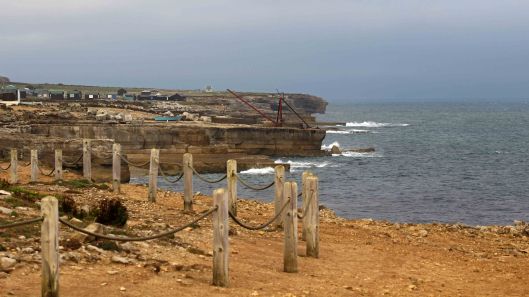
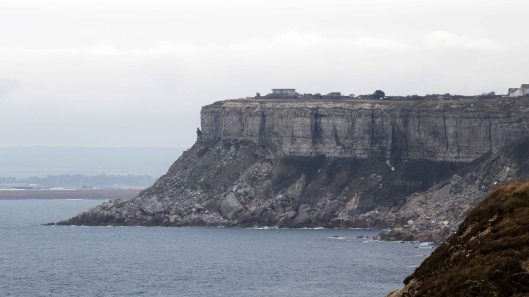
171023 Portland coastline (1)171023 Portland coastline (2)

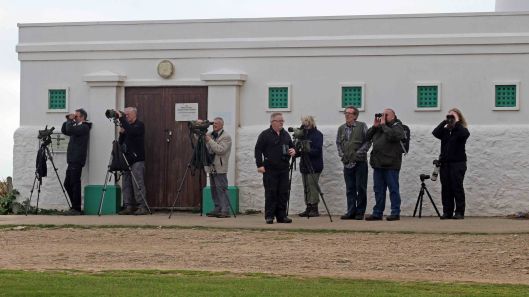
On the Saturday of our long weekend we went for a wonderful walk, along the cliff-top coastal paths and inland through fields, and later in to one of the old quarries. Those with ’scopes spotted some nice seabirds passing by, and gannets, shags, cormorants and various gulls could easily be seen with the naked eye and bins.

171023 Seawatching birders

171023 Cormorants
171023 Gannet

Kestrels were abundant – one sat obligingly on top of a post (though shooting in to a bright sky didn’t make for good photos) and I managed to get a reasonable fly-by shot.

171023 Kestrel (2)
171023 Kestrel (1)

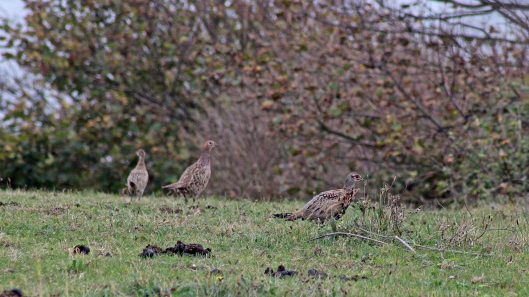
As well as seeing Stonechats, Meadow pipits, a Whinchat, Wheatears and large flocks of Goldfinches and Linnets, we also disturbed a family of Pheasants (mum, dad and two kids) in one of the fields.

171023 Pheasants

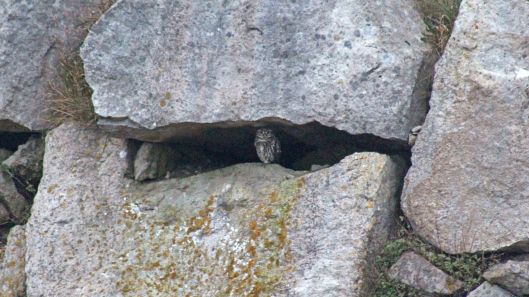
And the resident Little owl popped out of its hidey hole in a local quarry for a short time early on Sunday morning, though, again, the light was not the best for photography.

171023 Little owl

All up the group total for the weekend was 117 species seen or heard. At 82, my personal total was a bit lower but it’s the quality, not the quantity that counts – of those 82, 15 were lifers, birds I’d never seen before – and that’s a pretty impressive total for just three days’ birding!

Like Loading...

Moth trapping at the Obs

22 Sunday Oct 2017

Posted by sconzani in insects, nature

≈ 4 Comments

Tags

Black rustic, British moths, Brown-tail moth webs, Feathered Brindle, Fox moth caterpillar, Green-brindled Crescent, Lunar Underwing, moth larvae, moths, Portland moths

These are just a few moths from last weekend at Portland Bird Observatory in Dorset. They trap every night at the Obs and, because of their southern-coast location, just as with the birds they also get many migrant moths. However, I was too busy birding to take many moth photos and I’m fairly sure these are all common Brits. They’re not species I would necessarily see in Wales though and they are pretty, especially that third one (bottom left).

171022 Black rustic
171022 Feathered Brindle
171022 Green-brindled crescent
171022 Lunar underwing

These are: Black rustic (Aporophyla nigra), Feathered Brindle (Aporophyla australis), Green-brindled Crescent (Allophyes oxyacanthae), and Lunar Underwing (Omphaloscelis lunosa).

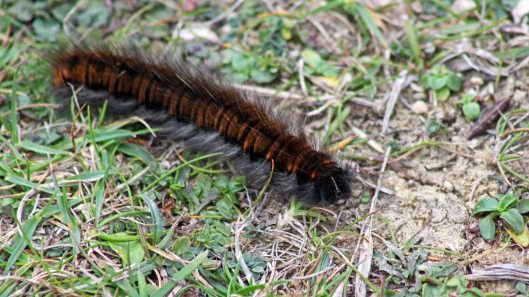
171022 Fox moth caterpillar

While out walking the cliff-top paths on Saturday afternoon, one of our team also found this little fella pottering along on the grass beside the track. It’s a Fox moth larva (Macrothylacia rubi).

171022 Brown-tail moth web (1)
171022 Brown-tail moth web (2)

We also spotted a ton of these webs in the brambles near the main lighthouse. They house the larvae of Brown-tail moths (Euproctis chrysorrhoea).

Like Loading...
← Older posts
Newer posts →

About me

sconzani

sconzani

I'm a writer and photographer; researcher and blogger; birder and nature lover; countryside rambler and city strider; volunteer and biodiversity recorder.

View Full Profile →

Follow earthstar on WordPress.com

Enter your email address to follow this blog and receive notifications of new posts by email.

Recent blog posts

  • Peak Wild garlic April 26, 2026
  • First damsels of 2026 April 25, 2026
  • NFY: Green-veined white April 24, 2026
  • The return of the Willow warblers April 23, 2026
  • Bug: Harpocera thoracica April 22, 2026

From the archives

COPYRIGHT

Unless otherwise acknowledged, the text and photographs on this blog are my own and are subject to international copyright. Nothing may be downloaded or copied without my permission.

Fellow Earth Stars!

  • Unknown's avatar
  • Unknown's avatar
  • Unknown's avatar
  • Unknown's avatar
  • Unknown's avatar
  • Unknown's avatar
  • Unknown's avatar
  • Unknown's avatar
  • Unknown's avatar
  • Unknown's avatar
  • Unknown's avatar
  • Unknown's avatar
  • Unknown's avatar
  • Unknown's avatar
  • Unknown's avatar
  • Unknown's avatar
  • Unknown's avatar
  • Unknown's avatar
  • Unknown's avatar
  • Unknown's avatar
  • Unknown's avatar
  • Unknown's avatar
  • Unknown's avatar
  • Unknown's avatar
  • Unknown's avatar
  • Unknown's avatar
  • Unknown's avatar
  • Unknown's avatar
  • Unknown's avatar
  • Unknown's avatar
  • Unknown's avatar
  • Unknown's avatar
  • Unknown's avatar
  • Unknown's avatar
  • Unknown's avatar
  • Unknown's avatar
  • Unknown's avatar
  • Unknown's avatar
  • Unknown's avatar
  • Unknown's avatar
  • Unknown's avatar
  • Unknown's avatar
  • Unknown's avatar
  • Unknown's avatar
  • Unknown's avatar
  • Unknown's avatar
  • Unknown's avatar
  • Unknown's avatar
  • Unknown's avatar
  • Unknown's avatar

Blog at WordPress.com.

Privacy & Cookies: This site uses cookies. By continuing to use this website, you agree to their use.
To find out more, including how to control cookies, see here: Cookie Policy
  • Subscribe Subscribed
    • earthstar
    • Join 642 other subscribers
    • Already have a WordPress.com account? Log in now.
    • earthstar
    • Subscribe Subscribed
    • Sign up
    • Log in
    • Report this content
    • View site in Reader
    • Manage subscriptions
    • Collapse this bar
 

Loading Comments...
 

You must be logged in to post a comment.

    %d