• ABOUT
  • BIRDING 2018
  • Birding 2019
  • BLOG POSTS
  • Butterflies 2018
  • Resources

earthstar

~ a celebration of nature

earthstar

Category Archives: nature

Enjoying the blues

14 Friday Apr 2017

Posted by sconzani in flowers, nature

≈ 2 Comments

Tags

blue flowers, Grape hyacinth, Muscari armenaicum, Muscari sp., Spring colour, spring flowers

Blue is not a colour we see often in flowers – I can only think of a few blue-flowering plants: delphiniums, agapanthus, hydrangeas, cornflowers, bluebells of course, and today’s plant, the Grape hyacinth (Muscari sp.). The scarcity of blue flowers is due to plants having no true blue pigment so they must perform a degree of chemical manipulation to make the colour. According to author David Lee, who wrote Nature’s Palette: The science of plant color (University of Chicago Press, 2010), ‘Plants tweak, or modify, [their] red anthocyanin pigments to make blue flowers. They do this through a variety of modifications involving pH shifts and mixing of pigments, molecules and ions.’

174014 grape hyacinth (1)

That knowledge makes me appreciate even more the delicate Grape hyacinths that are currently adorning many of my neighbours’ gardens and blooming prolifically at the local cemetery. They are probably Muscari armenaicum – muscari comes from the Greek muschos, referring to their musky scent, and armenaicum is a clue to their area of origin, Armenia and the meadows and woodlands of the eastern Mediterranean right through to the Caucasus. The Grape hyacinth was first cultivated in European gardens in the 1870s but spreads freely and rapidly so has become naturalised in Britain, much of Europe and North America.

174014 grape hyacinth (5)
174014 grape hyacinth (4)
174014 grape hyacinth (3)
174014 grape hyacinth (2)
Like Loading...

Genetic mutation leads to immigration

13 Thursday Apr 2017

Posted by sconzani in birds, nature

≈ 2 Comments

Tags

birding, birdwatching, Collared dove, genetic mutation, Mutation affected sense of direction, Streptopelia decaocto

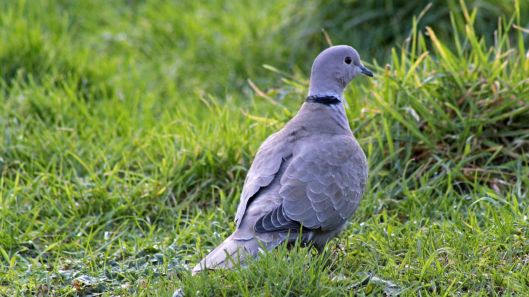
I came across the delightful bird in the series of three images below during a recent walk around Cardiff Bay. Sitting quietly in a tree by the footpath, it was indulging in a good preening, running its beak repeatedly down through its fluffed-up chest feathers. It’s a Collared dove (Streptopelia decaocto), a bird you’re often more likely to hear than to see, its continuous cooing floating down from the leafy trees where it’s sitting.

170413 Collared dove (1)
170413 Collared dove (3)
170413 Collared dove (2)

Amazingly, these birds only immigrated to Britain in the 1950s – they’re native to the Middle East but gradually spread across Europe before crossing the Channel, and they’re now very common garden visitors in villages and towns across the country. In Fauna Britannica, Richard Mabey notes that this incredible spread, more than any other European bird in the past 50 years, has been attributed to ‘a genetic mutation that affected the birds’ sense of direction and encouraged them to move north and west’, though the British Trust for Ornithology believes natural selection has probably now reduced this tendency. If it hadn’t, the birds would all be flying off over the Atlantic, a trip they probably wouldn’t survive.

170413 Collared dove (4)

Like Loading...

The donkeys of Morocco

12 Wednesday Apr 2017

Posted by sconzani in animals, nature

≈ Leave a comment

Tags

#WorldWildlifeWednesday, beasts of burdens, donkeys, donkeys in Morocco, Moroccan donkeys, Morocco

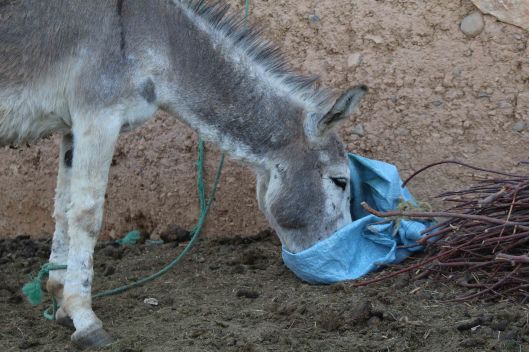
We’ve seen Mary Gillham and her many donkey friends, and we’ve looked at donkeys in Peru; now it’s time for the donkeys (and a horse or two, or perhaps a mule) of Morocco to show their charming faces. Morocco may be a rapidly westernising nation but equine power still rules in the narrow, meandering alleyways of the centuries-old medinas, where motorised vehicles will never fit or be welcomed, and in the more remote rural areas that roads do not, may never reach.

170412 Moroccan donkeys horses mules (1)

If you’re exploring the medinas of ancient Moroccan cities, one word you must immediately commit to memory is balak because, if you don’t take heed and ‘watch out’ or ‘get out of the way’, you may well be bowled over by a donkey carrying anything from full panniers of groceries to back-breaking loads of animal skins bound for the local tanneries. These animals are not pets – they don’t have names – and they are worked hard but, for the most part, they are looked after because they are valuable assets, providing essential transportation services to their owners and customers alike.

170412 Moroccan donkeys horses mules (3)
170412 Moroccan donkeys horses mules (4)
170412 Moroccan donkeys horses mules (5)
170412 Moroccan donkeys horses mules (6)
170412 Moroccan donkeys horses mules (7)
170412 Moroccan donkeys horses mules (8)

If you’re a donkey lover and would like to read more about the donkeys of Morocco, I found this article from their quarterly Journeys magazine on the Smithsonian website – it’s a great read.

170412 Moroccan donkeys horses mules (9)

Like Loading...

The chase is on!

11 Tuesday Apr 2017

Posted by sconzani in birds, nature

≈ 2 Comments

Tags

birding, birdwatching, Cygnus olor, Mute swan, swan, swan chasing swan, swan protecting female

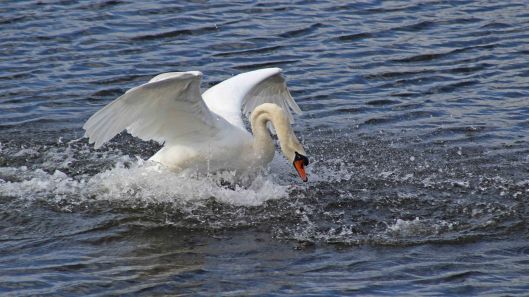
170411 Swan chases swan (1)

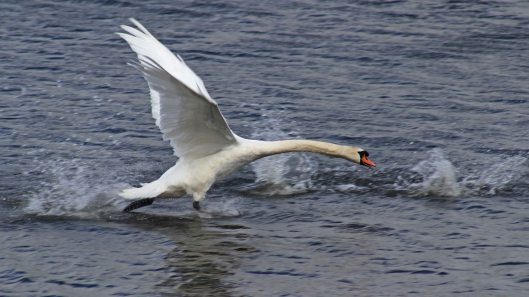
Mute swans (Cygnus olor) sure do get stroppy at this time of year. I guess it’s all about establishing and protecting their relationships with their female companions but sometimes they do get a bit carried away. This angry bird must’ve chased the interloper almost 500 metres before it was satisfied the other bird was far enough away from its lady friend and returned to her.

170411 Swan chases swan (2)170411 Swan chases swan (3)170411 Swan chases swan (4)170411 Swan chases swan (5)170411 Swan chases swan (6)

Like Loading...

Craig-y-Cilau National Nature Reserve

10 Monday Apr 2017

Posted by sconzani in geology, nature, parks, walks

≈ Leave a comment

Tags

birding, birdwatching, Brecon Beacons, Craig-y-Cilau, Glamorgan Bird Club, limestone cliffs, national nature reserve, old tramway

170410 Craig Y Cilau NNR (4)

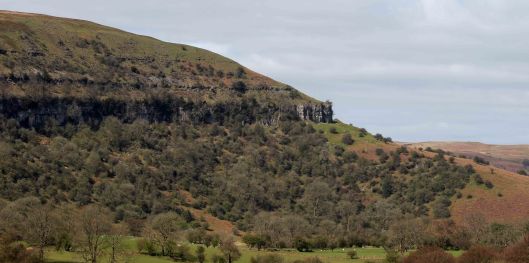
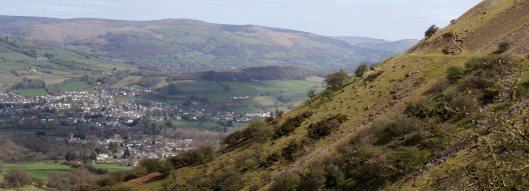
Last Wednesday I joined 19 of my fellow Glamorgan Bird Club members on a trip to the Craig-y-Cilau National Nature Reserve. Though our species list for the day totalled around 30, most birds were too distant for photographs but the location, high in the hills on the edge of the Brecon Beacons National Park, is stunning!

170410 Craig Y Cilau NNR (7)
170410 Craig Y Cilau NNR (3)
170410 Craig Y Cilau NNR (8)

The limestone cliffs here were once quarried and our path – at times rather narrow and with a steep drop to one side – followed the route of the old tramway, the signs of which could still be seen in the stones. The cliffs are riddled with caves, with a mapped system of over 400 miles of passageways, though you’d be foolhardy to enter without an experienced guide.

170410 Craig Y Cilau NNR (6)

Though the birds were somewhat elusive, we were surrounded by flourishing and sometimes rare flora, with wildflowers aplenty and some interesting fungi.

170410 Craig Y Cilau NNR (1)
170410 Craig Y Cilau NNR (5)

And the panoramic views, towards the towns of Crickhowell and Llangattock and over the surrounding countryside, were simply sensational. We didn’t get a chance to explore the whitebeam-filled woodlands or the unique raised bog so I’m already planning a return trip.

170410 Craig Y Cilau NNR (2)

Like Loading...

Butterflies!

09 Sunday Apr 2017

Posted by sconzani in insects, nature, spring

≈ 4 Comments

Tags

British butterflies, butterflies, Comma, Painted Lady, Peacock, Small tortoiseshell, Speckled wood

Yesterday I was celebrating the return of the Sand Martins, today it’s the turn of the butterflies. We’ve had 4 days of wall-to-wall sunshine and daily high temperatures in the mid teens which has encouraged all the small critters we share our world with to emerge and get active. And it’s a wondrous sight to behold!

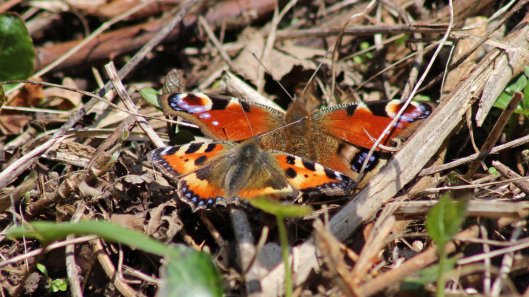
170409 Peacock & Small tortoisehell

These two, a Peacock (Aglais io) (top) and a Small tortoiseshell (Aglais urticae) (below) were in one of my local parks. They flew in together and sat very close like this for at least ten minutes, after which time I walked on. It’s unusual to see them like this and one of my knowledgeable friends speculated that the Small tortoiseshell might me a confused male, showing an ‘interest’ in the Peacock.

170409 Comma
170409 Speckled Wood
170409 Painted Lady

I saw these three, plus another Peacock and some Small whites that were too fast to photograph, on a walk along the local coastal path on Friday. They’re a Comma (Polygonia c-album) on the left, a Speckled wood (Pararge aegeria) in the centre – one of eight I saw on this walk, and a Painted lady (Vanessa cardui) on the right. The Painted Lady is a long-distance migrant, flying back to Britain at this time of year from the desert fringes of North Africa, the Middle East, and central Asia so it’s no wonder it’s looking rather battered.

Like Loading...

The birds are back in town!

08 Saturday Apr 2017

Posted by sconzani in birds, nature

≈ 3 Comments

Tags

birding, birdwatching, Cardiff Bay, migrating birds, Riparia riparia, Sand martin, signs of summer

Not just any old birds – I’m referring to the Sand martins (Riparia riparia), one of the first migrating birds to arrive in the springtime. When you start to see them swooping and diving in the hunt for insects and hear their characteristic chattering sounds, you know summer really is just around the corner.

170408 Sand Martin (1)

The Sand martins have been arriving at various places along the south Wales coast for the past couple of weeks, after a marathon flight from their overwintering spots in the Sahel, south of the Sahara in Africa. For such small birds, it really is a huge effort so it’s no surprise they stop over in Cardiff Bay to refuel and rest up. Though many birds fly on to destinations throughout Britain, some will stay on in Wales to breed and raise their broods of four or five chicks before heading south to Africa again around August-September. It’s usually quite difficult to get photos of these aerial acrobats but this morning I got lucky when this little one sat and sang me a pretty song.

170408 Sand Martin (2)

Like Loading...

Mad with joy

07 Friday Apr 2017

Posted by sconzani in flowers, nature, spring, wildflowers

≈ 12 Comments

Tags

spring, Spring colour, spring flowers, wildflowers

‘People from a planet without flowers would think we must be mad with joy the whole time to have such things about us.’ ~ Iris Murdoch

170407 spring flowers (1)
170407 spring flowers (2)
170407 spring flowers (3)
170407 spring flowers (4)
170407 spring flowers (5)
170407 spring flowers (6)
170407 spring flowers (7)
170407 spring flowers (8)
170407 spring flowers (9)
Like Loading...

Another day, another new gull!

06 Thursday Apr 2017

Posted by sconzani in birds, nature

≈ Leave a comment

Tags

birding, birdwatching, Blakc-headed gull, Cardiff Bay, gulls, Ichthyaetus melanocephalus, Mediterranean gull

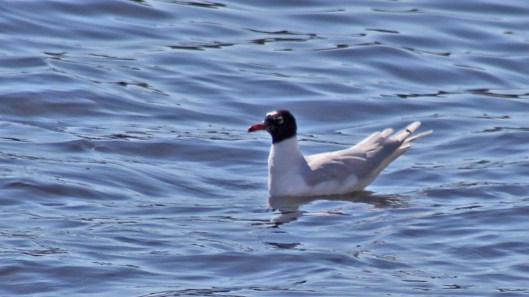
I’m rather ignorant about gulls but, when I saw this particular gull in a flock of about 20 others in Cardiff Bay a few days ago, I realised it looked different though I wasn’t able to identify the bird until I got home and had a good look at my photos. Even then I wasn’t entirely certain so posted some photos on the South Wales Birding group page on Facebook to get some expert opinions. And it turns out my deduction was right – this is a Mediterranean gull (Ichthyaetus melanocephalus).

170406 Mediterranean gull (1)

How did I recognise it from the usual Black-headed gulls (BHGs)? Well, in this bird the black feathers cover the whole head, rather than just the front half, and they are very black, not dark brown like the BHGs – the word melanocephalus means black-headed. Also, as one of my Facebook friends pointed out, you should always keep a look out for gulls that have white primaries, the long outermost feathers towards the top of a bird’s wing. Here are some flight photos that show how pale this bird’s wings were (and apologies for the poor images – it’s not easy to capture a flying bird and these are also heavily cropped).

170406 Mediterranean gull (2)
170406 Mediterranean gull (3)
170406 Mediterranean gull (5)
170406 Mediterranean gull (4)
Like Loading...

Station blooms

05 Wednesday Apr 2017

Posted by sconzani in flowers, nature, spring, wildflowers

≈ 2 Comments

Tags

daffodil, Penarth railway station, Penarth station, Snake’s head fritillary, Spring blooms, Spring colour, spring flowers, tulips

Though Penarth is a wonderfully historic Victorian seaside town, with lovely parks, an iconic pier and grand buildings, its station is nothing to write home about. The original stone-built station buildings were demolished in the 1980s and replaced with a functional but ugly brick structure. So, it’s not one of those picturesque stations with hanging baskets full of summer flowers but it does have one redeeming feature. The scruffy and uncared-for dirt bank alongside the platform is currently home to a delightful display of Spring blooms. So, while the other morning commuters spend their waiting time scrolling through the latest social media happenings on their smartphones, completely oblivious to their surroundings, I enjoy the flowers. I hope you do too!

170407 Penarth station blooms (1)
170407 Penarth station blooms (2)
170407 Penarth station blooms (3)
170407 Penarth station blooms (4)
170407 Penarth station blooms (5)
170407 Penarth station blooms (6)
170407 Penarth station blooms (7)
170407 Penarth station blooms (8)
170407 Penarth station blooms (9)
Like Loading...
← Older posts
Newer posts →

About me

sconzani

sconzani

I'm a writer and photographer; researcher and blogger; birder and nature lover; countryside rambler and city strider; volunteer and biodiversity recorder.

View Full Profile →

Follow earthstar on WordPress.com

Enter your email address to follow this blog and receive notifications of new posts by email.

Recent blog posts

  • Lifer: Box bug April 27, 2026
  • Peak Wild garlic April 26, 2026
  • First damsels of 2026 April 25, 2026
  • NFY: Green-veined white April 24, 2026
  • The return of the Willow warblers April 23, 2026

From the archives

COPYRIGHT

Unless otherwise acknowledged, the text and photographs on this blog are my own and are subject to international copyright. Nothing may be downloaded or copied without my permission.

Fellow Earth Stars!

  • Unknown's avatar
  • Unknown's avatar
  • Unknown's avatar
  • Unknown's avatar
  • Unknown's avatar
  • Unknown's avatar
  • Unknown's avatar
  • Unknown's avatar
  • Unknown's avatar
  • Unknown's avatar
  • Unknown's avatar
  • Unknown's avatar
  • Unknown's avatar
  • Unknown's avatar
  • Unknown's avatar
  • Unknown's avatar
  • Unknown's avatar
  • Unknown's avatar
  • Unknown's avatar
  • Unknown's avatar
  • Unknown's avatar
  • Unknown's avatar
  • Unknown's avatar
  • Unknown's avatar
  • Unknown's avatar
  • Unknown's avatar
  • Unknown's avatar
  • Unknown's avatar
  • Unknown's avatar
  • Unknown's avatar
  • Unknown's avatar
  • Unknown's avatar
  • Unknown's avatar
  • Unknown's avatar
  • Unknown's avatar
  • Unknown's avatar
  • Unknown's avatar
  • Unknown's avatar
  • Unknown's avatar
  • Unknown's avatar
  • Unknown's avatar
  • Unknown's avatar
  • Unknown's avatar
  • Unknown's avatar
  • Unknown's avatar
  • Unknown's avatar
  • Unknown's avatar
  • Unknown's avatar
  • Unknown's avatar
  • Unknown's avatar

Blog at WordPress.com.

Privacy & Cookies: This site uses cookies. By continuing to use this website, you agree to their use.
To find out more, including how to control cookies, see here: Cookie Policy
  • Subscribe Subscribed
    • earthstar
    • Join 642 other subscribers
    • Already have a WordPress.com account? Log in now.
    • earthstar
    • Subscribe Subscribed
    • Sign up
    • Log in
    • Report this content
    • View site in Reader
    • Manage subscriptions
    • Collapse this bar
 

Loading Comments...
 

You must be logged in to post a comment.

    %d