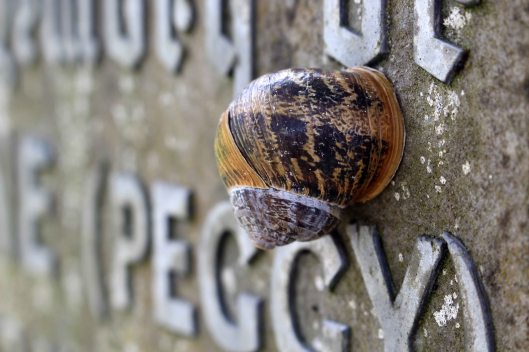
Finally, two snails that realise how much I struggle to put a name to them, and so make it easy for me. Meet William and Peggy!


04 Tuesday Apr 2017
Finally, two snails that realise how much I struggle to put a name to them, and so make it easy for me. Meet William and Peggy!
03 Monday Apr 2017

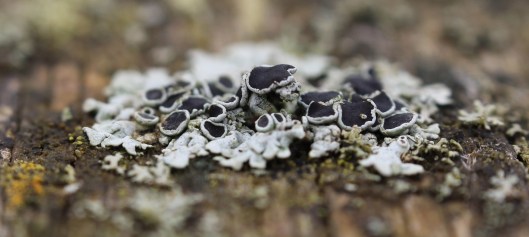
Americans call it the Hoary Rosette lichen but the Brits don’t appear to have a common name for this pretty little lichen, Physcia aipolia. I found it flourishing on wooden fence railings alongside the local coastal path so it obviously thrives in an exposed and salt-windswept location. Officially, it is usually found on the well-lit (I presume that’s sunlit rather than under lamp-posts) nutrient-rich wood of all manner of trees, their twigs and bark.


Its thallus (a plant body that doesn’t have stems, leaves, roots or veins) is foliose (has a lobed, leaf-like shape) and its apothecia (the cup-shaped fruiting bodies) have white rims, with dark brown or black centres. Physcia aipolia is widespread and common in Britain, though it does seem to prefer the slightly warmer and perhaps wetter climes of the south and west.
02 Sunday Apr 2017
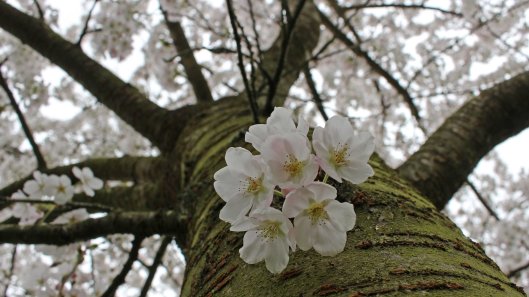
‘Blossom by blossom the spring begins.’ ~ Algernon Charles Swinburne (1837-1909), ‘Atalanta in Calydon’, Collected Poetical Works (1924), vol. ii, ‘Chorus’, p.250. My blossom photographs were taken on a very grey day in Cardiff’s magnificent Bute Park.


01 Saturday Apr 2017
Since moving to the seaside two months ago I have been thoroughly enjoying exploring my new surroundings and a particular favourite has been the walk from Penarth to Lavernock, a very small 1.5km section of the Wales Coastal Path.
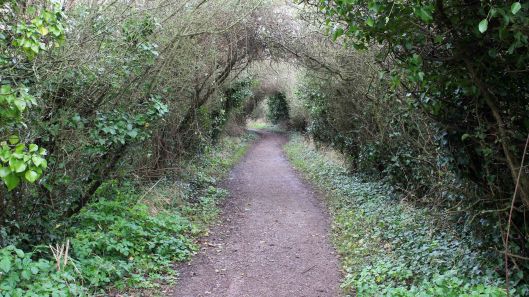
Despite its short length, it can take me rather a long time to walk because the path is bordered with all manner of trees, shrubs and wildflowers, so my eye is constantly drawn to checking these out.


I am fast discovering that the abundance of flora supports a wonderful array of fauna: flies and bees are flocking to the freshly opened flowers of Alexanders (Smyrnium olusatrum), recently arrived migrant Chiffchaffs (Phylloscopus collybita) are announcing their arrival with their familiar onomatopoeic song while recharging their batteries on flying insects, and various species of terrestrial snails sleep, slide and slither amongst the leaves.


There’s also a huge diversity of lichens, presumably much encouraged by the Welsh rains, the occasional wild winds, and the clean and salty seaside air.

Here and there gaps in the trees and shrubs reveal tantalising glimpses of the fascinating geology this coast is famous for (I have yet to venture down the cliffs but that will soon happen).

Boats and ships chug up and down the Bristol Channel; planes from Cardiff airport fly off overhead to foreign shores; the lighthouse on Flatholm beckons; and views of Penarth’s iconic pier abound.

But most of all I love the places – and there are many – where the foliage closes in overhead, to create little tunnels of vegetation. I find there’s something magical about such spaces, a little like stepping through the wardrobe door to emerge in a real-life Narnia.
31 Friday Mar 2017
I’ve been finding a lot of fungi recently on the bottoms of the dead stalks of last year’s umbellifers. They’re all exceedingly small and difficult to identify (which I find rather frustrating) but also rather gorgeous (which is why I have so far kept looking for them). This is one I was able to identify with help from my fungi friends and associates and a little microscope work. Its current name is Belonidium mollissimum (but it’s had a long list of other names – fungi keep being re-classified and renamed as researchers examine them and their DNA more carefully!) and the largest of its cups is just 1mm wide. This is a series of photos taken over the past two weeks to show how this tiny fungus has changed in that time.
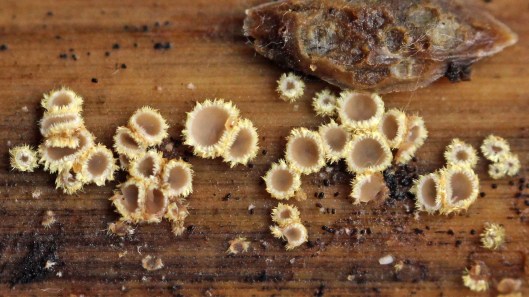
17 March, when first discovered
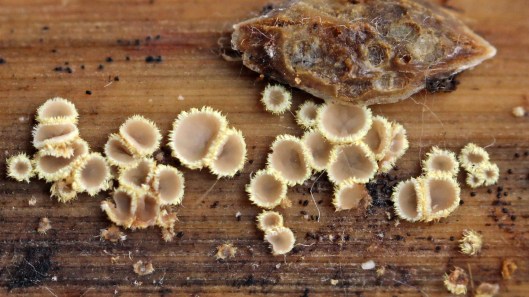
19 March

25 March

31 March
30 Thursday Mar 2017
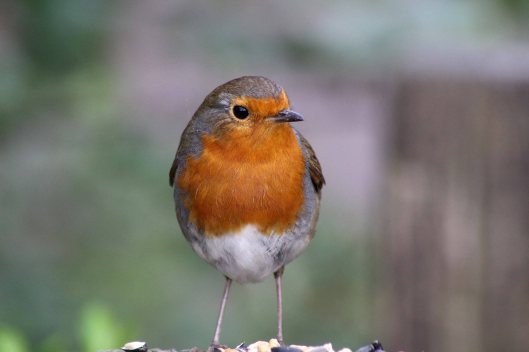
A robin a day makes me cheery and gay!
A robin a day drives the grey skies away.
A robin a day, hip hip hooray!
29 Wednesday Mar 2017
Tags
calcareous rock, cephalopods, Erfoud, fossils, Morocco, trilobites
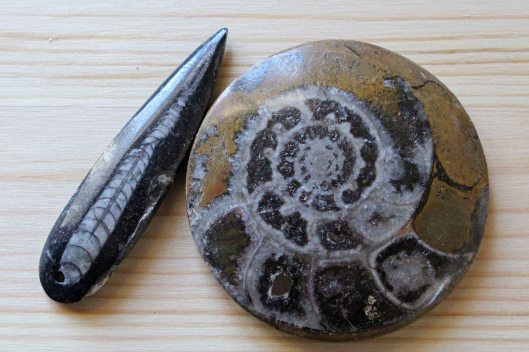
I’ve always been fascinated by fossils and would love to find a little something special (I’m hoping my move to the south Wales coast will help fulfil this dream as there are fossils, and even dinosaur bones, in nearby cliffs) so imagine my delight when we visited a fossil exhibition, museum, factory and shop during a tour of Morocco back in 2014.


We were near the town of Erfoud, in southern Morocco, an area which is now extremely arid but 500 million years ago was under the ocean. Some of the creatures that inhabited that ocean – in particular, the cephalopod molluscs and trilobite anthropods – became stranded in muddy lagoons that gradually dried out and, over time, the mud and creatures were transformed into a fine-grained calcareous rock containing the perfectly preserved fossilised creatures.


The museum-come-shop had some wonderful specimens on display and for sale, including large items like tables and lamp bases, wash basins and fountains. I couldn’t quite fit a table-top in my backpack but I did buy a couple of small trinkets, shown in the last photo included here. And if I do manage to find anything more local, I’ll definitely be posting about it!


28 Tuesday Mar 2017
Posted in flowers, nature, plants, wildflowers
Yes, it’s another of those international days of celebration. No, this is not a post about marijuana. The Oxford Dictionary defines a weed as a ‘wild plant growing where it is not wanted and in competition with cultivated plants’ but I prefer Ralph Waldo Emerson’s definition, ‘a weed is a plant whose virtues have not yet been discovered’.


So, for the obsessive gardeners out there, remember these:
Weeds provide food and shelter for insects, so they help to provide biodiversity and attract insects that are beneficial to the pollination of non-weeds.
Some weeds are also edible by humans, providing good sources of vitamins and minerals.
Weeds often thrive in impoverished soils and help to restore nutrients to those soils, as well as helping to stabilise the soil surface and prevent erosion.
Some weeds also have the ability to absorb heavy metals so can reduce contamination in industrial wastelands. They’re Nature’s clean-up crew!
Many weeds contain chemicals that are useful in medicines and herbal remedies, and research has shown that some weeds can be used as a source of biofuel.


27 Monday Mar 2017
Tags
Aythya collaris, birding, birdwatching, British birds, Cosmeston Lakes Country Park, Iceland gull, Larus glaucoides, Ring-necked duck
I had a different blog planned for today but then, this morning, I saw a post on Facebook that a rather special visitor had been spotted at my local country park, Cosmeston Lakes, so I headed along to check it out. And I was exceedingly lucky as there was also another unusual visitor on show. These are they.

Ring-necked duck (Aythya collaris)
Though it’s not easy to see, this lovely little duck gets its name from its purple neck band. The Ring-necked duck looks a lot like the local Tufted duck, but without the tuft, with slightly greyer sides and a different-shaped head, and, most distinctive, those pale bands of colour on its beak. It’s native to North America but one or two birds turn up in Britain most years. I was just very lucky that this one chose my local lake for its holiday spot this year.


Iceland gull (Larus glaucoides)
I’m hopeless at picking out different gulls from a large flock but the pale, almost buff plumage of this bird was quite distinctive once it was pointed out to me. Though it breeds in the Arctic, the Iceland gull spends its winters slightly further south, anywhere from the northern areas of Canada and the United States, to Britain and Ireland, as well as in Scandinavia and the northern parts of Germany. It is sometimes referred to as the white-winged gull and those white wings are one of the easiest ways to tell it apart from other gulls in flight.
26 Sunday Mar 2017
Tags
Aegopinella nitidula, British snails, Clear glass snail, Discus rotundatus, Discus snail, Kentish snail, Monacha cantiana, Rounded snail, Smotth glass snail, snails, Waxy glass snail
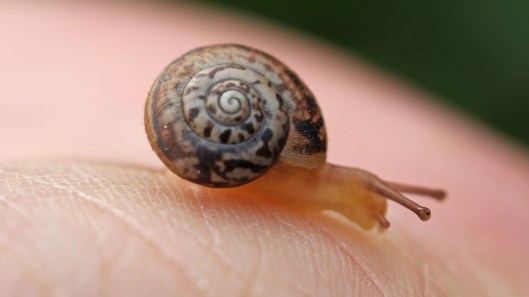
I had no intention of sliding down the slippery slope of snail identification but I’ve found a few in recent weeks and couldn’t not try to ID them. And then a friend, who has given up on that ‘too hard’ process, gifted me his guide book. Luckily, there is also a good ‘Slugs and Snails of the British Isles’ group of very helpful folks on Facebook, though you do have to know which bits of the snail to photograph for them to be able to help. So, these little snails are hopefully correctly identified as follows:
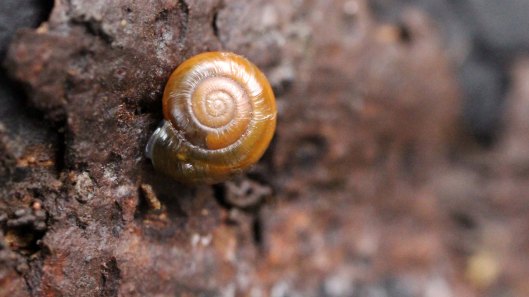
Smooth glass snail (Aegopinella nitidula)
Also known as the Clear glass snail or Waxy glass snail, this little land mollusc can be found munching away on plant matter all year round in gardens and hedgerows, rough grassland, waste ground and woodlands throughout much of Britain. It only grows to around 10mm so is quite little.

Rounded snail (Discus rotundatus)
At between 5 and 7mm across, the Rounded or Discus snail (I think that second name suits it very well) is also rather small. Its shell is quite flat but tightly coiled, with up to 6 whorls, and its upper surface is densely ribbed. It’s another very common snail (I obviously haven’t been looking very hard as this was my first sighting) and is especially partial to sheltered damp spots under logs, amongst leaf litter, beneath stones and rubble. Apparently it feeds on detritus (I’m never quite sure what that means!) and fungi.


Kentish snail (Monacha cantiana)
It may be named the Kentish snail but this is actually an introduced species. According to the German website Animal Base, it was ‘introduced to Great Britain with farmers in late Roman times and spread mainly in the mediaeval period, occupying a compact area covering S and E England, and still continues spreading (isolated sites in Wales, W central England and Scotland)’. The slight hairiness of my little friend (see photo above right) is because it’s a juvenile – those hairs will rub off as it grows to its full size of around 16mm.
 earthstar
You must be logged in to post a comment.