• ABOUT
  • BIRDING 2018
  • Birding 2019
  • BLOG POSTS
  • Butterflies 2018
  • Resources

earthstar

~ a celebration of nature

earthstar

Category Archives: nature

Random creatures of Barry

24 Monday Apr 2017

Posted by sconzani in insects, nature

≈ 7 Comments

Tags

Barry, Crab spider, Dock bug, Garden snails, Glamorgan Botany Group, Grene shieldbug, hoverflies, insects, ladybirds, Orange-tip butterfly, slow-worm

As I mentioned in yesterday’s post, I spent a wonderful day on Saturday exploring and examining some of the town of Barry’s wilder green spaces with members of the Glamorgan Botany Group. But, of course, you can’t spend a whole day looking at plants without also seeing an awful lot of the critters that live on those plants and I admit to being a trifle distracted at times … by a sunshine-yellow Crab spider, by fluttering butterflies and buzzing hoverflies, by plentiful dock and shield bugs, by the sad sight of a dead Slow-worm. Some of the lovely old stone houses and churches we passed were pretty cool too!

170424 1 Creatures of Barry
170424 2 Creatures of Barry
170424 3 Creatures of Barry
170424 4 Creatures of Barry
170424 5 Creatures of Barry
170424 6 Old buildings of Barry
170424 7 Creatures of Barry
170424 8 Creatures of Barry
170424 9 Creatures of Barry
170424 10 Old buildings of Barry
170424 11 Creatures of Barry
170424 12 Creatures of Barry
Like Loading...

I’m a mentee!

23 Sunday Apr 2017

Posted by sconzani in nature, plants, walks, wildflowers

≈ 4 Comments

Tags

amatuer botanist, Barry, British plants, Glamorgan Botany Group, Mary Gillham Archive Project, Mary Gillham Botany Mentorship Scheme, SEWBReC

Actually, I became a mentee a few weeks ago but yesterday was my first outing with my mentor and other members of the Glamorgan Botany Group. My plant knowledge is abysmal and I felt I needed to remedy that so when SEWBReC (the South East Wales Biodiversity Records Centre) announced that, as part of the Heritage Lottery-funded Mary Gillham Archive Project, they would be running a Botany Mentorship Scheme ‘to encourage the sharing of knowledge from experienced botanists to enthusiastic beginners’, I put my hand up.

170423 Botany walk in Barry (1)

As SEWBReC’s announcement said, ‘Mary spent her lifetime sharing her ecological knowledge including many years as an Extra Mural Lecturer at Cardiff University, so the inclusion of a Botany Mentorship Scheme in the project will carry on her passion for teaching others about the wildlife of south east Wales’. Lady Luck was smiling on me the day the mentees were selected and I am now one of a handful of keen amateurs with a steep (or so it seems to me) learning curve in front of me.

170423 wildflowers in Barry (1)
170423 wildflowers in Barry (4)
170423 wildflowers in Barry (3)
170423 wildflowers in Barry (2)

Yesterday, with my mentor and eight other enthusiastic plant people, I stomped around some of the less-well-explored and under-recorded green spaces of Barry, a town on the south Wales coast, examining and recording plant species. My mentor and walk-mates were welcoming, friendly, and generous in sharing their extensive knowledge, and it was a splendid, if somewhat overwhelming day. I have a great deal to learn but I’m looking forward to the challenge immensely.

170423 Botany walk in Barry (4)

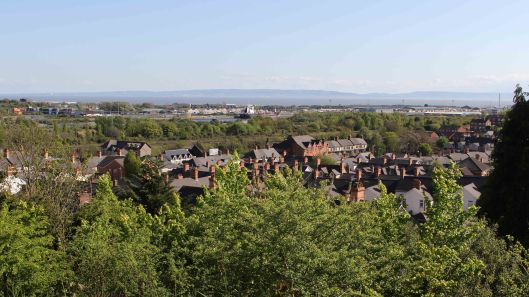
A view over Barry

Like Loading...

Wales Walks: Cwm George, and more

22 Saturday Apr 2017

Posted by sconzani in nature, spring, trees, walks, wildflowers

≈ 3 Comments

Tags

beech woodland, Bluebell, Cadoxton River, Coed Twyncyn, Cwm George, Cwm Penllwynog, Dinas Powys, Vale of Glamorgan walks, Wild garlic

I can’t believe it’s almost a year since I visited Cwm George. Luckily, I now live much nearer to this magnificent woodland so I’ll definitely be going back more often. I had a long walk here on Thursday with my friend Hilary, chatting and botanising and soaking in the beauty of the wild garlic and the bluebells and so much more.

This walk, called Salmon Leaps, is one of eight in the Vale of Glamorgan for which there are downloadable pamphlets available (see here for this one). Locals say there haven’t been salmon in these streams for years but don’t let that put you off. Ours was a variation of the routes in the brochure but with much of the same picturesque scenery. Let me show you me some of the highlights …

170421 Cwm George walk (1)

Crossing the Cadoxton River (well, stream, really)

170421 Cwm George walk (2)

The beeches of Cwm George, carpeted with swathes of wild garlic

170421 Cwm George walk (3)170421 Cwm George walk (4)

Looking across farmland to the village of Michaelston-le-Pit

170421 Cwm George walk (5)

A weir, with a small lake behind, on the upper Cadoxton River near Cwrt-Yr-Ala (where the salmon are supposed to leap)

170421 Cwm George walk (6)

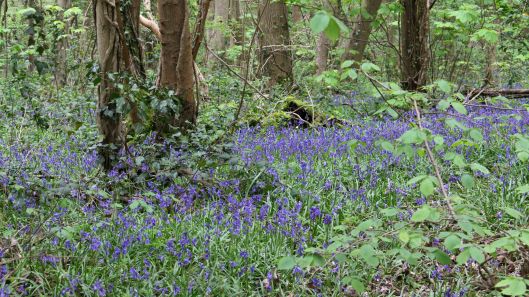
Heading in to another woodland, Cwm Penllwynog, and, below, some of its beautiful bluebells

170421 Cwm George walk (7)170421 Cwm George walk (8)

Wildflowers lined the hedgerows as we headed back towards Dinas Powys along Beauville Lane

170421 Cwm George walk (9)

More woodland – this is Coed Twyncyn

Like Loading...

‘A silent eloquence’

21 Friday Apr 2017

Posted by sconzani in flowers, nature, spring, wildflowers

≈ 4 Comments

Tags

Bluebell, Bluebells in springtime, British bluebells, Hyacinthoides non-scripta, quintessential spring flower, wildflowers

170421 bluebells (1)

‘A fine and subtle spirit dwells
In every little flower,
Each one its own sweet feeling breathes
With more or less of power.
There is a silent eloquence
In every wild bluebell
That fills my softened heart with bliss
That words could never tell.’
~ from ‘The Bluebell’ by Anne Brontë

170421 bluebells (4)
170421 bluebells (2)
170421 bluebells (3)
170421 bluebells (5)

170421 bluebells (6)

Like Loading...

Happy as a (Sky)lark

20 Thursday Apr 2017

Posted by sconzani in birds, nature

≈ 2 Comments

Tags

Alauda arvensis, bird conservation, bird idiom, birding, birdwatching, British birds, happy as a lark, Red list, Skylark, The Blorenge

It’s easy to see where the ‘happy as a lark’ expression comes from when you hear a Skylark singing – they sound like they’re positively bursting with happiness. And, though they sing throughout the year, spring is the prime season for their singing, as the males perform their vertical flight displays, hovering and belting out their songs from high in the sky before plummeting back down to earth. How could a female Skylark not be impressed with such melodic rhapsodies!

170420 Skylark (1)

When it’s on the ground, the Skylark (Alauda arvensis) can be difficult to spot, as its streaky brown colours blend so well with its preferred habitat, of grassland and moorland, as you can see in these photos, taken on top of The Blorenge, a 561-metre mountain in the Brecon Beacons National Park.

170420 Skylark (2)
170420 Skylark (3)
170420 Skylark (4)

Sadly, the once numerous Skylark has declined greatly in numbers in recent years and it’s now on the British Red List of Birds of Conservation Concern. Its decline has been attributed to agricultural intensification and to changing farming practices – many farmers have switched from spring to autumn for the sowing of their cereal crops, which has a knock-on effect on farmland birds. Hopefully, something can be done to rescue these beautiful songsters; otherwise the Skylark will be happy no longer.

Like Loading...

Paper wasps in Morocco

19 Wednesday Apr 2017

Posted by sconzani in insects, nature

≈ 2 Comments

Tags

insects of Morocco, Morocco, paper wasp nest, paper wasps, wasps, wasps in Morocco

I was pondering what to post for this week’s world wildlife Wednesday when a friend who keeps bees posted some wonderful close-up photos on Facebook of the cells her bees had built and that reminded me of these photos I took in Morocco in 2014. These are not bees, of course, these are paper wasps, though I don’t know the exact species.

170419 Paper wasps in Morocco (3)

We were wandering around the magnificent Roman ruins at Volubilis, admiring the incredible architecture and design skills of the Romans, when I spotted this equally amazing construction. As their name implies, these wasps use a papery material to construct their nests. In this case they probably gathered fibrous material from the stems of plants and perhaps from dead wood, which they then chewed up and mixed with saliva to cement the cells of the nest together.

170419 Paper wasps in Morocco (2)

These wasps may look small but their stings can be vicious so, although it looks like I got quite close, these photographs were actually taken with my long lens.

170419 Paper wasps in Morocco (1)

Like Loading...

Attracting thunderstorms and adders?

18 Tuesday Apr 2017

Posted by sconzani in flowers, nature, wildflowers

≈ Leave a comment

Tags

Cardamine pratensis, Cuckooflower, Lady's smock, Milkmaid, Spring colour, spring flowers, wildflowers

170418 Cuckooflower (3)

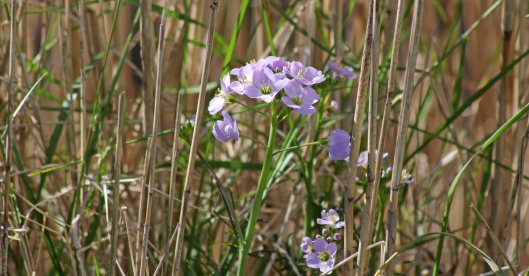
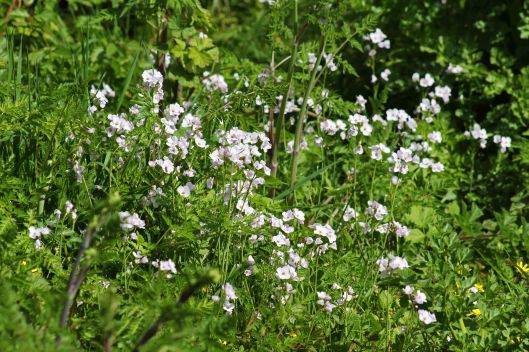
It seems that everywhere I walk at the moment there’s Cuckooflower. With its penchant for damp soggy ground, it can be found sprinkled amongst the reeds at the edge of Cardiff Bay wetlands, underlining the willow scrub along the edges of the River Taff, accentuating the lines of a drying drain at Cosmeston Lakes Country Park. And it’s such a pretty little thing, with its pale lilac flowers sitting high on an upright stalk, all the better for the bees and butterflies to find them.

170418 Cuckooflower (1)
170418 Cuckooflower (2)

Its scientific name is Cardamine pratensis and, if you don’t know it as Cuckooflower (it flowers at the time the cuckoos return to Britain), then you may know it by its other popular names, Milkmaid and Lady’s smock. Milkmaid is the older name, possibly a reference to its feminine colour and blousy shape when the flowers are first opening and I read, in an article in the Darlington & Stockton Times 23 June 2006, that

‘When Christianity came to these islands, that feminine association was transferred to the Virgin Mary, which led to a host of other names for the flower, such as my lady’s smock, lady’s glove and dozens more.
There is one old story which says that St Helena found Our Lady’s smock in a cave near Bethlehem, an article of clothing she left behind. It was later taken to St Sophia and then to Aix la Chapelle, where it was venerated for centuries, with this little wild flower being named in several European countries in honour of that relic.
‘In Europe, a lot of superstition used to surround this flower. It was thought that if anyone picked it, a thunderstorm would break out. It was also thought to generate lightning and for this reason was never taken into a house. In parts of England, it was believed to attract adders, Britain’s only poisonous snake, with a notion that anyone picking the flower would be bitten before the year was out.’

170418 Cuckooflower (5)
170418 Cuckooflower (4)

Luckily, I prefer to leave wildflowers where they are for everyone to enjoy so haven’t picked any, though I’m now almost tempted, just to see what happens … almost.

170418 Cuckooflower (6)

Like Loading...

A Green-legged long-shank comes to call

17 Monday Apr 2017

Posted by sconzani in birds, nature

≈ 2 Comments

Tags

birding, birdwatching, Cardiff Bay, Green-legged horseman, Green-legged long-shank, Greenshank, Tringa nebularia

I get alerts for sightings of uncommon birds through various Twitter accounts and my birding group on Facebook and, when I heard a Greenshank had been spotted in Cardiff Bay, I crossed my fingers it would stay around overnight and was up early the next morning to see. I was lucky and, considering they have a reputation for being flighty, this bird was uncommonly still and very obliging. When it did start a little nervous jiggle, I quickly moved on.

170417 Greenshank (1)

The Greenshank (Tringa nebularia) has gained a delightful collection of common names including barker, stiltie (in Scotland, meaning wader with long legs), greater plover, green-legged horseman, green-legged long-shank, and green-shanked godwit. As you might guess from all those mentions of ‘green shanks’, it has a greenish tinge to its long slim legs. It’s an elegant bird, I think, not large, though it is the largest amongst its close relatives the redshanks and larger sandpipers.

170417 Greenshank (2)

In south Wales, the Greenshank is mostly a passage bird, seen around coastal wetlands and estuaries and near inland waters like ponds and marshes. They spend their winters in western Europe, the Mediterranean and Africa, through the Middle East and Arabian Peninsula to Southeast Asia, and as far south as Australia, and in Britain they spend their summers in the north and west of Scotland, where they breed on upland moorlands, usually near trees, a large rock or fencepost (possibly as a visual aid to nest location).

Like Loading...

Patterns in nature, 3

16 Sunday Apr 2017

Posted by sconzani in nature, nature photography

≈ Leave a comment

Tags

design in nature, natural design, patterns, patterns in nature, skin patterns, symmetry in nature

‘At some point in life, the world’s beauty becomes enough.’ ~ Toni Morrison

170416 1 zebra
170416 2 mushroom
170416 3 shell
170416 4 lichen
170416 5 great tit
170416 6 giraffe
170416 7 speckled wood
170416 8 seed
170416 9 camelia
Like Loading...

A master of camouflage

15 Saturday Apr 2017

Posted by sconzani in fungi, nature

≈ 4 Comments

Tags

Cosmeston Lakes Country Park, fungus, Helvella acetabulum, Helvella fungi, Vinegar cup

170415 Helvella acetabulum Vinegar Cup (4)

I found these little fungi at Cosmeston Lakes Country Park during a long ramble on Thursday. So well camouflaged were they amongst the leaf litter and fallen branches that it wasn’t until I bent down to pick up a rotting branch to check for slime moulds that I spotted the first one. These are Vinegar cups (Helvella acetabulum) and, according to the Welsh biodiversity recording database, this is only the fourth recorded find in Wales. I imagine they’re not as rare as that makes them sound, but simply under-recorded – I blame their camouflage!

170415 Helvella acetabulum Vinegar Cup (3)
170415 Helvella acetabulum Vinegar Cup (2)
170415 Helvella acetabulum Vinegar Cup (1)

Luckily (actually, a huge relief!) these fungi could be identified using an excellent key on the Fungi of Great Britain and Ireland website (thanks to Brian Douglas of Kew for pointing that out). The key check went as follows:

(1) Stipe (stem) ribbed and furrowed over its entire length, internally chambered, quite short, but with ribs present on the underside of the cap; (2) cap cupulate; (3) Ribs on stipe extending conspicuously to the underside of the cap, usually to at least half way (4) Hymenium (interior of the cup) brown; cap externally dark brown above (these were partly eaten so hard to tell), (definitely) paler below. Ribs of stipe branching, sharp-angled, not interconnected by cross-veins, not reaching the margin of the cap. Fruiting in spring.

170415 Helvella acetabulum Vinegar Cup (5)
170415 Helvella acetabulum Vinegar Cup (6)

If only all fungi were that easy to identify! These lovely Helvellas can be found from April through to June, mostly on rich mouldy soil in deciduous forests, though they do also like calcareous soil conditions.

Like Loading...
← Older posts
Newer posts →

About me

sconzani

sconzani

I'm a writer and photographer; researcher and blogger; birder and nature lover; countryside rambler and city strider; volunteer and biodiversity recorder.

View Full Profile →

Follow earthstar on WordPress.com

Enter your email address to follow this blog and receive notifications of new posts by email.

Recent blog posts

  • Lifer: Box bug April 27, 2026
  • Peak Wild garlic April 26, 2026
  • First damsels of 2026 April 25, 2026
  • NFY: Green-veined white April 24, 2026
  • The return of the Willow warblers April 23, 2026

From the archives

COPYRIGHT

Unless otherwise acknowledged, the text and photographs on this blog are my own and are subject to international copyright. Nothing may be downloaded or copied without my permission.

Fellow Earth Stars!

  • Unknown's avatar
  • Unknown's avatar
  • Unknown's avatar
  • Unknown's avatar
  • Unknown's avatar
  • Unknown's avatar
  • Unknown's avatar
  • Unknown's avatar
  • Unknown's avatar
  • Unknown's avatar
  • Unknown's avatar
  • Unknown's avatar
  • Unknown's avatar
  • Unknown's avatar
  • Unknown's avatar
  • Unknown's avatar
  • Unknown's avatar
  • Unknown's avatar
  • Unknown's avatar
  • Unknown's avatar
  • Unknown's avatar
  • Unknown's avatar
  • Unknown's avatar
  • Unknown's avatar
  • Unknown's avatar
  • Unknown's avatar
  • Unknown's avatar
  • Unknown's avatar
  • Unknown's avatar
  • Unknown's avatar
  • Unknown's avatar
  • Unknown's avatar
  • Unknown's avatar
  • Unknown's avatar
  • Unknown's avatar
  • Unknown's avatar
  • Unknown's avatar
  • Unknown's avatar
  • Unknown's avatar
  • Unknown's avatar
  • Unknown's avatar
  • Unknown's avatar
  • Unknown's avatar
  • Unknown's avatar
  • Unknown's avatar
  • Unknown's avatar
  • Unknown's avatar
  • Unknown's avatar
  • Unknown's avatar
  • Unknown's avatar

Blog at WordPress.com.

Privacy & Cookies: This site uses cookies. By continuing to use this website, you agree to their use.
To find out more, including how to control cookies, see here: Cookie Policy
  • Subscribe Subscribed
    • earthstar
    • Join 642 other subscribers
    • Already have a WordPress.com account? Log in now.
    • earthstar
    • Subscribe Subscribed
    • Sign up
    • Log in
    • Report this content
    • View site in Reader
    • Manage subscriptions
    • Collapse this bar
 

Loading Comments...
 

You must be logged in to post a comment.

    %d