• ABOUT
  • BIRDING 2018
  • Birding 2019
  • BLOG POSTS
  • Butterflies 2018
  • Resources

earthstar

~ a celebration of nature

earthstar

Category Archives: nature

Bioblitzing Cwm Saerbren

27 Saturday Aug 2016

Posted by sconzani in birds, fungi, insects, nature, plants, wildflowers

≈ 5 Comments

Tags

bioblitz, biological diversity, biological recording, biological recording centre, Cwm Saerbren Woodland, Cwmsaerbren, SEWBReC

Each summer my local biological records centre, SEWBReC, runs a series of biological recording field days, partly to introduce members of the public to the world of biological recording, allowing them to rub shoulders with wildlife experts and learn species identification skills, and partly to record the biodiversity of particular areas. Last Thursday I went along to the field day-come-bioblitz at the Cwm Saerbren Woodland, adjacent to the small town of Treherbert at the top of the Rhondda Fawr Valley.

160827 Cwmsaerbren bioblitz (12)

This assumed unicorn was the star of the show!

Though the turnout from the locals was disappointing (not a single person!) and despite the sometimes heavy rain (a common feature up the Valleys), we had a great day. With the SEWBReC crew, a couple of guys from Natural Resources Wales, and a few of us volunteers from the Mary Gillham Archives Project, we stomped around the trails of Cwm Saerbren, recording all we saw. And, after meeting up back at the town to identify and write up our afternoon list and then filling up on hot chips from the local takeaway shop, we also got out with the bat recorder and had moth-attracting lights running to see what flying critters we might find. All up, once everything is IDed, I reckon our list will be well over 200 species. Not bad for a day’s work!

160827 Cwmsaerbren bioblitz (10)
160827 Cwmsaerbren bioblitz (6)
160827 Cwmsaerbren bioblitz (8)
160827 Cwmsaerbren bioblitz (7)
160827 Cwmsaerbren bioblitz (2)
160827 Cwmsaerbren bioblitz (3)
160827 Cwmsaerbren bioblitz (5)
160827 Cwmsaerbren bioblitz (13)
160827 Cwmsaerbren bioblitz (4)
160827 Cwmsaerbren bioblitz (16)
160827 Cwmsaerbren bioblitz (1)
160827 Cwmsaerbren bioblitz (11)
160827 Cwmsaerbren bioblitz (17)
160827 Cwmsaerbren bioblitz (9)
160827 Cwmsaerbren bioblitz (15)
Like Loading...

Bramble or blackberry?

26 Friday Aug 2016

Posted by sconzani in flowers, nature, plants, wildflowers

≈ 5 Comments

Tags

autumn fruit, blackberry, bramble, Rubus fruticosus agg, Rubus species, wild fruit

First, the glorious flowers: some look like crushed paper tissue, others like crinkled pieces of silk. They range in colour from bleached white through parchment with the merest blush of pink to a pink that reminds me of the sticky candyfloss I ate as a child at the local fair.

160826 Rubus fruticosus agg (1)
160826 Rubus fruticosus agg (2)
160826 Rubus fruticosus agg (3)
160826 Rubus fruticosus agg (4)
160826 Rubus fruticosus agg (5)
160826 Rubus fruticosus agg (6)

Once the busy little pollinators have done their work, the fruit begins to develop and my taste buds start to stir as I look forward to the delicious juicy treats to come. First, the clusters of little green globes and then, as they ripen in the summer sun, the tinges of red appear, hinting at the lusciousness to come.

160826 Rubus fruticosus agg (7)
160826 Rubus fruticosus agg (8)

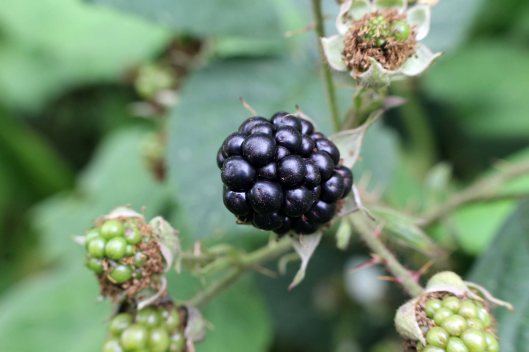
And then one day, when I’m out on one of my wanders, I spot it, the very first black berry. Will it still be a little sour and will it flood my mouth with those delectable full fruit flavours of perfect ripeness?

160826 Rubus fruticosus agg (9)

Here in Britain they are called brambles, in my New Zealand homeland we called them blackberries and, in scientific terms, they are all grouped together under the unprepossessing name of Rubus fruticosus agg. Agg stands for aggregate, as in a grouping together of a range of very closely related biological organisms, because Rubus fruticosus includes a myriad of hybridisations. But, whatever you call them, for me they are one of the things I most love about late summer and, yes, I have already eaten my first yummy blackberries of 2016.

Like Loading...

The Spotted longhorn beetle

25 Thursday Aug 2016

Posted by sconzani in insects, nature

≈ 4 Comments

Tags

Black and Yellow longhorn beetle, Longhorn beetle, Rutpela maculata, Spotted longhorn beetle

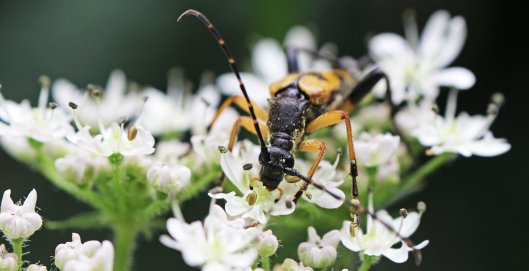
Let me introduce you to Rutpela maculata. It’s called a longhorn beetle, but really I would say it has long antennae rather than long horns, and its common name is the Spotted longhorn, but really it has spots and stripes, so its other common name of Black and Yellow longhorn seems more appropriate. Its colours and patterns roughly mimic those of wasps which, in theory, gives it protection from predators like birds.

160825 Longhorn beetle (1)

I was a little surprised, and somewhat saddened, to learn that the adult beetles have a very short life, of just two to four weeks, but this is actually quite common amongst insects. Most spend the majority of their lives as larvae.

160825 Longhorn beetle (2)
160825 Longhorn beetle (3)
160825 Longhorn beetle (4)

The adult longhorn beetles grow to between 13 and 20mm long, and can be seen any time from May to August, frequenting hedgerows and the edges of woodland trails, often enjoying a feed of pollen or nectar on umbellifers. I’ve only seen two so far, both pictured here, and you can see that the markings and colouration vary from beetle to beetle.

160825 Longhorn beetle (5)

Like Loading...

Meeting the Maasai cattle

24 Wednesday Aug 2016

Posted by sconzani in animals, nature

≈ 8 Comments

Tags

Cattle herding, Maasai, Maasai cattle, Maasai village, Tanzania

Herding cattle, sheep and goats, sleeping in a boma, getting blessed by the chief, making bead jewellery and dancing – all in a day’s work when you spend time with the Maasai!

160824 Maasai cattle (1)

After writing about Cambodia cattle for last Wednesday’s world wildlife post, I just had to show you some Maasai cattle (and people) images this week. In October 2014 I was privileged to spend 3 days and a night in a Maasai village in Tanzania, and it was one of the most memorable experiences of my life.

160824 Maasai cattle (3)
160824 Maasai cattle (2)

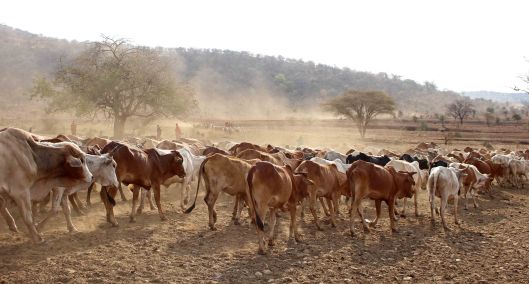
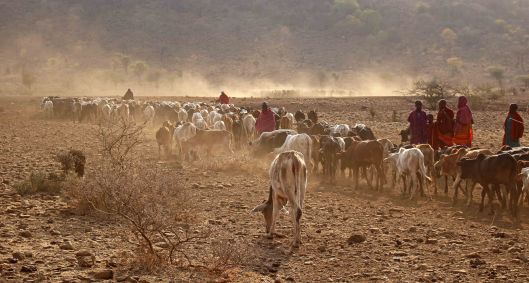
In this and the surrounding villages controlled by chief Meshuku Mappi, the Maasai own approximately 170,000 cattle, sheep and goats. That number seems almost incredible but, after watching huge herds of beasts being driven home to their overnight corrals by the men of the tribe, I can definitely believe it.

160824 Maasai cattle (5)160824 Maasai cattle (4)

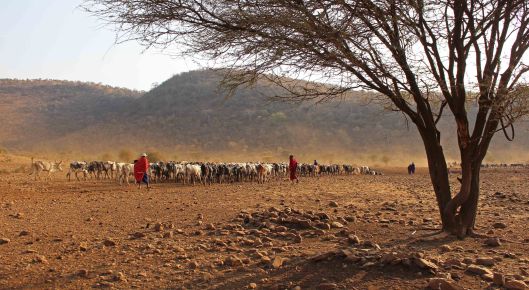
It was the perfect photo opportunity – cloven hooves churned up dust from the bone dry ground, statuesque baobob trees punctuated the landscape like frozen giants, and the bright reds and blues of the men’s clothing popped against the browns of the landscape and the animals.

160824 Maasai cattle (11)160824 Maasai cattle (7)160824 Maasai cattle (6)

And, after an overnight stay in one of the village bomas (mud huts), we were up early next morning to catch the sun rise over the nearby hills and to watch the men driving the animals out for the day’s grazing. Life for the Maasai revolves around their animals – their cows are their primary source of food, and their wealth and status are measured in cattle. The Maasai are very special people and it was a huge privilege to spend time with them and get a glimpse of their daily lives.

160824 Maasai cattle (8)160824 Maasai cattle (9)160824 Maasai cattle (10)

Like Loading...

Camouflage

23 Tuesday Aug 2016

Posted by sconzani in insects, nature

≈ Leave a comment

Tags

Bindweed flower, camouflage, Crab spider, Eupeodes corollae, hoverfly, insect camouflage, Misumena vatia, sawfly larve

On the positive side … this Sawfly larva has its colour co-ordination working very well, though maybe needs to work on its choreography.

160823 camouflage (2)

On the negative side … or positive side, depending on whether you’re identifying with the Crab spider (probably Misumena vatia) using the large white Bindweed flower as its lair, or the spider’s victim, a hoverfly (probably Eupeodes corollae).

160823 camouflage (1)

Like Loading...

Horseflies love me

22 Monday Aug 2016

Posted by sconzani in insects, nature

≈ 13 Comments

Tags

cleg, Haematopota species, horsefly, Tabanidae

And I really wish they didn’t!

160822 Horsefly Haematopota sp (2)

It’s the female Horseflies that are the problem – they’re the biters, of humans, horses and other animals, to get the blood they need to aid egg production and, for some reason, they can smell my blood coming a mile away. I got several bites on my face during a recent fungi foray and had a nasty allergic reaction, was swollen and looked like I had some kind of infectious disease. Antihistamine meds don’t really agree with me, so I retreated from the world for a week till the worst of the swelling had gone down. (I got the bite in my photo four days ago. Luckily, Ms Horsefly was only on me for a second or two, before I noticed and flicked her off.)

160822 Horsefly Haematopota sp (3)
160822 Horsefly Haematopota sp (1)
160822 Horsefly bite

The trouble for me is that Horseflies (a large and diverse group called the Tabanidae family, and also known by the common name of Cleg) are rather lovely creatures and they have the most incredible eyes, so I’m driven to capture photos of them (perhaps I’m a masochist!). The Horsefly in my photos is one of the Haematopota species. They have compound eyes that appear brightly coloured and have incredible patterns – from other photos I’ve seen, each creature seems to have a different pattern, much like fingerprints or retina patterns. So, I will continue to seek them out, just as they continue to seek me out!

160822 Horsefly Haematopota sp (4)

Like Loading...

Bugs in the meadows

21 Sunday Aug 2016

Posted by sconzani in insects, nature

≈ 12 Comments

Tags

bugs in meadows, Leptopterna dolabrata, Meadow plant bug, plant bug

Look closely at the wildflowers and grasses in a meadow during the summer months and you might be surprised at how much life is thriving below the casual gaze of human passers-by. If you live in Britain, Europe or North America (where these critters were accidentally introduced in the 1830s), one of the bugs you are quite likely to see is this aptly named Meadow plant bug (Leptopterna dolabrata).

160820 Leptopterna sp nymph (6)
160820 Leptopterna sp nymph (7)

It’s tiny, only about ⅓ inch (8mm) long, and rather well camouflaged amongst the plant stems and leaves. As you might expect from the name plant bug, it feeds on plants. In fact, it’s an expert sucker, using its stylet (piercing mouthpart) to inject into the plant stem an enzyme-rich saliva, which begins to break down the plant tissues even before the bug sucks out the resulting plant soup.

160820 Leptopterna sp nymph (8)
160820 Leptopterna sp nymph (9)

Leptopterna dolabrata is sexually dimorphic so the males and females have slightly different colouring, plus the males are fully winged whereas the females are usually only partly winged. You can see the differences in the mating pair shown above. And below is a plant bug nymph, probably one of their offspring – I say probably because many of the nymphs look alike so it’s difficult to tell exactly which species they are.

160820 Leptopterna sp nymph (5)

Like Loading...

From photograph to painting

20 Saturday Aug 2016

Posted by sconzani in insects, nature

≈ 9 Comments

Tags

dragonflies, dragonfly, Southern hawker

A few days ago I posted a photo of a Southern hawker dragonfly on the UK Dragonflies & Damselflies page on Facebook, just to be sure of my identification of this beautiful creature.

160820 Southern Hawker (1)

Julie Horner was one of the people who liked my photo and she also commented, asking my permission to paint the dragonfly. I said yes, if she would give me permission to share her painting here on the blog. A deal was struck and I emailed Julie the images I shared on my Southern Hawker blog post last week.

160820 Souther Hawker Julie Horner painting

Yesterday, Julie completed the painting and I am really delighted to be able to share her work with you. I love how she has simplified the subject matter – the iris is the perfect flower for the dragonfly to perch on, I think, and I also admire how well she has captured the detail in the wings. I’m sure you’ll agree that Julie is a really talented artist and I’m thrilled at what this impromptu collaboration has produced. You can check out more of Julie’s gorgeous paintings on her Facebook page, Horner Art Studio, and on her Etsy page.

Like Loading...

A wealth of wildflowers

19 Friday Aug 2016

Posted by sconzani in flowers, nature, wildflowers

≈ 2 Comments

Tags

Creeping jenny, Devil's-bit scabious, Dock, Meadowsweet, Narrow-leaved everlasting pea, Ragged robin, Ribwort plantain, Rosebay willowherb, Sneezewort, Tall Melilot

It’s Friday! It’s Floral Friday! It must be time for more wildflowers. Here’s the latest selection from my wanderings around parks, meadows and reserves:

Creeping jenny (Lysimachia nummularia), Devil’s-bit scabious (Succisa pratensis), Dock (Rumex sp), Meadowsweet (Filipendula ulmaria), Narrow-leaved everlasting pea (Lathyrus sylvestris), Ragged robin (Lychnis flos-cuculi), Ribwort plantain (Plantago lanceolata), Rosebay willowherb (Chamerion angustifolium), Sneezewort (Achillea ptarmica) and Tall Melilot (Melilotus altissimus).

Creeping jenny Lysimachia nummularia
Devil's-bit scabious Succisa pratensis
Dock Rumex sp
Meadowsweet Filipendula ulmaria
Narrow-leaved everlasting pea Lathyrus sylvestris
Ragged robin Lychnis flos-cuculi
Ribwort plantain Plantago lanceolata
Rosebay willowherb Chamerion angustifolium
Sneezewort Achillea ptarmica
Tall Melilot Melilotus altissimus
Like Loading...

Parc Slip Reptile ramble

18 Thursday Aug 2016

Posted by sconzani in 'Dedicated Naturalist' Project, nature, reptiles

≈ 7 Comments

Tags

adder, British reptiles, Common lizard, grass snake, Mary Gillham Archive Project, Parc Slip, Parc Slip Nature Reserve, slow-worm, volunteering, Wildlife Trust, Wildlife Trust for South & West Wales, WTSWW

Partly as a training exercise in wildlife identification, partly as a reward for all our hard work to date, and partly as a fun way for our team to get together, our Mary Gillham Archive Project volunteers were treated to a reptile ramble at Parc Slip Nature Reserve yesterday. And it was fantastic!

160818 reptile ramble (4)

Led by friendly and knowledgeable Wildlife Trust officer Lorna, we explored the research and conservation areas where members of the public don’t normally get to wander. With the excitement palpable and a huge sense of anticipation from us onlookers, Lorna used her trusty snake stick to lift up the reptile refugia (sheets of corrugated iron or heavy plastic under which the reptiles frequently shelter) to see what we could find. Though her initial efforts proved unsuccessful, we did eventually get lucky and were very excited to see one very small, young Common lizard (which scuttled away far too quickly for a photo so my lizard photo here is from another day), a Grass snake (which also slithered away far too quickly to photograph), an Adder and 4 Slow-worms. Success! And a great day out, thanks to the conservation efforts of the wonderful folks who work and volunteer at the Wildlife Trust of South & West Wales.

160818 reptile ramble (2)
160818 reptile ramble (5)
160818 reptile ramble (1)
160818 reptile ramble (7)
160818 reptile ramble (3)
160818 reptile ramble (6)
Like Loading...
← Older posts
Newer posts →

About me

sconzani

sconzani

I'm a writer and photographer; researcher and blogger; birder and nature lover; countryside rambler and city strider; volunteer and biodiversity recorder.

View Full Profile →

Follow earthstar on WordPress.com

Enter your email address to follow this blog and receive notifications of new posts by email.

Recent blog posts

  • Nesting material April 28, 2026
  • Lifer: Box bug April 27, 2026
  • Peak Wild garlic April 26, 2026
  • First damsels of 2026 April 25, 2026
  • NFY: Green-veined white April 24, 2026

From the archives

COPYRIGHT

Unless otherwise acknowledged, the text and photographs on this blog are my own and are subject to international copyright. Nothing may be downloaded or copied without my permission.

Fellow Earth Stars!

  • Unknown's avatar
  • Unknown's avatar
  • Unknown's avatar
  • Unknown's avatar
  • Unknown's avatar
  • Unknown's avatar
  • Unknown's avatar
  • Unknown's avatar
  • Unknown's avatar
  • Unknown's avatar
  • Unknown's avatar
  • Unknown's avatar
  • Unknown's avatar
  • Unknown's avatar
  • Unknown's avatar
  • Unknown's avatar
  • Unknown's avatar
  • Unknown's avatar
  • Unknown's avatar
  • Unknown's avatar
  • Unknown's avatar
  • Unknown's avatar
  • Unknown's avatar
  • Unknown's avatar
  • Unknown's avatar
  • Unknown's avatar
  • Unknown's avatar
  • Unknown's avatar
  • Unknown's avatar
  • Unknown's avatar
  • Unknown's avatar
  • Unknown's avatar
  • Unknown's avatar
  • Unknown's avatar
  • Unknown's avatar
  • Unknown's avatar
  • Unknown's avatar
  • Unknown's avatar
  • Unknown's avatar
  • Unknown's avatar
  • Unknown's avatar
  • Unknown's avatar
  • Unknown's avatar
  • Unknown's avatar
  • Unknown's avatar
  • Unknown's avatar
  • Unknown's avatar
  • Unknown's avatar
  • Unknown's avatar
  • Unknown's avatar

Blog at WordPress.com.

Privacy & Cookies: This site uses cookies. By continuing to use this website, you agree to their use.
To find out more, including how to control cookies, see here: Cookie Policy
  • Subscribe Subscribed
    • earthstar
    • Join 642 other subscribers
    • Already have a WordPress.com account? Log in now.
    • earthstar
    • Subscribe Subscribed
    • Sign up
    • Log in
    • Report this content
    • View site in Reader
    • Manage subscriptions
    • Collapse this bar

Loading Comments...

You must be logged in to post a comment.

    %d