• ABOUT
  • BIRDING 2018
  • Birding 2019
  • BLOG POSTS
  • Butterflies 2018
  • Resources

earthstar

~ a celebration of nature

earthstar

Category Archives: nature

No flies on me!

06 Tuesday Sep 2016

Posted by sconzani in insects, nature

≈ 6 Comments

Tags

Coenosia sp, Dagger fly, Empis sp, Eriothrix rufomaculata, Eurithia anthophila, Flesh fly, flies, fly, Graphomya maculata, Sarcophaga sp

Do you ever get the feeling you’re being watched? Often, when I’m out on my wanders with wildlife, I get a little tingling in the back of my neck as if my extra-sensory perception is trying to tell me I’m being stared at. When I look around, there’s never a person or a bird or an animal but there’s often a fly, just sitting quietly on a leaf or a twig, minding its own business though focussing its gigantic eyes in my direction. Is it wondering if I’d make a tasty meal? Is it curious about what I’m doing? Is it staring in case I might turn up something it could eat? Is it monitoring a potential threat? Do flies think?

160906 1 Sarcophaga sp Flesh fly
160906 2 Coenosia sp (Muscidae)

I will never know the answers to those questions but their watchfulness has made me notice the flies around me and, amazingly, some of them are rather lovely little creatures. May I present to you: a Flesh fly (Sarcophaga sp.); one of the Muscidae family, Coenosia sp.; Eurithia anthophila; Eriothrix rufomaculata; a Dagger fly (Empis sp.); and Graphomya maculata.

160906 3 Eurithia anthophila
160906 4 Eriothrix rufomaculata

(By the way, that feeling of being stared at has a label, scopaesthesia, and, despite several series of scientific lab experiments, the phenomenon remains unproven. In my case, the tingling is probably a tiny spider I’ve picked up amongst the bushes.)

160906 5 Daggerfly Empis sp
160906 6 Graphomya maculata
Like Loading...

Wild about cyclamen

05 Monday Sep 2016

Posted by sconzani in autumn, flowers, nature

≈ 7 Comments

Tags

autumn colour, autumn flowers, cyclamen, Cyclamen hederifolium, Wild cyclamen

It must be autumn – even if I chose to ignore the cooler evenings, the nights drawing in and the falling leaves, I can’t ignore the gorgeous cyclamen flowering in my local park!

160905 Wild Cyclamen (1)

The Wild cyclamen (Cyclamen hederifolium) is not native to Britain – it hails from the Mediterranean countries, though has, over time, made its way into more northern European countries, including Britain, where garden escapees have gradually become naturalised in many of the southern counties and here in Wales.

160905 Wild Cyclamen (4)
160905 Wild Cyclamen (5)

The word cyclamen comes originally from the Greek for circle, cyclamīnos, which is a nod to its round-shaped tuber, and the species name, hederifolium, is a combination of the Latin hedera (meaning ivy) and folium (meaning leaf), which refers to the shape and patterns on cyclamen leaves. More interesting though is its common name, sowbread, which apparently came about because pigs like to eat cyclamen, a fact reflected not only in the English common name but in several other languages as well: pain de pourceau in French, pan porcino in Italian, varkensbrood in Dutch, and ‘pigs’ manjū’ in Japanese.

160905 Wild Cyclamen (2)160905 Wild Cyclamen (3)

Like Loading...

The moths of Cwm Saerbren

04 Sunday Sep 2016

Posted by sconzani in insects, nature

≈ Leave a comment

Tags

bioblitz, Common carpet moth, Common rustic moth, Cwm Saerbren Woodland, Lesser broad-bordered yellow underwing, moth, Small fan-footed wave, Square-spot rustic, Yponomeuta

For me, one of the highlights of our bioblitz of the Cwm Saerbren Woodland last week was the night-time moth-trapping session. I say trapping though, in fact, there was no trap – a big white sheet was draped over a conveniently situated tall wire-mesh fence outside the hall we were using and two bright lights set blazing nearby. It rained steadily most of the evening, so the porch hall provided a convenient sheltering spot and, luckily, the moths weren’t put off.

160904 Common carpet (1)
160904 Common carpet (2)

It’s taken me a few days to identify, and get help with identifying, what we saw. Luckily one of my colleagues at SEWBReC, David Slade, is a moth expert, co-author of The Moths of Glamorgan, and Country recorder for moths – you couldn’t get much better help than that! Thanks, Dave.

Here then are some of our nocturnal visitors: Common carpet (Epirrhoe alternata) (2 photos at top), Common rustic (Mesapamea secalis agg.) (agg. because this species has now been separated into three sub-species which can only be identified through examination of the genitalia), Lesser broad-bordered yellow underwing (Noctua janthe), Small fan-footed wave (Idaea biselata), Square-spot rustic (Xestia xanthographa) (2 photos) and Yponomeuta cagnagella or malinellus or padella (these can’t be separated to exact species once they’ve reached adulthood). (Apologies for the poor photos – not easy conditions for photography.)
160904 Common Rustic agg
160904 Lesser Broad-bordered Yellow Underwing
160904 Small fan-footed wave
160904 Square-spot Rustic (1)
160904 Square-spot Rustic (2)
160904 Yponomeuta cagnagella or malinellus or padella
Like Loading...

‘Dedicated Naturalist’: Sessile or pedunculate?

03 Saturday Sep 2016

Posted by sconzani in 'Dedicated Naturalist' Project, nature, trees

≈ 2 Comments

Tags

Dr Mary Gillham, Durmast oak, Lowland oak, Mary Gillham Archive Project, Pedunculate Oak, Quercus pedunculata, Quercus petraea, Quercus robur, Quercus sessiliflora, Sessile oak, Upland oak, volunteering

A snippet from my volunteer work on the ‘Dedicated Naturalist’ Project, helping to decipher and digitise, record and publicise the life’s work of naturalist extraordinaire, Dr Mary Gillham. This is an extract from a piece called ‘The British Oak’, written for the Cardiff Naturalists’ Society newsletter, September 1991.

Oak is Britain’s national tree. Hearts of oak were our ships and an oak tree appears on the head of the Cardiff Naturalists’ Society notepaper. Yet how many of us can tell the two native British oaks apart – or even realise that there are two? …

We have the Lowland Oak, [in Wales] predominantly in the Vale of Glamorgan, and the Upland Oak, predominantly on the Coalfield hills. If you live along the South Border Ridges backing Cardiff – Pentyrch or thereabouts – you will have both, and also a wide range of hybrids between, so you may be excused a certain degree of confusion.

160903 Oak painting Mary Gillham

Mary Gillham’s 1962 watercolour of a hybrid oak

The Lowland or Pedunculate Oak has stalked acorns and unstalked leaves [as in my photo, left below]. (A peduncle is a flower of fruit talk and the name applies to these.) The ‘proper’ name was formerly a neatly descriptive Quercus pedunculata until some egg-headed boffin decided to change it to Quercus robur, which seems to mean very little.

The Upland, Durmast or Sessile Oak has stalkless acorns, sessile, or sitting directly on the woody twig, and stalks to the leaves, which taper to the base instead of terminating in two ear flaps [as in Mary’s photo, below right]. The ‘proper’ name of this was Quercus sessiliflora until (probably the same) taxonomist changed it to a meaningless Quercus petraea.

160903 Oak pedunculate
160903 Oak sessile Mary Gillham photo

These scientists do so like to make things difficult for us. Well, yes, so does Mother Nature. I, too, live on the Border Ridges, so my oaks have stalks to both acorns and leaves. That’s the sort of thing which happens with all this indiscriminate sexual intercourse!

For the full story about the Mary Gillham Archive Project, check out our website, https://marygillhamarchiveproject.wordpress.com/  and follow our progress on Facebook and on Twitter.

Like Loading...

A new wildflower meadow

02 Friday Sep 2016

Posted by sconzani in nature, wildflowers

≈ 8 Comments

Tags

Corncockle, Cornflower, Field bindweed, Gypsywort, Radyr Weir, Sopawort, Taff Trail, Tansy, White campion, wildflower meadow

Last Monday was a holiday here in Britain so I took myself off for a long walk along Cardiff’s River Taff, starting at the new hydro-electric scheme at Radyr Weir. While the Archimedes Screw turbines that power the scheme were impressive to see in action, it was the adjacent wildflower meadow that I loved best. It appears newly planted so was perhaps part of the reinstatement plan following the hydro scheme’s construction.

160902 wildflower meadow (2)

Though late in the season, the flowers were in full bloom, providing a welcome feast for bees, wasps, flies and hoverflies. I imagine the flowers were an off-the-shelf wildflower seed mix but they were still lovely, especially my favourites, the eye-popping red of the poppies and blue of the cornflowers.

160902 wildflower meadow (1)

Strolling along the adjacent, much older pathways I also found other beautiful wildflowers so today’s Floral Friday photos include the Corncockle (Agrostemma githago), Cornflower (Centaurea cyanus), Field bindweed (Convolvulus arvensis), Gypsywort (Lycopus europaeus), Soapwort (Saponaria officinalis), Tansy (Tanacetum vulgare) and White campion (Silene latifolia sub alba).

160902 Corncockle
160902 Cornflower
160902 Field bindweed
160902 Gypsywort
160902 Soapwort
160902 Tansy
160902 White campion
Like Loading...

Checking out commas and dashes

01 Thursday Sep 2016

Posted by sconzani in insects, nature

≈ 4 Comments

Tags

Chrysotoxum bicinctum, Eupeodes corollae, Eupeodes luniger, hoverfly, Migrant hoverfly, Xanthogramma pedissequum

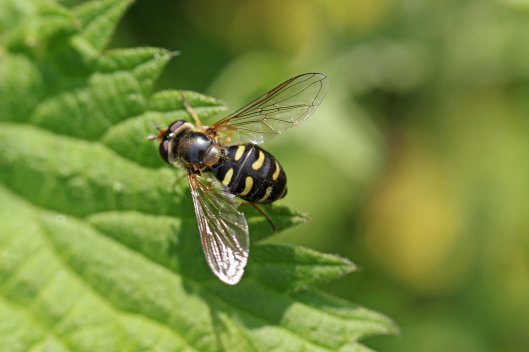
No, this is not a post about English grammar! I thought I would share more photos of hoverflies before they disappear for the year and it just so happens that today’s selection is not at all scientific – same genus, same habitats – they just all happen to be decorated with commas or dashes.

160901 Chrysotoxum bicinctum

First up is Chrysotoxum bicinctum, with the two yellow stripes across its abdomen making it quite a distinctive hoverfly and also more easily identifiable than many. Its antennae are a little longer than most hoverflies so this little critter is really trying very hard to imitate a wasp … but without the sting. Usually found in grassy habitats with nearby trees and shrubs for shelter, Chrysotoxum bicinctum can be seen from May to September in most parts of Britain.

160901 Eupeodes corollae (a)
160901 Eupeodes corollae (b)

Also known as the Migrant hoverfly because, despite its small size, it is migrates across Europe and North Africa, Eupeodes corollae is rather a pretty little hoverfly. It can be a little tricky to ID as the males and females have different yellow markings and, to further confuse things, it is also very similar to Eupeodes luniger, up next. Interestingly, E. corollae has been used as way to control insects and aphids on fruit plantations and in greenhouses … but it turns out they ate more fruit than aphids!

160901 Eupeodes luniger

The difference between E. corollae and Eupeodes luniger is in those commas that adorn their abdomens. In E. corollae the markings extend to the edge of the abdomen, whereas in E. luniger they do not. That sounds an easy way to identify them but these hoverflies are not huge critters and it’s not always easy to see those edges. Eupeodes luniger is another migrating species that is known to fly long distances. In Britain they are mostly found in the southern counties.

160901 Xanthogramma pedissequum

Last but certainly not least is Xanthogramma pedissequum, another striking wasp mimic, with characteristic vertical stripes on its thorax and horizontal dashes on its abdomen. Though peaking in June and July, it can be seen in southern Britain from May through to September, in grassy places and along tracks and trails where there is some bare dirt. Presumably, this is because their larvae feed on the aphids found in ants’ nests so they are looking along those pathways for suitable egg-laying places.

Like Loading...

Homage to the Baobab

31 Wednesday Aug 2016

Posted by sconzani in nature, trees

≈ 12 Comments

Tags

Baobab, Maasai, Rachel Sawaya, Tanzania, The Baobab Tree poem

You know he is there, standing
in a field, like all the others
but he is not like them.
from ‘The Baobab Tree’ by Rachel Sawaya

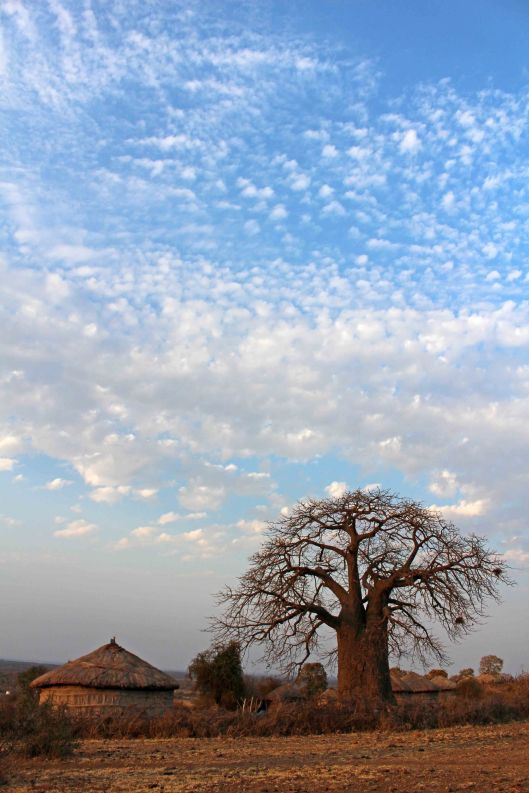
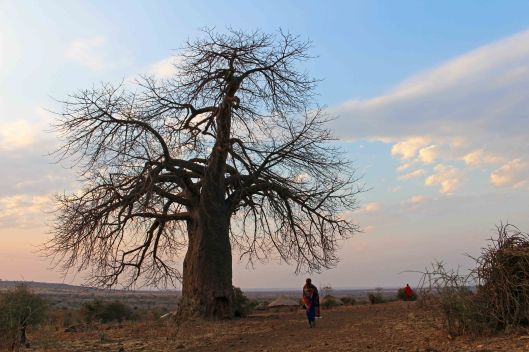
I love these words from Rachel’s prize-winning poem (more about that and her here). In a few deceptively simple words she encapsulates what I love about the baobab: it is not like any other. No facts and figures today. Instead, I hope my photos, taken in Tanzania in 2014, will speak to you of the Baobab.

160831 baobab (1)160831 baobab (2)160831 baobab (3)160831 baobab (4)160831 baobab (5)160831 baobab (6)

Like Loading...

Rocking the Rhodos

30 Tuesday Aug 2016

Posted by sconzani in insects, nature, parks, plants

≈ 7 Comments

Tags

Bute Park, Graphocephala fennahi, leafhopper, plant bug, rhododendron, rhododendron leafhopper

160830 Rhododendron leafhopper (2)

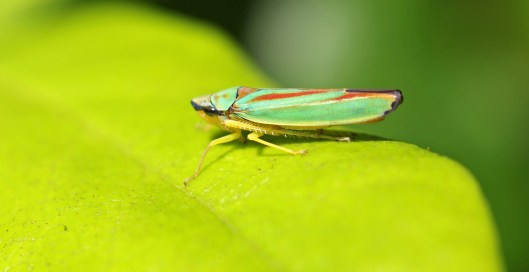
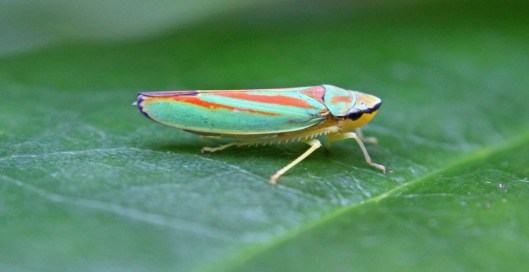
What dapper little critters these are, don’t you think? The fashionistas of the bug world in their pale-green orange-striped suits, with contrasting purple trim and coordinating pale yellow under-wear. No dull dark-grey pinstripes for these hoppers; they’re American immigrants and they’re happy to be noticed. It certainly makes them easy to identify, a huge bonus in the world of plant bugs!

160830 Rhododendron leafhopper (1)

Rhododendron leafhoppers (Graphocephala fennahi) were first introduced to Britain in the early 1900s and I was first introduced to them early last week, when walking a butterfly transect with a colleague, but I’ve been back twice to see them since then, just because they make me laugh. The ones in my pictures make their home in the rhododendron bushes in one small area of Cardiff’s Bute Park, and there are hundreds, if not thousands of them – so many, in fact, that you can actually hear the sproing as they flit from leaf to leaf. And, if you stand in front of the bushes, you’re in serious danger of straining your neck from watching them fly and spring back and forth. Yet another free entertainment package from Mother Nature (with a little voyeurism thrown in)!

160830 Rhododendron leafhopper (3)
160830 Rhododendron leafhopper (4)
160830 Rhododendron leafhopper (5)
160830 Rhododendron leafhopper (6)
Like Loading...

Roath Park’s Giant polypores

29 Monday Aug 2016

Posted by sconzani in fungi, nature

≈ 1 Comment

Tags

bracket fungus, Giant polypore, Meripilus giganteus, polypore fungus, Roath Park

On either side of the path to a beautiful old bridge across the brook that runs through Roath Park Pleasure Gardens there stands a tree. Both trees are huge and old and dead but both are the source of life and habitat of choice of many a beetle and bug, and a wide range of fungi. This month, first one tree and then the other has played host to magnificent large clumps of the Giant polypore, Meripilus giganteus.

160829 Giant polypore (3)
160829 Giant polypore (4)

Their Latin name is most appropriate: Meri means a part and pile means caps and, not surprisingly, giganteus means gigantic, so together we have gigantic caps made of many parts. And they are gigantic! These specimens have reached a combined width of perhaps half a metre but it is not unknown for a single cap to grow that wide. Another common name for this fungus is Black-staining polypore as the pore surface will stain dark brown or black when bruised. Giant polypores are most often found on beech trees and stumps but will also parasitise the roots of various other broadleaf trees, in Britain and much of Europe. If this looks familiar to my North American readers, it’s because a related fungus, Meripilus sumstinei, can be found on your trees.

160829 Giant polypore (1)
160829 Giant polypore (2)
160829 Giant polypore (5)
160829 Giant polypore (6)
Like Loading...

The koru

28 Sunday Aug 2016

Posted by sconzani in nature, plants

≈ 10 Comments

Tags

koru, Maori symbol, meaning of koru, spiral in nature, symbolism of koru, symbolism of spiral

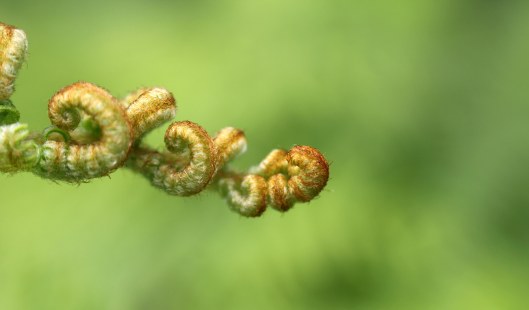
New Zealand Maori have a saying: ‘Ka hinga atu he tete-kura, ka hara-mai he tete-kura’, which loosely translates to ‘As one fern frond dies, one is born to take its place’.

160828 koru (5)

Maori call the newborn, unfurling fern frond a koru. It symbolises creation and new life, and represents strength and peace. The koru also embodies the spiral motif, found in the art of many ancient cultures. Its circular shape suggests perpetual motion, and the spiral itself communicates not only the idea of constant growth through its outward movement but also, through its inward coil, the concept of returning to a point of origin. The koru, with its beautiful promise of hope and new life to come, is one of my favourite things in the natural world.

160828 koru (3)
160828 koru (2)
160828 koru (4)
160828 koru (1)
Like Loading...
← Older posts
Newer posts →

About me

sconzani

sconzani

I'm a writer and photographer; researcher and blogger; birder and nature lover; countryside rambler and city strider; volunteer and biodiversity recorder.

View Full Profile →

Follow earthstar on WordPress.com

Enter your email address to follow this blog and receive notifications of new posts by email.

Recent blog posts

  • Nesting material April 28, 2026
  • Lifer: Box bug April 27, 2026
  • Peak Wild garlic April 26, 2026
  • First damsels of 2026 April 25, 2026
  • NFY: Green-veined white April 24, 2026

From the archives

COPYRIGHT

Unless otherwise acknowledged, the text and photographs on this blog are my own and are subject to international copyright. Nothing may be downloaded or copied without my permission.

Fellow Earth Stars!

  • Unknown's avatar
  • Unknown's avatar
  • Unknown's avatar
  • Unknown's avatar
  • Unknown's avatar
  • Unknown's avatar
  • Unknown's avatar
  • Unknown's avatar
  • Unknown's avatar
  • Unknown's avatar
  • Unknown's avatar
  • Unknown's avatar
  • Unknown's avatar
  • Unknown's avatar
  • Unknown's avatar
  • Unknown's avatar
  • Unknown's avatar
  • Unknown's avatar
  • Unknown's avatar
  • Unknown's avatar
  • Unknown's avatar
  • Unknown's avatar
  • Unknown's avatar
  • Unknown's avatar
  • Unknown's avatar
  • Unknown's avatar
  • Unknown's avatar
  • Unknown's avatar
  • Unknown's avatar
  • Unknown's avatar
  • Unknown's avatar
  • Unknown's avatar
  • Unknown's avatar
  • Unknown's avatar
  • Unknown's avatar
  • Unknown's avatar
  • Unknown's avatar
  • Unknown's avatar
  • Unknown's avatar
  • Unknown's avatar
  • Unknown's avatar
  • Unknown's avatar
  • Unknown's avatar
  • Unknown's avatar
  • Unknown's avatar
  • Unknown's avatar
  • Unknown's avatar
  • Unknown's avatar
  • Unknown's avatar
  • Unknown's avatar

Blog at WordPress.com.

Privacy & Cookies: This site uses cookies. By continuing to use this website, you agree to their use.
To find out more, including how to control cookies, see here: Cookie Policy
  • Subscribe Subscribed
    • earthstar
    • Join 642 other subscribers
    • Already have a WordPress.com account? Log in now.
    • earthstar
    • Subscribe Subscribed
    • Sign up
    • Log in
    • Report this content
    • View site in Reader
    • Manage subscriptions
    • Collapse this bar

Loading Comments...

You must be logged in to post a comment.

    %d