• ABOUT
  • BIRDING 2018
  • Birding 2019
  • BLOG POSTS
  • Butterflies 2018
  • Resources

earthstar

~ a celebration of nature

earthstar

Category Archives: nature

Cattle in Cambodia

16 Tuesday Aug 2016

Posted by sconzani in animals, nature

≈ 4 Comments

Tags

bovine, Cambodia, cattle, Cattle in Cambodia, cow, Water buffalo

World wildlife Wednesday has rolled around again, and I was stuck for an idea this week until my friend Viv, who lives in Thailand, posted a photo of one of her local water buffalo.

160817 cambo cattle (11)

My photos, however, were not taken in Thailand but in Cambodia, where I lived and worked for seven months back in 2013. Both water buffalo and the local cattle are common sights there, pulling wagons and ploughs, and wallowing in muddy watering holes. These valuable, well-tended beasts of burden are also farmed for their dairy products, and cow dung has long been used both as fertiliser and as fuel in impoverished countries like Cambodia. Cattle also feature in their ancient religions, and representations can be seen in the stone statues and sculptured reliefs that adorn the world-famous temples of Angkor Wat and the local pagodas. So, today we have a celebration of ‘bovinity’!

160817 cambo cattle (1)
160817 cambo cattle (2)
160817 cambo cattle (3)
160817 cambo cattle (4)
160817 cambo cattle (5)
160817 cambo cattle (6)
160817 cambo cattle (7)
160817 cambo cattle (8)
160817 cambo cattle (9)
160817 cambo cattle (10)
Like Loading...

Seven Sisters Country Park

16 Tuesday Aug 2016

Posted by sconzani in birds, insects, nature, parks, wildflowers

≈ 8 Comments

Tags

birding, birdwatching, British birds, chalk cliffs, Cuckmere River, East Sussex, Seven Sisters Country Park

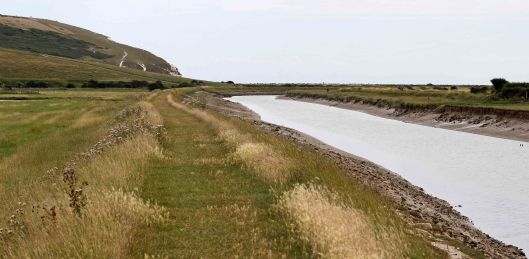
Last Wednesday Jill and I walked the full length of the Seven Sisters Country Park in East Sussex twice, down to the sea and back on one side of the river, followed by a break for a delicious lunch at the Cuckoo Inn, and then down to the sea and back on the other side of the river.

160816 7 sisters (1)

We did the same walk on 13 August 2014 and it was top of my list to do again on this visit. Rather than the cloudless, bright blue sky of two years ago, this time it was quite overcast though no less beautiful as the clouds lent a different atmosphere to the landscape, creating a more moody feel that I almost prefer.

160816 7 sisters (11)

The huge chalk cliffs were just as awe-inspiring, the cliff tops were covered with luxuriant wildflower growth, and we delighted in sightings of birds and insects. It was a magical day!

To walk the landscapes of the Seven Sisters Country Park, check out my Sconzani blog posts: this was on a blue-sky day in 2014 and this was last week.

160816 7 sisters (14)
160816 7 sisters (4)
160816 7 sisters (5)
160816 7 sisters (3)
160816 7 sisters (13)
160816 7 sisters (2)
160816 7 sisters (8)
160816 7 sisters (12)
160816 7 sisters (6)
160816 7 sisters (9)
160816 7 sisters (16)
160816 7 sisters (7)
160816 7 sisters (10)
160816 7 sisters (15)
Like Loading...

A Southern hawker

15 Monday Aug 2016

Posted by sconzani in insects, nature

≈ 1 Comment

Tags

Aeshna cyanea, dragonflies, dragonfly, Southern hawker

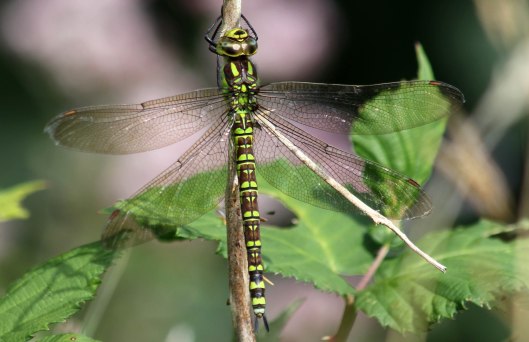
Although I’d seen a Southern hawker dragonfly (Aeshna cyanea) once before, I hadn’t managed to get any good photos until I spotted this little beauty while on an outing to Lewes in East Sussex during last week’s holiday. Though the spot where she settled meant she was slightly obscured by vegetation, she very obligingly stayed put while I got several shots.

160815 Southern Hawker (1)

At around 70mm (2¾ inches) long, Southern hawkers are reasonably large creatures, and my research tells me they can be very inquisitive, sometimes flying right up to the people watching them to check them out. I’ve yet to see a male but imagine them to be rather handsome as they have vivid blue and green colouring with similar dark patterning to the female.

160815 Southern Hawker (3)
160815 Southern Hawker (2)

Neither of the Southern hawkers I’ve seen was near water and this is quite common, apparently. Though they need well-vegetated ponds in which to lay their eggs, they can often be seen hawking for food along tree-lined paths and woodland rides. These dragonflies are common in southern parts of England and Wales, hence the name Southern hawker.

160815 Southern Hawker (4)

Like Loading...

Rye Harbour Nature Reserve

14 Sunday Aug 2016

Posted by sconzani in birds, insects, nature, wildflowers

≈ 4 Comments

Tags

largest coastal shingle area in Europe, Rye Harbour Nature Reserve, shingle beach

On the first full day of my short break in East Sussex, my friend Jill and I enjoyed a long walk around the fabulous Rye Harbour Nature Reserve, which, along with Dungeness, encompasses the largest coastal shingle area in Europe. Former gravel pits now filled with fresh water together with salt-marshes and saline lagoons provide the perfect habitats for a huge number of birds, as well as both common and rare species of plants and insects. I was in biological heaven!

160814 Rye Harbour (18)

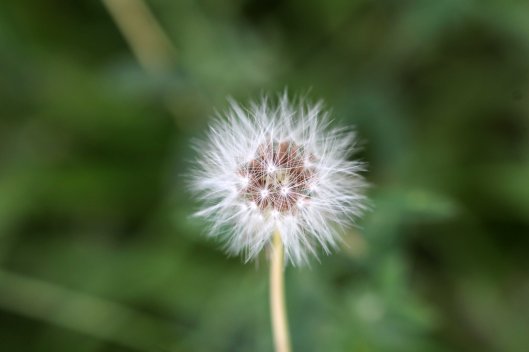
The species in my photos are just a very small selection of what you can see: Black-headed gulls (Chroicocephalus ridibundus) and an unidentified small brown wader; Geranium sp; Viper’s bugloss (Echium vulgare); Little egret (Egretta garzetta); Great mullein (Verbascum thapsus); Curlew (Numenius arquata); Pied wagtail (Motacilla alba); Large white butterfly (Pieris brassicae); Field Grasshopper (Chorthippus brunneus); a plant that looks like a dandelion but isn’t (!); Wild teasel (Dipsacus fullonum); Cormorants (Phalacrocorax carbo); Yellow horned poppy (Glaucium flavum); Coots (Fulica atra); Gatekeeper (Pyronia tithonus) and rather raggedy Red admiral (Vanessa atalanta) butterflies; Lapwings (Vanellus vanellus); and Marsh mallow (Althaea officinalis).

For a wander around the landscapes of Rye Harbour Nature Reserve, check out my Sconzani blog post here.

160814 Rye Harbour (1)
160814 Rye Harbour (2)
160814 Rye Harbour (3)
160814 Rye Harbour (4)
160814 Rye Harbour (5)
160814 Rye Harbour (6)
160814 Rye Harbour (7)
160814 Rye Harbour (8)
160814 Rye Harbour (9)
160814 Rye Harbour (10)
160814 Rye Harbour (11)
160814 Rye Harbour (12)
160814 Rye Harbour (13)
160814 Rye Harbour (14)
160814 Rye Harbour (15)
160814 Rye Harbour (16)
160814 Rye Harbour (17)
Like Loading...

The Herring gull alarm clock

13 Saturday Aug 2016

Posted by sconzani in birds, nature

≈ 7 Comments

Tags

birding, birdwatching, British birds, Herring gull, Larus argentatus

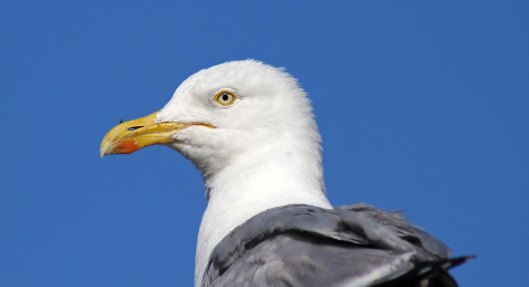
When I went to stay with my friend Jill in East Sussex this week I didn’t expect to be woken early each morning by Herring gulls (scientific name Larus argentatus) screeching and squawking on hers and her neighbours’ rooftops as she lives several miles from the sea as the gull flies and nowhere near something that might attract them, like a rubbish tip. It seems the gulls have started moving inland in her area and she’s certainly noticed more of them about in the past year or so. According to the RSPB, Herring gull numbers have been declining in recent years so perhaps they are expanding their range in search of food.

160813 herring gulls (7)

I enjoyed hearing them as it made me feel like I was on holiday at the seaside, though they could be very cheeky. Although Jill doesn’t feed them, they do scavenge food put out for the smaller birds, and one rather insistent gull has taken to tapping at the French doors in her bedroom in the morning in the hope of getting some breakfast. And I took these photos of the same (or another, equally brazen bird) outside the back door, giving me a very imperious ‘feed me now’ look, then mewing like a young gull when the glare didn’t produce the desired results. I’m afraid it went away hungry.

160813 herring gulls (1)
160813 herring gulls (2)
160813 herring gulls (3)
160813 herring gulls (4)
160813 herring gulls (5)
160813 herring gulls (6)
Like Loading...

A bewilderment of thistles

12 Friday Aug 2016

Posted by sconzani in flowers, nature, wildflowers

≈ 6 Comments

Tags

Common knapweed, Creeping thistle, Lesser burdock, Spear thistle, thistle, thistle lookalikes

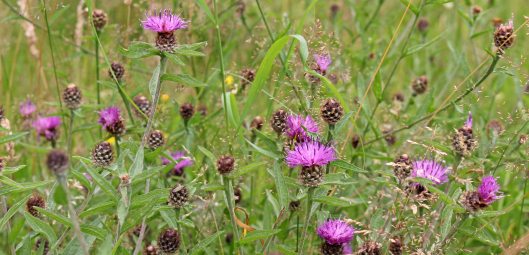
Last Floral Friday I was confused about geraniums; this week it’s thistles and things that look like thistles that are causing my befuddlement.

160812 thistles (14)

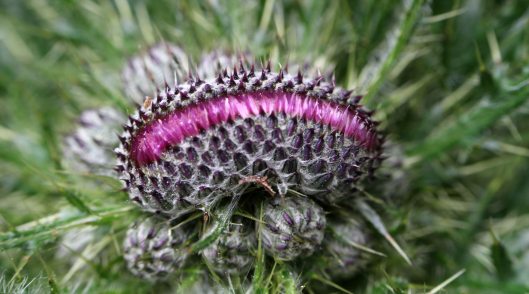
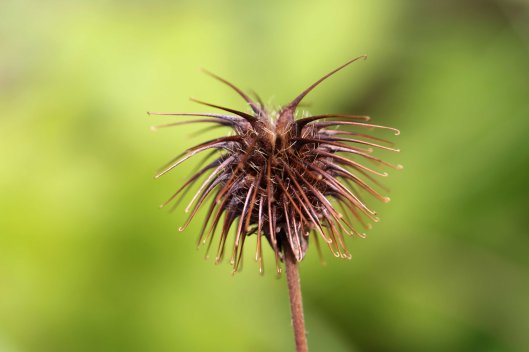
It seems there are thistle lookalikes, like Lesser burdock (Arctium minus agg.) and Common Knapweed (Centaurea nigra), though admittedly, they don’t have thorns but the flowers are very similar. And then there are plants that have ‘thistle’ in their names that don’t look a bit like thistles to me: Smooth sow thistle (Sonchus oleraceus), for example, that looks more like a dandelion, and Globe thistle (Echinops sp.), which looks like a cross between a thistle, a teasel and an allium. And then there are the numerous varieties of actual thistles to decipher. Which genus is it: Cirsium, Carduus (Latin for ‘a kind of thistle’), Silybum (yes, really!) or Onopordum? And is it Spear thistle (Cirsium vulgare) or Creeping thistle (Cirsium arvense) or Milk thistle (Silybum marianum) or Scotch thistle (Onopordum acanthum)?

160812 thistles (13)

I think you can see why I’m not even going to try to identify these photos. I’m going to remain bewildered and simply enjoy their wonderful structures and gorgeous colours.

160812 thistles (1)
160812 thistles (2)
160812 thistles (3)
160812 thistles (4)
160812 thistles (5)
160812 thistles (6)
160812 thistles (7)
160812 thistles (8)
160812 thistles (9)
160812 thistles (10)
160812 thistles (11)
160812 thistles (12)
Like Loading...

‘Dedicated Naturalist’: ‘brief but fleeting pleasure’

11 Thursday Aug 2016

Posted by sconzani in 'Dedicated Naturalist' Project, insects, nature

≈ Leave a comment

Tags

Eristalis arbustorum, Eristalis pertinax, Eristalis tenax, hoverfly

A snippet from my volunteer work on the ‘Dedicated Naturalist’ Project, helping to decipher and digitise, record and publicise the life’s work of naturalist extraordinaire, Dr Mary Gillham. This is the type of delightful insight we volunteers often discover when mining Mary’s copious archives for biological records. Never a dull moment and frequent chuckling make a volunteer’s work fun!
 160811 Eristalis pertinax

Eristalis tenax drone flies   MATING, presumably, on 10 July 1981. The larger female sitting on flower head – buddleja, hogweed, thistle, &c. Male, or up to four males, smaller but marked exactly the same, narrow yellow bands on black, hovering 2-3” above for often considerable while before darting momentarily down, sweeping a tail across hers and swooping away again. No wonder he has to hover so persistently to get his aim just right for the ‘brief but fleeting pleasure’. Only 1 male is accepted, she flying off almost at once.

160811 Eristalis arbustorum

My images are the same genus but not the same species as Mary’s though their behaviour is similar. The top image is Eristalis pertinax, a very common hoverfly in much of Britain, and the lower image depicts a female (left) and male (right) Eristalis arbustorum, in a situation similar to that Mary has described, with the male awaiting his chance to pounce.

For the full story about the Mary Gillham Archive Project, check out our website, and follow our progress on Facebook and on Twitter.

Like Loading...

Crabs in Kep in Cambodia

10 Wednesday Aug 2016

Posted by sconzani in nature

≈ 3 Comments

Tags

Cambodia, crab market, crab traps, crabs, crustaceans, hermit crab, Kep

For world wildlife Wednesday this week we’re heading to Cambodia where I lived and worked for 7 months in 2013. In January that year, I visited the seaside town of Kep with some friends. Kep is particularly famous for its delicious crabs and, just as other places have huge statues of their typical food product (in New Zealand, Ohakune has an enormous carrot; in Australia, Woombye a huge pineapple – I’m sure there are others), so Kep has this large statue of a crab – a male crab I am reliably told – something to do with the width of the central plate on its tummy!

160810 kep crabs (1)
160810 kep crabs (2)

The locals make a living from farming and catching crabs, and it was interesting to watch them checking their traps in the warm waters near the crab market. Both the sunset, which we enjoyed at the one of the restaurants near the crab market, and the crabs we ate later, were superb, as were all the other types of fresh seafood we savoured in Kep: prawns, shrimps, fish, squid and octopus. Seafood is my absolute favourite food so I was in heaven.

160810 kep crabs (3)
160810 kep crabs (4)

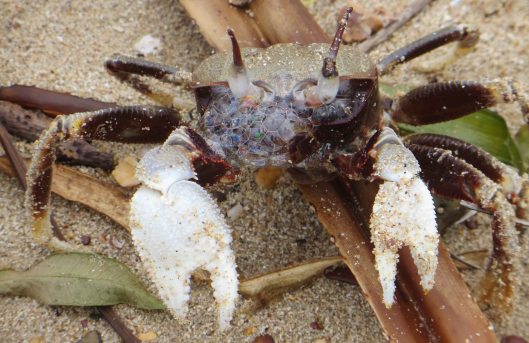
Our beach walks also featured many crabs: this large one had escaped the traps and was blowing bubbles on the sand at the water’s edge (thought to be how crabs aerate their gills when out of water), and the tiny hermit crabs were fun to watch, scuttling along the sand with their homes on their backs.

160810 kep crabs (5)

160810 kep crabs (6)
160810 kep crabs (7)
Like Loading...

The ladybird lifecycle

09 Tuesday Aug 2016

Posted by sconzani in insects, nature

≈ 7 Comments

Tags

Halyzia 16-punctata, harlequin ladybird, Harmonia axyridis, ladybird, ladybird larva, ladybird lifecycle, ladybird pupa, Orange ladybird

Just like every other insect, a ladybird goes through a complete transformation during its short, one-year life but the various stages are something I’ve only become aware of this year so I thought I’d share them with you.

160809 ladybird (1) 22 spot
160809 ladybird (2)

Adult ladybirds spend the cold winter months in a dormant state, awakening in the springtime as the weather begins to warm up. After munching away on some aphids to get their juices flowing again, they look for a member of the opposite sex and mate. I don’t have any egg photos but they are, apparently, bright yellow and are laid on the underside of leaves. Once the mating and egg-laying are complete, the adult ladybirds die.

160809 ladybird (3)
160809 ladybird (4)
160809 ladybird (5) orange Halyzia 16-punctata

Depending on the temperature and weather conditions, the eggs hatch after 3 to 10 days and the little larvae immediately begin eating: scale insects and aphids are their favourites so you can see why gardeners love them. At this stage, they look nothing at all like ladybirds, though they do have unique patterns – left and centre above are Harlequins (Harmonia axyridis) and the one on the right is an Orange (Halyzia 16-punctata).

160809 ladybird (6)
160809 ladybird (7)

After 3 to 4 weeks of constant eating, the larvae pupate, shedding their larval skin and changing into this strange-looking blob you can find attached to the tops of leaves. The metamorphosis from larvae to adult ladybird only takes 7 to 10 days – a miracle really!

160809 ladybird (8)

When the adult ladybird first emerges from its pupa, it is very pale and takes a little while for its final colours to show, though you can usually see traces of its spots. And that’s it! The adult will trundle around the leaves, eating all those pesky aphids until the winter months come, and the whole process will begin all over again.

Like Loading...

The seed is hope

08 Monday Aug 2016

Posted by sconzani in flowers, nature, plants

≈ 4 Comments

Tags

flower seeds, plant seeds, quotes about seeds, seed quotations

‘From a small seed a mighty trunk may grow.’ ~ Aeschylus

160808 seeds (1)

‘Don’t judge each day by the harvest you reap but by the seeds that you plant.’ ~ Robert Louis Stevenson

160808 seeds (2)

‘To see things in the seed, that is genius.’ ~ Lao Tzu

160808 seeds (3)

‘Everyone who enjoys thinks that the principal thing to the tree is the fruit, but in point of fact the principal thing to it is the seed. — Herein lies the difference between them that create and them that enjoy.’ ~ Friedrich Nietzsche

160808 seeds (4)

‘Though I do not believe that a plant will spring up where no seed has been, I have great faith in a seed. Convince me that you have a seed there, and I am prepared to expect wonders.’ ~ Henry David Thoreau

160808 seeds (5)

Like Loading...
← Older posts
Newer posts →

About me

sconzani

sconzani

I'm a writer and photographer; researcher and blogger; birder and nature lover; countryside rambler and city strider; volunteer and biodiversity recorder.

View Full Profile →

Follow earthstar on WordPress.com

Enter your email address to follow this blog and receive notifications of new posts by email.

Recent blog posts

  • Nesting material April 28, 2026
  • Lifer: Box bug April 27, 2026
  • Peak Wild garlic April 26, 2026
  • First damsels of 2026 April 25, 2026
  • NFY: Green-veined white April 24, 2026

From the archives

COPYRIGHT

Unless otherwise acknowledged, the text and photographs on this blog are my own and are subject to international copyright. Nothing may be downloaded or copied without my permission.

Fellow Earth Stars!

  • Unknown's avatar
  • Unknown's avatar
  • Unknown's avatar
  • Unknown's avatar
  • Unknown's avatar
  • Unknown's avatar
  • Unknown's avatar
  • Unknown's avatar
  • Unknown's avatar
  • Unknown's avatar
  • Unknown's avatar
  • Unknown's avatar
  • Unknown's avatar
  • Unknown's avatar
  • Unknown's avatar
  • Unknown's avatar
  • Unknown's avatar
  • Unknown's avatar
  • Unknown's avatar
  • Unknown's avatar
  • Unknown's avatar
  • Unknown's avatar
  • Unknown's avatar
  • Unknown's avatar
  • Unknown's avatar
  • Unknown's avatar
  • Unknown's avatar
  • Unknown's avatar
  • Unknown's avatar
  • Unknown's avatar
  • Unknown's avatar
  • Unknown's avatar
  • Unknown's avatar
  • Unknown's avatar
  • Unknown's avatar
  • Unknown's avatar
  • Unknown's avatar
  • Unknown's avatar
  • Unknown's avatar
  • Unknown's avatar
  • Unknown's avatar
  • Unknown's avatar
  • Unknown's avatar
  • Unknown's avatar
  • Unknown's avatar
  • Unknown's avatar
  • Unknown's avatar
  • Unknown's avatar
  • Unknown's avatar
  • Unknown's avatar

Blog at WordPress.com.

Privacy & Cookies: This site uses cookies. By continuing to use this website, you agree to their use.
To find out more, including how to control cookies, see here: Cookie Policy
  • Subscribe Subscribed
    • earthstar
    • Join 642 other subscribers
    • Already have a WordPress.com account? Log in now.
    • earthstar
    • Subscribe Subscribed
    • Sign up
    • Log in
    • Report this content
    • View site in Reader
    • Manage subscriptions
    • Collapse this bar

Loading Comments...

You must be logged in to post a comment.

    %d