• ABOUT
  • BIRDING 2018
  • Birding 2019
  • BLOG POSTS
  • Butterflies 2018
  • Resources

earthstar

~ a celebration of nature

earthstar

Category Archives: nature

The Silver Y moth

18 Monday Jul 2016

Posted by sconzani in insects, nature

≈ 6 Comments

Tags

Autographa gamma, British moth, migratory moth, moth, Silver Y, Silver Y moth

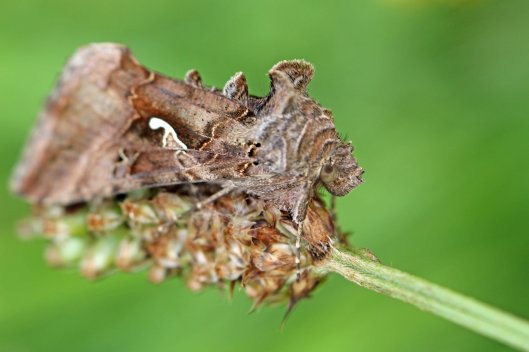
When I first spotted this little moth clinging upside down to a flowerhead of Ribwort plantain, I thought it was a pupa of some kind. It was only when I got really close with my camera that I noticed a little eye watching me. Though it must’ve been a bit shocked to see a giant with a black box looming over it, it didn’t move. Even as I rotated the stem this way and that to get photos from different angles, it stayed perfectly still. Maybe it was petrified or maybe it just felt assured that its perfect camouflage meant it wouldn’t be harmed – and it certainly wasn’t harmed. And I was overjoyed to see such a gorgeous creature.
160718 silver y moth (2)

It’s a Silver Y moth (Autographa gamma), named for the little white marking on its forewings that looks like a Y or, if you know your Greek alphabet, a gamma. Though they can be found in the warmer parts of Britain all year round, these little creatures (with a wingspan of 30-45mm) are also migratory. In spring, they fly from the southern parts of Europe and from north Africa as far north as Greenland, Iceland and the Scandinavian countries, sometimes arriving in Britain in their thousands. Look for them on their favourite food plants, the clovers, Common nettle, and the peas and cabbages in your vegetable garden.

160718 silver y moth (1)
160718 silver y moth (3)
Like Loading...

I go to nature …

17 Sunday Jul 2016

Posted by sconzani in nature

≈ 7 Comments

Tags

Cardiff, John Burroughs, meadow, nature quote, nature walks, Pontcanna Fields, Taffside trail, walking in nature

‘I go to nature to be soothed and healed, and to have my senses put in order.’
~ John Burroughs

160717 taffside

Like Loading...

Brown is the new black

16 Saturday Jul 2016

Posted by sconzani in insects, nature

≈ 9 Comments

Tags

Aphantopus hyperantus, butterflies, butterfly, Cathays Cemetery, Maniola jurtina, Meadow Brown, Ringlet

160716 Meadow Brown (1)

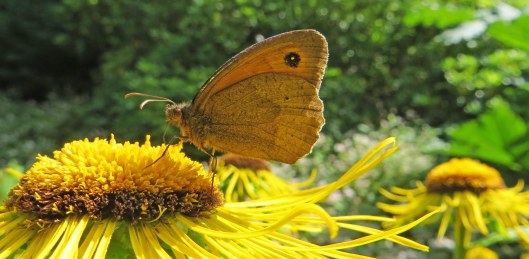
The two butterflies I see most often at the moment are fifty shades of brown and, when flying, very difficult to tell apart. Both enjoy the sheltered areas of tall grass and wildflowers in the conservation areas of Cathays Cemetery and, on a sunny day, I might see a combined total of perhaps thirty. Both are difficult to photograph as they rarely keep still long enough for me to reach them, let alone get focused shots, and they often settle down low in areas of long grass so, even at my most stealthy, I can seldom step through the greenery without disturbing them.

160716 ringlet (1)
160716 ringlet (2)

The Ringlet (Aphantopus hyperantus) is not a Shirley Temple lookalike – its common name comes from the series of little ring markings on its hind wings. One of the advantages of being brown is that it is more easily able to warm itself up so can still be seen flying on overcast days. Common throughout Britain (except for the northernmost parts of Scotland), it tends to live in colonies, sometimes numbering up to several thousand individuals – what a sight that would be!

160716 Meadow Brown (2)
160716 Meadow Brown (3)

As its name suggests, the Meadow Brown (Maniola jurtina) is brown and lives in meadows, and it’s one of the most common, widespread and least endangered of British butterflies. There are, in fact, four separate sub-species, differentiated by location and extremely subtle variations in markings but I’m not going to venture in to that level of specialisation (there’s a wealth of information on the UK Butterflies website if you’re tempted).

Like Loading...

Floral Friday: Orchids

15 Friday Jul 2016

Posted by sconzani in flowers, nature, wildflowers

≈ 7 Comments

Tags

British orchids, Common spotted orchid, Common twayblade, Early purple orchid, native orchids, Southern marsh orchid

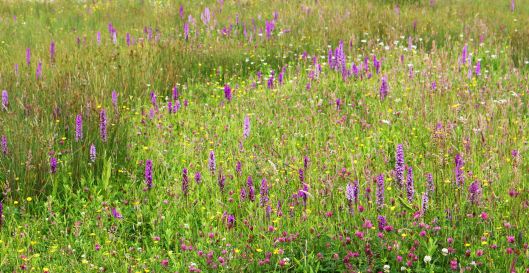
In the past, when I heard the word orchid, I would think of the exotic tropical species to be found in places like Singapore and other Asian countries. Now I know there is an entirely different kind of orchid that is a British native and, while not as spectacular in appearance as some of the exotics, these natives are, I think, even more beautiful.

160715 orchids (1)

The flower spikes stand tall, like sentinels, amongst the more flippant flora of the meadows and chalk grasslands, though the individual flowers are delicate little poppets, with a surprising range of patterns and hues. This is partly because they hybridise easily which can make them difficult to identify. I think I have here examples of the Common twayblade, Early purple, Southern marsh and Common spotted orchids.

160715 orchids (2)
160715 orchids (3)
160715 orchids (4)
160715 orchids (5)
160715 orchids (6)
160715 orchids (7)
160715 orchids (8)
160715 orchids (9)
160715 orchids (10)
Like Loading...

Get a gryp–o!

14 Thursday Jul 2016

Posted by sconzani in insects, nature

≈ 5 Comments

Tags

Calocoris (Grypocoris) stysi, Grypocoris (Lophyromiris) stysi, Grypocoris stysi, leaf bug, Miridae, plant bug

A Grypocoris (Lophyromiris) stysi that is – the bug formerly known as Calocoris (Grypocoris) stysi. Though it’s a relatively common bug and can be found throughout Britain, this little dude has no common name so I’ve taken to calling it Grypo – those Latin names are just too long-winded to get my tongue around and not so easy on the memory either.

160714 grypocoris stysi (1)

So, the Grypos are out in force at the moment. Their eggs hatch in May, they eat up large during June and July – mostly on nettles and umbellifers, though the odd snack of aphid also goes down a treat – and by the end of August they’re gone. They’re wee things, between 6 and 8mm long, so not always easy to spot but their distinctive patterning means they are, at least, easy to identify – not the case with many of Britain’s bug community.

160714 grypocoris stysi (2)
160714 grypocoris stysi (3)
160714 grypocoris stysi (4)

Grypo is one of the myriad Miridae family, which includes more than 10,000 species of plant / leaf / grass bugs. As many members of Grypo’s extended family are stem-piercing sap-sucking plant pests, they frequently suffer from bad press. Rest assured, little Grypo is one of the good guys.

160714 grypocoris stysi (5)
160714 grypocoris stysi (6)
160714 grypocoris stysi (7)
Like Loading...

World wildlife Wednesday: Antelopes anonymous

13 Wednesday Jul 2016

Posted by sconzani in animals, nature

≈ 6 Comments

Tags

antelope, Ngorongoro Crater, safari, Serengeti National Park, Serengeti Plains, Tanzania

I used the word anonymous in my title because I’m not entirely sure what all of these animals are. And I use the word ‘antelopes’ in the broadest possible sense, as my photos may well include creatures that are not strictly speaking members of the antelope family. The trouble is that when you go on safari in a country like Tanzania, it’s far too easy to be overwhelmed by and enraptured with the less common, more sensational animals (the lions and leopards and cheetahs), so the ‘antelopes’, though no less interesting in themselves, tend to get ignored just a little.

160713 antelopes (7)

Having said that I did have to sort through more than a hundred ‘antelope’ photos when choosing which to include in this post. And, because I knew I would forget them, I did ask our guides the names of what we were seeing and made a list – I’m just not sure now which is which on that list. So, these photos may or may not include: impala, topi, Thomson’s gazelle, Grant’s gazelle, dik-dik, waterbuck, bushbuck, Cape eland, and Coke’s hartebeest.

160713 antelopes (1)
160713 antelopes (2)
160713 antelopes (3)
160713 antelopes (5)
160713 antelopes (8)
160713 antelopes (9)
160713 antelopes (11)
160713 antelopes (4)
160713 antelopes (10)
160713 antelopes (6)
Like Loading...

I’m following a tree: month 6

12 Tuesday Jul 2016

Posted by sconzani in nature, trees

≈ 5 Comments

Tags

Bute Park, Dawn redwood, I'm following a tree, Metasequoia glyptostroboides

The longest day has come and gone, and autumn’s just around the corner. Though some trees are already dropping leaves, there’s none of that messy stuff happening around the very tidy Dawn Redwood.

160712 dawn redwood

The park staff at Bute Park keep her base neatly strimmed and regularly mow the grass that surrounds her, so she always looks tip top (except when untidy humans leave litter from their picnics or late evening drinking sessions!).

160712 dawn redwood base

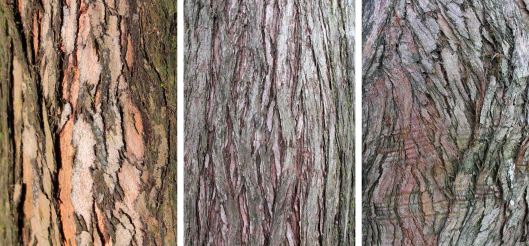
As you might expect from a tree named redwood, Dawn’s wood, if we could see it, would be a rich reddish colour. The bark that covers her wood is also a reddish brown, though it will become increasingly grey as she ages. This bark is quite fibrous and furrowed, and it exfoliates in long narrow strips.

160712 Dawn redwood bark

Both the bark and the leaves are used in Chinese folk medicine to produce an ‘anti-microbic, analgesic and anti-inflammatory drug for dermatic diseases’. In 2015, a study was undertaken to determine if there was any scientific basis to this medical use and it found that Dawn Redwood does, indeed, contain chemicals that can reduce the symptoms in allergic contact dermatitis. So, Ms Metasequoia glyptostroboides is not only beautiful but useful too!

Tree following is fun. Why not join in? You can find out more here.
Like Loading...

It’s a Comma!

11 Monday Jul 2016

Posted by sconzani in insects, nature

≈ 8 Comments

Tags

butterfly, Comma, Comma butterfly, Comma butterfly pupa, Polygonia c-album, pupa

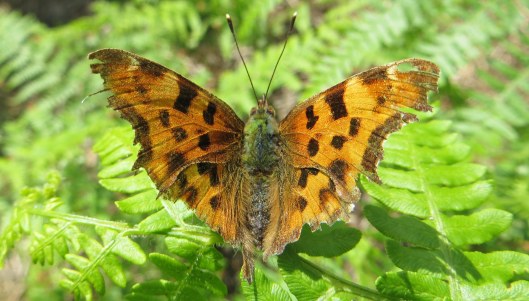
I’d seen the stunning Comma butterfly (Polygonia c-album) before, when I lived in Cheshire for 6 months, but this was my first in Wales and the first for 2016. And, surprisingly for a butterfly that can be quite skittish, it was very amenable to photography, fluttering off and coming back to a nearby leaf and changing its pose so I could get a variety of shots – a born model!

160711 Comma (1)

Named for the small white comma-shaped mark on the underside of its wings, the Comma is a resilient species. The main food plant for its caterpillars used to be the hops used in brewing beer so the butterfly’s numbers dwindled perilously when hop farming declined in the 1800s. For some reason, the Comma has changed its larval food plant to the Common nettle so, since the 1960s, both its numbers and the extent of its range have increased dramatically. It’s a born survivor!

160711 Comma (2)
160711 Comma (3)

You can just see the little white comma on the underwide of the wing in the photo above left. On the right is the pupa – a beautifully textured structure, with small silver highlights. And below is a rather battered-looking older specimen, seen when I lived in Cheshire.

160711 Comma (4)

Like Loading...

Summer wildflowers

10 Sunday Jul 2016

Posted by sconzani in flowers, nature, wildflowers

≈ 8 Comments

Tags

Common comfrey, Common honeysuckle, Cornflower, Field bindweed, Fox and cubs, Hedge woundwort, Lesser stitchwort, Ox-eye daisy, Ragwort, White clover, Wood forget-me-not, Yellow loosestrife

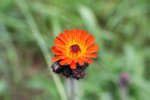
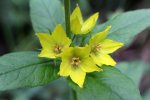
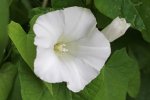
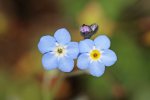
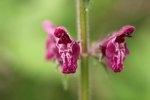
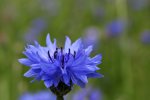
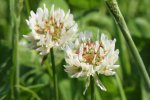
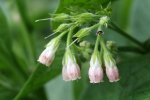
As the summer progresses so, too, do the varieties of wildflowers that add colour to the roadside verges, beautify patches of waste ground, light up drab spots along hedgerows, adorn the edges of the trails I regularly walk, and sparkle in the conservation areas at my local cemetery.

These are some that have caught my eye in the past couple of weeks: Fox-and-Cubs (Pilosella aurantiaca), Yellow loosestrife (Lysimachia vulgaris), Ox-eye daisy (Leucanthemum vulgare), Field bindweed (Convolvulus arvensis), Wood forget-me-not (Myosotis sylvatica), Hedge woundwort (Stachys sylvatica), Cornflower (Centaurea cyanus), White clover (Trifolium repens), Common comfrey (Symphytum officinale), Ragwort (Senecio jacobaea), Common honeysuckle (Lonicera periclymenum), and the last, I think, is Lesser stitchwort (Stellaria graminea).


Like Loading...

The 5-spot Burnets

09 Saturday Jul 2016

Posted by sconzani in insects, nature

≈ 10 Comments

Tags

5-spot Burnet, Cathays Cemetery, Common bird's foot trefoil, moth, Zygaena trifolii

I thought after yesterday’s post you might like to see the moth that little Henderson Cuthbert the caterpillar will, hopefully, develop into. As you can see, the 5-spot Burnet moth (Zygaena trifolii) is a real beauty.

160710 5-spot burnet (1)

Its preferred habitats are marshlands and boggy heaths, so I’m not entirely sure how they came to live in Cathays Cemetery, though the shade provided by the many tall, mature trees does tend to keep the uncut grass of the conservation areas quite damp so perhaps that serves them just as well. There is also plenty of Common bird’s foot trefoil (the yellow flower shown in one of my photos), which is their favourite food plant.

160710 5-spot Burnet (2)
160710 5-spot Burnet (4)

The 5-spots are certainly plentiful at the moment – when I wander around the cemetery paths, it’s not unusual to see half a dozen at a time. I hope my little friend H. C. will soon join his relations, buzzing about the graves like little pink-winged bumblebees.

160710 5-spot Burnet (3)

Like Loading...
← Older posts
Newer posts →

About me

sconzani

sconzani

I'm a writer and photographer; researcher and blogger; birder and nature lover; countryside rambler and city strider; volunteer and biodiversity recorder.

View Full Profile →

Follow earthstar on WordPress.com

Enter your email address to follow this blog and receive notifications of new posts by email.

Recent blog posts

  • Nesting material April 28, 2026
  • Lifer: Box bug April 27, 2026
  • Peak Wild garlic April 26, 2026
  • First damsels of 2026 April 25, 2026
  • NFY: Green-veined white April 24, 2026

From the archives

COPYRIGHT

Unless otherwise acknowledged, the text and photographs on this blog are my own and are subject to international copyright. Nothing may be downloaded or copied without my permission.

Fellow Earth Stars!

  • Unknown's avatar
  • Unknown's avatar
  • Unknown's avatar
  • Unknown's avatar
  • Unknown's avatar
  • Unknown's avatar
  • Unknown's avatar
  • Unknown's avatar
  • Unknown's avatar
  • Unknown's avatar
  • Unknown's avatar
  • Unknown's avatar
  • Unknown's avatar
  • Unknown's avatar
  • Unknown's avatar
  • Unknown's avatar
  • Unknown's avatar
  • Unknown's avatar
  • Unknown's avatar
  • Unknown's avatar
  • Unknown's avatar
  • Unknown's avatar
  • Unknown's avatar
  • Unknown's avatar
  • Unknown's avatar
  • Unknown's avatar
  • Unknown's avatar
  • Unknown's avatar
  • Unknown's avatar
  • Unknown's avatar
  • Unknown's avatar
  • Unknown's avatar
  • Unknown's avatar
  • Unknown's avatar
  • Unknown's avatar
  • Unknown's avatar
  • Unknown's avatar
  • Unknown's avatar
  • Unknown's avatar
  • Unknown's avatar
  • Unknown's avatar
  • Unknown's avatar
  • Unknown's avatar
  • Unknown's avatar
  • Unknown's avatar
  • Unknown's avatar
  • Unknown's avatar
  • Unknown's avatar
  • Unknown's avatar
  • Unknown's avatar

Blog at WordPress.com.

Privacy & Cookies: This site uses cookies. By continuing to use this website, you agree to their use.
To find out more, including how to control cookies, see here: Cookie Policy
  • Subscribe Subscribed
    • earthstar
    • Join 642 other subscribers
    • Already have a WordPress.com account? Log in now.
    • earthstar
    • Subscribe Subscribed
    • Sign up
    • Log in
    • Report this content
    • View site in Reader
    • Manage subscriptions
    • Collapse this bar

Loading Comments...

You must be logged in to post a comment.

    %d