• ABOUT
  • BIRDING 2018
  • Birding 2019
  • BLOG POSTS
  • Butterflies 2018
  • Resources

earthstar

~ a celebration of nature

earthstar

Category Archives: nature

When is a 5-spot not?

08 Friday Jul 2016

Posted by sconzani in insects, nature

≈ 17 Comments

Tags

5-spot Burnet, 5-spot Burnet moth caterpillar, caterpillar, Cathays Cemetery, moth, Narrow-bordered 5-spot

Meet Henderson Cuthert. He’s a 5-spot Burnet moth caterpillar and, though he will never know it, he has been a brilliant help to me in determining whether all the Burnet moths I keep seeing at my local cemetery are 5-spot Burnets or Narrow-bordered 5-spot Burnets. The two moths are almost impossible to tell apart but the length of the hairs on their caterpillars is a determining factor – short for 5-spot, long for Narrow-bordered 5-spot. And it’s likely that there is a colony of just one species at the cemetery rather than both.

160709 5-spot Burnet caterpillar  (1)

You may well wonder why my little friend is called Henderson Cuthbert (and you may well think me more than a little crazy when I explain). The events were as follows:
Day 1: Caterpillar spotted in front of grave of a husband and wife named Henderson. Photos taken, name filed in memory so I could remember where he was located.
Day 2: I had a sneaky feeling he was getting ready to pupate so returned to see what was happening … and he was, though he had only spun the thinnest of coverings at that stage. The weather was lousy and he looked like getting hammered by a nearby bush so I relocated his piece of grass to the grave opposite. The surname on that headstone was Cuthbert (thus Henderson Cuthbert).

160709 5-spot Burnet caterpillar (2)
160709 5-spot Burnet caterpillar (3)
160709 5-spot Burnet pupa (1)

But wait, there’s more …
Day 3: Initially, I thought the pupa had to be examined to determine species, so I returned again and carefully brought Henderson Cuthbert home with me, though I was rather devastated that he might have to sacrifice his life in the name of biological recording.
Day 4: I discovered my mistake, sent photos rather than pupa for identification, and little H.C. gets to live to be a moth. Delight!
Day 5: That’s tomorrow. I will take H.C. back to the cemetery so he can complete his life cycle in peace.

Many thanks to County Recorder Dave Slade for help in identifying Henderson Cuthbert.

Like Loading...

Death in the cemetery

07 Thursday Jul 2016

Posted by sconzani in insects, nature

≈ 4 Comments

Tags

Cathays Cemetery, Cinnabar moth, Common blue damselfly, Common crab spider, Leptopterna species, micro moth, Xysticus cristatus, Xysticus species

The association of death with a cemetery is not exactly unexpected but, in this case, I’m documenting the death of wildlife rather than humans because, just as I see the beginnings of life happening in the cemetery (those Common red soldier beetles were just one example!), so I also see its ending.

160707 death Cinnabar & Common crab CathaysCem

Here a beautiful Cinnabar moth (Tyria jacobaeae) has met its end in the fangs of a spider, probably a Common crab spider (Xysticus cristatus) but please correct me if I’m wrong. I’m not good at identifying spiders. It seems the spider pounced while the moth was concentrating on laying her eggs on the undersides of these leaves.

160707 death Common Blue female CathaysCem

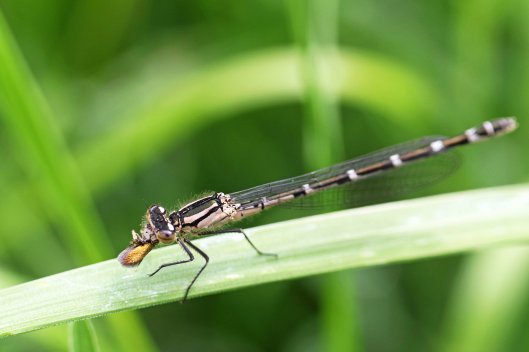
Common blue damselflies (Enallagma cyathigerum) are quite small but this female’s lunch is even smaller and is probably a micro moth, but, as there are 1627 species of micro moths in the British Isles, I’m not even going to hazard a guess as to which one this is.

160707 death Xysticus sp & Leptopterna sp nymph CathaysCem

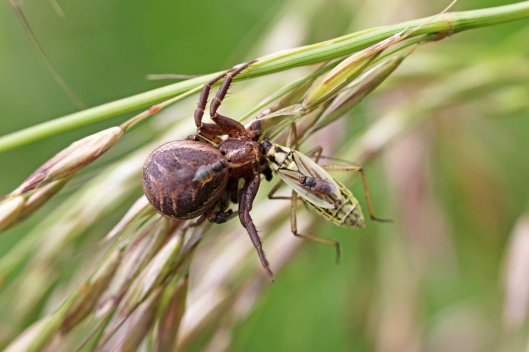
Once again, a lurking spider has successfully captured its next meal. I’m reliably informed this is also one of the Xysticus species of crab spiders, and its victim is a nymph of the Leptopterna species of grass bugs. The tiny flies are an intriguing mystery – they appeared to be travelling around with the spider like the pilot fish that live as ectoparasites in the company of sharks.

Like Loading...

Superb starlings

06 Wednesday Jul 2016

Posted by sconzani in birds, nature

≈ 14 Comments

Tags

birding, birdwatching, Kuala Lumpur Bird Park, Lamprotornis superbus, starling, Superb starling, Tanzania

The Superb starling (Lamprotornis superbus) is native to many east African countries – Uganda, Somalia, Ethiopia, Kenya and Tanzania, where most of my photos were taken – but you only have to google their name to discover how widely they’ve spread throughout the world, either as specimens in zoos and bird parks (one of my photos was taken in the Kuala Lumpur Bird Park in 2013) or in the aviaries of bird collectors.

160706 Superb starling Kuala Lumpur (1)

And it’s easy to see how they got their name – what truly stunning colours they are, from their iridescent blue backs and breasts and those glorious turquoise wings to their orange-red tummy and legs, all rounded off by a snowy white bottom! Like the starlings I’m more familiar with in Britain and New Zealand, Superb starlings are sociable birds, often to be heard chattering and singing their loud quavering songs in the company of others. Unlike their British and New Zealand counterparts, which are inclined to be nervous of people, the Superbs are quite bold and brassy and easily tamed.

160706 Superb starling Tanzania (2)
160706 Superb starling Tanzania (3)
160706 Superb starling Tanzania (4)
Like Loading...

Aye, aye, skipper!

05 Tuesday Jul 2016

Posted by sconzani in insects, nature

≈ 4 Comments

Tags

butterflies, butterfly, Large skipper, Ochlodes sylvanus, Small skipper, Thymelicus sylvestris

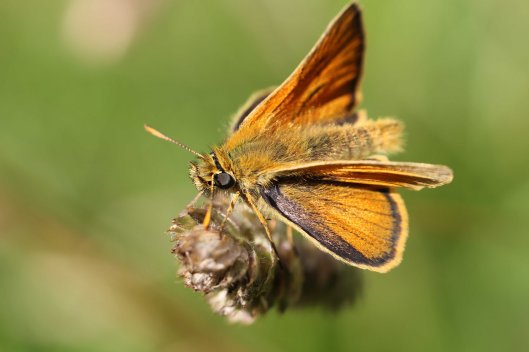
A couple of weeks ago I posted about several recent butterfly sightings, including one of the Large skipper (Ochlodes sylvanus). Today we have my first 2016 sighting of a Small skipper (a completely separate species, Thymelicus sylvestris), which I was lucky enough to see and photograph at the cemetery last Sunday. It’s often difficult to tell the Large (below, left) and Small (below, right) apart when they’re flying but, in these photos, you can clearly see the differences in the markings on their upper wings. The colours of both skippers remind me of golden amber, especially when the sunshine touches them.

160705 Large Skipper
160705 Small skipper (1)

Apparently, the Small skipper’s eggs usually hatch in late summer, after which the wee caterpillars overwinter within the grass stalk where their eggs were originally laid. Come spring, they spin themselves a little grass shelter that helps protect them from predators, initially only popping out at night to feed but emerging more often during the day as they grow larger. They pupate in May and June, before appearing, often in large numbers, as beautiful butterflies in July. My Small skipper was true to form, basking on grass in the warm sunshine, allowing me to get lots of lovely photos.

160705 Small skipper (3)160705 Small skipper (2)

Like Loading...

Sex in the cemetery

04 Monday Jul 2016

Posted by sconzani in flowers, insects, nature

≈ 5 Comments

Tags

beetles, Cathays Cemetery, Common red soldier beetle, Rhagonycha fulva

I popped in to the new section of Cardiff’s Cathays Cemetery yesterday for a mooch. Around the old graves, where last week there had been a colourful mix of long grasses and wildflowers, the strimmers had been in and done their destructive work (why? why? why?) so there wasn’t much insect life to be found. However, I spotted a burst of bright yellow – one of the Santolina species of shrubs – in the middle of an adjoining section so, thinking there might be a bee or two, I went to investigate.

160704 red soldier beetles (7)

Well, I couldn’t believe my eyes! It was seething with Common red soldier beetles (Rhagonycha fulva). There must’ve been hundreds of them, scurrying from flower to flower, feasting on the obviously delicious pollen and nectar, and … um … creating more soldier beetles. Everywhere I looked there were couples. As I later read on the Wildlife Trust website, the ‘adults spend much of their short, summer lives mating and can often be seen in pairs.’ Ain’t that the truth!

160704 red soldier beetles (1)
160704 red soldier beetles (2)
160704 red soldier beetles (3)
160704 red soldier beetles (4)
160704 red soldier beetles (5)
160704 red soldier beetles (6)
Like Loading...

The photo-bombing beetle

03 Sunday Jul 2016

Posted by sconzani in fungi, insects, nature

≈ 10 Comments

Tags

beetle, fungus, inkcap, insect photobomber, mossy log, Red-headed Cardinal beetle, Rhydypennau Wood

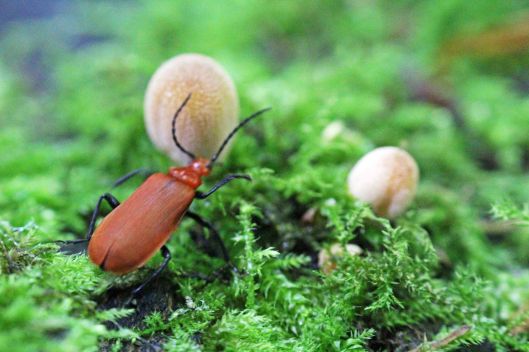
During yesterday’s walk to the stunning wildflower meadows neighbouring Cardiff’s Llanishen Reservoir, I detoured through Rhydypennau Wood to see what fungi might be about. There wasn’t a lot but I spotted some inkcaps sprouting amongst the moss on a fallen log so thought I’d get some photos.
160703 photobombing beetle (1)

The camera was out, I was kneeling in the leaf litter, leaning on the log, and had just taken my first shot when …

160703 photobombing beetle (2)

‘Oi, lady photographer leaning all over MY mossy log, I’m coming through!’, squeaked the Red-headed cardinal beetle.

160703 photobombing beetle (3)

It tootled along the log, through my shot, over MY inkcaps, and on its merry way.

160703 photobombing beetle (4)

And it left me laughing in its wake. Best photo bomb ever!

Like Loading...

Happy National Meadows Day!

02 Saturday Jul 2016

Posted by sconzani in nature, wildflowers

≈ 4 Comments

Tags

Cosmeston Lakes Country Park, Heath Park, Howardian Nature Reserve, meadows, National Meadows Day, Plantlife

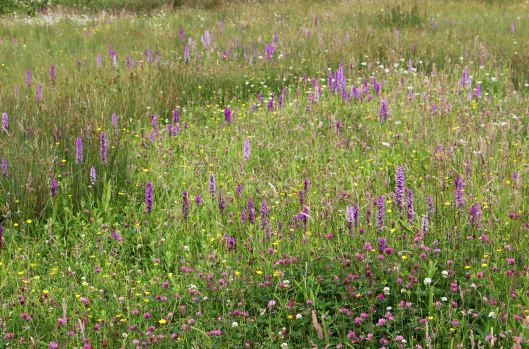
Today is the second National Meadows Day, an initiative led by Plantlife, with contributions from 11 other organisations and with financial support from the Heritage Lottery Fund, that aims to:

raise awareness of the desperate plight of wildflower meadows and grasslands and equip communities with the knowledge and skills to reverse this devastating trend, and
give people all over the UK the chance to visit, enjoy and learn about our wildflower meadows and grasslands.

160702 NatMeadows Day Barrage

Meadows are such magical places. The gorgeous flowers they contain provide food and shelter to all manner of wildlife, from pretty fluttering butterflies and hawking dragonflies, to wandering weevils and little leaf beetles. There are events happening all around Britain today so, if you’ve no plans yet for your afternoon, get out and enjoy a meadow near you.

160702 NatMeadows Day cosmeston

a blaze of Bird’s-foot trefoil at Cosmeston Lakes Country Park

160702 NatMeadows Day heath

daisies and buttercups at Heath Park

160702 NatMeadows Day Howardian

a gorgeous display of native orchids at Howardian Nature Reserve


Like Loading...

Floral Friday: Waterlilies

01 Friday Jul 2016

Posted by sconzani in flowers, nature

≈ 8 Comments

Tags

#FloralFriday, water lily, waterlilies, waterlily

What a week of doom and gloom this has been! From the disastrous political events in Britain, which have in turn triggered economic and financial difficulties around the globe, to the tragedy of the bombings in Istanbul, it seems there has been little to celebrate. So, to finish the working week, I think we need a celebration of flowers. May their beauty bring a little joy, peace and tranquility to your world today.

160701 waterlilies (1)
160701 waterlilies (2)
160701 waterlilies (3)
160701 waterlilies (4)
160701 waterlilies (5)
160701 waterlilies (6)
160701 waterlilies (7)
160701 waterlilies (8)
160701 waterlilies (9)
Like Loading...

All spit and no cuckoo

30 Thursday Jun 2016

Posted by sconzani in insects, nature

≈ 8 Comments

Tags

Cercopis vulnerata, cuckoo spit, froghopper, red-and-black froghopper, spittle bug

What an intriguing insect this is! I’d heard of spittle bugs, of course, but didn’t really know anything about them until I started researching their story to go with my photos. Briefly, here’s what I’ve discovered …

160630 Red-and-black Froghopper (1)

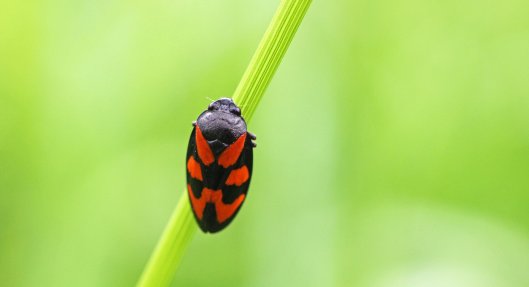
The Red-and-black froghopper, scientific name Cercopis vulnerata, spends most of its life as a nymph living around the roots of trees, and the adults only appear above ground for a few short weeks in the summer.

160630 Red-and-black Froghopper (2)

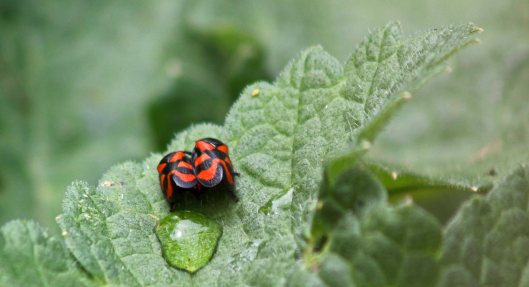
So many British insects are hard to identify but the colours of this froghopper make it truly unmistakable – good news when it’s looking for a mate. Please excuse yet another voyeuristic photo of insects in copula!

160630 Red-and-black Froghopper (3)

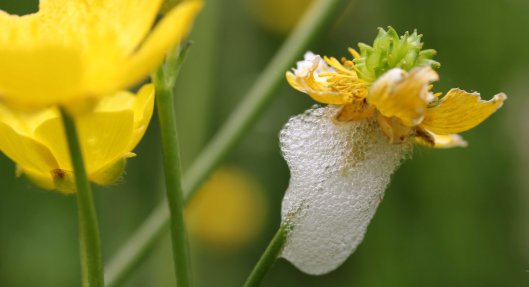
Now comes the weird bit, the ‘cuckoo spit’, so named because it appears about the same time cuckoos reappear in Britain and can be heard broadcasting their characteristic call, though why the spittle is referred to as their spit escapes me. And it’s not really spit at all – it’s produced by the tiny froghopper nymph to protect itself from drying up and as a place to hide from predators.

160630 Red-and-black Froghopper (4)

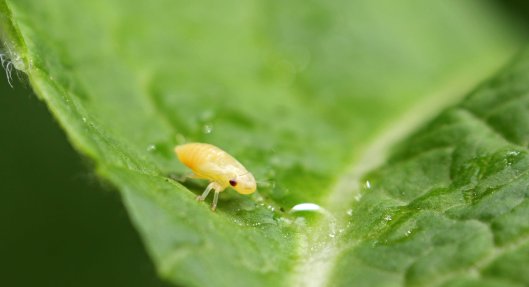
This cute little nymph actually mixes a fluid from its anus with a secretion from its abdominal glands and then blow bubbles into the mixture from a valve on its tummy. (And I touched that stuff!) After hanging out in its bubble sac for a while, the nymph heads underground, where it sheds its skin several times before changing into its red-and-black adult form and starting the process all over again.

160630 Red-and-black Froghopper (5)

Oh, and the froghopper part of its name comes from the way it imitates a frog by leaping away from danger, though I’ve never seen one do that. Maybe my camera and I don’t look all that dangerous.

Like Loading...

Cambodia’s Common green frog

29 Wednesday Jun 2016

Posted by sconzani in amphibian, flowers, nature

≈ 7 Comments

Tags

Cambodia, Common green frog, frog, Green paddy frog, Hylarana erythraea, Wat Damnak, waterlilies, waterlily

When I lived in Cambodia in 2013, one of the things that regularly made me smile was these little frogs, the Common greens (Hylarana erythraea), also known as the Green paddy frogs. Although they would live almost anywhere there was a pond or stagnant water, there was one particular pond, in the grounds of a local pagoda, where I knew they could always be found.

160629 Cambodia Common green frog (1)

The frogs were quite wary of humans – perhaps they had some realisation that the locals considered them a food source – so I would have to move very slowly and quietly ever closer to the pond to try to get photos. And, even then, the slightest breeze or loud noise or change in the light would see some of them leap frantically away to hide, well camouflaged, under a lily pad. And that just made me laugh out loud, which scared the rest of them into panicky hopping. The long narrow pond was also full of waterlilies so, for me, the combination of cute frogs and gorgeous blooms was irresistible.

160629 Cambodia Common green frog (2)
160629 Cambodia Common green frog (3)
160629 Cambodia Common green frog (4)
Like Loading...
← Older posts
Newer posts →

About me

sconzani

sconzani

I'm a writer and photographer; researcher and blogger; birder and nature lover; countryside rambler and city strider; volunteer and biodiversity recorder.

View Full Profile →

Follow earthstar on WordPress.com

Enter your email address to follow this blog and receive notifications of new posts by email.

Recent blog posts

  • Nesting material April 28, 2026
  • Lifer: Box bug April 27, 2026
  • Peak Wild garlic April 26, 2026
  • First damsels of 2026 April 25, 2026
  • NFY: Green-veined white April 24, 2026

From the archives

COPYRIGHT

Unless otherwise acknowledged, the text and photographs on this blog are my own and are subject to international copyright. Nothing may be downloaded or copied without my permission.

Fellow Earth Stars!

  • Unknown's avatar
  • Unknown's avatar
  • Unknown's avatar
  • Unknown's avatar
  • Unknown's avatar
  • Unknown's avatar
  • Unknown's avatar
  • Unknown's avatar
  • Unknown's avatar
  • Unknown's avatar
  • Unknown's avatar
  • Unknown's avatar
  • Unknown's avatar
  • Unknown's avatar
  • Unknown's avatar
  • Unknown's avatar
  • Unknown's avatar
  • Unknown's avatar
  • Unknown's avatar
  • Unknown's avatar
  • Unknown's avatar
  • Unknown's avatar
  • Unknown's avatar
  • Unknown's avatar
  • Unknown's avatar
  • Unknown's avatar
  • Unknown's avatar
  • Unknown's avatar
  • Unknown's avatar
  • Unknown's avatar
  • Unknown's avatar
  • Unknown's avatar
  • Unknown's avatar
  • Unknown's avatar
  • Unknown's avatar
  • Unknown's avatar
  • Unknown's avatar
  • Unknown's avatar
  • Unknown's avatar
  • Unknown's avatar
  • Unknown's avatar
  • Unknown's avatar
  • Unknown's avatar
  • Unknown's avatar
  • Unknown's avatar
  • Unknown's avatar
  • Unknown's avatar
  • Unknown's avatar
  • Unknown's avatar
  • Unknown's avatar

Blog at WordPress.com.

Privacy & Cookies: This site uses cookies. By continuing to use this website, you agree to their use.
To find out more, including how to control cookies, see here: Cookie Policy
  • Subscribe Subscribed
    • earthstar
    • Join 642 other subscribers
    • Already have a WordPress.com account? Log in now.
    • earthstar
    • Subscribe Subscribed
    • Sign up
    • Log in
    • Report this content
    • View site in Reader
    • Manage subscriptions
    • Collapse this bar

Loading Comments...

You must be logged in to post a comment.

    %d