• ABOUT
  • BIRDING 2018
  • Birding 2019
  • BLOG POSTS
  • Butterflies 2018
  • Resources

earthstar

~ a celebration of nature

earthstar

Category Archives: nature

Evernia prunastri

09 Tuesday Feb 2016

Posted by sconzani in lichen, nature, nature photography

≈ 2 Comments

Tags

lichen dye, Oakmoss, perfume, Staghorn lichen

What substance produces a beautiful lilac dye and is one of the raw materials in many well-known perfumes? It’s called Oakmoss (Evernia prunastri), but it’s not a moss, it’s a lichen, and it doesn’t just grow on oak trees, it grows on the bark of other deciduous trees and conifers as well, in most of the temperate regions of the northern hemisphere. Another of its common names is Staghorn lichen because its branching shape resembles the antlers of deer.
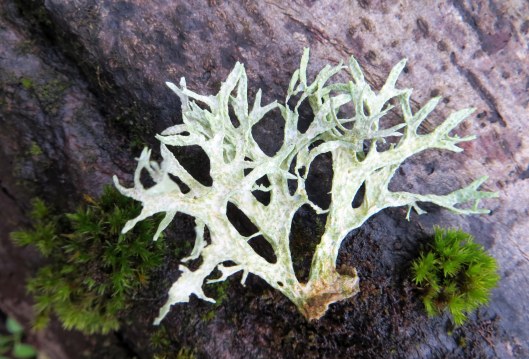
evernia prunastri (1)

At one time, Oakmoss was one of the most common base materials used in the Chypre and Fougère categories of perfumes, and was highly valued for the rich, earthy and, apparently, very sensual aroma it added to these fragrances. Unfortunately, Oakmoss can produce severe reactions in people with sensitive skin, so the IFRA (the International Fragrance Association) has now imposed restrictions on its use though, through the prudent manipulation of their recipes, it seems Oakmoss is still to be found in many well-known perfumes, like Paloma Picasso, Chanel No. 19 and Miss Dior.

evernia prunastri (2)

And, if you’re keen to use natural products to dye wool or fabric products, soaking this lichen in a mixture of water and ammonia will produce a vibrant lilac-coloured dye.
Like Loading...

An essential piece of traveller’s kit

08 Monday Feb 2016

Posted by sconzani in fungi, nature, nature photography

≈ 2 Comments

Tags

birch polypore, fungus, Otzi the Iceman, Razor strop fungus

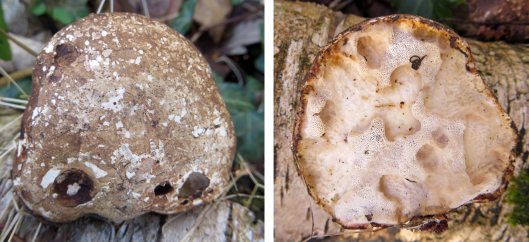
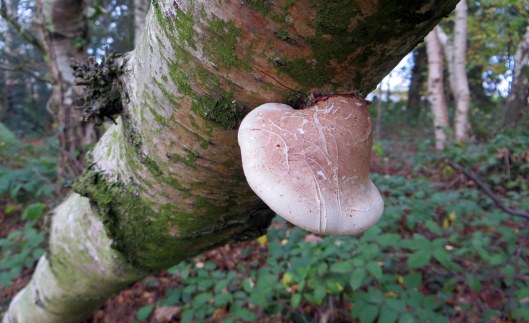
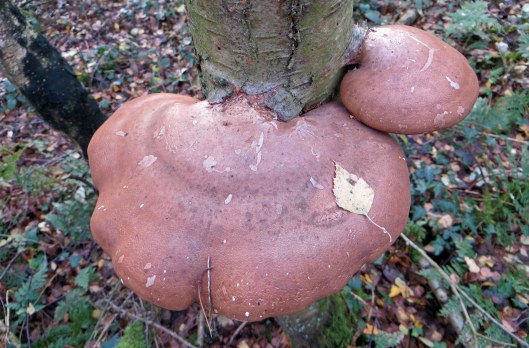
Do you remember the news about Ötzi the Iceman, the 5000-year-old mummified man found in a glacier in the Ötztal Alps in Italy in September 1991? Amongst his meagre possessions, Ötzi was carrying two types of fungi, one of which was Birch polypore (Piptoporus betulinus). It’s one of the most common bracket fungi and grows, as you might guess from the name, on birch trees.

160206 birch polypore (1)

Archaeologists speculate that Ötzi was carrying the bracket fungus for medicinal reasons – this was his first aid kit. Birch polypore is known to have both anti-inflammatory and antibacterial properties – various modern survivalist websites even advise using strips of it as plasters on wounds. Some herbalists recommend it in tea to soothe the nerves and eliminate fatigue but, be warned, it can act as a laxative!

160206 birch polypore (2)

Another of this fungus’s common names is Razor strop as barbers used to sharpen their cut-throat razors on it, and ancient people like Ötzi also used it as tinder. One spark from a flint and they could start a new campfire, and they could even carry a slowly smouldering piece of dry fungus with them as they travelled.

160206 birch polypore (3)

the underside, shown on the right, has been much nibbled, probably by slugs

Like Loading...

The blood spewer

07 Sunday Feb 2016

Posted by sconzani in insects, nature, nature photography

≈ 6 Comments

Tags

beetle, Blood spewer beetle, Bloody-nosed beetle, British beetle, Brynna Woods

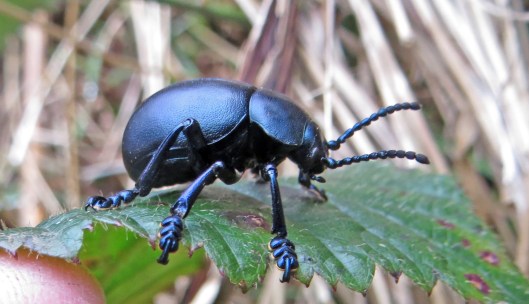
With a name like blood spewer, you might expect this post to be about some gigantic ravaging beast, but no! This is a beetle, large for a beetle at 2cm long, but nevertheless slow and bumbling and flightless and harmless, and really rather delightful, with body parts of a very pretty, slightly metallic-looking blue-purple-black. We found it amongst the bracken during a walk through Brynna Woods, in East Glamorgan, earlier this week.

160207 bloody nosed beetle (6)

Timarcha tenebricosa, or the bloody-nosed beetle, as it is more commonly known, gets its gruesome name from a defence strategy it has developed in response to predators. When threatened, it discharges small globules of unsavoury red fluid from its mouth. It seems we weren’t perceived as threatening, as this little creature didn’t perform its party trick for us.

160207 bloody nosed beetle (4)

This is a leaf beetle, most often seen during the spring and summer months in grassy areas, in hedgerows and on heathland in Britain and in southern and central Europe. It is particularly partial to nibbling on the plant Lady’s bedstraw, and has the most amazing-looking segmented antennae and lower legs, as you can see in my photos. Ours was a charming and colourful encounter on a rather grey day.

160207 bloody nosed beetle (5)

Like Loading...

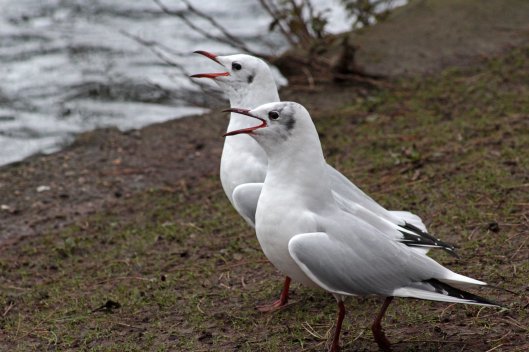
The black-headed gull duo

06 Saturday Feb 2016

Posted by sconzani in birds, nature, nature photography

≈ 8 Comments

Tags

birding, birds, birdwatching, black-headed gulls, British birds, gulls, Roath Park Lake

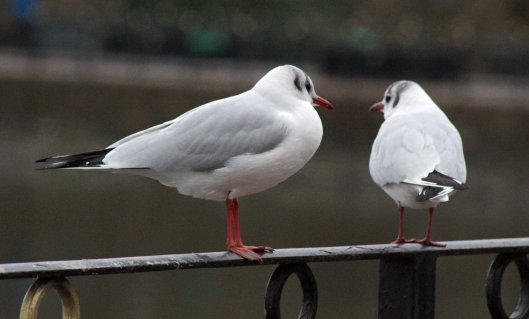
Roath Park Lake, in Cardiff, last week …

160208 black headed gull song (1)

A Gull: ‘Is she still there?’
Gull Y: ‘Yep.’
A Gull: ‘What’s she doing?’
Gull Y: ‘Just pointing that black thing at us. Why do they do that?’

160208 black headed gull song (2)

A Gull; ‘I dunno. Ignoring them doesn’t seem to work either.’
Gull Y: ‘Shall we give her something to look at then?’
A Gull: ‘Righto. We could do with some practice.’
Gull Y: ‘Yeah. Let’s fly down by that tree and give her a blast of our new number.’

160208 black headed gull song (3)

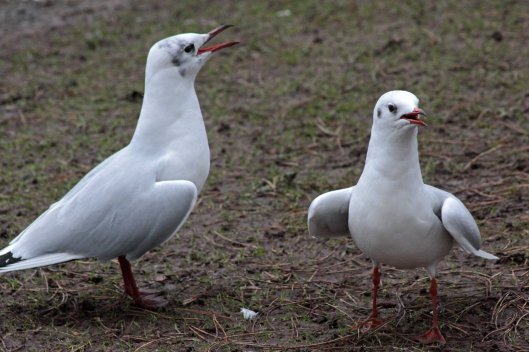
A Gull: ‘The skies are alive with the sound of gull song.’
Gull Y: ‘With songs we have sung for a million years.’

160208 black headed gull song (4)

A Gull: ’The lakes fill my heart with the sound of gull song.’
Gull Y: ‘My heart wants to eat every fish it sees.’

160208 black headed gull song (5)

A Gull: ‘Well, a little appreciation would be welcome.’

Like Loading...

Swamped with swamphens

05 Friday Feb 2016

Posted by sconzani in birds, nature, nature photography

≈ 1 Comment

Tags

birding, birds, birdwatching, Grey-headed swamphen, Purple Gallinule

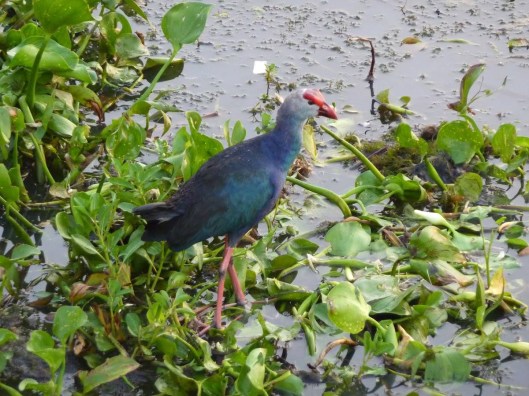
After reading my recent post The Moorhen, the gallinule and the pukeko, my friend Viv, who lives in Thailand, sent me this wonderful photo of their local swamphen. This is the Grey-headed swamphen (Porphyrio poliocephalus) and Viv writes:

160205 Grey-headed swamphen

‘This was taken 4 years ago on a wetland area in a National Park down south in Songkla province. They were everywhere there striding across the water hyacinth searching for food. I have seen one Swamp hen locally, on another wetland area that borders the paddy fields but it’s not being managed and the reeds have swamped everything so spotting wildlife, especially birds, is difficult.’

One of my fellow bloggers, Theresa Green, also got in touch with details of the swamphens she saw when she lived in southern Spain. Hers were Purple Gallinules (Porphyrio porphyrio) and she has written an excellent well-illustrated blog about these birds and their antics that you can check out here.

Like Loading...

The Daffy and the Taffy

04 Thursday Feb 2016

Posted by sconzani in flowers, nature, nature photography

≈ 6 Comments

Tags

daffodil, Welsh national emblem, Welsh symbol

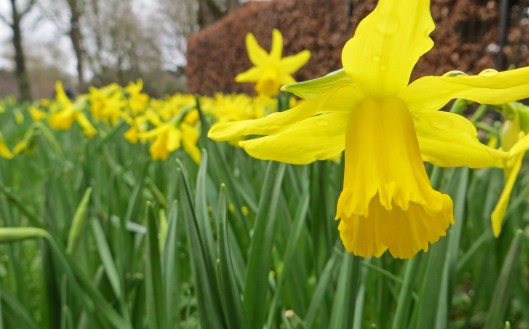
As the daffodil is one of the national symbols of Wales, I naturally expect to see a lot of daffodils here and, though it is still very early in the season, so far I have not been disappointed. As I couldn’t help but wonder why the daffodil is an official Welsh emblem, I’ve been investigating.

160204 daffodil (1)

It seems the origins are somewhat obscure. It could be because the daffodil was the favourite flower of the only Welshman to have been Prime Minister of Britain, David Lloyd George, who apparently wore the flower each year on St David’s Day and supposedly ordered its use in the celebration of Edward’s investiture as Prince of Wales in 1911 (though that event was in July and photographs show no daffodils present).

160204 daffodil (2)

one of the more unusual Welsh varieties of daffodil

It could perhaps be because the flower usually blooms in early spring which usually coincides with the celebration of the Welsh patron Saint David’s Day on 1 March (not late January, like this year). Or it could be a confusion of words: that other national Welsh emblem, the leek, is cenhinen in the Welsh language, whereas the Welsh for daffodil is cenhinen pedr. Did the two terms just get confused over time? The truth may never be known.

160204 daffodil (3)

Like Loading...

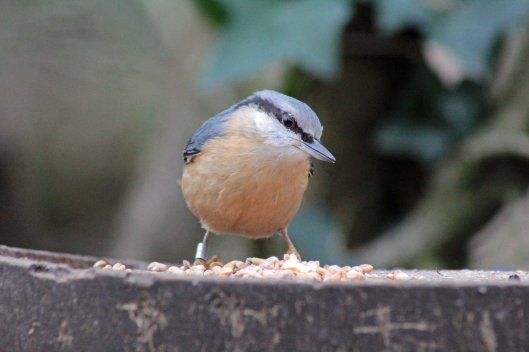
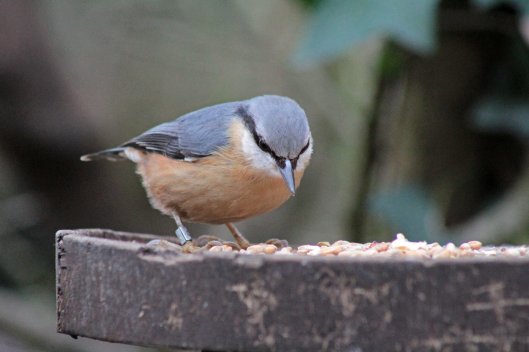
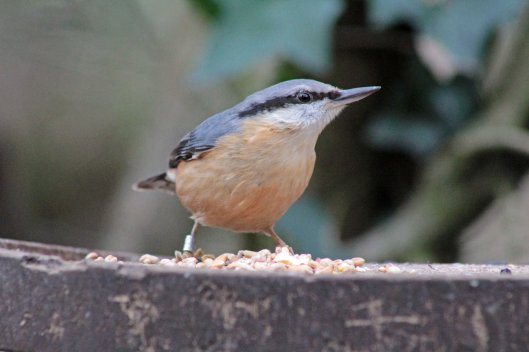
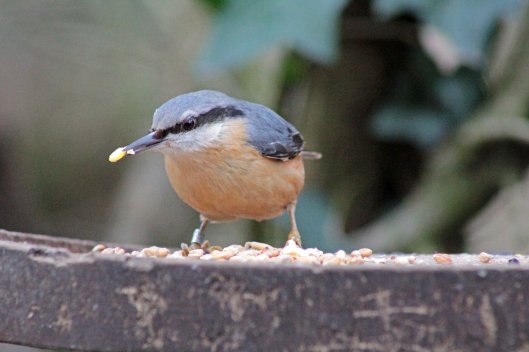
Chatting to a nuthatch

03 Wednesday Feb 2016

Posted by sconzani in birds, nature, nature photography

≈ 4 Comments

Tags

birding, birds, birdwatching, British birds, nuthatch

Forest Farm Nature Reserve, a few days ago …

160203 nuthatch (1)

Nuthatch: ‘Oi, you there. The lady with the camera.’
Me: ‘Well, hello to you too, nuthatch. How’re you doing today?’

160203 nuthatch (2)

Nuthatch: ‘Never mind the pleasantries. Where’re the sunflower seeds? Don’t ya know I prefer sunflower seeds?’
Me: ‘Sorry, I don’t have any seeds.’

160203 nuthatch (3)

Nuthatch: ‘Well, if you want photos, you’ve gotta pay, y’know. Is this my best side?’
Me: ‘You’re very demanding. Yes, very handsome.’

160203 nuthatch (4)

Nuthatch: ‘Sunflower seeds or nyjer seeds are best. I’ll take this stuff if I have to but I prefer the seeds.’
Me: ‘I’ll make sure I bring payment next time. I like your bling.’

160203 nuthatch (5)

Nuthatch: ‘The bling? Well, I would’ve preferred black m’self but they don’t give you a choice, y’know.’
Me: ‘Silver goes well with your colouring. Thanks for the photos. ’Til next time.’

Like Loading...

The original source of iodine

02 Tuesday Feb 2016

Posted by sconzani in nature, nature photography, plants, seaweed

≈ Leave a comment

Tags

bladder wrack, kelp, seashore plant, seaside

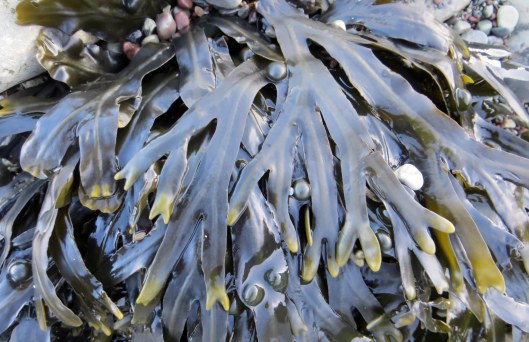
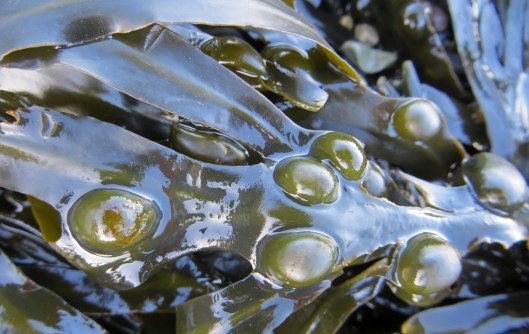
For the first time this year I’ve been to the seaside – not a long sandy beach, but the boulder-strewn former harbour entrance at the bottom of the crumbling cliffs of Penarth Head where many rocks on the lower half of the shore have bladder wrack growing on them. Fucus vesiculosus is probably the most common seaweed to be found on British shores, and grows on the coasts of most of the oceans and seas in the northern hemisphere.

160202 bladderwrack (1)

As its common name implies, this member of the kelp family uses air bladders for buoyancy, to help float its fronds upwards towards the light. When growing in an area with more violent wave action, it grows less bladders as the wave movement helps elevate its fronds instead. It is intolerant of drying out, so its fronds flop together in a moist heap which helps keep water loss to a minimum between tides.

160202 bladderwrack (2)

Though herbalists have used bladder wrack for centuries to stimulate thyroid function, and for the treatment of rheumatism and some skin diseases, it was only in 1819 that J. F. Coindet validated its efficacy scientifically, when he discovered that bladder wrack contained iodine. Extracts were subsequently used in medicines to treat goitre and other thyroid diseases.

Like Loading...

He of the many many legs

01 Monday Feb 2016

Posted by sconzani in insects, nature, nature photography

≈ Leave a comment

Tags

flat-backed millipede, millipede, minibeasts

Though the word millipede comes from the Latin for ‘thousand feet’, the Common flat-backed millipede (Polydesmus angustus) only usually has between 40 and 70 feet, and no species of millipede has more than 750. I guess whoever originally named them got tired of counting!

160201 Millipede (Polydesmus complanatus) (3)

Growing up to 25mm long, this little creature is actually the largest and most common millipede in Britain, though it’s seen more frequently in England and Wales. Just like the woodlice it’s with here, it prefers damp shaded places, perhaps under logs, stones or bark, or amongst leaf litter, in woods and on farm lands but also in the home garden. Although it has many many legs, it actually moves quite slowly so, rather than running away from perceived danger, it secretes an unpleasant chemical from pores along its body to deter predators.

160201 Millipede (Polydesmus complanatus) (2)

The millipede’s favourite foods include fungi and dead vegetation, and it is a useful recycler of nutrients back into the soil. This little millipede gets its name from its broad body armour which makes its body look rather flat and helps it push its way into narrow crevices under bark or beneath stones.

Like Loading...

The moorhen, the gallinule and the pukeko

31 Sunday Jan 2016

Posted by sconzani in birds, nature, nature photography

≈ 10 Comments

Tags

birding, birds, birdwatching, British birds, New Zealand birds, Peruvian birds, Pukeko, Purple Gallinule

The British moorhen (Gallinula chloropus) looks very familiar to me as we have a similar bird in my native New Zealand, and I remember also being surprised during a visit to the Amazon jungle when I lived in Peru to see a bird I recognised from home – their purple gallinule (Porphyrio martinicus) looks remarkably like the New Zealand pukeko (Porphyrio melanotus melanotus). All three birds make the same high-pitched squeak and have that same cheeky strut, continuously flashing their white undertail as they sashay along, though there are some colour differences. The beaks of each are different, and the plumage of the moorhen seems much less vibrant to my eye.

160130 pukeko

New Zealand pukeko (above) & purple gallinule, from the Peruvian Amazon (below)

160130 Purple gallinule Manu

The moorhen (below) is widespread throughout Britain, second only to the mallard in the extent of its habitable range. Prior to 1954, when nest predation was made illegal, eggs were regularly taken for food – apparently they go well with bacon! The bird itself can be shot and eaten during the season, though I’m not sure how palatable their strong dark meat would be, and I really can’t imagine how anyone would want to kill or eat a bird that is so pretty and so highly entertaining.

160130 moorhen

Like Loading...
← Older posts
Newer posts →

About me

sconzani

sconzani

I'm a writer and photographer; researcher and blogger; birder and nature lover; countryside rambler and city strider; volunteer and biodiversity recorder.

View Full Profile →

Follow earthstar on WordPress.com

Enter your email address to follow this blog and receive notifications of new posts by email.

Recent blog posts

  • Blood bees April 29, 2026
  • Nesting material April 28, 2026
  • Lifer: Box bug April 27, 2026
  • Peak Wild garlic April 26, 2026
  • First damsels of 2026 April 25, 2026

From the archives

COPYRIGHT

Unless otherwise acknowledged, the text and photographs on this blog are my own and are subject to international copyright. Nothing may be downloaded or copied without my permission.

Fellow Earth Stars!

  • Unknown's avatar
  • Unknown's avatar
  • Unknown's avatar
  • Unknown's avatar
  • Unknown's avatar
  • Unknown's avatar
  • Unknown's avatar
  • Unknown's avatar
  • Unknown's avatar
  • Unknown's avatar
  • Unknown's avatar
  • Unknown's avatar
  • Unknown's avatar
  • Unknown's avatar
  • Unknown's avatar
  • Unknown's avatar
  • Unknown's avatar
  • Unknown's avatar
  • Unknown's avatar
  • Unknown's avatar
  • Unknown's avatar
  • Unknown's avatar
  • Unknown's avatar
  • Unknown's avatar
  • Unknown's avatar
  • Unknown's avatar
  • Unknown's avatar
  • Unknown's avatar
  • Unknown's avatar
  • Unknown's avatar
  • Unknown's avatar
  • Unknown's avatar
  • Unknown's avatar
  • Unknown's avatar
  • Unknown's avatar
  • Unknown's avatar
  • Unknown's avatar
  • Unknown's avatar
  • Unknown's avatar
  • Unknown's avatar
  • Unknown's avatar
  • Unknown's avatar
  • Unknown's avatar
  • Unknown's avatar
  • Unknown's avatar
  • Unknown's avatar
  • Unknown's avatar
  • Unknown's avatar
  • Unknown's avatar
  • Unknown's avatar

Blog at WordPress.com.

Privacy & Cookies: This site uses cookies. By continuing to use this website, you agree to their use.
To find out more, including how to control cookies, see here: Cookie Policy
  • Subscribe Subscribed
    • earthstar
    • Join 642 other subscribers
    • Already have a WordPress.com account? Log in now.
    • earthstar
    • Subscribe Subscribed
    • Sign up
    • Log in
    • Report this content
    • View site in Reader
    • Manage subscriptions
    • Collapse this bar

Loading Comments...

You must be logged in to post a comment.

    %d